
Why Addressable Panels Offer Higher ROI Than Conventional Panels
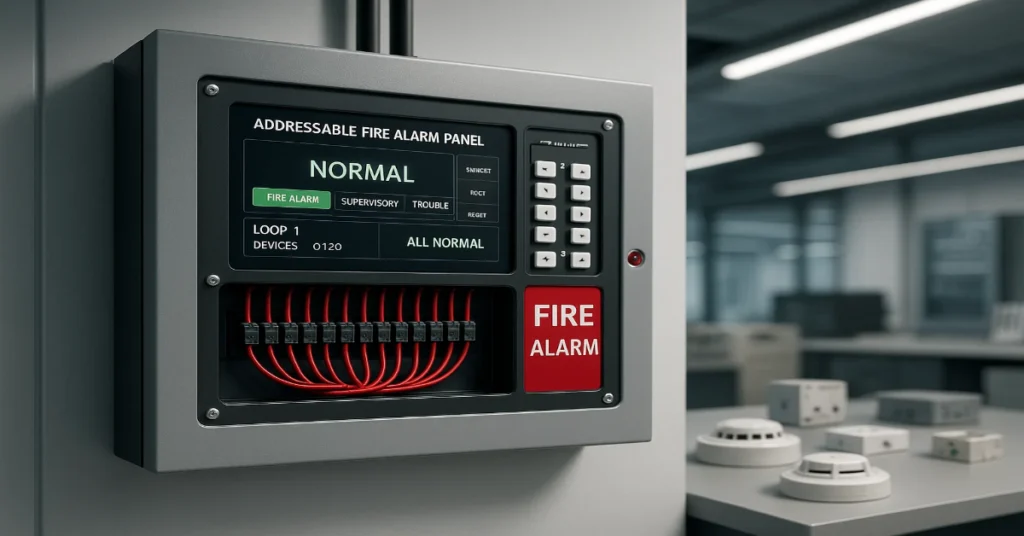
Fire safety technology has seen a major shift over the last decade, especially in medium and large-scale facilities. While conventional fire alarm systems were once the standard, modern businesses now prioritize long-term value, higher accuracy and cost efficiency. This shift has pushed addressable fire alarm panels into the spotlight, not simply as an upgrade, but as a better Return on Investment (ROI) decision. Today, facility owners, engineers and safety consultants are increasingly selecting addressable systems because they deliver measurable economic and operational benefits over time. This article breaks down those advantages and explains why addressable panels offer a significantly higher ROI compared to conventional panels. The discussion is based on real industry needs, life-cycle costs and performance expectations. 1. The Real Cost of Fire Alarm Systems: Not Just the Panel Price Most procurement teams still initiate fire alarm purchases by comparing the panel’s upfront cost. A conventional panel appears cheaper at first glance, but hidden costs add up over the life of the system. Key cost factors often overlooked Conventional panels often seem economical during purchase but become cost-heavy in long-term operation. Addressable panels reduce these expenses significantly. 2. Addressable Panels Reduce Cabling Costs by Up to 40% Cabling is a major portion of the project budget, especially in larger buildings. Conventional panels require separate wiring for each device (multiple loops), making them cable-intensive. How addressable panels improve cabling efficiency This structure can reduce cabling and installation costs by up to 40% depending on project scale. Why this adds to ROI Less cabling means: Addressable systems such as those typically used in modern commercial sites are designed to minimize infrastructure waste. This delivers immediate and long-term financial benefits. 3. Faster, More Accurate Detection Reduces Downtime Costs One of the biggest contributors to ROI is the system’s performance during an actual event. Addressable systems pinpoint the exact device or room in alarm. Conventional systems only show “Zone 3 Alarm” or “Zone 6 Fault,” leaving teams to search for the source. Impact of improved accuracy For facilities like hotels, hospitals, IT parks and manufacturing plants, every minute saved during an alarm reduces financial risk. Addressable panels offer this precision, making them a safer and more financially sound choice in the long run. 4. False Alarm Reduction Directly Saves Money False alarms are not just annoying; they are expensive. Each false alarm can disrupt: Conventional panels are more prone to false alarms because the system cannot identify which device is causing the issue. How addressable systems reduce false alarms Many modern addressable systems (including those widely used across global projects) incorporate intelligent detection to minimize nuisance alarms. ROI advantage Fewer false alarms mean: Over the life of a building, this can save lakhs of rupees. 5. Simplified Maintenance Lowers Life-Cycle Costs Maintenance often becomes the biggest cost over a fire alarm system’s lifespan. Conventional systems require manual checking, zone-by-zone testing and time-consuming inspections. Addressable panels deliver smarter maintenance Technicians spend less time troubleshooting, which translates into reduced maintenance contracts and fewer emergency repairs. Long-term ROI impact By making maintenance faster and more predictable: This is one of the strongest reasons modern buildings prefer addressable systems. 6. Scalable Architecture Reduces Upgrade Costs Most buildings expand and remodel over time. Conventional systems are rigid, while addressable panels are designed to grow with the building. Advantages of scalability A scalable system ensures your initial investment stays relevant even as your facility evolves. For example, many addressable platforms (including those widely used in commercial infrastructure) support modular expansions, making them suitable for multi-phase projects. This adaptability contributes heavily to long-term savings. 7. Integration With Modern Building Systems Enhances Value Modern buildings rely on automation, HVAC control, access systems, CCTV, BMS platforms and emergency communication networks. Addressable systems integrate seamlessly with: Conventional systems struggle with advanced integration because of their limited communication ability. ROI gains from integration Integration readiness ensures that the system remains valuable for decades. 8. Higher Data Transparency Helps Improve Safety Planning Addressable fire panels generate detailed logs: This data supports reliable audits and compliance reporting. How data transparency boosts ROI Better data leads to better decisions and long-term operational savings. 9. Longer Lifespan Compared to Conventional Panels Addressable systems typically have a longer service life because: Conventional panels often require complete replacement once hardware becomes obsolete. Lifecycle impact A longer lifespan means: This dramatically increases overall ROI. 10. Future-Proof Technology Ensures Sustained Value Building safety is evolving rapidly. Addressable systems are continuously upgraded with new: This technology-forward nature ensures the system remains compliant with future fire safety standards. Many well-established brands including those commonly used in airports, malls, hospitals and hotels, design addressable platforms with long-term growth in mind. ROI impact By choosing a future-ready system, businesses avoid: Future-proofing is one of the most underrated ROI factors. Comparison Table: Addressable vs Conventional Panels (ROI Perspective) Feature / Cost Factor Conventional Panel Addressable Panel Cabling Cost High Low False Alarms Higher chance Very low due to intelligent detection Maintenance Manual & time-consuming Automated, faster, predictive Scalability Limited High Fault Identification Only zone-level Exact device-level Integration Capability Basic Advanced Lifespan Medium Higher Long-Term ROI Moderate to low High 11. Why Businesses Specifically Prefer Addressable Systems Today Growing building complexity Modern buildings have more floors, more occupants and more interconnected services. Stricter compliance requirements Auditors now prefer detailed logs and reporting, only possible with addressable systems. Higher risk management awareness Businesses today quantify operational risks, making addressable systems the logical choice. Better facility management culture FM teams value data-driven monitoring and quick troubleshooting. 12. GST Addressable Panels as Industry Benchmark When engineers look for reliability, they often compare addressable systems based on: Systems like those widely deployed in commercial, industrial and hospitality projects are frequently used as benchmarks because they deliver proven long-term value. GST panels are known for dependable loop performance, intelligent device communication and stable architecture, qualities that naturally contribute to higher ROI. Addressable Panels Deliver Long-Term ROI That Conventional Panels Cannot Match Addressable fire alarm panels are not just a technical upgrade, they
The Real Reason Your Fire Alarm System Has Frequent False Alarms
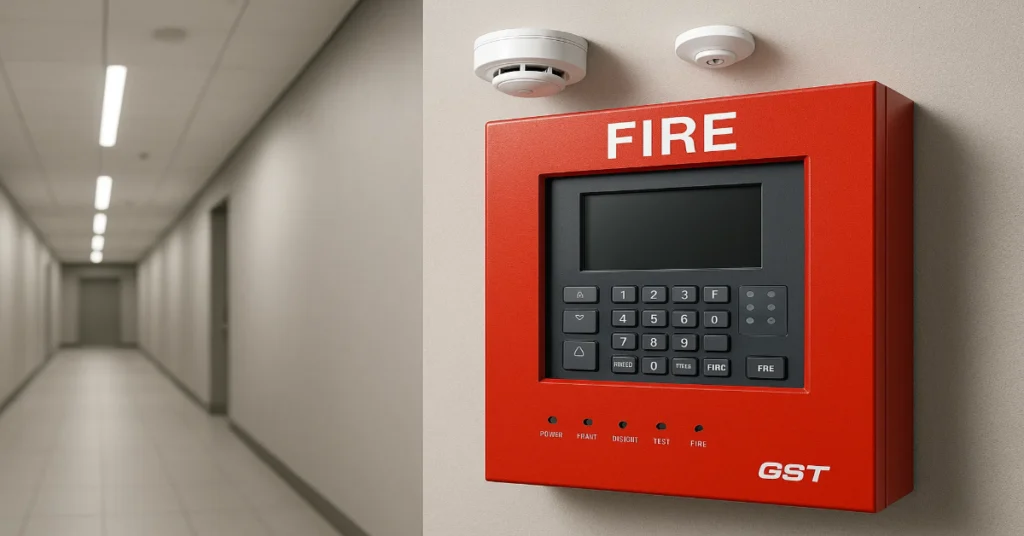
False alarms are more than an inconvenience. They disrupt operations, create panic, waste manpower and most dangerously make people ignore fire alarms altogether. When a business faces repeated false alarms, it’s a clear sign that something is fundamentally wrong with the system. Many facility managers assume false alarms happen due to poor-quality detectors or accidental triggers. But the real reasons often lie much deeper within system design, environmental compatibility, incorrect installation practices, outdated conventional technology and long-ignored maintenance issues. In this comprehensive guide, you will learn: Let’s break down the truth behind recurring false alarms and what you can do to stop them for good. 1. False Alarms Are Not Random, They’re a Symptom of System Weakness False alarms don’t “just happen.”If your system is triggering alarms frequently, it means it is: ✔ Misreading the environment✔ Receiving inaccurate data✔ Failing to distinguish between real fire indicators and disturbances✔ Unable to self-correct or isolate problematic devices In short, false alarms are a diagnostic indicator, not an accident. They reveal underlying gaps in: A fire alarm system should be stable, predictable and resilient. When it isn’t, it means something in the design or hardware ecosystem isn’t working the way it should. 2. Poor Detector Placement Is the Hidden Root Cause One of the biggest and least understood causes of false alarms is incorrect device placement. Many installers treat detectors as plug-and-play devices. But every detector type has strict environmental rules. When detectors are placed incorrectly, they behave unpredictably. Common placement mistakes include: ❌ Installing smoke detectors near HVAC vents Airflow can confuse a detector’s sensing chamber, causing turbulence and nuisance alarms. ❌ Installing detectors near kitchens or pantry areas Cooking vapors, steam and aerosols can easily trigger them. ❌ Mounting heat detectors too close to machinery Equipment generates sporadic heat spikes that mimic fire signatures. ❌ Placing detectors in dusty, humid or polluted zones Dust buildup is one of the fastest ways to cause false alarms. ❌ Installing the wrong detector type for the environment For example: When detectors are mismatched to the environment, false alarms become inevitable. 3. Poor Maintenance Turns Small Issues Into False Alarm Cycles Fire alarm systems require routine cleaning, calibration and inspection. When these steps are ignored, the system becomes unstable. Common maintenance-related triggers include: Most detectors have a lifespan of 8–10 years. After that, sensitivity drifts and false alarms escalate dramatically. If your system is older, frequent false alarms are a warning that devices need replacement. 4. Environmental Factors You Don’t Usually Notice Your environment is far more dynamic than you think. A fire alarm system must account for: ✔ Temperature fluctuations Heat detectors may interpret sudden, non-fire heat surges as danger. ✔ Humidity Moisture can obstruct sensor chambers or trigger condensation alarms. ✔ Aerosols from cleaning sprays Cleaning staff often unknowingly trigger smoke detectors at night. ✔ Renovation or construction work Dust, paint fumes, welding smoke, all confuse sensors. ✔ High-voltage equipment Electrical noise and electromagnetic interference affect older systems. Most of these do not indicate system failure but they indicate a mismatch between detector type, system intelligence and environmental behavior. 5. Old Conventional Systems Are Naturally Prone to False Alarms Conventional systems treat the building as zones, not individual devices. This lack of detail creates instability because: ✔ The system cannot identify which device is misbehaving If one detector drifts or malfunctions, the entire zone can go into alarm. ✔ Sensitivity levels cannot be adjusted individually All detectors in a zone must operate at the same sensitivity, even if they are in different environments. ✔ No real-time diagnostics You cannot track device health trends, contamination levels or communication issues. ✔ Wiring faults often resemble fire signals A loose wire or short circuit can look like a fire condition. ✔ The system cannot differentiate between genuine smoke and disturbances Conventional panels lack algorithmic intelligence to filter out nuisances. This is why older conventional panels often create recurring, untraceable false alarms that become expensive to diagnose. 6. Devices Reaching End-of-Life Lead to Sensitivity Drift Every detector has a manufacturer-specified lifespan. Beyond this period: Many facilities continue using detectors far past their expiry date, assuming they are still functional. But aged sensors are one of the most common causes of persistent nuisance alarms. A modern addressable system alerts you in advance when a detector is nearing end-of-life, something conventional systems cannot do. 7. Faulty Wiring and Loose Connections Mimic Fire Conditions In older systems, wiring issues are often mistaken as fire signals. Common wiring-related causes: Conventional panels see these faults as abnormal current patterns and interpret them as alarms. Addressable systems, in contrast, can identify: This makes troubleshooting far simpler and prevents false alarms caused by wiring instability. 8. Using Low-Quality or Uncertified Detectors Many false alarm cycles begin when buildings use: Fire detection is not a place to cut costs.Non-certified devices degrade faster and behave unpredictably, especially under environmental stress. A robust system uses: ✔ Certified detectors✔ Matched panels and modules✔ Proper calibration✔ Reliable device communication This drastically reduces false alarms and increases system stability. 9. Changing Building Usage Without Updating the Detection Plan If your building started using: …then your old fire detection plan is no longer suitable. Detectors designed for your original building conditions may not be compatible with new environmental behavior. For example: When building activities evolve, the fire alarm design must evolve too. 10. Why Modern Addressable Systems Reduce False Alarms Significantly Modern addressable fire alarm systems use intelligent algorithms and device-level communication to differentiate real fires from disturbances. Key advantages include: ✔ Device-level monitoring The system identifies exactly which detector is misbehaving. ✔ Adjustable sensitivity settings Each detector can be calibrated for its unique environment. ✔ Drift compensation Smart detectors automatically balance their sensitivity as they age, reducing false alarms. ✔ Real-time diagnostics The panel monitors contamination, chamber blockages, wiring issues and signal deviations. ✔ Event history and trend analysis Engineers can track and prevent false alarms before they happen. ✔ Reduced wiring faults Addressable loops are more resilient and