
7 Fire Safety Innovations You’ll See in Every Building by 2030
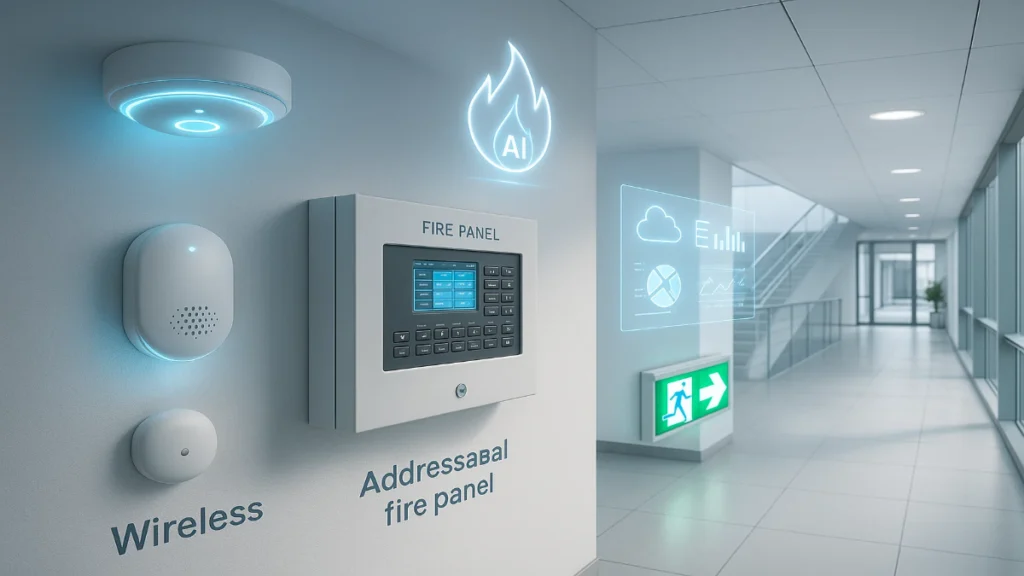
Fire safety is transforming faster than ever. With smart buildings, AI-driven systems and stricter compliance standards, the way buildings detect, respond to and prevent fire hazards is undergoing a major shift. By 2030, most commercial, residential and industrial buildings will rely on intelligent, future-ready systems instead of traditional manual solutions. This article explores seven major fire safety innovations expected to become standard worldwide by 2030. These trends are driven by new technologies, global safety regulations and manufacturers like GST (Gulf Security Technology) introducing more advanced fire detection and alarm solutions suitable for modern building needs. The goal is to help facility managers, building owners, consultants and safety engineers understand what’s coming and how to prepare. Why Fire Safety Is Changing So Rapidly Several major factors are influencing the shift toward smarter fire safety: By 2030, fire alarm systems will not just detect a fire, they will predict, communicate and automatically coordinate safety actions. 1. AI-Enabled Fire Detection Systems Traditional fire alarm systems respond only when smoke, heat or flames reach a certain threshold. But by 2030, AI-enabled detection will become standard in most buildings. How AI-Based Detection Works Artificial intelligence analyzes multiple data points in real time: AI can detect fire far earlier than humans or conventional detectors. Why This Will Be Standard by 2030 Role of GST GST already integrates intelligent algorithms in detectors and addressable systems. By 2030, AI-driven features will become more mature and universal. 2. Smart Addressable Panels With Predictive Maintenance Smart addressable panels have already replaced many conventional systems. But by 2030, they will go further with predictive maintenance, meaning they will detect internal faults before they cause device failures. Features You Will See Why This Matters Predictive maintenance helps facility teams fix issues before the system breaks down. This prevents: GST’s Contribution GST’s addressable panels already include real-time loop diagnostics and device tracking, setting the foundation for predictive maintenance standards expected by 2030. 3. Cloud-Based Fire Monitoring & Remote Management By 2030, buildings will no longer rely only on control rooms. Cloud-based monitoring will allow: All accessible from smartphones, tablets or any secure web dashboard. Why Cloud Fire Safety Will Become Mandatory GST and Cloud Integration Many GST systems are already compatible with centralized monitoring software. As cloud adoption grows, such systems will become standard in every large building. 4. Multi-Criteria Detectors for Zero False Alarms False alarms cause huge losses in industries, hotels, malls and hospitals. That’s why multi-criteria detectors, which analyze multiple fire indicators, will be common by 2030. These detectors combine: Together, these ensure accuracy with near-zero false alarms. Why All Buildings Will Use This GST’s Product Evolution GST already manufactures multi-sensor detectors used in airports, high-rise buildings and industries. Technology will only become more advanced by 2030. 5. Integrated Fire Safety with BMS, Access Control & IoT By 2030, fire safety will be fully integrated with other building systems through IoT, BACnet and Modbus protocols. In a fire event, systems will automatically: This creates a coordinated response, reducing confusion and human errors. Why Integration Will Be Universal GST’s Integration Capability GST addressable panels support integrations with BMS and IoT-based fire coordination, a feature that will be expected in all buildings by 2030. 6. Wireless Fire Detection Systems for Old & Complex Buildings Wireless fire alarm technology will grow massively due to the rising need for: Why Wireless Will Be Everywhere Installing wired loops is expensive and often impossible in: Wireless systems speed up deployment and allow fast reconfiguration. Future Wireless Innovations Expected by 2030 GST’s Technology Direction GST already produces wireless and hybrid alarm solutions. By 2030, these systems will meet the same standards as wired panels. 7. Voice Evacuation & Intelligent Emergency Messaging Voice evacuation will replace traditional sirens in most modern buildings by 2030. Why Voice Evacuation Is More Effective Instead of just a bell ringing, systems can announce: Advanced Features Coming by 2030 GST & Intelligent PA/VA GST’s addressable systems already integrate with PA/VA for smart evacuation, creating a strong foundation for the advanced voice-based solutions coming in the next decade. Fire Safety Data Will Drive Smarter Building Designs By 2030, fire safety systems will collect and analyze huge amounts of data that architects and safety engineers can use to: Data-driven fire engineering will reduce risks before a fire even happens. What Building Owners Should Do Today To prepare for 2030 fire safety standards, building owners and developers should start: Selecting brands like GST, known for reliable, standards-compliant fire systems can make upgrades smoother and more future-ready. The Future of Fire Safety Is Intelligent, Integrated & Predictive By 2030, every building from small offices to mega malls will depend on advanced, AI-enabled fire safety systems. These innovations will reduce risks, save costs and ensure faster emergency responses. The transformation is already underway. With manufacturers like GST continuously improving their technologies, buildings can now adopt smarter detection, faster communication and more automated evacuation processes. If you are designing, renovating or managing a property, investing in future-ready fire safety solutions today will ensure your building stays compliant, protected and technologically ahead in the coming decade. Read Also: How to Future-Proof Your Fire Alarm System Using GST Panels Read Also: How GST Panels Help You Get Fire NOC Faster
How to Future-Proof Your Fire Alarm System Using GST Panels
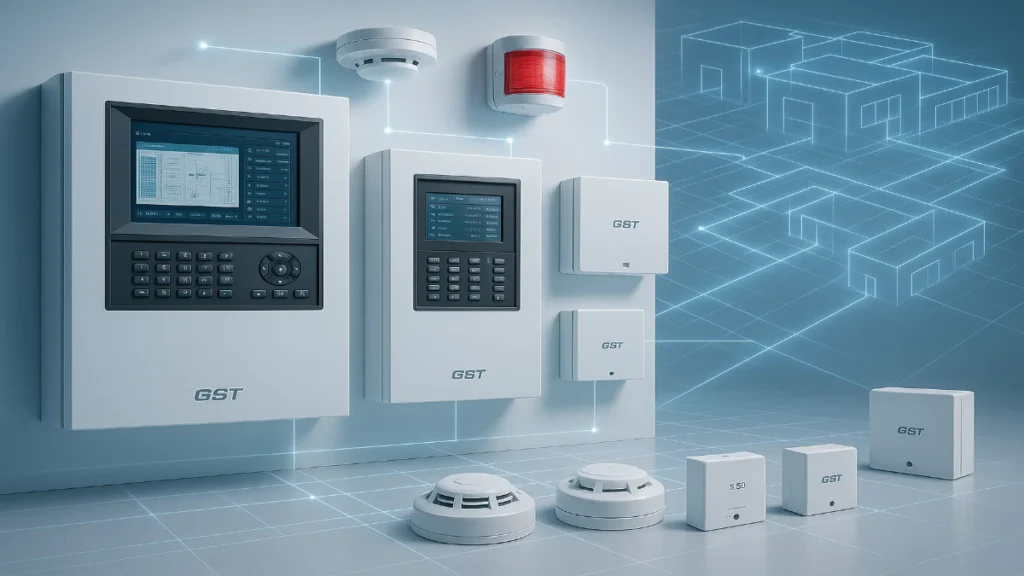
Fire safety is no longer limited to simple detection and alarm triggers. Modern buildings whether commercial, industrial, retail or residential need fire systems that can adapt, scale and remain reliable as infrastructure evolves. Technology changes fast and so do fire safety standards. That’s why future-proofing your fire alarm system has become essential for long-term safety and compliance. Among the available fire alarm solutions, GST (Gulf Security Technology) stands out for building future-ready, scalable and intelligent fire alarm panels. GST’s addressable and conventional systems are designed to support long-term growth, new device integrations, digital monitoring and industry certifications making them ideal for projects that demand safety today and flexibility tomorrow. This detailed guide explains how you can future-proof your fire alarm system with GST panels, what features matter the most and why the right system ensures lower maintenance costs and better compliance for years to come. Why Future-Proofing Your Fire Alarm System Matters Future-proofing means preparing your fire detection system to adapt to new requirements without major replacements. Here’s why it has become so important: 1. Rapid Technology Upgrades Fire alarm technology now includes smart communication, networking, AI-enabled analytics, cloud monitoring and more. If your panel cannot accommodate technology upgrades, you will be forced to replace the entire system later. 2. Evolving Building Layouts Renovations, expansions and interior redesigns are common in malls, hospitals, offices, hotels, warehouses and factories. A rigid fire alarm system cannot adjust to such changes. 3. Increasing Compliance Requirements Indian fire norms increasingly align with international standards. A flexible system like GST ensures continuous compliance with progressive rules. 4. Long-Term Cost Savings A future-ready fire system minimizes replacement costs, reduces downtime and avoids expensive rewiring during upgrades. 5. Better Safety Over Time A scalable and intelligent system ensures faster detection, quicker evacuation and more accurate alerts as new sensors or technologies become available. Why GST Panels Are Built for the Future GST has designed its panels with long-term adaptability in mind. Whether it’s addressable panels (like GST200, GST100, GST5000 Plus) or conventional panels, each system is engineered to remain relevant for years through modularity, flexible architecture and compatibility with wide product families. Here’s how GST ensures future-proofing: 1. Modular Architecture for Easy System Expansion The biggest advantage of GST panels is their modular architecture. You can add or remove modules based on site requirements, which reduces unnecessary costs. GST modules that support future expansion: Because GST panels are modular, a small system can grow into a multi-building setup without reinstalling everything. This is essential for malls, corporate offices, warehouses, IT parks, townships and manufacturing plants that expand over time. 2. Wide Compatibility with GST Detectors and Field Devices GST provides one of the most complete ecosystems of detectors, modules and notification devices. This makes future upgrades simple and cost-effective. Compatible GST Devices Include: Because all these devices come from the same brand ecosystem, integration becomes smooth and future expansion remains hassle-free. 3. Scalable Loop Capacity for Long-Term Growth GST addressable panels offer strong loop capacity to support a large number of devices: A single loop can cover multiple floors or sections and additional loops can be added as the building grows. 4. Smart Networking for Multi-Building Campuses Future-proofing is impossible without reliable networking. GST supports advanced networking that allows multiple panels to communicate across a large site. GST networking advantages: This is especially beneficial for IT parks, universities, malls, hotels, airports and industrial plants. 5. Built-In Diagnostics and Self-Testing Features Future-proof systems must be easy to maintain. GST panels reduce downtime through: These features allow technicians to identify issues early and reduce annual maintenance costs. 6. International Standards and Certifications A future-ready system must follow global standards for safety and compliance. GST products are compliant with: Using an internationally certified panel ensures your system remains compliant for decades even when laws evolve. 7. Integration-Friendly Design Future buildings focus on automation. GST supports integration with: This flexibility protects your investment as buildings adopt smart technologies. 8. Designed for Power Efficiency and Climate Reliability For India’s climate and frequent power fluctuations, GST offers: This ensures long-term durability and reduces the need for frequent hardware replacements. How to Future-Proof Your Building Using GST Panels Here are practical steps to build a system that stays reliable for 10–15 years or more. Step 1: Choose an Addressable System Over Conventional If your goal is future-readiness, addressable systems offer: GST’s addressable panels are ideal for sites that will grow over time. Step 2: Plan for Extra Loops and Extra Capacity Even if you don’t need them now, choose a panel with expansion capability. Example:If your building needs 2 loops today, choose GST200N which supports loop expansion. Step 3: Use Compatible GST Modules for Integrations Add I/O modules during commissioning to keep the system automation-ready. This allows easy integration later without panel replacement. Step 4: Add Loop Isolators for Better Fault Tolerance Isolators help the system continue working even if a section of the loop fails. This enhances long-term reliability. Step 5: Implement Networkable Architecture If you anticipate building expansion, select GST networking panels. You can connect multiple buildings without changing the entire system infrastructure later. Step 6: Invest in Certified Devices Always use EN54-certified GST detectors and modules. They last longer, reduce false alarms and support compliance for years. Step 7: Plan a Preventive Maintenance Schedule Future-proofing is not only about hardware but also long-term care. A yearly maintenance plan should include: GST panels support all these diagnostics smoothly. Top GST Panels Best Suited for Future-Proof Installations GST200N Addressable Panel GST5000 / GST5000 Plus GST100 Addressable Panel GST Conventional Panels Long-Term Benefits of a Future-Proof GST Fire Alarm System When you adopt GST, you secure your fire system for the next decade: Future-proofing your fire alarm system is not an optional strategy, it’s a smart, essential step for long-term safety, compliance and financial efficiency. GST panels provide all the essential features needed to build a forward-compatible fire alarm system, including scalability, integration, diagnostics, networking and global-certified reliability. Whether you’re installing a new