
Why Addressable Panels Are Becoming Popular in Factories
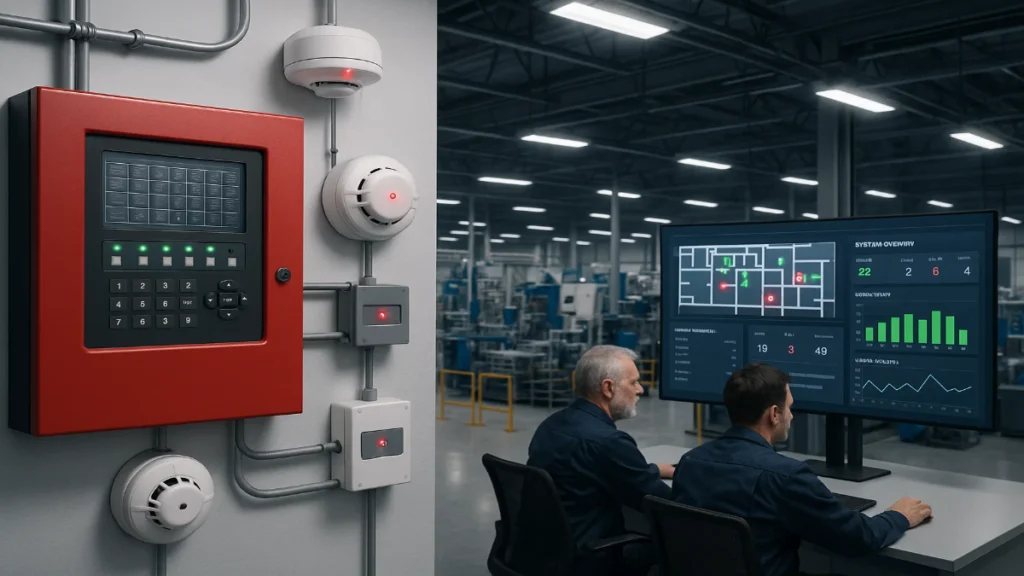
Industrial facilities have always operated in high-risk environments. With heavy machinery, high-energy electrical systems, chemicals and continuous production cycles, factories face a greater need for real-time fire protection than most other buildings. As industries continue to adopt automation and smarter systems, fire safety technology is evolving as well. One major shift happening across manufacturing plants is the growing preference for addressable fire alarm panels over traditional conventional systems. Factories are choosing addressable panels because they offer better accuracy, faster response, easier maintenance and long-term cost benefits. They also align with modern safety compliance standards and the increasing push toward Industry 4.0. In this detailed article, we’ll explore why addressable panels have become the new standard in industrial fire safety and how brands like GST (Gulf Security Technology) provide reliable, advanced options widely used across factories. Understanding the Basics: What Makes Addressable Panels Different? A traditional fire alarm system only tells you which zone has a fire. This is a big limitation in industries where zones can be large, complex and full of equipment. Addressable panels work differently.Every device like detector, manual call point, module has a unique address. So when a fire starts, the panel shows the exact device that triggered the signal. Simple Example In a factory, this difference saves time, reduces confusion and allows teams to respond precisely where needed. Why Factories Are Rapidly Shifting to Addressable Fire Alarm Panels Factories operate under high pressure to reduce downtime, maintain safety and follow strict compliance guidelines. Below are the key reasons why addressable panels are becoming the preferred choice across industries. 1. Real-Time Visibility and Pinpoint Accuracy Factories often have: In such environments, knowing the exact fire point is crucial. How Addressable Panels Help In industries like pharmaceuticals, textiles, chemicals, food processing and metal manufacturing, this level of detail prevents accidents from turning into disasters. 2. Faster Response Helps Reduce Downtime Every minute of downtime costs factories money. Traditional panels can delay response because the fire team must search the entire zone to identify the issue. Addressable systems speed up emergency response by: In an environment where downtime translates to financial loss, this is one of the biggest reasons factories prefer addressable panels. 3. Intelligent Detection Minimizes False Alarms False alarms interrupt production. They force evacuation, cause unnecessary panic and sometimes stop machinery that must not shut down abruptly. Addressable panels use intelligent algorithms that: Brands like GST offer multi-criteria detectors as informational examples, which combine optical and heat sensing to reduce false alarms, extremely important in dusty or high-temperature environments. 4. Better Safety Compliance and Audit-Ready Reporting Factories must comply with: Addressable systems make compliance simpler through: Most modern addressable panels, including systems provided by GST, generate detailed logs that help factories during audits without spending hours collecting data manually. 5. Scalable and Future-Ready for Expanding Factories Industrial facilities grow over time. Production lines expand, new sections open and additional machinery gets installed. Conventional panels often struggle with scalability because they require rewiring entire zones. Why Addressable Panels Work Better for Expansion This scalability is a major reason factories planning long-term investments prefer addressable solutions. 6. Reduced Maintenance Time and Cost Factories operate non-stop, which means fire systems must stay functional without disruptions. How Addressable Panels Simplify Maintenance Instead of shutting down large zones or spending hours searching, technicians directly address the problem. This saves time and reduces workforce costs. 7. Integration With Modern Industrial Automation (Industry 4.0 Ready) Factories today are moving toward smart, automated ecosystems. A fire alarm system is no longer an isolated unit, it must work with: Addressable panels support seamless integration because they are software-friendly and communication-ready. As an informational example, GST’s addressable panels support networking and integration interfaces, allowing factories to centralize control and improve emergency response workflows. 8. Early Warning and Prediction-Based Monitoring Some addressable systems offer advanced features such as: Factories that deal with flammable chemicals, paper products or electrical machinery benefit greatly from such predictive analysis. These features help identify risks before they turn into a fire, making the workplace safer and more secure. 9. Better Reliability in Harsh Industrial Environments Factories expose devices to: Addressable systems are built to withstand industrial conditions better than traditional ones because: These features make addressable technology more reliable in demanding environments. 10. Long-Term Cost Efficiency While conventional systems may appear cheaper initially, they become more expensive in the long run due to: Addressable panels reduce these long-term costs through: For factories operating on tight budgets and long-term planning, addressable panels prove to be a better investment. Where Addressable Panels Fit Best in Factories Addressable systems enhance safety in almost every industrial area, including: 1. Production Lines Machinery and equipment generate heat, sparks, and electrical loads that require precise monitoring. 2. Hazardous Storage Zones Areas with chemicals, flammable liquids or raw materials benefit greatly from fast, accurate fire detection. 3. Electrical Rooms Addressable heat detectors help identify overheating panels, transformers and motors. 4. Warehouses and Loading Areas Large spaces require zone-free detection for faster emergency response. 5. Control Rooms Integration with other automation systems improves incident handling. 6. High-Ceiling Manufacturing Halls Special sensors offer better performance in complex spatial layouts. Why Many Factories Use GST Addressable Panels Factories often choose GST’s addressable solutions because they offer: Challenges Factories Solve by Switching to Addressable Panels Switching from conventional to addressable systems solves major industrial safety challenges: Addressable systems help industrial teams work more efficiently and keep production running smoothly while ensuring worker safety. Future Trends: Why Addressable Technology Will Continue to Dominate As industries continue to adopt smart technologies, addressable fire alarm systems will play an even bigger role. Future trends include: Factories looking for long-term safety infrastructure already see addressable panels as the foundation for future-ready fire protection. Note: Addressable fire alarm panels are becoming popular in factories because they offer precision, speed, scalability and long-term efficiency, qualities essential in modern industrial environments. Their ability to integrate with automation systems, reduce false alarms and support predictive monitoring makes them a superior choice
The Most Cost-Efficient Fire Safety Setup for 2025
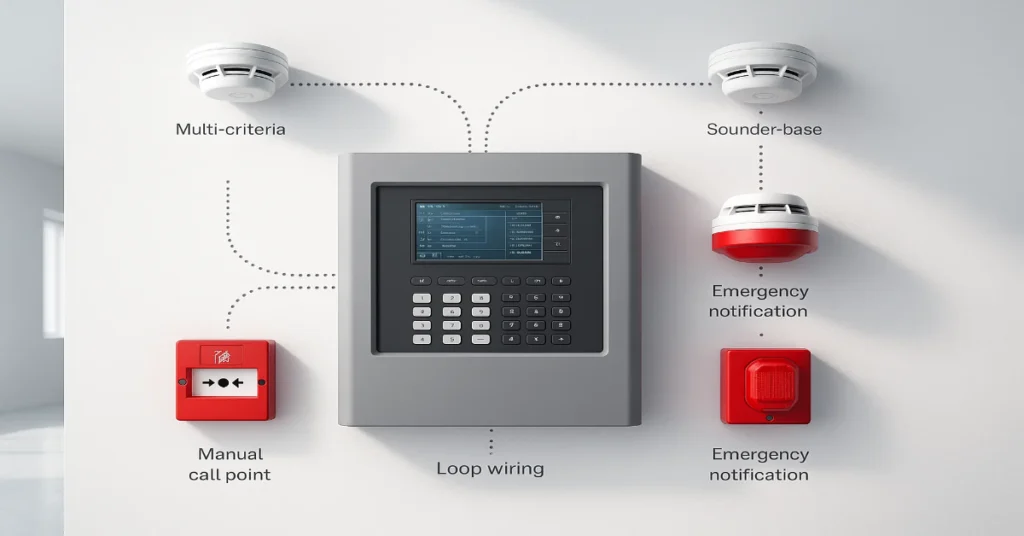
Fire safety standards are getting stricter, technologies are evolving faster and building owners today want systems that protect people without increasing long-term operational costs. As 2025 begins, one question rises in almost every commercial, industrial and residential project: “What is the most cost-efficient fire safety setup that actually works in the long run?” Cost-efficiency is no longer about choosing the cheapest equipment. It is about choosing a system that reduces installation cost, minimizes false alarms, lowers maintenance expenses, avoids downtime and meets compliance requirements without last-minute spending. This detailed guide breaks down the smartest and most financially sustainable fire safety setup for 2025, explains how modern technologies reduce costs and highlights where brands like GST (Gulf Security Technology) fit in. Why Cost-Efficiency Matters More Than Ever in 2025 Buildings today are becoming more complex, energy-efficient and automated. Fire risks come not only from flames but also from: At the same time, project budgets are shrinking and operation teams are under pressure to reduce recurring service costs. A cost-efficient fire safety setup helps in: ✔ Lower installation expenses Better architecture, optimized wiring and modular systems reduce project cost. ✔ Minimum false alarms False alarms waste manpower, cause panic and invite penalties in many cities. ✔ Low maintenance overheads A system that is easy to test and service cuts yearly service cost drastically. ✔ Faster issue detection Modern panels identify exactly where the fault is, saving hours of manpower. ✔ Compliance without extra spending When a system meets EN standards, local regulations and NOC requirements, owners avoid repeated modification costs. ✔ Long-term savings A high-quality system survives for 10–15 years, reducing replacement frequency. In short, a cost-efficient setup is not basic or cheap, it is smart, scalable and low-maintenance. Core Components of a Cost-Efficient Fire Safety Setup To build a financially sustainable fire protection system, you need a well-balanced combination of: Let’s break down each element and understand how to make cost-efficient choices. 1. Choose Addressable Systems Over Conventional Systems Why Addressable is More Cost-Efficient in 2025 Initially, addressable panels seem costlier, but their lifetime savings are significantly higher because: ✔ Faster installation due to loop wiring Addressable devices run on a loop instead of individual wiring, reducing cable costs. ✔ Pinpoint identification The system shows the exact detector that triggered an alarm.Result: zero time wasted searching floors and rooms. ✔ Lower troubleshooting cost Faults, wiring issues, and device failures are identified automatically. ✔ Scalable as your building grows You can add devices, floors, or zones without replacing the entire panel. ✔ Minimum false alarms Addressable detectors are more intelligent and less sensitive to dust, moisture and small disturbances. Note: Brands like GST include addressable panels widely used in commercial and industrial projects because of their stable loop architecture and large device support. 2. Use Multi-Criteria Detectors Instead of Single-Sensor Devices Traditional smoke detectors easily give false alarms due to: Multi-criteria detectors analyze a combination of smoke, heat and sometimes CO levels. This makes them more reliable and more cost-efficient. Benefits of Multi-Criteria Detectors Over 10 years, a multi-sensor detector saves several times its cost in unwanted alarm prevention. 3. Modular Fire Alarm Panels for Future-Proof Savings A modular panel allows you to add cards, loops and communication modules only when required. Cost Advantages This is especially beneficial for: Note: GST addressable panels are known for their modular structure, enabling cost-efficient scalability. 4. Use Loop Isolators to Prevent Entire-System Failure Loop isolators are small devices that isolate short circuits.Without them, a single line fault can shut down the entire system. Cost-Saving Benefits For large buildings, loop isolators are essential and save money over time. 5. Choose Sounder-Base Detectors for Faster Installation Installing separate sounders, detectors and bases increases: Sounder-base detectors combine these into one device. Advantages Modern projects prefer these for time and labor savings. 6. Use Addressable Manual Call Points With LED Indicators Addressable MCPs provide accurate signaling, help in faster emergency communication and reduce inspection effort. Cost-Efficiency Their LED indicators also help easily identify active units. 7. Invest in Long-Life Batteries and Smart Power Management Many people try to save cost by choosing inexpensive batteries, but these end up failing quickly. In 2025, the best cost-efficient approach is: Benefits UPS-backed fire panels also reduce load on batteries and extend their life. 8. Integrate Fire and Building Automation When fire safety connects with building automation, the system becomes more efficient and reduces manual work. Examples Cost Advantage This reduces the need for separate manual interventions and prevents property damage during an emergency. 9. Remote Monitoring for Reduced Manpower Cost In 2025, remote monitoring is one of the biggest cost savers. Central monitoring software allows: When issues are identified early, on-site visits reduce by 40–50%. Note: Brands like GST support various remote monitoring tools that improve system oversight without increasing cost. 10. Regular Preventive Maintenance to Avoid Heavy Repairs Preventive maintenance avoids large breakdowns and extends life. A cost-efficient schedule includes: Smart panels help automate these reminders, reducing the workload on teams. The Most Cost-Efficient Setup for 2025 (Complete Formula) Below is a practical configuration that balances cost, safety and long-term performance: ✔ Addressable fire panel with modular expansion Reduces wiring and future upgrade cost. ✔ Multi-criteria smoke/heat detectors Lower false alarms = lower service bills. ✔ Sounder-base detectors or integrated notification devices Simplifies wiring and installation. ✔ Addressable manual call points with indicators Ensures faster emergency response. ✔ Loop isolators at correct intervals Protects the system and reduces repair cost. ✔ Long-life SMF batteries + smart charging Less frequent replacements, better reliability. ✔ Remote monitoring software Lower manpower cost, faster detection of issues. ✔ Clean agent suppression (optional based on building type) Ideal for server rooms, labs, or electrical spaces. ✔ Regular preventive maintenance Ensures devices last long and stay compliant. This combination is the most cost-efficient because it reduces: Where Brands Like GST Fit In GST (Gulf Security Technology) is widely used in many markets because the brand manufactures: Their systems are often selected in cost-conscious projects because of