
Why GST Fire Alarm Panels are the Most Reliable Panels in India
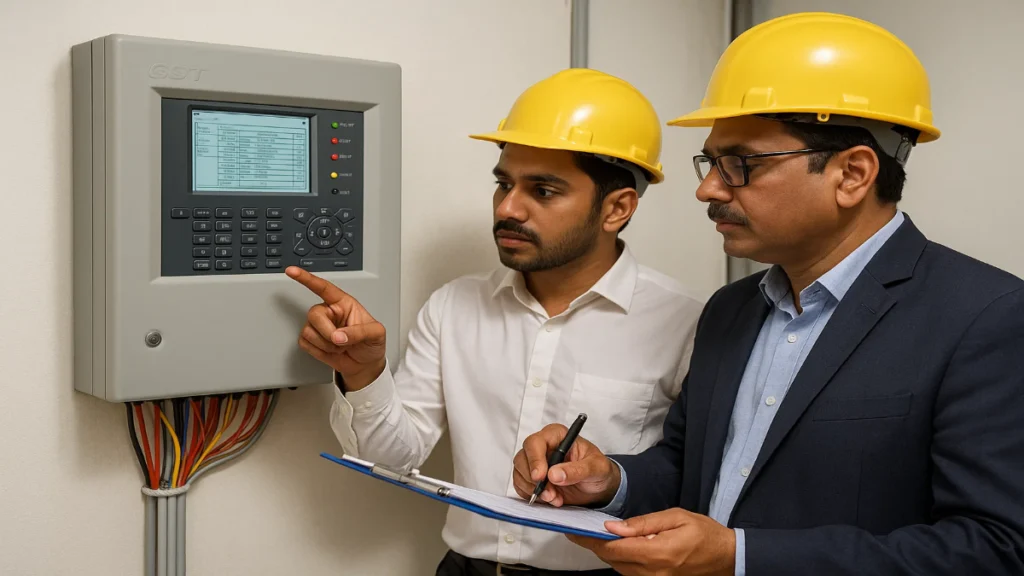
Reliability in fire alarm systems is not a feature; it is a responsibility. In a country like India, where buildings range from high-rise commercial towers to densely populated residential complexes and large industrial facilities, the performance of a fire alarm panel can directly influence life safety, property protection and business continuity. A reliable fire alarm panel must detect threats early, communicate alerts clearly, integrate with other safety systems and continue operating even in challenging conditions. GST Fire Alarm Panels have steadily built a reputation across India for consistently meeting these expectations with technical excellence. Used widely in airports, hospitals, IT parks, factories, hotels and infrastructure projects, GST panels are often chosen not only for compliance but for long-term dependability. This article explains in detail why GST Fire Alarm Panels are among the most reliable fire alarm panels in India, covering their technology, design philosophy, compliance, performance and real-world suitability. Understanding Reliability in Fire Alarm Panels Before examining GST panels specifically, it is important to define what reliability means in the context of fire alarm systems. Reliability is the ability of a system to perform its intended function accurately and continuously under all expected operating conditions. A reliable fire alarm panel should detect fire events quickly without false alarms, function continuously during power fluctuations, communicate accurately with field devices and provide clear information to operators. It should also be easy to maintain, scalable for future expansion and supported by a strong service network. GST Fire Alarm Panels are engineered with all these factors in mind. Proven Brand Presence in the Indian Fire Safety Market GST, also known as Gulf Security Technology, has established a strong footprint in the Indian fire safety industry. Over the years, GST panels have been deployed in thousands of projects across different sectors. This widespread adoption is not accidental. Consultants, system integrators and end users consistently select GST because of its stable performance and predictable behaviour in real-world conditions. In India, where environmental factors such as dust, humidity, temperature variations and power quality issues are common, fire alarm panels must be robust. GST panels are designed to operate reliably despite these challenges, making them suitable for Indian operating environments. Advanced Addressable Technology One of the key reasons behind the reliability of GST Fire Alarm Panels is their advanced addressable technology. Addressable systems allow each device, such as smoke detectors, heat detectors and manual call points, to have a unique identity. This technology enables precise event identification. When an alarm or fault occurs, the panel displays the exact device location, reducing response time and minimising confusion. Accurate identification is critical during emergencies, and GST panels excel in delivering clear, actionable information. Addressable architecture also improves system stability. The panel continuously monitors device communication, detects faults early and isolates issues before they escalate into system failures. Stable Performance with Low False Alarm Rates False alarms are one of the biggest concerns in fire alarm systems. Frequent false alarms reduce trust in the system, disrupt operations and can lead to unnecessary evacuations. GST Fire Alarm Panels are known for their stable detection logic and compatibility with intelligent detectors. GST panels use refined algorithms to interpret signals from detectors. This allows them to differentiate between real fire conditions and environmental disturbances such as dust, steam or minor temperature changes. As a result, GST systems deliver dependable detection while significantly reducing false alarms. This reliability is especially valuable in sensitive environments such as hospitals, hotels, data centres and commercial buildings. Compliance with Indian and International Standards Reliability is closely linked to compliance. GST Fire Alarm Panels are designed and tested to meet relevant Indian and international fire safety standards. Compliance ensures that panels perform consistently under defined test conditions and meet safety benchmarks. GST panels align with standards commonly referenced in India, including IS and EN certifications, depending on the model and application. This compliance provides confidence to consultants, approving authorities and building owners. Certified systems also simplify project approvals and audits, reducing delays and ensuring smooth commissioning. Robust Hardware Design Hardware reliability is a major factor in fire alarm panel performance. GST panels feature durable enclosures, high-quality electronic components and well-engineered power supplies. The panels are designed to handle voltage fluctuations, which are common in many parts of India. Built-in protection circuits help prevent damage from power surges, short circuits and electrical noise. This hardware resilience contributes to long-term system stability and reduced downtime. Additionally, GST panels are designed for continuous operation, ensuring uninterrupted monitoring even during extended use. Intelligent System Monitoring and Diagnostics GST Fire Alarm Panels continuously monitor system health. They track device communication, loop integrity, power status and internal panel conditions. Any abnormality triggers a fault indication, allowing maintenance teams to address issues proactively. This intelligent diagnostics capability improves reliability by preventing minor issues from becoming major failures. Early fault detection reduces system downtime and ensures that the fire alarm system remains operational at all times. Clear fault messages displayed on the panel help technicians quickly identify and resolve problems without guesswork. Scalability and System Flexibility A reliable fire alarm panel must adapt to changing building requirements. GST panels are designed with scalability in mind. They support multiple loops, a large number of devices and networked configurations for large or complex sites. This flexibility allows buildings to expand their fire alarm systems without replacing the entire panel. Scalability ensures long-term reliability by accommodating future needs while maintaining consistent performance. Networked GST panels also provide redundancy, which enhances reliability in large installations such as airports, campuses and industrial plants. User-Friendly Interface and Clear Information Human interaction plays an important role in system reliability. During emergencies, operators must understand panel information quickly. GST Fire Alarm Panels feature intuitive interfaces, clear displays and logical menu structures. The panels present alarms, faults and system status in a clear and readable format. This reduces operator errors and ensures faster response times. A system that communicates clearly is inherently more reliable during critical situations. Seamless Integration with Other Safety Systems GST Fire Alarm
GST Fire Alarm Cost Estimation for New Construction Projects
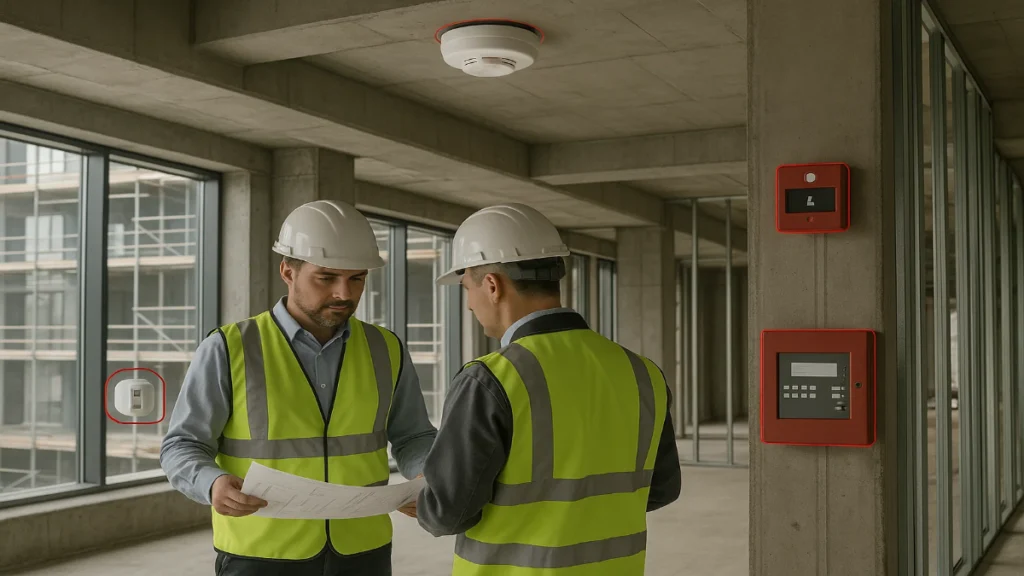
In modern construction planning, fire alarm systems are designed as part of the building’s core life-safety infrastructure rather than an auxiliary service. Their layout, capacity and system integration directly influence statutory approvals, operational reliability and long-term maintenance efficiency. For this reason, accurate cost estimation of a GST fire alarm system during the early design phase is essential for new construction projects. A well-calculated estimate aligns system design with regulatory requirements, prevents scope changes during execution and ensures predictable project budgeting throughout the construction lifecycle. Why Fire Alarm Cost Estimation Matters in New Construction Fire alarm systems are among the first safety services reviewed by fire authorities before granting approvals and occupancy certificates. In new construction projects, inaccurate estimation often leads to redesign, additional material procurement and installation delays. Unlike retrofit installations, new construction offers the advantage of planned routing, optimal device placement and system scalability. However, these advantages only translate into cost efficiency when estimation is done correctly at the planning stage. Proper estimation ensures: Understanding GST Fire Alarm Systems in Construction Planning GST fire alarm systems are commonly specified in new construction projects because they support both conventional and addressable architectures. Most medium to large projects prefer addressable or intelligent addressable systems due to better fault diagnostics and precise fire location identification. From a planning perspective, GST systems allow designers to: These characteristics directly affect how cost estimation is structured for new buildings. Key Components That Define Fire Alarm Cost Accurate estimation begins with understanding the major system components and their role in the overall budget. Fire Alarm Control Panel The control panel acts as the system’s command centre. Its cost depends on loop capacity, device limit, networking capability and redundancy requirements. New construction projects typically select panels with spare capacity to support future expansion. Automatic Detectors Smoke detectors, heat detectors and multi-sensor detectors account for the largest portion of equipment cost. Their quantity depends on floor area, ceiling height, occupancy classification and risk zones defined by fire regulations. Manual Call Points Manual call points are installed at exits, staircases and circulation areas. Their cost impact increases in buildings with multiple floors and escape routes. Notification Devices Sounders, hooters and visual alarm devices ensure occupant alerting during emergencies. The number and type depend on ambient noise levels and building usage. Interface Modules Modules enable communication between the fire alarm system and other building services, such as: New construction projects often require more modules due to higher integration requirements. Cabling and Installation Accessories Fire-rated cables, conduits, junction boxes and mounting accessories form a significant cost component, especially in high-rise or large-footprint projects. Factors That Influence GST Fire Alarm Cost Estimation No single cost figure applies to all construction projects. Several technical and regulatory factors influence the final estimate. Building Size and Height Larger buildings require more devices, longer cable runs, and higher-capacity panels. High-rise structures may also require zoning and networking between panels. Occupancy Type Fire alarm requirements differ for offices, hospitals, hotels, industrial plants and residential complexes. High-risk occupancies demand additional detection and control logic. Regulatory Compliance Requirements Local fire authority guidelines determine detector spacing, alarm audibility, redundancy and integration needs. Compliance directly impacts material quantity and system design. System Architecture Selection Addressable systems have higher initial costs than conventional systems but offer better scalability and lower long-term maintenance costs. Most new construction projects choose addressable systems for this reason. Integration Scope Integration with building management systems, public address systems, or access control increases both hardware and programming costs. Approximate Cost Range for New Construction Projects While exact pricing depends on project specifics, cost estimation typically follows building scale and complexity. Small commercial buildings usually require lower investment due to limited device count and simpler layouts. Mid-scale residential and commercial projects fall into a moderate range because of multi-floor coverage and integration requirements. Large commercial complexes, hospitals, malls and industrial facilities require higher budgets due to extensive detection coverage, redundancy and system networking. These estimates generally include equipment supply, installation, testing and commissioning but may exclude statutory approval fees. Structured Cost Estimation Process A professional estimation process ensures technical accuracy and budget control. Review of Architectural and MEP Drawings Designers study floor plans, ceiling layouts and electrical drawings to identify device locations and routing paths. Device Quantity Calculation Each floor is analysed to determine the required number of detectors, call points, sounders and modules based on coverage norms. Panel and Loop Planning Panel capacity is selected based on total device count and future expansion needs. Cable Length Estimation Cable routes are mapped to calculate fire-rated cable quantities accurately. Installation and Commissioning Cost Assessment Labour costs include installation, testing, programming and system handover documentation. Cost Efficiency Advantages in New Construction New construction projects benefit from optimised fire alarm planning because: When planned correctly, this results in lower installation labour and better system aesthetics. Long-Term Cost Considerations Initial installation cost is only one part of the financial picture. Addressable fire alarm systems reduce troubleshooting time, which lowers maintenance expenses. System scalability prevents costly panel replacement when buildings expand. Energy-efficient panels also reduce operational costs over time. Common Errors in Fire Alarm Cost Estimation Many projects underestimate detector quantity by ignoring ceiling height and room usage. Others fail to include interface modules during initial planning. Excluding fire-rated cabling to reduce upfront cost often leads to compliance failure and reinstallation expenses. Another common mistake is selecting panels without spare capacity, resulting in early system upgrades. How to Optimise Fire Alarm Budget Without Compromising Compliance Early involvement of fire consultants ensures alignment with regulations. Coordinating fire alarm layouts with electrical and HVAC teams reduces conflicts and labour costs. Selecting scalable panels and standardised devices improves long-term cost efficiency. Clear documentation supports faster approvals and avoids redesign delays. Note: GST fire alarm cost estimation for new construction projects is a technical planning exercise that directly affects compliance, budgeting and long-term system performance. Treating fire alarm systems as core infrastructure rather than an afterthought ensures smoother execution and predictable costs. By understanding system components, regulatory