
Reliable and Cheapest Fire Alarm Panel Replacement for Legacy Systems
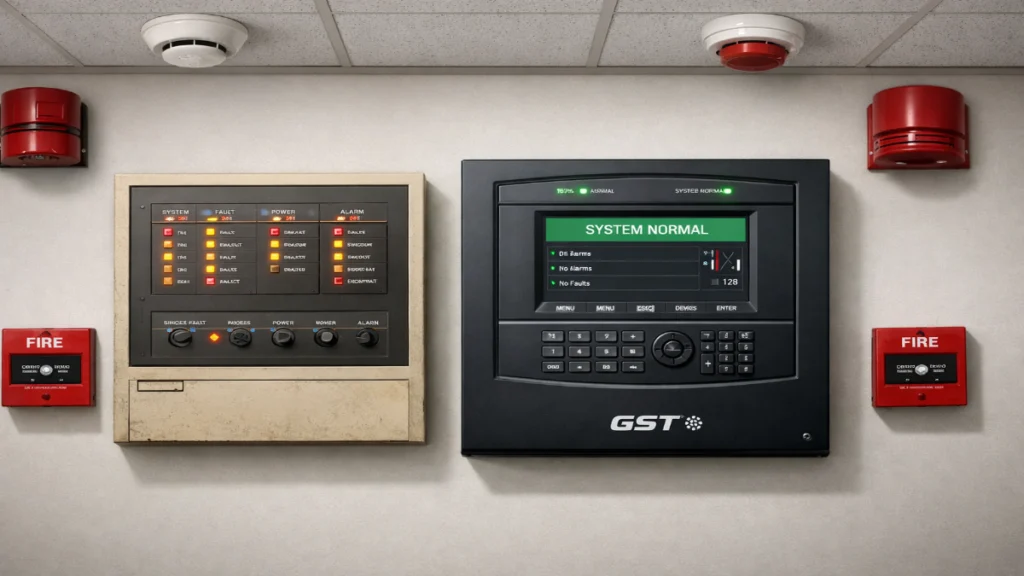
Legacy fire alarm systems are still active in thousands of buildings across India and other developing markets. While these systems were reliable in their time, they now face significant challenges, including component failures, a lack of spares, false alarms, compliance gaps, and high maintenance costs. For building owners, facility managers, and consultants, the biggest question is: What is the most reliable and cost-effective fire alarm panel replacement for legacy systems, without changing everything? This article answers that question in detail and explains why GST Fire Alarm Systems offer one of the cheapest, most reliable and future-ready upgrade paths for both conventional and addressable legacy installations. Understanding Legacy Fire Alarm Systems What Is a Legacy Fire Alarm System? A legacy fire alarm system typically refers to: These systems are commonly found in: Most legacy installations use either: Why Fire Alarm Panel Replacement Becomes Necessary Replacing only field devices is rarely enough. In most cases, the fire alarm panel is the first component that fails or becomes obsolete. Common Problems With Legacy Panels From a safety and compliance perspective, continuing with an outdated panel is a risk. The Biggest Challenge: Budget Constraints Most projects fail at one critical point—cost. Building owners want: This is where choosing the right brand and right panel architecture becomes essential. Why GST Is the Best Choice for Legacy Panel Replacement GST (Gulf Security Technology) has become the preferred brand for replacing legacy fire alarm panels due to its cost efficiency, backward compatibility and long-term reliability. Key Reasons GST Stands Out Cheapest Does Not Mean Compromising Safety Many people assume “cheapest” equals “low quality.” That is not true when the system is engineered for replacement projects. GST panels are designed to: This makes GST one of the most economical yet dependable options for legacy upgrades. Replacing Conventional Legacy Panels With GST When You Should Choose a Conventional Replacement If your building has: Then, replacing the old system with a modern conventional fire alarm panel is often the smartest move. Benefits of GST Conventional Panels This approach is ideal for: Upgrading From Conventional to Addressable – The Smart Hybrid Approach Many legacy buildings want future readiness, but cannot afford a full replacement. GST offers scalable solutions that allow migration from conventional to addressable fire alarm panel architecture. Why This Matters This phased upgrade strategy significantly reduces capital expenditure. Replacing Legacy Addressable Panels With GST The Addressable Replacement Advantage Older addressable systems often use: Replacing them with a modern GST fire alarm system provides immediate operational benefits. Key Benefits GST addressable panels are particularly suited for: Compatibility With Existing Field Devices Can You Reuse Old Detectors? In many cases, yes, partially. Over time, you can replace devices with: This phased device replacement strategy drastically lowers initial costs. Reliability That Reduces Long-Term Costs A cheap system that fails often is not cheap at all. GST panels are known for: This reliability directly translates into: Compliance With Current Fire Safety Standards Modern fire safety norms demand: GST panels comply with: This ensures smooth approvals during: Why Consultants Recommend GST for Replacement Projects Fire consultants and system integrators prefer GST because: Most importantly, GST allows consultants to balance safety, performance and budget, a critical factor in retrofit projects. Final Thoughts Replacing a legacy fire alarm panel does not have to be expensive, complex or risky. With the right approach and the right brand, you can: GST Fire Alarm Systems provides one of the most reliable and cheapest fire alarm panel replacement solutions for legacy systems, without compromising on performance or compliance. Whether you choose a conventional fire alarm panel for simplicity or an addressable fire alarm panel for advanced control, GST offers a proven, scalable and budget-friendly path forward. Read Also: Why Addressable Systems Are Preferred in Modern Construction Read Also: The Hidden Challenges of Upgrading Fire Alarm Systems in Occupied Buildings
The Hidden Challenges of Upgrading Fire Alarm Systems in Occupied Buildings
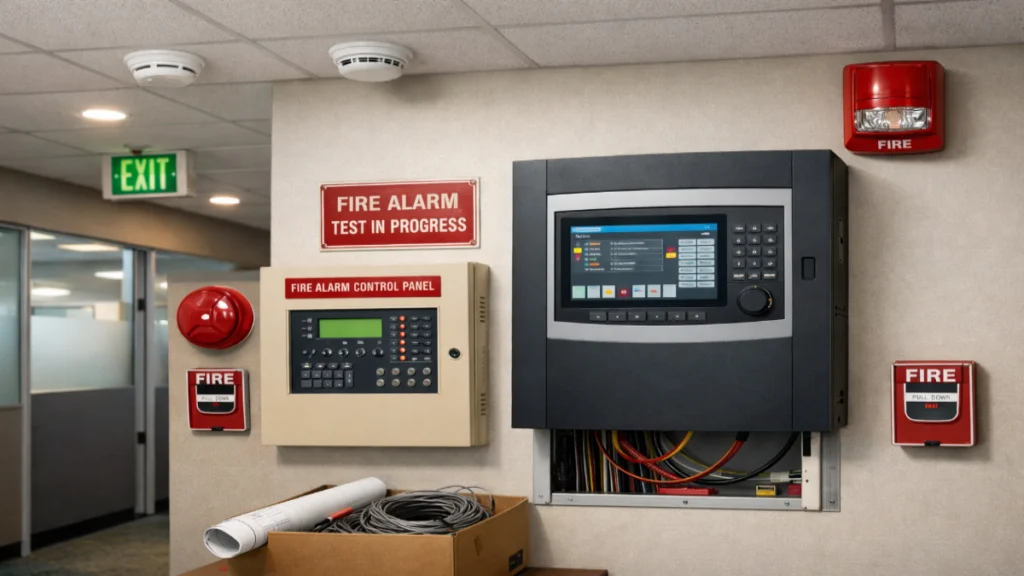
Upgrading a fire alarm system is never a simple task. The complexity increases significantly when the building is occupied and operational. Hospitals, hotels, offices, malls, factories, educational institutions and residential complexes all face a common dilemma: how to modernise fire safety infrastructure without disrupting daily activities or compromising occupant safety. While upgrading fire alarm systems is essential to meet evolving safety standards, many facility managers underestimate the hidden challenges involved. From technical compatibility issues to occupant coordination and compliance risks, these challenges can impact timelines, budgets and safety outcomes if not managed correctly. This article explores the real-world challenges of upgrading fire alarm systems in occupied buildings, explains how to overcome them and highlights why choosing a reliable and future-ready solution like a GST fire alarm system can make the entire process smoother, safer and more cost-effective. Why Fire Alarm System Upgrades Are Necessary Before diving into challenges, it is important to understand why upgrades become unavoidable: Older systems, especially those based on a conventional fire alarm panel, often struggle to meet today’s performance, diagnostics and scalability requirements. Challenge 1: Ensuring Life Safety During the Upgrade The Biggest Concern: Continuous Fire Protection When a building is occupied, fire protection cannot be switched off. Even a short downtime can put lives and property at risk. Hidden risks include: Practical Solution Modern systems like a GST fire alarm system support phased migration, allowing installers to keep sections active while upgrading others. Advanced addressable fire alarm panel architecture enables partial commissioning without shutting down the entire building. Challenge 2: Disruption to Occupants and Daily Operations Noise, Access and Schedule Conflicts Upgrading involves: In occupied buildings, this can lead to: How to Minimise Disruption GST systems are designed with installer-friendly configuration tools, reducing on-site time and disruption. Challenge 3: Compatibility With Existing Infrastructure Mixing Old and New Technology Many buildings attempt partial upgrades, which creates compatibility issues between: For example: Smart Upgrade Strategy A flexible addressable fire alarm panel from GST supports backward compatibility options, hybrid configurations and smooth transition from a conventional fire alarm panel setup to a fully addressable system. Challenge 4: Managing False Alarms During Transition Why False Alarms Increase During Upgrades False alarms in occupied buildings can: How Advanced Systems Help Modern addressable detectors offer: GST detectors are engineered to maintain high reliability even during upgrade phases. Challenge 5: Compliance With Fire Codes and Local Regulations Regulations Do Not Pause for Upgrades Even during system replacement, buildings must comply with: Failure to comply can result in: Compliance-Friendly Design GST systems are globally certified and widely accepted by fire authorities. Their modular design makes it easier to maintain compliance at every stage of the upgrade. Challenge 6: Space Constraints in Existing Control Rooms Older Panels vs Modern Requirements Legacy control rooms often: New systems require: GST Advantage GST panels feature compact, modular designs, making them ideal replacements without major civil modifications, critical in occupied buildings. Challenge 7: Training and Familiarity for Maintenance Teams New Technology, Old Habits Facility teams used to older systems may struggle with: This can lead to: User-Friendly Systems Make a Difference GST fire alarm systems offer: This reduces learning curves and improves system confidence. Challenge 8: Budget Overruns and Hidden Costs Why Costs Increase Unexpectedly Common cost drivers include: Long-Term Cost Control Although initial costs may appear higher, GST systems deliver: This makes them a smart financial choice for occupied buildings. Challenge 9: Upgrading Detectors Without Affecting Coverage Detector Replacement Risks Replacing old devices can: Smart Device Strategy Using GST addressable detectors and conventional detectors allows: Challenge 10: Integration With Other Building Systems Modern buildings often require fire alarm systems to integrate with: Older panels lack these capabilities. GST systems support open protocols and standard interfaces, ensuring smooth integration without complex custom solutions. Addressable vs Conventional During Upgrades Conventional Fire Alarm Panel Limitations Addressable Fire Alarm Panel Benefits Most occupied-building upgrades eventually transition from a conventional fire alarm panel to an addressable fire alarm panel for these reasons. Why GST Fire Alarm Systems Are Ideal for Occupied Buildings A GST fire alarm system stands out because it is designed for real-world conditions where zero downtime is critical. Key Advantages These features make GST a trusted choice for hospitals, hotels, IT parks, airports and commercial complexes. Best Practices for Successful Upgrades in Occupied Buildings Upgrading fire alarm systems in occupied buildings is a complex process filled with hidden challenges that go far beyond equipment replacement. Safety risks, operational disruption, compliance demands and budget control all require careful planning and the right technology. Choosing a future-ready solution like a GST fire alarm system, supported by modern addressable fire alarm panel architecture, reliable addressable detectors and flexible upgrade options, helps overcome these challenges with confidence. When life safety is involved, shortcuts are not an option. A well-planned upgrade ensures continuous protection, regulatory compliance and peace of mind for both occupants and building owners. Read Also: Fire Alarm Failures That Force Immediate System Replacement Read Also: Why GST Fire Alarm Systems Are a Long-Term Investment