
Fire Alarm System Design Trends Engineers Are Adopting
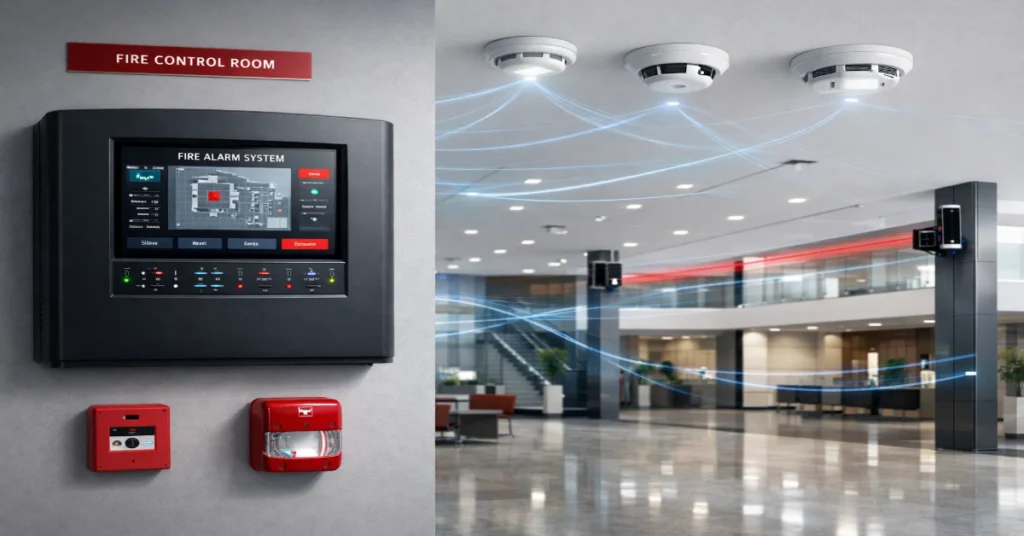
Fire alarm systems have evolved dramatically over the past decade. Today’s design approaches focus not just on detecting fire, but on intelligence, connectivity, efficiency and safety for people and property. Engineers across industries are adopting new technologies and frameworks that improve accuracy, reduce false alarms and integrate seamlessly into modern buildings and smart infrastructure. In this deep-dive article, we will explore the latest trends in fire alarm system design, explain why they matter, and how engineers are using them to build smarter safety systems. By the end, you will have a clear understanding of key design principles shaping fire alarm engineering in 2025 and beyond. 1. Intelligent & AI-Driven Detection Systems Artificial intelligence (AI) plays a transformative role in fire alarm design today. Instead of simply reacting to smoke or heat, intelligent systems analyse patterns over time and differentiate between harmless signals (like cooking smoke) and genuine emergencies. Why This Matters How It Works Modern fire panels equipped with AI use machine learning models to interpret data from multiple sensors and historical patterns. These systems learn what is “normal” in a space and only signal an alarm when multiple factors match real fire conditions. This shift toward proactive detection increases safety and dovetails with smarter maintenance strategies, as engineers can receive early notifications of failing components or sensors. 2. Internet of Things (IoT) & Connected Infrastructure In 2025, connectivity is no longer optional for fire alarm systems; it’s standard. IoT integration connects detection units, panels and control systems across facilities. Core Advantages IoT-enabled fire alarm networks allow sensors to communicate with each other and other building systems. This deep connectivity supports predictive maintenance, intelligent alerts and advanced data analytics, giving engineers a holistic view of building safety. 3. Wireless & Hybrid Fire Alarm Systems Wireless technology is no longer seen as a workaround; it’s a trend that offers flexibility, scalability and cost savings. Why Designers Prefer Wireless In hybrid systems, wireless detectors work alongside wired backbone infrastructure to offer reliability where needed while also benefiting from wireless flexibility. 4. Multi-Sensor Detection Technologies Traditional smoke detectors rely on a single input, typically smoke or heat. Modern designs use multi-sensor detection technologies that combine signals such as smoke, heat, carbon monoxide (CO) and more. Benefits of Multi-Sensor Systems By analysing a range of variables simultaneously, multi-sensor detectors enhance system intelligence, accuracy and reliability, especially in complex environments like kitchens, factories or warehouses. 5. Advanced Detection Technologies: VESDA, Beam & Thermal Imaging Cutting-edge solutions extend beyond conventional sensors to deliver very early fire detection and improved coverage. Very Early Smoke Detection Apparatus (VESDA) Optical Beam Smoke Detectors Infrared & Thermal Imaging These advanced technologies strengthen the ability to protect diverse spaces effectively, reducing the window between ignition and detection. 6. Cloud-Based Monitoring & Centralised Management Cloud integration is one of the most transformative trends in fire alarm system design. How It Enhances Fire Safety Cloud platforms also support compliance reporting, analytics dashboards and historical trend analysis, helping engineers make data-driven safety decisions and meet auditing requirements more easily. 7. Integration With Building Management Systems (BMS) Fire alarm systems today are rarely standalone. Integration with Building Management Systems (BMS) allows fire safety measures to coordinate with HVAC, access control, lighting, elevators and emergency communication systems. Functional Benefits This level of integration supports smarter, faster responses during emergencies, improving both safety and operational resilience. 8. Edge Computing & Local Decision Making Edge computing refers to processing data at the source instead of relying entirely on cloud servers. Why It’s Important This trend helps ensure systems continue functioning when connectivity is compromised, making them ideal for mission-critical facilities. 9. Cybersecurity for Connected Fire Alarm Systems As fire alarm systems become more connected and cloud-integrated, cybersecurity becomes essential. Common Security Features Security-focused design ensures that safety systems themselves are protected from tampering or cyberattacks, which is crucial when they interface with building networks and management platforms. 10. Sustainable & Inclusive Fire Alarm Designs Modern systems incorporate eco-friendly materials and intuitive alert mechanisms for individuals with special needs. Sustainability Trends Inclusivity Enhancements These designs ensure fire alarm systems support all occupants and align with modern environmental standards. The Future of Fire Alarm System Design Fire alarm system design in 2025 is increasingly smart, connected, predictive and people-centric. By incorporating AI, IoT, cloud technologies, advanced sensors and inclusive features, engineers are building systems that not only detect fire but also prevent it and guide responses. Trends such as wireless systems, cloud monitoring, multi-sensor detectors, BMS integration, cybersecurity and sustainability define the future of fire safety. Organizations that adopt these innovations will deliver higher levels of safety, efficiency and compliance while meeting the expectations of modern building owners, occupants and regulatory authorities. Whether you are a building owner, safety engineer, facility manager or fire protection professional, staying informed about these trends will help you plan, design and implement fire alarm systems that are reliable, resilient and ready for tomorrow. Read Also: The Hidden Challenges of Upgrading Fire Alarm Systems in Occupied Buildings Read Also: Why a Factory Replaced Its Fire Alarm Panel Mid-Project
Why a Factory Replaced Its Fire Alarm Panel Mid-Project
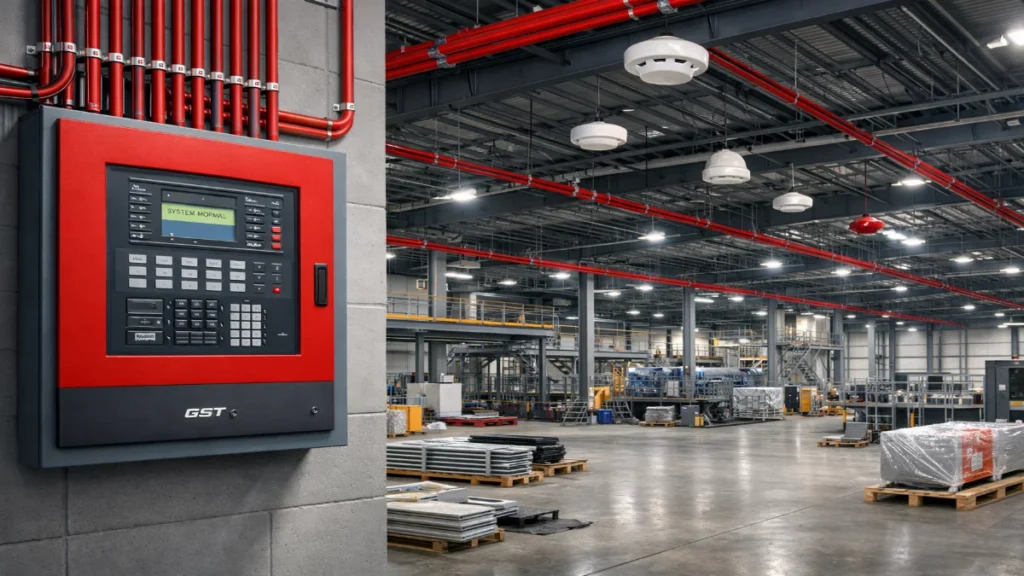
A Real-World Case Study on Scalability, Risk and Smart Fire Safety Decisions Fire alarm system decisions are often treated as routine checklist items during factory construction. Panels are selected, drawings are approved, and installation begins, usually early in the project timeline. But what happens when a system that looked sufficient on paper fails to keep up with real project growth? This case article explains why a manufacturing factory replaced its fire alarm panel when the project was already 60% complete, what triggered the decision and how switching to GST Fire Alarm Systems helped the project stay on schedule. More importantly, this case highlights a critical lesson for engineers, consultants and project owners: Scalability is not a future concern. It becomes a mid-project crisis if ignored. Background: A Factory Project Midway to Completion A large manufacturing facility was under construction in an industrial zone. The project involved multiple production halls, utility areas, control rooms, storage sections and administrative blocks. The fire alarm system design was finalised early, based on the initial layout and production scope. By the time the project reached 60% construction completion, the following milestones were already achieved: At this stage, the project was expected to move smoothly toward system commissioning. Instead, execution was suddenly halted. The Unexpected Halt: Why Engineers Stopped the Work The stoppage did not happen due to labour issues, supply delays or budget overruns. The reason was more fundamental. 👉 The fire alarm system design could no longer support the evolving factory layout. As construction progressed, the factory’s operational plans changed. Management approved the implementation of new production lines to meet the increasing demand. This expansion significantly altered the fire detection requirements. Engineers realised that continuing with the existing fire alarm panel would introduce serious long-term risks. What Triggered the Change in Fire Alarm Design 1. New Production Lines Were Added The factory owner decided to install additional production lines to improve capacity. These lines required: The original fire alarm design did not account for this growth. 2. Detector Count Exceeded Original Estimates During recalculation, engineers found that the total detector and device count exceeded the panel’s loop capacity. This was not a small overrun. The gap was large enough that: At this point, minor adjustments were no longer possible. 3. Panel Expansion Limitations Were Discovered Late The originally selected fire alarm panel had limited scalability: Although technically functional, the panel was not suitable for a growing industrial environment. This limitation was not obvious during early design stages but became critical once the project expanded. 4. Redesign Would Have Caused Major Delays Engineers evaluated the option of continuing with the existing panel using workarounds, such as: However, these workarounds introduced new problems: The project team realised that patchwork solutions would delay commissioning and create long-term operational issues. The Decision Point: Patch the Problem or Fix It Properly At this stage, the project faced a clear decision: Option 1: Continue with Workarounds Option 2: Replace the Fire Alarm Panel Early After multiple coordination meetings between consultants, engineers and the factory management, the decision was made. 👉 The team chose early replacement. Why the Factory Switched to GST Fire Alarm Systems The replacement decision was not just about changing hardware. It was about choosing a platform that could grow with the factory. After a technical evaluation, the project team selected GST Fire Alarm Systems due to their proven performance in industrial environments. Key Reasons for Choosing GST Fire Alarm Systems 1. High Loop Capacity for Industrial Scale GST addressable fire alarm panels support higher device counts per loop, making them suitable for large manufacturing facilities with expanding layouts. 2. Seamless Expansion Without Redesign The system allowed engineers to add detectors, modules and zones without reworking the original design philosophy. 3. Flexible Networking for Future Phases GST panels support networking between multiple panels, making them ideal for factories planned in phases. 4. Clear Programming and Logic Control Complex cause-and-effect requirements for industrial risks were easier to configure and manage. 5. Strong Compliance Support The system aligned well with applicable fire safety standards and local authority expectations. Implementation: Replacing the Panel Mid-Project Replacing a fire alarm panel at 60% project completion is not a simple task. However, early action minimised disruption. How the Replacement Was Managed Because the replacement happened before final commissioning, the overall project timeline remained intact. Results: What Changed After the Replacement The impact of switching to GST Fire Alarm Systems was immediate and measurable. 1. Expansion Became Seamless New production areas were added without redesigning the fire alarm system. Engineers simply extended loops and addressed new devices. 2. Loop Capacity Issues Were Eliminated The upgraded panel handled the increased detector count comfortably, without overloading or performance concerns. 3. Future Phases Were Accommodated The factory planned additional buildings for future years. The new system already had the capacity and networking capability to support them. 4. Project Handover Stayed on Schedule Despite the mid-project replacement, the factory achieved timely system testing, authority approval and handover. This outcome would not have been possible if the issue had been ignored until commissioning. Scalability Is Not a “Later” Problem This case highlights a critical truth in fire alarm system design: Scalability is not something you plan after construction. It directly affects project execution. In industrial projects, production requirements change frequently. Fire alarm systems must be designed to absorb these changes without becoming obstacles. Ignoring scalability can lead to: Lessons for Engineers and Project Owners 1. Design for Growth, Not Just Approval A system that passes today’s drawings may fail tomorrow’s expansion. 2. Validate Panel Capacity Early Loop limits, networking options and future zones should be reviewed before procurement. 3. Avoid “Just Enough” Designs Minimum compliance designs often break under real-world conditions. 4. Early Replacement Is Cheaper Than Late Failure Fixing scalability issues mid-project is far less painful than fixing them post-handover. A Thought for Growing Projects 👉 If your project will grow, your fire alarm system must grow first. Designing for scalability is not an upgrade; it is risk