
Response Time Behaviour of GST Addressable Fire Alarm Systems
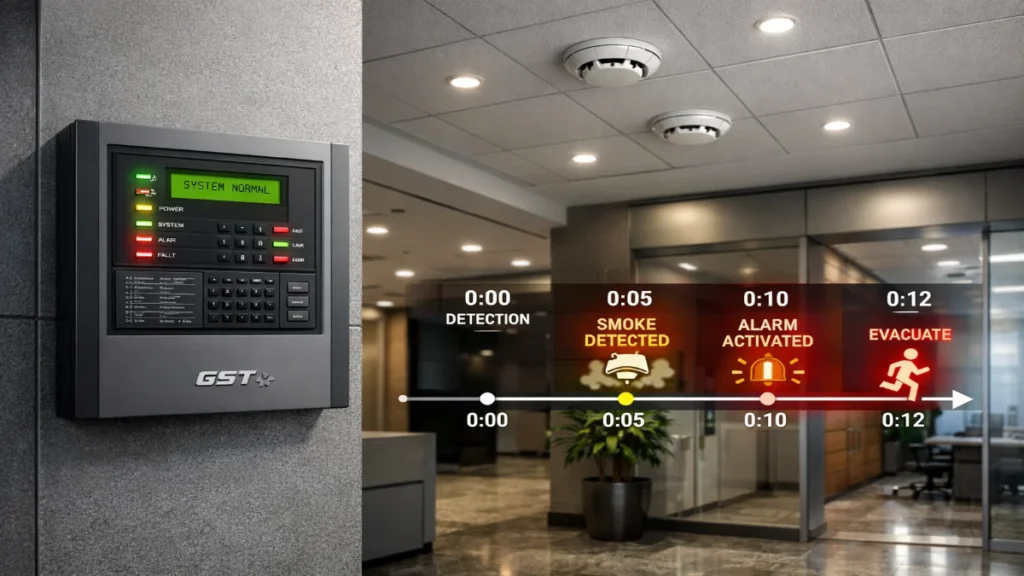
In modern buildings, fire safety is no longer measured only by compliance; it is measured by how fast a system detects, processes and responds to an emergency. When seconds can decide the scale of damage or loss of life, the response time behaviour of a fire alarm system becomes one of its most critical performance indicators. Among advanced fire detection technologies, GST addressable fire alarm systems have gained strong adoption across commercial, industrial and high-density residential projects. Engineers, consultants and facility managers increasingly prefer them because of their predictable response time, intelligent processing and scalable architecture. This article explains how response time works in GST addressable systems, what factors influence it, how it compares with traditional systems and why it performs reliably in real-world fire scenarios. What Is Response Time in a Fire Alarm System? Response time refers to the total time taken from the initial fire signature (smoke, heat, or flame) to the activation of alarms and control actions. It includes four main stages: A well-designed addressable fire alarm panel reduces delay at every stage. Why Addressable Systems Behave Differently Than Conventional Systems To understand GST’s response time behaviour, it helps to compare addressable and conventional technologies. Conventional Fire Alarm Systems: Response Limitations A conventional fire alarm panel groups detectors into zones. When one device activates: This leads to: Conventional systems still work well for small buildings, but response accuracy drops as building size increases. Addressable Fire Alarm Systems: Intelligent Response In contrast, a GST fire alarm system using addressable technology assigns a unique digital address to each device. This enables: As a result, response time becomes consistent and predictable, even in complex installations. Core Components That Influence Response Time in GST Addressable Systems 1. Intelligent Addressable Detectors Addressable detectors from GST continuously communicate with the control panel. Unlike basic detectors, they do not simply switch from “normal” to “alarm.” Instead, they: This behaviour enables early-stage fire detection without unnecessary delays. Compared to conventional detectors, this intelligent signalling shortens detection-to-decision time significantly. 2. High-Speed Loop Communication Protocol GST addressable systems use optimised digital loop protocols designed for fast polling cycles. Key advantages include: Even when hundreds of devices share a loop, the system maintains consistent response times without congestion. 3. Panel Processing Logic and Algorithms The real strength of a GST addressable fire alarm panel lies in its internal processing logic. The panel: This ensures alarms activate only when conditions are validated, avoiding both slow responses and false triggers. 4. Cause-and-Effect Programming Response time is not just about detection; it is also about action. GST panels allow: This reduces the time between alarm confirmation and emergency response execution. How GST Addressable Systems Handle Real Fire Scenarios Scenario 1: Smouldering Fire (Early Smoke) In slow-developing fires: Result: Earlier alarm activation compared to conventional systems, which may wait for higher thresholds. Scenario 2: Fast-Flaming Fire In rapid-fire growth: Result: Minimal response delay, even under high thermal conditions. Scenario 3: Dust or Environmental Interference False alarms increase response hesitation in many systems. GST systems reduce this risk by: This ensures response time remains fast without sacrificing reliability. Addressable vs Conventional: Response Time Comparison Parameter Addressable Fire Alarm Panel Conventional Fire Alarm Panel Detection accuracy High Moderate Signal processing Intelligent, digital Basic, zone-based Alarm confirmation Fast and validated Simple threshold-based Fault isolation Device-level Zone-level Response time consistency Excellent Varies with load This comparison clearly shows why addressable systems dominate medium to large projects. Installation Quality and Its Impact on Response Time Even the best system performs poorly if installed incorrectly. Proper Loop Design GST systems require: Poor loop design can introduce communication delays. Correct Device Selection Using the right mix of: ensures optimal response behaviour. Professional Programming and Commissioning Panel configuration directly affects response time. Proper commissioning ensures: Response Time Behaviour in Large and Multi-Building Projects GST addressable systems perform consistently across: Their distributed intelligence ensures that response time does not degrade as the system scales. This makes GST particularly suitable for future expansion, where maintaining performance consistency is critical. Compliance with International Fire Standards GST addressable fire alarm systems are designed to align with: These standards include strict expectations around alarm response behaviour, reinforcing system reliability. Why GST Fits Regional Building Needs In regions with: GST addressable systems provide: This makes them suitable for both emerging and mature infrastructure markets. Best Practices to Maintain Fast Response Time Over System Life These steps ensure response time performance remains optimal year after year. Why Response Time Is a Core Strength of GST Addressable Systems The response time behaviour of GST addressable fire alarm systems reflects a balance of speed, intelligence and reliability. From early detection to instant output activation, every component is designed to minimise delay without compromising accuracy. Compared to conventional fire alarm panels, GST addressable solutions deliver: For engineers, consultants and building owners focused on real-world fire safety, not just compliance, this response behaviour makes GST a dependable choice for modern fire protection strategies. Read Also: What Makes GST Fire Alarm Panels Suitable for High-Density Buildings Read Also: Fire Alarm System Scalability: The Problem No One Notices Until Phase-2
What Makes GST Fire Alarm Panels Suitable for High-Density Buildings
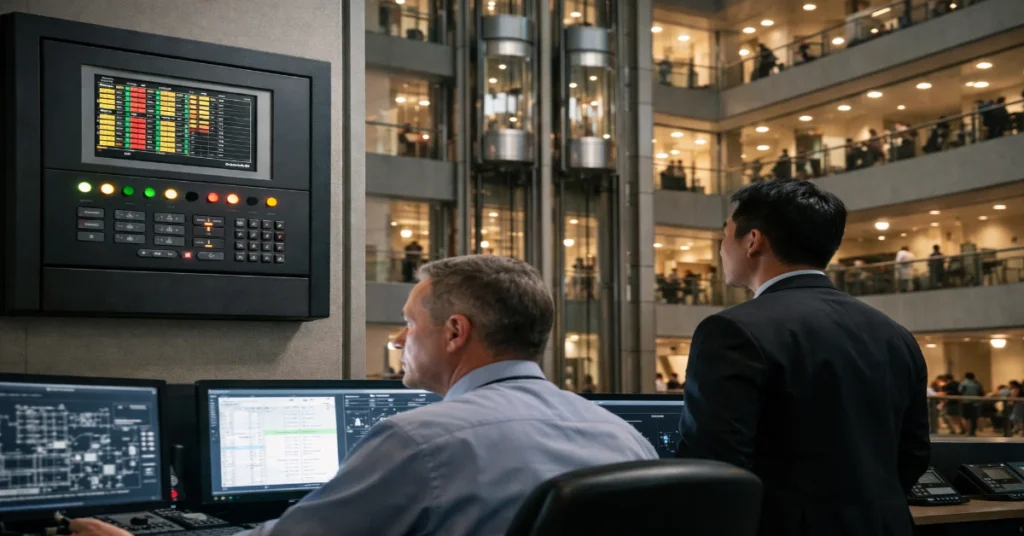
High-density buildings are becoming the new standard across cities. From high-rise residential towers and large hospitals to IT parks, malls, airports and industrial campuses, modern infrastructure now houses thousands of occupants under one roof. While these buildings deliver efficiency and scale, they also introduce serious fire safety challenges. In such environments, a fire alarm system must do more than detect smoke. It must identify the exact location, communicate instantly, scale effortlessly and remain reliable even under heavy load. This is where GST fire alarm panels have proven to be a practical and trusted choice for engineers, consultants, and facility managers. This article explains why GST fire alarm panels are particularly suitable for high-density buildings, how they address real-world design challenges and what makes them stand out compared to traditional solutions. Understanding Fire Safety Challenges in High-Density Buildings Before selecting a fire alarm system, it is important to understand the unique risks that high-density buildings present. Common Challenges Include: In such scenarios, basic or poorly designed fire alarm systems fail quickly. False alarms increase, response time slows and maintenance becomes costly. This is why modern projects increasingly rely on GST fire alarm systems, especially in complex and high-occupancy environments. Why Fire Alarm Panel Selection Matters in High-Density Buildings The fire alarm panel acts as the brain of the entire fire detection system. In high-density buildings, the panel must: GST fire alarm panels are designed specifically to meet these demands. 1. Advanced Addressable Architecture for Precise Detection One of the strongest reasons GST panels excel in high-density buildings is their addressable system architecture. An addressable fire alarm panel assigns a unique digital address to every device connected to the loop. This allows the system to identify exactly which detector or module has triggered an alarm or fault. Benefits of High-Density Buildings: In a 40-floor residential tower or a multi-block hospital, knowing “Smoke detected in Room 1207, Block B” instead of “Fire on Floor 12” makes a significant difference. GST addressable panels handle large device counts per loop, making them ideal for dense installations. 2. High Device Capacity Without Performance Drop High-density buildings often require thousands of detectors, call points and modules. Many systems struggle when pushed to their maximum limits. GST fire alarm panels are engineered to support: This ensures: Engineers prefer GST because the system performs consistently even in large-scale, fully populated buildings. 3. Flexible Use of Addressable and Conventional Technologies Not all areas in a high-density building have the same risk profile. Some spaces require intelligent detection, while others can operate efficiently with simpler solutions. GST allows seamless use of both: Similarly, projects can combine: This hybrid flexibility helps: GST systems make this integration smooth and reliable. 4. Faster Alarm Response Time in Crowded Environments In high-density buildings, seconds matter. Delayed alarms can lead to smoke spread, confusion and increased risk to occupants. GST fire alarm panels use: As a result: This fast response is critical in locations such as: 5. Reduced False Alarms Through Intelligent Detection False alarms are a major issue in high-occupancy buildings. They disrupt operations, reduce trust in the system and lead to unnecessary evacuations. GST fire alarm systems minimise false alarms by: This ensures alarms activate only when real fire conditions exist, not due to dust, steam or transient smoke. 6. Clear, User-Friendly Interface for Emergency Situations During a fire event, clarity is crucial. Security staff and facility managers must understand the situation instantly. GST fire alarm panels feature: Even non-technical staff can quickly: This usability makes GST panels suitable for buildings with round-the-clock operations. 7. Seamless Integration With Other Building Systems High-density buildings rely on integrated safety and automation systems. GST fire alarm panels support easy integration with: This integration ensures a coordinated emergency response, not isolated actions. 8. Scalability for Future Expansion One of the most overlooked issues in large buildings is future expansion. New floors, tenants or functional changes often require system upgrades. GST fire alarm systems are designed with scalability in mind: This avoids: For long-term projects, GST offers an excellent return on investment. 9. Cost-Effective for Large-Scale Projects High-density buildings require significant capital investment. Fire alarm systems must balance performance and budget. GST panels are widely recognised for: By supporting both gst fire alarm system addressable and conventional configurations, GST helps project owners control costs without compromising safety. 10. Compliance With International and Local Standards Fire safety compliance is non-negotiable. GST fire alarm panels are designed to meet: This simplifies: For large commercial and residential projects, compliance confidence is a major advantage. Real-World Applications of GST in High-Density Buildings GST fire alarm systems are commonly deployed in: Their consistent performance across diverse environments proves their suitability for dense occupancy. Addressable vs Conventional: Choosing the Right GST Solution Feature Addressable Fire Alarm Panel Conventional Fire Alarm Panel Location Accuracy Exact device-level Zone-level Scalability High Limited False Alarm Control Advanced Basic Best For High-density buildings Small buildings GST offers both options, allowing engineers to design custom-fit solutions. Final Thoughts High-density buildings demand intelligent, scalable and reliable fire alarm solutions. GST fire alarm panels meet these demands through advanced addressable technology, robust performance and practical design flexibility. Whether it is a high-rise residential tower or a massive commercial complex, GST fire alarm systems provide the accuracy, speed and reliability that modern buildings require. For engineers, consultants and developers seeking long-term value and dependable safety, GST remains a smart and proven choice. Read Also: How Engineers Misjudge Fire Alarm Response Time Read Also: Fire Alarm System Design Trends Engineers Are Adopting