
Why Large Projects Choose GST Fire Alarm Panels for Compliance & Reliability
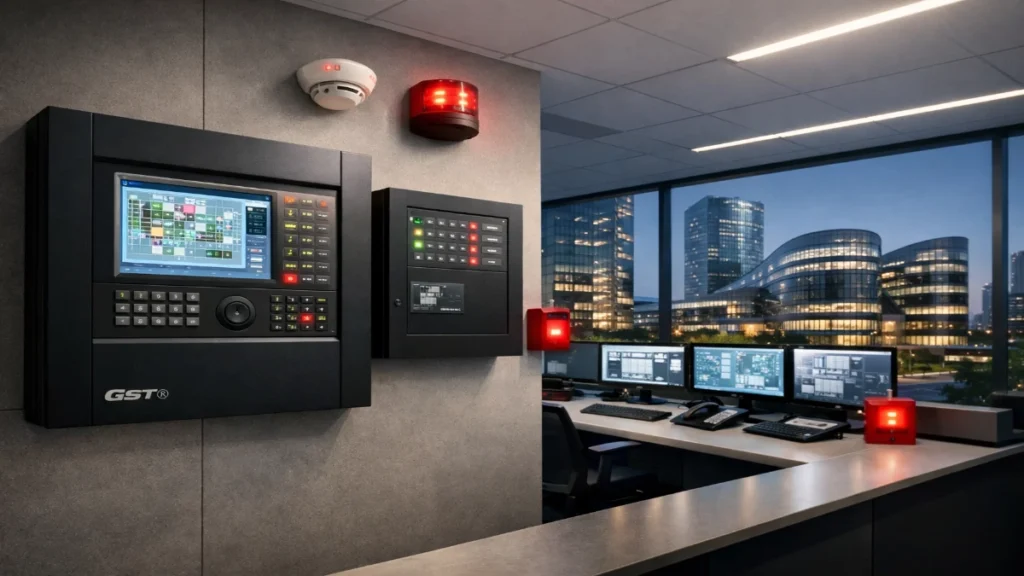
Large construction projects do not fail because of a lack of ambition. They fail when systems do not scale, comply or perform reliably during real-world conditions. Among all life safety systems, fire alarm systems carry the highest compliance responsibility. A single design error or unreliable panel can delay approvals, halt occupancy or expose owners to serious legal and safety risks. This is why large commercial, industrial and infrastructure projects consistently choose GST Fire Alarm Panels. From airports and metro stations to IT parks, hospitals, factories and high-rise buildings, GST fire alarm systems have become a preferred choice for compliance and long-term reliability. This article explains why GST fire alarm panels dominate large projects, how they meet international and local fire codes and why engineers trust them for complex, high-density environments. Understanding the Compliance Challenge in Large Projects Large projects face very different fire safety challenges compared to small buildings. Key Compliance Pressures Fire alarm systems must comply not only on paper, but also in real-time performance, fault tolerance and event accuracy. GST fire alarm panels are designed specifically to address these challenges. What Makes GST Fire Alarm Systems Ideal for Large Projects? GST (Gulf Security Technology) is globally recognised for designing fire alarm solutions engineered for scale, stability and compliance. Their systems are widely used in mission-critical environments where failure is not an option. Core Design Philosophy of GST These principles make GST fire alarm systems highly suitable for large projects that demand both technical excellence and regulatory approval. Compliance with Global and Local Fire Standards One of the biggest reasons large projects select GST is certification confidence. International Standards Compliance GST fire alarm panels are tested and certified to major international standards, such as: These certifications simplify approval processes for: Local Code Alignment In markets like India, the Middle East and Southeast Asia, GST systems align well with: This dual compliance approach reduces redesign risk and speeds up approvals. Reliability Under High Device Load Large projects often exceed 2,000 to 20,000 fire alarm devices. Not every system handles this reliably. The Problem with Many Fire Alarm Panels How GST Solves This GST fire alarm panels are built with: This ensures consistent response time even when loops are fully populated, which is critical in large installations. Addressable Technology: A Must for Large Projects Most large projects today mandate an addressable fire alarm panel rather than conventional systems. Why Addressable Systems Matter GST offers a full range of addressable fire alarm panel solutions designed for complex architectures. GST Addressable Detectors: Accuracy at Scale Detection accuracy directly impacts safety and compliance. Challenges in Large Buildings GST Addressable Detectors Advantages GST addressable detectors use: This reduces: For large projects, this reliability translates into lower operational risk and higher system trust. Conventional Fire Alarm Panels Still Matter While addressable systems dominate large projects, certain zones still require conventional fire alarm panel solutions. Typical Use Cases GST provides seamless integration between addressable and conventional fire alarm panel architectures, allowing engineers to design cost-effective hybrid systems without compromising compliance. Robust Network Architecture for Large Campuses Large projects often span multiple buildings or blocks. Common Challenges GST Networked Panel Advantage GST fire alarm systems support: This architecture ensures that: Faster Approvals from Fire Authorities Fire authorities prefer systems they trust. Why Authorities Recognise GST Engineers often report fewer objections and faster NOCs when GST systems are used in large projects. Reduced Maintenance Burden Over Project Life Compliance does not end at commissioning. Large projects operate for decades. Maintenance Risks in Large Systems GST Long-Term Reliability GST fire alarm panels are known for: This significantly reduces the total cost of ownership, a major concern for large asset owners. Scalability for Phase-2 and Phase-3 Expansion Large projects almost always expand. Expansion Risks GST designs panels with: This makes future expansion smoother and more economical, protecting the original investment. Why Engineers Trust GST in Critical Environments GST fire alarm systems are widely deployed in: These environments demand: GST delivers consistent performance even under harsh conditions. GST vs Generic Fire Alarm Brands Criteria Generic Brands GST Fire Alarm Systems Certification Limited Global approvals Device Capacity Moderate High Network Stability Inconsistent Proven Expansion Support Restricted Excellent Authority Acceptance Variable High Compliance Is Not Optional, Reliability Is Not Negotiable Large projects cannot afford experimentation with life safety systems. Compliance failures delay occupancy. Reliability failures endanger lives. This is why GST fire alarm panels are repeatedly chosen for large projects worldwide. Their proven design, certification strength, scalability and long-term reliability make them a safe and strategic choice for engineers, consultants and asset owners. When compliance, performance and future readiness matter, GST fire alarm systems stand out as a trusted solution. Read Also: Why GST Addressable Fire Alarm Panels Perform Better During Partial Failures Read Also: How Engineers Misjudge Fire Alarm Response Time
Why GST Addressable Fire Alarm Panels Perform Better During Partial Failures
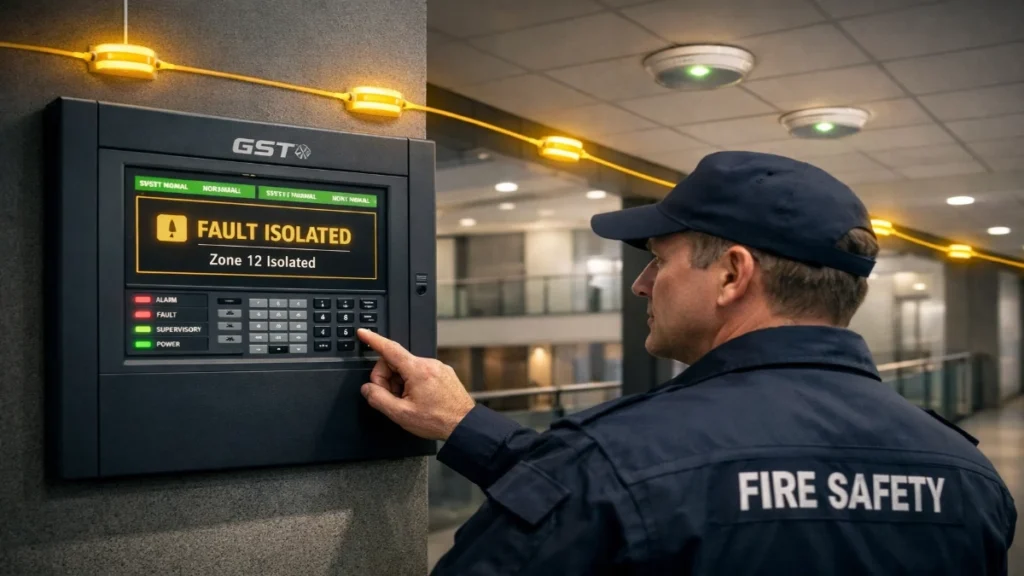
In real-world buildings, fire alarm systems rarely fail. Instead, they face partial failures, a damaged cable, a faulty detector, a short circuit on one loop or a device that stops responding. During these moments, the true quality of a fire alarm panel becomes visible. A poorly designed system may lose entire zones, confuse operators or stop communicating altogether. A well-engineered system, however, continues to protect occupants while clearly reporting the fault. This is exactly where GST Addressable Fire Alarm Panels stand out. Large commercial buildings, hospitals, airports, data centres, factories and high-rise projects increasingly choose GST fire alarm systems because they maintain operational reliability even when part of the system fails. This article explains why GST addressable panels perform better during partial failures, how their architecture differs from legacy designs and why this matters for life safety, compliance, and operational continuity. What Is a Partial Failure in a Fire Alarm System? A partial failure occurs when a portion of the fire alarm system stops functioning, while the rest of the system remains intact. Common Partial Failure Scenarios In such cases, the question is not “Will the system fail?” but rather: How much of the system continues to protect the building? Why Traditional Systems Struggle During Partial Failures Limitations of Conventional Architecture In a conventional fire alarm panel, multiple conventional detectors are connected to a single zone circuit. When a fault occurs: Even modern conventional fire alarm panel designs still rely on shared circuits, which creates single points of failure. Addressable Systems: Designed for Failure Tolerance An addressable fire alarm panel works differently. Each device, manual call point, smoke detector, heat detector, module, has a unique digital address. The panel communicates individually with every device on the loop. This design alone significantly improves performance during faults. However, not all addressable systems are built the same. GST’s Design Philosophy: Faults Should Not Become Disasters GST (Gulf Security Technology) has designed its addressable fire alarm panels with a clear philosophy: A fault should reduce functionality, not eliminate protection. This principle shapes both hardware architecture and software intelligence across GST panels. 1. Advanced Loop Isolation Protects the Rest of the System The Problem with Standard Addressable Loops In many addressable systems, a short circuit on the loop can disable a large section of devices until the fault is cleared. How GST Solves This GST addressable panels support loop isolators, either built into devices or installed as dedicated modules. What Happens During a Short Circuit? Result: Only a small section is affected, not the entire loop. This is a major reason why GST addressable fire alarm panels perform better during partial failures compared to generic systems. 2. Device-Level Intelligence Keeps Detection Active GST addressable detectors are not passive components. They contain onboard intelligence that allows them to: If one detector fails: This is fundamentally different from conventional detectors, where a single fault can impact an entire zone. 3. Accurate Fault Identification Reduces Human Error Why Fault Clarity Matters During emergencies, confusion is dangerous. A vague fault message wastes time and increases risk. GST’s Advantage GST addressable panels display: This precision allows: In contrast, a conventional fire alarm panel often provides only zone-level fault information. 4. Distributed Power Architecture Improves Survivability Partial failures are not limited to data lines. Power issues are equally critical. GST systems support: If one power segment experiences an issue: This level of resilience is essential for large buildings and mission-critical facilities. 5. Software Logic Prevents Cascade Failures Many systems fail not because of hardware, but because of poor software logic. GST fire alarm systems use: This ensures: 6. Networked Panels Maintain Global Visibility In large projects, multiple panels are networked together. GST networking architecture allows: So even during a partial failure in one area: 7. Compliance Under Fault Conditions Fire safety standards do not only evaluate performance during normal operation. They also assess fault behaviour. GST panels are designed to meet: This is one reason consultants and authorities prefer GST fire alarm systems for high-value projects. 8. Maintenance Without Shutdown One of the most overlooked advantages of GST addressable systems is live maintenance capability. Technicians can: All without shutting down the entire system. This is impossible with most conventional fire alarm panel designs. 9. Real-World Scenario: Partial Failure in a Commercial Complex Imagine a shopping mall under renovation. With a conventional system: This real-world resilience explains why large projects consistently prefer GST addressable fire alarm panels. 10. Long-Term Cost Benefits of Fault Resilience Partial failures are not rare events; they are inevitable over a building’s lifecycle. GST systems reduce: Over time, this results in: Addressable vs Conventional: Fault Performance Comparison Aspect Addressable Fire Alarm Panel (GST) Conventional Fire Alarm Panel Fault isolation Device/segment level Zone level Fault identification Exact device address Entire zone Operation during fault Mostly active Often degraded Maintenance flexibility High Limited Scalability Excellent Restricted Why Engineers and Consultants Trust GST Professionals do not select fire alarm systems based on brochures. They choose systems that behave predictably when things go wrong. GST delivers: This is why GST addressable fire alarm panels are specified in airports, hospitals, factories, IT parks and large commercial developments. Safety Does Not Stop at the First Fault Fire alarm systems must protect lives even when components fail. Partial failures are not exceptions; they are part of reality. GST understands this reality and designs its systems accordingly. By combining: GST ensures that fire protection continues, even under imperfect conditions. That is the real reason GST Addressable Fire Alarm Panels perform better during partial failures and why they remain a trusted choice for modern, large-scale projects. Read Also: Response Time Behaviour of GST Addressable Fire Alarm Systems Read Also: What Makes GST Fire Alarm Panels Suitable for High-Density Buildings