
Lifecycle Cost Advantages of GST Addressable Fire Alarm Systems
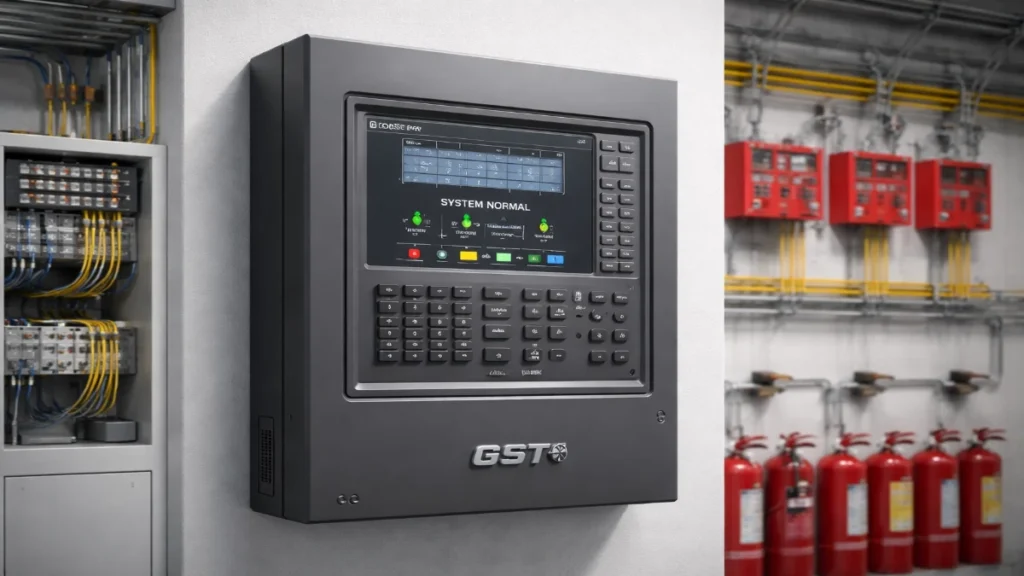
Fire alarm systems are not one-time purchases. They are long-term safety investments that remain active for 10–20 years or more. While many buyers focus only on the initial price, experienced consultants, facility managers and building owners evaluate the total lifecycle cost before making a decision. This is where GST Addressable Fire Alarm Systems clearly stand out. From design and installation to operation, maintenance, expansion and eventual upgrades, GST systems consistently deliver lower lifetime ownership costs without compromising safety or compliance. This article provides a detailed explanation of why GST addressable systems offer superior lifecycle cost advantages, particularly when compared to traditional solutions. What Is Lifecycle Cost in Fire Alarm Systems? Lifecycle cost refers to the total cost of owning and operating a fire alarm system over its entire usable life. It includes: A system with a lower upfront price can become more expensive over time if it causes frequent faults, requires manual intervention, or becomes obsolete quickly. Why GST Focuses on Long-Term Value, Not Just Initial Cost GST (Gulf Security Technology) designs its addressable fire alarm systems with a long-term performance mindset. Every component, from control panels to addressable detectors, is engineered to reduce operational complexity and lifetime expenses. Instead of forcing system replacements, GST supports scalable, backwards-compatible and service-friendly architectures, which directly reduce ownership costs over decades. Lower Design and Engineering Costs Simplified System Architecture GST addressable systems utilise an intelligent loop-based architecture, enabling hundreds of devices to operate on a single loop. This reduces: Compared to a conventional fire alarm panel, which requires multiple zones and extensive wiring, GST systems significantly lower engineering time and material usage. Consultant-Friendly Documentation GST provides: This reduces redesign cycles and engineering errors, saving consultancy hours and project costs. Reduced Installation Costs Over the System Life Less Cabling, Less Labor With GST addressable systems: Even during future modifications, installers can add devices without disturbing existing wiring, something not easily possible in conventional fire alarm panel setups. Faster Commissioning GST panels offer: These features reduce commissioning time and minimise costly site visits during project handover. Intelligent Devices Reduce Operational Costs Smart Addressable Detectors = Fewer False Alarms GST addressable detectors use advanced algorithms to analyse smoke, heat and environmental conditions. This intelligence helps: False alarms are expensive. They disrupt operations, reduce trust in the system and may even lead to penalties. GST significantly lowers these indirect costs. Precise Event Identification Each device has a unique address. When an alarm occurs, the system identifies: This eliminates time wasted searching zones, which is common with conventional detectors. Lower Maintenance and Service Costs Predictive Maintenance Instead of Reactive Repairs GST addressable systems continuously monitor device health and report: Maintenance teams can address issues before failures occur, reducing emergency service calls and downtime. Faster Fault Isolation In traditional systems, a single fault can disable an entire zone. GST panels isolate faults automatically, allowing: This is a major lifecycle cost advantage for hospitals, data centres, malls and industrial facilities. Reduced Spare Parts and Inventory Costs GST maintains long product lifecycles and backward compatibility, which means: Facilities do not need to stock multiple detector types or obsolete components, unlike mixed or legacy systems. Easy Expansion Without System Replacement Scalable Architecture As buildings grow, GST systems grow with them: This avoids the common situation where conventional systems must be replaced entirely during expansion. Software-Driven Configuration Most changes in a gst fire alarm system are software-based, not hardware-based. This reduces: Energy Efficiency Reduces Operating Expenses GST panels and devices are designed for low power consumption: Lower energy usage translates into reduced electricity bills and longer battery life, especially important in large installations. Compliance Stability Lowers Long-Term Risk Designed for Global and Local Standards GST systems are engineered to meet: This protects building owners from future retrofit costs due to regulatory changes. Audit-Ready Reporting Event logs, alarm histories, and fault records help facilities pass inspections without additional system upgrades or documentation expenses. Training and Skill Availability Reduce Dependency Costs GST systems follow logical, intuitive programming and operation, making it easier to: This is particularly valuable for organisations managing multiple sites. Comparison: GST Addressable vs Conventional Lifecycle Cost Cost Factor GST Addressable System Conventional System Initial Wiring Lower Higher False Alarms Minimal Frequent Fault Isolation Automatic Manual Expansion Cost Low High Maintenance Predictive Reactive System Replacement Rare Common Lifecycle Cost Significantly Lower Higher Why Consultants Recommend GST for Long-Term Projects Fire safety consultants increasingly recommend GST because: For high-value assets, GST delivers predictable costs, consistent performance and future-ready safety. Lifecycle Cost Advantage in Real-World Applications Commercial Buildings Reduced downtime, minimal false alarms and easy tenant modifications. Industrial Facilities Reliable detection in harsh environments and fault tolerance during operations. Hospitals and Data Centers Continuous system availability and precise alarm identification. Educational Institutions Low maintenance overhead and simplified system management. Final Thoughts: True Value Lies in the Lifecycle The real cost of a fire alarm system is not what you pay on day one; it is what you spend over the next 10–20 years. GST Addressable Fire Alarm Systems consistently deliver: When lifecycle cost matters, and it always does, GST proves to be a smarter, more economical choice than traditional alternatives. Read Also: What Makes the GST-200N Panel Consultant-Friendly in Fire Alarm Design Read Also: GST Addressable Fire Alarm Panel Specifications Explained for Buyers
What Makes the GST-200N Panel Consultant-Friendly in Fire Alarm Design
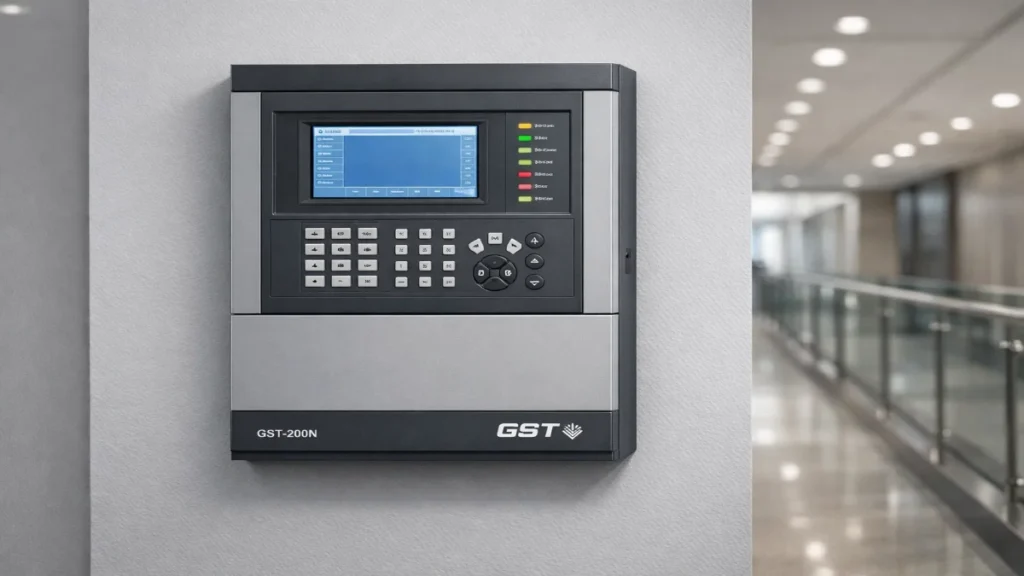
In today’s safety-driven building environment, fire alarm systems are no longer optional; they are critical infrastructure. Consultants, engineers and project managers demand solutions that are intelligent, reliable, flexible and cost-effective. Among the many options in the market, the GST-200N Panel from Gulf Security Technology (GST) has emerged as a standout choice. It has quickly become a favourite among fire safety consultants for its innovative design, advanced features, adaptability and compliance with international safety standards. In this article, we explore what makes the GST-200N Panel consultant-friendly in fire alarm design, including its technical strengths, real-world benefits and how it simplifies complex safety requirements without compromising performance. 1. Consultant Priorities in Fire Alarm System Design Before we dive into the GST-200N, it’s important to understand what fire safety consultants look for when they select a fire alarm solution: These priorities shape the decision-making process. A fire alarm panel that satisfies these criteria not only protects life and property but also minimises long-term operational costs. 2. Introducing the GST-200N Panel The GST-200N Panel is an advanced fire alarm control panel designed and manufactured by Gulf Security Technology (GST), a trusted brand recognised for durable, state-of-the-art fire detection and alarm products. The GST-200N stands out for its: ✔ Modular and future-ready architecture✔ Compatibility with both addressable and conventional devices✔ Powerful processing and alarm management✔ High-resolution diagnostics and troubleshooting This mix of features makes it an ideal choice for consultants designing systems that need both simplicity and sophistication. 3. Dual Support: Addressable and Conventional Systems One of the key strengths of the GST-200N Panel is its flexible support for both addressable fire alarm panel and conventional fire alarm panel architectures. Addressable Fire Alarm Panel Integration In modern buildings, especially high-rise complexes, hospitals, airports and commercial zones, addressability is essential. Addressable systems allow each device (like a sensor or detector) to have a unique ID. This means: The GST-200N natively supports addressable configurations with an intuitive mapping interface, allowing consultants to lay out zones and devices easily during design. Conventional Fire Alarm Panel Compatibility For smaller facilities, simpler requirements, or budget-conscious projects, a conventional fire alarm panel may be sufficient. The GST-200N supports conventional loops while maintaining: This duality makes the GST-200N convenient for consultants who deal with mixed-type projects across different site scales. 4. Intelligent Device Support: Addressable and Conventional Detectors A fire alarm panel’s value is enhanced by the quality of detectors it supports. The GST-200N excels in this area by being compatible with both addressable detectors and conventional detectors. Addressable Detectors Addressable detectors feed specific data back to the panel, including: This smart communication allows consultants to design systems that predict and prevent fire events rather than merely react to them. Conventional Detectors While simple, conventional detectors remain valuable in many applications. They’re ideal for: The ability of the GST-200N to support these ensures consultants can tailor system design without overengineering solutions. 5. User-Friendly Interface and Programming Tools Fire safety consultants often spend significant time during the design and commissioning phase. The GST-200N supports this effort with user-centric tools: ✔ Clear LCD with intuitive menu navigation✔ Graphical interface for zone and device assignment✔ Remote programming support✔ Exportable configuration reports These features allow consultants to configure projects faster, debug issues effectively and generate documentation without delays. 6. Scalability for Large Projects Scalability is a major factor in consultant decisions. The GST-200N Panel allows: For consultants working on mixed-use developments, educational campuses or industrial complexes, this future-proof design ensures that current installation can grow with future needs. 7. Compliance, Standards and Safety Certifications Consultants must ensure that any fire alarm solution adheres to local codes and international standards. The GST-200N meets or exceeds requirements set by: ✔ NFPA (National Fire Protection Association)✔ UL (Underwriters Laboratories)✔ EN 54 Fire Detection standards This compliance gives consultants confidence that the system will stand up to regulatory audits, insurance checks and safety certification processes. 8. Advanced Diagnostics and Maintenance Support Post-installation support and maintenance are vital components of fire safety design. GST has built the GST-200N with advanced diagnostics that help consultants and facility managers: This proactive view reduces downtime and enhances long-term safety performance. 9. Cost Effectiveness Across the System Lifecycle While equipment cost matters, consultants increasingly evaluate lifecycle cost, which includes installation, maintenance, upgrade flexibility and energy consumption. The GST-200N provides: These advantages reduce operational expenses and improve total return on investment. 10. Why Consultants Prefer the GST-200N Panel When you combine all the strengths listed above, a clear picture emerges. Consultants prefer the GST-200N Panel because it: 11. Practical Application Examples Commercial Buildings In modern offices with open spaces and complex HVAC systems, the GST-200N’s addressable capabilities reduce false alarms while speeding up emergency responses. Hospitals and Healthcare Facilities Life safety here depends on precision and redundancy. Addressable detectors provide granular monitoring and the panel’s scalability supports extensive zones. Educational Campuses From auditoriums to dormitories, consultants can design tailored systems combining addressable and conventional fire alarm panel elements for cost-effective coverage. Industrial and Warehousing Harsh environments require rugged detectors and clear fault reporting, something the GST-200N handles with strength and efficiency. Note: The GST-200N Panel sets a new benchmark for consultant-friendly fire alarm design. It provides the best mix of flexibility, intelligence, scalability and compliance, all packaged in an intuitive, easy-to-deploy platform. Whether you are designing a complex addressable fire alarm panel solution for a high-rise tower or a simple conventional fire alarm panel system for a small facility, the GST-200N meets consultants’ needs without compromise. With support for both addressable detectors and conventional detectors, this panel empowers safety professionals to design smarter, safer and more efficient fire protection systems. Read Also: GST Addressable Fire Alarm Panel Specifications Explained for Buyers Read Also: What Makes a GST Fire Alarm Supplier Technically Reliable