
Why GST Addressable Systems Reduce Risk in Large Fire Safety Projects
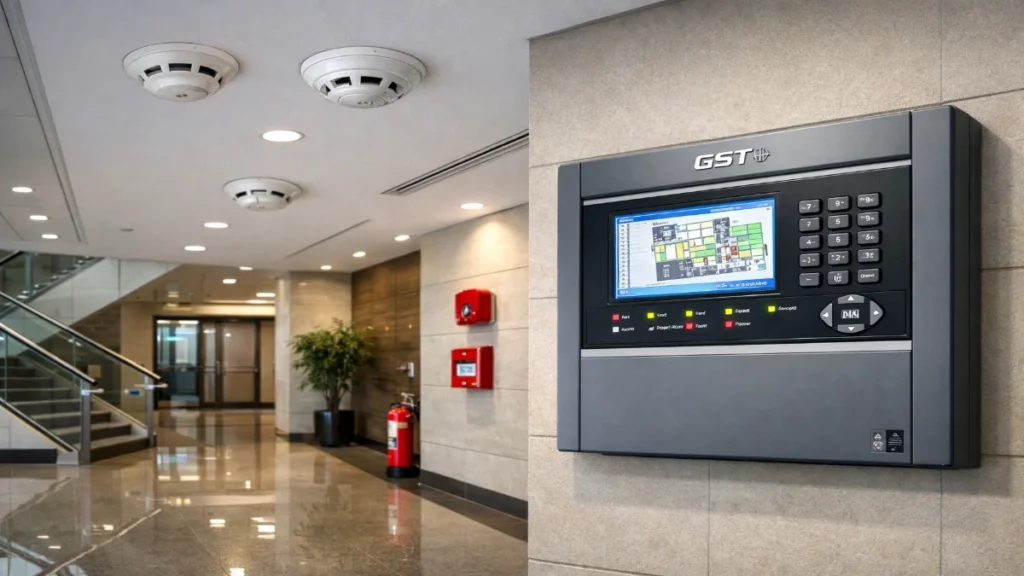
Fire safety in large buildings is no longer just about compliance; it is about risk reduction, operational continuity and protecting human life. As infrastructure grows more complex, traditional fire alarm technologies struggle to provide the speed, accuracy and intelligence needed for modern environments. This is where GST Addressable Fire Alarm Systems by Gulf Security Technology stand out. Designed for large-scale fire safety projects, these systems significantly reduce risk through precise detection, faster response and intelligent system control. In this article, we explain why engineers, consultants and facility managers trust GST addressable systems and how they help minimise fire-related risks in large projects such as hospitals, airports, data centres, commercial complexes and industrial facilities. Understanding Risk in Large Fire Safety Projects Before discussing solutions, it is important to understand why risk is higher in large projects. Common Fire Safety Risks in Large Buildings Large fire safety projects face multiple challenges: A delayed or inaccurate alarm response can lead to: To control these risks, intelligent fire detection and monitoring systems are essential. What Is a GST Addressable Fire Alarm System? A GST addressable fire alarm system assigns a unique digital address to every connected device, detectors, call points, sounders and modules. This allows the control panel to identify exactly which device is in alarm, trouble, or fault condition. Unlike traditional systems, addressable technology provides actionable information, not just alerts. Addressable vs Conventional Systems: Risk Perspective Understanding the difference between addressable and conventional systems highlights why addressable technology is preferred for large projects. Conventional Fire Alarm Systems A conventional fire alarm panel divides a building into zones. When an alarm occurs, the panel only identifies the affected zone, not the specific device. Risk limitations: GST Addressable Fire Alarm Systems GST addressable systems pinpoint the exact device location, such as: This precision dramatically reduces risk by enabling faster, more informed decisions. How GST Addressable Systems Reduce Fire Risk 1. Precise Fire Location Identification One of the biggest risk factors during a fire event is uncertainty. GST addressable systems eliminate this by: This accuracy helps emergency teams respond faster and more effectively, limiting fire spread. 2. Faster Emergency Response Time In fire safety, every second matters. GST addressable systems: Because responders know where to go immediately, the risk of escalation reduces significantly. 3. Intelligent False Alarm Management False alarms are a serious risk in large buildings. They can: GST addressable systems use: This intelligence allows the system to distinguish real fire conditions from environmental disturbances, minimising unnecessary evacuations. 4. Continuous System Health Monitoring A fire alarm system that fails silently creates a hidden risk. GST addressable systems continuously monitor: Any fault is immediately reported to the control panel, ensuring no undetected failures remain in the system. 5. Reduced Cabling and Installation Risk Complex cabling increases installation errors and future faults. GST addressable systems: Fewer cables mean: 6. Scalable Design for Future Growth Large projects often expand over time. A rigid system creates future risks. GST addressable solutions are: New devices can be added without major rewiring, ensuring long-term risk control as the facility grows. Role of GST Addressable Detectors in Risk Reduction Detection quality directly affects system performance. GST addressable detectors provide: Compared to conventional detectors, addressable detectors provide individual status reporting, making maintenance and fault detection more reliable. Centralised Control Through GST Fire Alarm Systems A GST fire alarm system acts as a centralised command centre for large facilities. Benefits of Centralised Intelligence This centralised approach ensures consistent risk management across the entire project. Cause-and-Effect Programming: Smarter Risk Control GST addressable panels allow detailed cause-and-effect logic, such as: Instead of a full building response, actions remain targeted and controlled, reducing unnecessary disruption and improving safety outcomes. Compliance and Regulatory Risk Reduction Non-compliance is a major project risk. GST addressable systems are designed to meet: Their detailed event logs and diagnostics simplify: Lower Maintenance Risk Over System Lifetime A system that is difficult to maintain becomes unreliable over time. GST addressable systems: This proactive maintenance approach ensures the system remains fully operational when needed most. Real-World Applications Where GST Reduces Risk GST addressable systems are ideal for: In each case, the system’s intelligence helps manage complex risk environments effectively. Addressable vs Conventional: Long-Term Risk View Factor Conventional System GST Addressable System Fire Location Accuracy Zone-based Device-level Response Speed Slower Faster False Alarm Control Limited Advanced Maintenance Visibility Low High Scalability Restricted Flexible This comparison clearly shows why addressable systems are safer for large projects. Why GST Is the Safer Choice Large fire safety projects demand accuracy, reliability and intelligence. GST addressable fire alarm systems reduce risk by: For consultants, engineers and building owners, choosing GST addressable systems is not just a technical decision; it is a risk management strategy that protects lives, assets and reputations. Read Also: Why Engineers Choose GST-IFP4E Addressable Fire Alarm Panel for Mid-to-Large Projects Read Also: Lifecycle Cost Advantages of GST Addressable Fire Alarm Systems
Why Engineers Choose GST-IFP4E Addressable Fire Alarm Panel for Mid-to-Large Projects
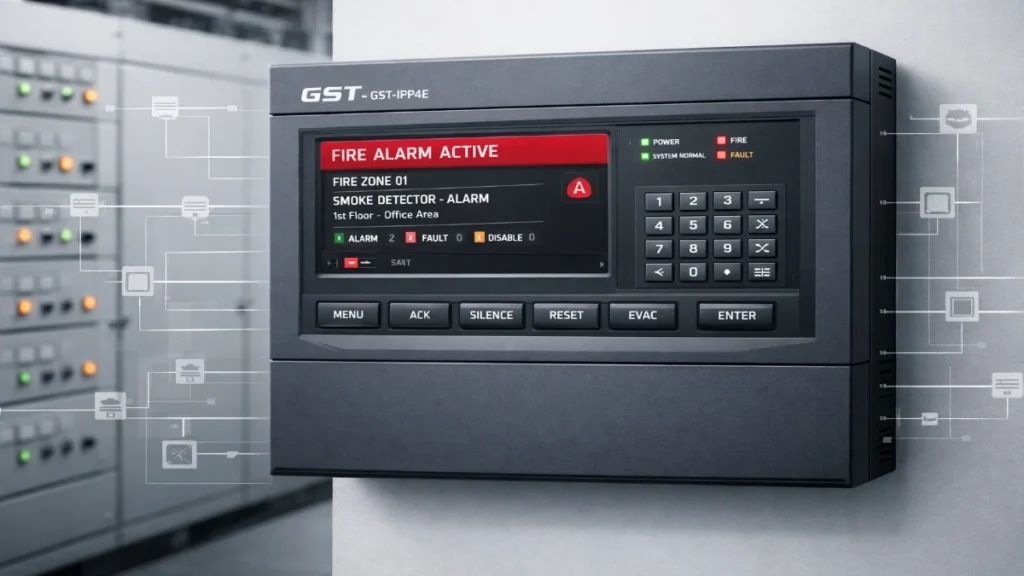
Fire alarm system design is one of the most critical responsibilities for consulting engineers, system integrators and project managers. In mid-to-large commercial and industrial projects, engineers must balance system reliability, scalability, compliance, lifecycle cost and ease of maintenance, all without compromising life safety. This is where the GST-IFP4E Addressable Fire Alarm Panel has earned strong trust among fire safety professionals. Designed by GST (Gulf Security Technology), this intelligent panel delivers robust performance, advanced addressability and project-friendly flexibility that engineers consistently prefer for complex installations. This article explains why engineers choose the GST-IFP4E addressable fire alarm panel for mid-to-large projects, covering technical advantages, design flexibility, real-world usability and long-term value. Understanding the Role of the GST-IFP4E in Modern Fire Alarm Design The GST-IFP4E is a fully intelligent addressable fire alarm control panel designed to manage large numbers of devices across multiple zones, floors or buildings. Unlike entry-level systems, it is built for high-occupancy, high-risk, and mission-critical environments. Engineers value this panel because it offers: These qualities make it ideal for airports, hospitals, IT parks, malls, high-rise buildings, manufacturing plants and infrastructure projects. 1. Addressability That Engineers Can Fully Trust Exact Location Identification During Emergencies One of the main reasons engineers select the GST-IFP4E is its true addressable architecture; each device, whether a detector, module, or call point, has a unique digital address. This allows the panel to: Compared to a conventional fire alarm panel, which only shows a zone in alarm, an addressable fire alarm panel like the GST-IFP4E provides pinpoint accuracy. This level of clarity is essential in large buildings where seconds matter. 2. Scalable Design for Mid-to-Large Projects Designed to Grow With the Project Mid-to-large projects often evolve during execution. Engineers prefer systems that can scale without redesigning the entire fire alarm layout. The GST-IFP4E supports: This scalability makes it far more suitable than traditional conventional fire alarm panel systems, which quickly reach their limitations in complex projects. 3. Seamless Integration With GST Fire Alarm Ecosystem One Brand, One Responsibility Engineers often face compatibility challenges when mixing products from different manufacturers. The GST-IFP4E eliminates this risk by working seamlessly with the complete GST fire alarm system range. This includes: Using a single, unified ecosystem improves system stability and simplifies approvals, testing and long-term maintenance. 4. Superior Performance of GST Addressable Detectors Intelligent Detection With Reduced False Alarms The GST-IFP4E supports advanced addressable detectors that use intelligent algorithms to differentiate between real fire conditions and environmental disturbances. Benefits engineers value: When compared to conventional detectors, addressable detectors connected to the GST-IFP4E provide continuous communication and real-time status updates, which are critical for large projects. 5. Clear Advantage Over Conventional Fire Alarm Panels Why Engineers Move Beyond Conventional Systems While conventional fire alarm panels still have their place in small buildings, they fall short in modern mid-to-large developments. Engineers choose GST-IFP4E because it overcomes key limitations such as: In contrast, the GST-IFP4E simplifies design, improves diagnostics and reduces long-term costs, making it a strategic choice for professional engineers. 6. Faster Commissioning and Easier Programming Saving Time on Site Project timelines are always tight. Engineers appreciate that the GST-IFP4E offers: These features significantly reduce commissioning time, especially in projects with hundreds or thousands of devices. Faster commissioning means: 7. Advanced Fault Management for Mission-Critical Sites Built for Reliability In large installations, system faults are inevitable. What matters is how the panel handles them. The GST-IFP4E provides: This ensures the fire alarm system remains operational even during partial failures, an essential requirement in hospitals, data centres and industrial facilities. 8. Compliance With Global and Local Fire Standards Confidence for Consultants and Authorities Engineers must design systems that pass approvals without complications. The GST-IFP4E is designed to comply with international fire safety standards, making it suitable for global and regional projects. Compliance benefits include: This makes the panel a dependable choice for consultants working on regulated, high-value projects. 9. Lower Lifecycle Cost Despite Advanced Features Smart Investment for Long-Term Projects Although addressable systems have a higher initial cost than conventional ones, engineers understand that total lifecycle cost matters more. The GST-IFP4E reduces long-term expenses through: Compared to systems based on conventional detectors, the GST-IFP4E delivers better value over the life of the building. 10. Future-Ready Architecture Designed for Tomorrow’s Buildings Smart buildings demand intelligent fire systems. The GST-IFP4E supports: Engineers choose it because it protects their design from becoming obsolete, even as building technology evolves. Why GST-IFP4E Is the Engineer’s Choice Engineers choose the GST-IFP4E Addressable Fire Alarm Panel because it delivers precision, reliability, scalability and long-term value, all essential for mid-to-large fire safety projects. By combining intelligent detection, seamless integration, robust fault handling and future-ready design, the GST-IFP4E stands out as a professional-grade solution that engineers can specify with confidence. For projects where safety, compliance and performance cannot be compromised, the GST-IFP4E remains a trusted and proven choice. Read Also: Lifecycle Cost Advantages of GST Addressable Fire Alarm Systems Read Also: What Makes the GST-200N Panel Consultant-Friendly in Fire Alarm Design