
Addressing Authority Compliance Issues Using GST Fire Alarm Panels
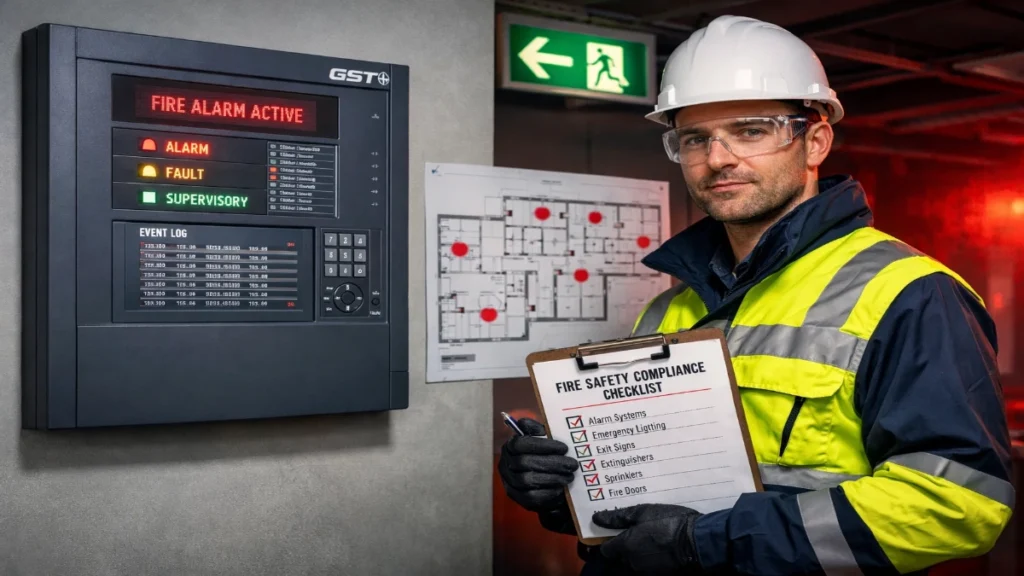
Fire safety compliance is no longer optional. In India and across most regions, authorities are stricter, audits are more frequent and penalties for non-compliance can be serious. For building owners, facility managers, and project contractors, the real challenge is not only installing a fire alarm system but also proving that it meets authority expectations in terms of documentation, performance and maintenance. This is where a reliable fire alarm platform makes a huge difference. GST fire alarm panels are widely used in commercial, industrial and critical facilities because they help teams solve the most common compliance failures: poor zone mapping, unclear alarm records, weak fault monitoring, difficult expansion and inconsistent service logs. In this guide, you will learn how to address authority compliance issues using GST Fire Alarm Panels, what inspectors check, where projects typically fail and how to stay ready for approvals and renewals year-round. What “Authority Compliance” Means in Fire Alarm Projects Authority compliance means your fire alarm system must satisfy the requirements of local fire departments, consultants and safety auditors. Compliance is not only about “system working.” It is about the system working correctly, reporting correctly and remaining maintainable over time. Authorities usually look for proof in three major areas: 1) Design compliance 2) Installation compliance 3) Operational compliance Many sites fail not because the system is bad, but because the system cannot prove performance in a structured, audit-friendly way. The Most Common Authority Compliance Issues (And Why They Happen) Before we discuss solutions, let’s highlight the common reasons inspections fail: Issue 1: Unclear zoning and poor fire location identification Inspectors want quick, accurate identification of the alarm area. If the system only shows “Zone 3” without a meaningful location, it creates confusion during emergencies and audits. Issue 2: Too many false alarms and nuisance triggers Frequent false alarms become a serious compliance risk because authorities treat them as operational negligence. False alarms may come from incorrect detector selection, poor programming or environmental conditions. Issue 3: Faults are not detected, logged, or responded to Loose wiring, device removal, loop short/open faults, these must be supervised and reported properly. If faults stay hidden, compliance fails. Issue 4: Missing documentation and event records Many sites cannot produce clean logs during audits: Issue 5: Expansion was done incorrectly Sites often expand floors or modify partitions. If the system is not scalable or changes are made without updating drawings and programming, compliance breaks. Issue 6: Incompatible integrations Authorities frequently check interlocks: Why GST Fire Alarm Panels Help Fix Compliance Problems A fire alarm panel should do more than just trigger an alarm. It should support compliance for years by being stable, scalable and easy to audit. That’s where GST solutions stand out. Here’s how GST fire alarm panels support better compliance outcomes. 1) Better Fire Location Identification With Addressable Intelligence One of the strongest compliance advantages of a GST addressable fire alarm panel is accurate identification. Instead of just identifying a zone, the system can identify: This level of clarity reduces response time and makes authority inspections smoother. Compliance win: Authorities love systems where the fire team can instantly identify where the activation happened. 2) Cleaner Documentation and Traceable Event History Authorities don’t only verify that devices work. They verify accountability. GST panels support clear event reporting, such as: That makes it easier for facility teams to show that they track events and respond properly. Compliance win: You can present a structured system history during audits and renewals. 3) Strong Fault Monitoring Improves Audit Confidence A big compliance failure happens when fault detection is weak or ignored. Authorities often test: GST fire alarm panels are designed to support reliable supervision, helping your team detect problems early instead of facing surprise failures during inspection day. Compliance win: If faults appear early, corrective action becomes easy and auditable. 4) Easier Device Mapping and Labelling (A Common Inspection Point) Authorities frequently check whether device naming is meaningful. For example, a “Smoke Detector 012” is not enough. They expect something like: GST systems allow structured programming, so you can standardise naming, which boosts readability for both responders and auditors. Compliance win: Clear mapping reduces rejection risk during commissioning. 5) Addressable vs Conventional: Choosing the Right System for Authority Requirements Not every building needs the same setup. In some small premises, a conventional fire alarm panel may still be acceptable. In larger or more complex sites, authorities often prefer addressable for accuracy and maintenance control. When a conventional system is usually acceptable Where addressable is a smarter compliance choice GST offers both conventional and addressable options, so you can meet compliance while staying practical on cost and scale. 6) Reducing False Alarms With Smarter Configuration False alarms can become a compliance headache because they trigger: GST panels can support better alarm control when the system design and programming are handled properly. You can reduce nuisance alarms by: Compliance win: Lower false alarm frequency improves authority trust and builds operational discipline. 7) Better Support for Site Expansion Without Breaking Compliance Real buildings grow. Floors change. Tenants change. Warehouses add partitions. And compliance fails when expansions are done without proper updates. GST addressable systems are designed to support scaling and reconfiguration more smoothly than systems that require major rewiring and complicated changes. Best practice: Whenever expansion happens, update: Compliance win: You stay inspection-ready even after modifications. 8) Integration-Readiness Helps With Authority Interlocks Authorities often validate interlocks because fire safety is not isolated anymore. Common integrations include: With the right design, GST panels make integration management practical and structured. Compliance win: Your fire alarm becomes part of a complete life safety ecosystem. What Inspectors Commonly Check During Fire Alarm Compliance Audits If you want to pass approvals with confidence, align your site readiness with typical inspection practices. Inspectors usually check: System health checks Device checks Fault simulation Documentation review A GST-based system helps you present your setup clearly and confidently, especially when you maintain a consistent documentation routine. A Simple Compliance Checklist You Can Follow With GST Panels Here’s
Common Pitfalls in Fire Alarm Retrofits & How GST Panels Reduce Risk
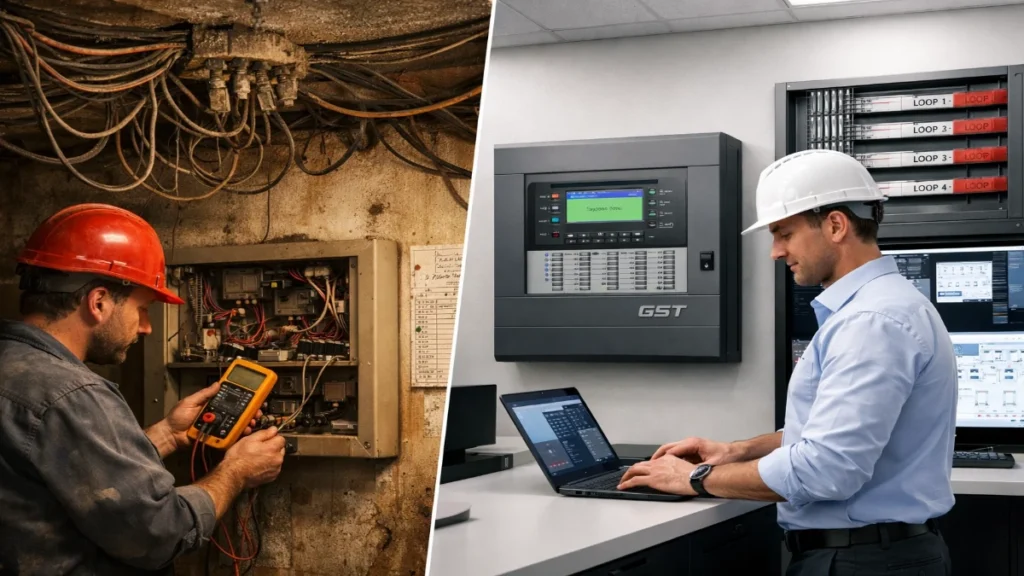
Quick summary: Retrofits fail when teams underestimate cable health, load calculations, device compatibility, zoning logic and commissioning time. GST panels reduce risk by improving fault isolation, loop stability, system scalability, diagnostics and integration readiness, especially in complex mixed environments. Fire alarm retrofits look simple on paper: replace old devices, upgrade the control panel, add notification and hand over a safer facility. But on real sites, factories, hospitals, warehouses, hotels, malls or commercial towers, retrofits are rarely straightforward. You are working with existing cables, active operations, legacy devices, partial drawings and tight shutdown windows. That is why fire alarm retrofits often fail, not because of bad intentions, but because of hidden risks that show up late: unstable loops, false alarms, cable faults, incomplete cause-and-effect logic or compliance gaps. In this article, we’ll break down the most common retrofit pitfalls and explain how GST fire alarm panels help reduce risk through smarter diagnostics, flexible architecture, stable performance and easier commissioning. We’ll also cover practical retrofit strategies that improve reliability and help consultants and project teams close faster with fewer surprises. Why Fire Alarm Retrofits Are Riskier Than New Installations A new installation is built around clean drawings, controlled environments and brand-new cabling and devices. A retrofit is different: Even when the “scope” looks small, the risk is usually bigger. That’s why a fire alarm retrofit must be treated like a risk management project, not just a supply-and-install job. Top 12 Common Pitfalls in Fire Alarm Retrofits Below are the pitfalls that repeatedly create delays, disputes, failures and post-handover complaints. 1) Assuming Old Cables Are “Good Enough” Many retrofit projects reuse existing field wiring to save time and cost. This can work, but only after testing. The problem is that old cables may have: Result: Earth faults, intermittent loop drops, random faults and false alarms. How GST panels reduce risk:GST systems support stable loop communication and provide strong fault diagnostics. A modern addressable fire alarm panel can identify loop issues faster, helping teams isolate faulty segments instead of guessing across floors. 2) Mixing Legacy Devices Without Compatibility Planning Retrofits often involve partial upgrades. For example, a team upgrades the panel but tries to reuse old detectors and modules. This becomes risky if: Result: Devices not responding, missing alarms, frequent troubles, or unpredictable behaviour. How GST panels reduce risk:GST retrofit-friendly product ecosystems make it easier to standardise devices under one platform. When combined with addressable detectors, you get a predictable device response and easier mapping during commissioning. 3) Underestimating Cause-and-Effect Complexity Many retrofits fail at the programming stage, not installation. Cause-and-effect rules include: If these rules are not revalidated during retrofit, logic may remain incomplete or incorrect. Result: Alarms trigger, but output actions fail, leading to audit failures. How GST panels reduce risk:GST panels are built for structured configuration and easier testing of logic. Teams can validate outputs, zones and event actions more confidently during FAT/SAT. 4) Wrong Zoning or Loop Segmentation Decisions In many older systems, zoning was designed around wiring convenience, not life safety strategy. During retrofit, teams copy the old zoning instead of improving it. Bad zoning causes: How GST panels reduce risk:GST solutions support scalable loop architecture and better segmentation planning. The result is easier fault isolation and safer operations in phased retrofit jobs. 5) Ignoring Battery and Load Calculations This is one of the most common compliance failures. Retrofits often add: But teams sometimes keep the same PSU/battery concept. Result: The panel works during normal power but fails backup runtime requirements. How GST panels reduce risk:GST fire alarm panels support modern power management planning. With correct sizing, you avoid handover-day failures and reduce long-term operational risk. 6) Overlooking NAC Circuit Limitations Notification Appliance Circuits (NAC) are a common trouble area. In older buildings: Result: Low volume, inconsistent alerting, frequent NAC faults. How GST panels reduce risk:Modern GST platforms support structured notification design. When done right, you get stable performance and easier compliance verification. 7) Poor Labelling and Missing Documentation Retrofit teams often inherit: Result: Longer downtime, wrong device mapping, confusion during emergency response. How GST panels reduce risk:GST panels help during commissioning by enabling clearer device identification and mapping workflows, making it easier to build accurate as-builts for the facility team. 8) Not Testing for Earth Faults Early Earth faults are common in old sites, especially industrial plants and basements. They usually come from: Result: Repeated faults, reduced reliability, delayed project completion. How GST panels reduce risk:A robust gst fire alarm system supports better fault reporting and faster isolation practices, reducing the time wasted on repeated trial-and-error fixes. 9) Trying to Retrofit in Live Areas Without a Phased Strategy Fire alarm retrofits cannot disrupt operations, especially in: If you don’t plan the phasing, you risk leaving areas unprotected. How GST panels reduce risk:GST retrofit strategies work well with phased implementation. A well-planned addressable fire alarm panel supports scalable expansion so you can upgrade zone-by-zone without chaos. 10) Wrong Detector Selection for the Actual Environment A very common retrofit mistake is copying the old detector types without re-evaluating the site. Examples: Result: Nuisance alarms, occupants ignoring alarms and eventually system bypass habits. How GST panels reduce risk:GST supports a complete device ecosystem. With the right mix of addressable detectors and well-matched applications, you reduce false alarms and build trust in the alarm system. 11) Integrations Done as an Afterthought Modern buildings often require integration with: If integration is planned late, it causes scope disputes and delays. How GST panels reduce risk:GST panels are integration-ready when planned correctly. This reduces rework and helps the system behave as a coordinated safety network instead of isolated boxes. 12) Rushing Commissioning and Handover Retrofit commissioning requires more time than new projects because every loop and device must be verified against unknown conditions. Common rushed steps: Result: Failures during consultant inspections, or worse, failures during real emergencies. How GST panels reduce risk:GST platforms support systematic testing and stable performance, enabling teams to validate the full system properly before handover. How GST Panels Reduce Retrofit