
Networked Fire Alarm Systems: How GST Panels Support Multi-Panel Integration
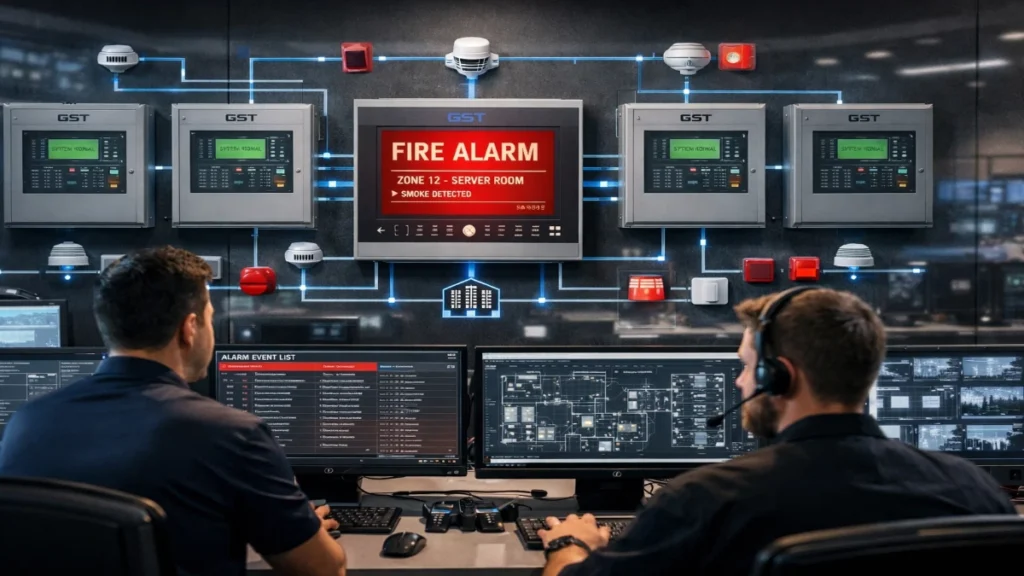
When a building is small, a single fire alarm control panel is usually enough. But the moment a project becomes larger, like a hospital, airport terminal, IT campus, manufacturing plant, mall or multi-tower residential complex, one panel often cannot handle everything efficiently. That is where networked fire alarm systems become essential. Instead of forcing one panel to manage every detector, every sounder, every module and every building zone, a networked system allows multiple fire alarm panels to work together as one unified solution. This is exactly what GST network-ready addressable panels are designed for. They help engineers create scalable, reliable and authority-compliant fire alarm architectures without making system expansion complicated. In this article, you will learn how multi-panel fire alarm networking works, why it matters in modern projects and how GST panels support multi-panel integration for smooth site-wide fire safety. What Is a Networked Fire Alarm System? A networked fire alarm system is a setup where two or more fire alarm panels are connected, allowing them to communicate and share critical information such as: Think of it like multiple brains connected by a reliable communication line. Each panel handles its own building or zone locally, but the entire facility is controlled and monitored together. This design is extremely useful for: Instead of installing one oversized panel and pushing it beyond practical limits, engineers install multiple panels, then network them into a single coordinated system. Why Multi-Panel Integration Matters in Large Fire Alarm Projects Fire safety is not only about detection. In large projects, it is about speed, coordination and continuity of operation. Here’s why networking is a smart engineering decision: 1) Better Coverage Across Multiple Buildings A single panel may struggle with long cable runs, power loads, and loop capacity. With a multi-panel design, each building gets its own panel, reducing complexity and improving response reliability. 2) Stronger System Redundancy If one panel is down for service, the rest of the network remains active. This improves uptime and safety for the facility. 3) Faster Troubleshooting and Maintenance Technicians can isolate faults building-wise instead of hunting across an entire campus from one centralised cabinet. 4) Easier Expansion for Future Phases When a facility expands, you can add a new panel and integrate it into the network instead of replacing the entire infrastructure. 5) Better Authority Compliance and Inspection Handling Authorities often expect proper zoning, control logic and event reporting across the project. Networked architecture supports this cleanly. Understanding the Basics: Single Panel vs. Multi-Panel Systems Before diving deeper into integration, let’s simplify how systems differ: Single Panel System Multi-Panel Integrated System If your project includes multiple staircases, separate blocks, or high-risk industrial sections, multi-panel integration often becomes the best practice. How GST Panels Support Multi-Panel Integration GST is widely trusted for large-scale deployments because its network-capable addressable solutions support integration in a structured, engineered way. Here is how GST panels help in real-world multi-panel network design: 1) Distributed Intelligence With Local Control In a network system, each panel still works independently for its own building. That means: This setup improves safety because the system does not rely only on “one central point.” 2) Unified Monitoring Across the Facility Networking allows operators to monitor the entire facility from one interface or command centre. Events such as: can be observed quickly, even if the panel is physically located elsewhere. That makes site safety management faster, especially for security control rooms. 3) Event Sharing Between Panels When a fire event occurs, a networked system can share data so that other panels respond correctly. Example:A detector triggers in the electrical room of one building. The network can allow: This becomes useful when you want synchronised evacuation logic, especially in shared zones like basements, connecting corridors or utility tunnels. 4) Scalable Design for Multi-Phase Projects Many sites don’t build everything at once. They complete Phase 1, then expand years later. GST networked panel architecture supports that practical reality: That makes GST a smart option for long-term scalability. 5) Smart Mapping and Location-Based Response In large facilities, confusion wastes time. Multi-panel integration supports a cleaner event structure where each building and zone is categorised properly. This improves emergency response because teams immediately know: That is exactly the level of clarity required in major projects. Core Components in a GST Multi-Panel Network Setup To understand integration better, it helps to know the building blocks of the system. Fire Alarm Control Panels (FACPs) Each building typically has its own addressable fire alarm panel, handling: Addressable Detectors These devices provide point-level accuracy and allow the panel to identify the exact device in alarm. Examples include: Conventional Detectors (for specific applications) Some zones can still use conventional circuits depending on design and budget. Control & Interface Modules Modules connect the fire alarm system with: Notification Appliances Sounders, hooters, strobes, speakers and PA evacuation interfaces coordinate site-wide alerts. Typical Architecture: How Multi-Panel Networking Works in Real Projects Here’s how engineers commonly design a networked GST fire alarm architecture in a multi-building campus: Step 1: Create Building-Level Fire Alarm Zones Each building has its own zones for: Step 2: Install One Panel per Building or Wing Instead of one central cabinet, panels are distributed: Step 3: Link Panels Through a Communication Network Panels share system data and events. The network can be designed so that: Step 4: Implement Cause-and-Effect Logic Cause-and-effect helps the system respond intelligently. Example rules: This is especially important in premium projects where compliance requires tested logic. How GST Supports Better Coordination During Emergencies A major benefit of multi-panel integration is coordinated response. Faster Alarm Verification In large sites, false alarms happen, such as dust, maintenance activity, steam or minor smoke. Networking makes it easier to: Controlled Evacuation Strategy Not all buildings require full evacuation immediately. For example: Multi-panel systems make this logic practical and manageable. Better Notification Coverage Sounder circuits can be managed building-wise, allowing: Networked Systems vs. Large Conventional Systems Some projects still consider conventional setups for cost reasons. That approach can work for small buildings, but
How We Designed a Scalable Fire Alarm Network Using GST Addressable Panels for a Multi-Building Campus
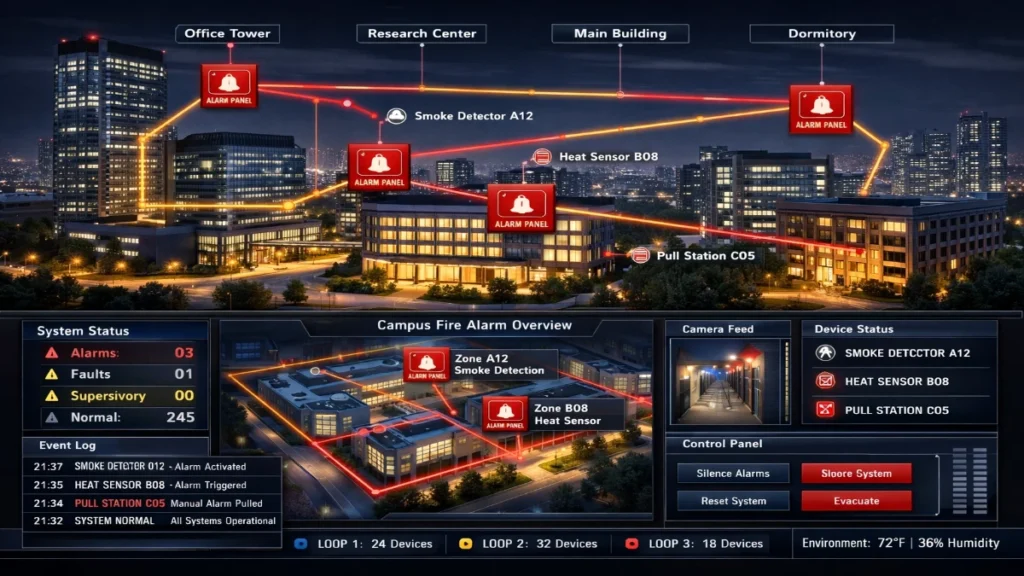
Designing a fire alarm system for a multi-building campus is very different from protecting a single commercial building. You don’t just need detection and alerting; you need scalability, zoning clarity, fast response visibility and long-term service simplicity. Add expansions, tenant changes and phased construction into the mix, and the project becomes a real engineering challenge. In this article, we’ll walk through how we designed a scalable campus-wide fire alarm network using a GST addressable architecture, built to handle multiple buildings, different occupancy types and future growth without redesigning the entire system. Whether you manage a university, industrial park, hospital campus, IT SEZ, warehouse cluster or township, this approach will help you understand what actually works in real-world deployments across India. Project Snapshot: What We Needed to Solve The campus had: The client’s priority was simple:“We want strong compliance, quick response and a system that doesn’t collapse when we expand.” This is exactly where a GST fire alarm system with a network-ready addressable layout becomes the right fit. Why GST Addressable Architecture Made Sense for a Campus A multi-building campus needs more than basic alarms. It needs intelligence and clarity. With a properly designed addressable fire alarm panel network: Compare that to a basic setup with a conventional fire alarm panel, where zones represent groups of devices and identifying the exact device location can take longer during an emergency. For a campus environment, seconds matter and so does location accuracy. Step 1: We Started With Risk Mapping, Not Just Drawings Many fire alarm projects start with layouts and BOQ. We started with something more practical: Risk-first planning We mapped: This allowed us to design fire alarm coverage based on behaviour and risk, not just building shape. Step 2: We Designed a Modular Loop Strategy Per Building The biggest issue in campus projects is loop overload and poor isolation. So we designed the structure like this: One building = one primary loop strategy Instead of making one huge campus loop, we used: This design delivered: This is where addressable detectors play a major role because every detector reports individually, which helps the maintenance team pinpoint issues without guesswork. Step 3: We Created a “Network Core + Building Nodes” Model To keep the system scalable, we followed a campus-style topology: Central monitoring hub (Main Security Room) Distributed panels (Building-Level Nodes) Each major building had a panel positioned strategically for: This approach supports a growing campus because you can add new building panels later without disturbing the network backbone. Step 4: We Standardized Devices to Reduce Operational Errors Multiple teams manage a multi-building campus over time, including security, maintenance, facilities and contractors. So device standardisation reduces long-term confusion. We standardised: When the system expands in the future, the same design language continues. That’s how scalability becomes operational, not just technical. Step 5: We Balanced Addressable and Conventional Zones Where Needed Yes, the primary design was addressable. But practical engineering means using the right tool for the right area. Some areas benefit from conventional wiring due to: So in a few controlled zones, we used a conventional fire alarm panel strategy as sub-coverage while still keeping the campus backbone addressable. This hybrid thinking is especially helpful in service blocks like: The key is: Use conventional detectors only where they simplify without weakening safety. Step 6: We Implemented Naming, Grouping, and Location Logic Like a Map In campus deployments, speed is not only about detection, but it’s also about response clarity. So every device identity was built using a consistent format: [Building Code] – [Floor] – [Zone Type] – [Device Number] Example: This makes it easy for security teams to respond quickly, even if they are new to the site. And it becomes a lifesaver during: This is an underrated strength of a well-designed addressable fire alarm panel implementation. Step 7: We Designed Alarm Cause & Effect for Controlled Evacuation A scalable campus system must avoid two extremes: So we built “Cause & Effect” logic in layers: Local events stay local (when safe) Cross-building escalation happens only with rules Example triggers: This protects the campus from panic while ensuring real emergencies trigger full action. Step 8: We Planned Cable Routes for Reliability and Maintenance Campus fire alarm cabling has one major enemy:distance + interference + physical damage risks So we planned cable routes with: We also ensured that future pathways remain available for campus expansion, so the client doesn’t end up breaking walls again later. Step 9: We Used Zoning That Matches Campus Movement Many systems fail because zoning does not match real-life movement. So we designed zoning based on: This ensures evacuation instructions feel logical. That is exactly why a structured gst fire alarm system delivers better response accuracy on campuses. Step 10: Commissioning Was Planned as a Phase-Based Checklist Campus projects usually run in phases. That means: So commissioning was structured with: Stage 1: Device installation validation Stage 2: Loop testing per building Stage 3: Network integration testing Stage 4: Documentation and handover This approach reduced delays, reduced rework and kept compliance clean during audits. Real Engineering Challenges We Solved (And How) 1) Long-distance reliability between buildings Solution: We kept building loops independently and relied on structured panel networking instead of dragging loops across long distances. 2) Different building types within one campus Solution: Risk-based device planning ensured labs, offices and utilities got the right detection approach. 3) Maintenance team continuity problems Solution: Standard naming, device mapping and documentation made the service easier even if staff changed later. 4) Expansion readiness Solution: Extra capacity planning ensured new buildings could join the system with minimal disruption. Why This Design Becomes Scalable in the Real World “Scalable” is not just adding more devices. A scalable fire alarm network means: By designing the system around these principles, the campus gets a fire alarm network that stays stable even after years of growth. What EPC Teams and Facility Managers Learn From This Approach If you’re planning a large campus project, here are the top lessons: This is