
9 Warning Signs Your CCTV System Needs an Upgrade
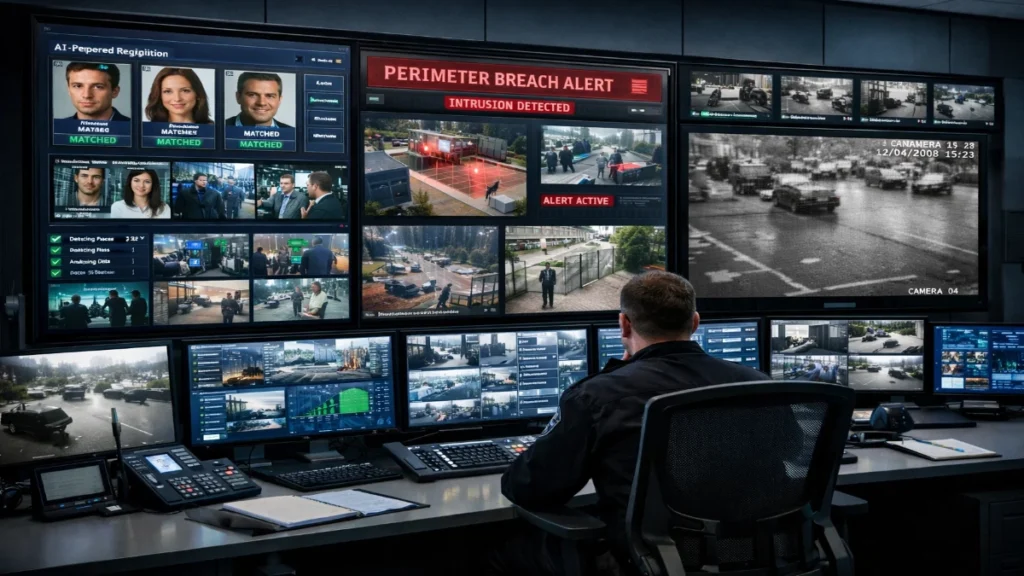
In today’s security landscape, a CCTV system is not just a monitoring tool; it is a core part of operational safety, compliance, risk management and business continuity. Whether you manage a manufacturing plant, corporate office, warehouse, hospital, or retail chain, your surveillance infrastructure directly impacts security response time, forensic accuracy and liability protection. Yet many businesses continue to rely on outdated systems installed 7–10 years ago. Technology has evolved rapidly, from analogue DVR systems to AI-powered IP surveillance, and older systems often fail when they are needed most. If you are unsure whether your current CCTV system still meets modern standards, this guide will help you evaluate it clearly and practically. Below are 9 critical warning signs that indicate your CCTV system needs an upgrade. 1. Poor Video Quality and Blurry Footage Video clarity is the primary purpose of a surveillance system. If you cannot clearly identify faces, license plates, or movement patterns, your system fails its core function. Older analogue cameras typically record in: Modern IP cameras now offer: Why This Matters In forensic investigations, unclear footage becomes legally weak evidence. Insurance claims, internal investigations and law enforcement cooperation all depend on image clarity. If your footage looks pixelated when zoomed, your CCTV system is technologically outdated. 2. Limited Storage Capacity Many legacy DVR systems rely on small hard drives with restricted recording cycles. This creates two major risks: Modern systems support: If your system stores less than 30 days of footage in a commercial environment, it may not meet compliance or operational requirements. Storage capacity directly affects accountability. 3. Frequent Downtime or System Failures Do you experience: Frequent system failure indicates ageing hardware, outdated firmware or unsupported software. Security systems must operate 24/7. Even a few hours of downtime can create blind spots that expose facilities to theft, vandalism, or safety incidents. Modern surveillance infrastructure offers: If your system fails without warning, it needs an upgrade. 4. No Remote Access or Mobile Monitoring Today’s security management demands real-time access from anywhere. If your system: You are operating below industry standards. Modern IP-based systems allow: For engineers and facility managers overseeing multiple sites, remote access is no longer optional; it is operationally essential. 5. Incompatibility with Modern Security Systems A CCTV system should not operate in isolation. It must integrate with: If your cameras cannot integrate with newer IP-based infrastructure, you limit your automation capabilities. Modern systems enable: Integration improves response time and reduces false alarms. 6. No Smart Analytics or AI Capabilities Traditional CCTV systems simply record footage. Modern systems analyse it. Advanced video analytics include: AI reduces manual monitoring and enhances threat detection. Without analytics, security teams rely entirely on human observation, which increases error probability. For large enterprises and industrial sites, AI-powered surveillance is becoming standard practice. 7. Cybersecurity Vulnerabilities Older CCTV systems often: These vulnerabilities expose your network to cyber threats. Surveillance systems are now common entry points for hackers targeting corporate infrastructure. Modern systems include: If your system vendor no longer provides updates, your security risk increases significantly. 8. High Maintenance and Repair Costs If you frequently: It may be more cost-effective to upgrade entirely. Legacy systems require more manual maintenance due to ageing components. Modern IP systems offer: Upgrading reduces long-term operational expenditure. 9. Your Business Has Expanded: But Your CCTV Has Not Business growth changes security requirements. Consider whether: If your CCTV coverage remains unchanged, your risk exposure increases. Modern scalable systems allow: Security infrastructure must evolve with organisational growth. Additional Indicators Engineers Should Evaluate Engineers and security managers should also assess: Network Bandwidth Capacity IP cameras require optimised network design. Poor network planning leads to latency and frame drops. Power Redundancy Do you have UPS backup for cameras and NVRs? Environmental Suitability Industrial sites require IP-rated and weatherproof cameras. Compliance Standards Ensure your system meets: Upgrading is not just about technology; it is about operational resilience. How Modern CCTV Systems Improve Operational Efficiency Upgrading your CCTV system offers measurable benefits: AI-based analytics transform surveillance from passive recording to proactive threat detection. For industrial engineers, this shift aligns surveillance infrastructure with smart facility management principles. Final Thoughts A CCTV system should provide clarity, reliability, intelligence and resilience. If your infrastructure shows even three or four of the warning signs discussed above, it is time to conduct a professional system audit. Security failures rarely announce themselves in advance. Most organizations realize system weaknesses only after an incident occurs. Upgrading your CCTV system is not a cosmetic improvement. It is a strategic investment in risk management, operational continuity and digital transformation. Engineers, facility managers and security heads must evaluate surveillance infrastructure with the same seriousness as fire safety systems, network architecture and physical access control. Proactive upgrades prevent reactive damage control. If your current system feels outdated, slow, or unreliable, that instinct is usually correct. Now is the right time to assess, plan and modernise your CCTV infrastructure before vulnerabilities turn into costly incidents. Read Also: How AI-Based CCTV Cameras Improve Threat Detection Read Also: Industrial Surveillance + Fire Safety: A Unified Protection Strategy
How AI-Based CCTV Cameras Improve Threat Detection
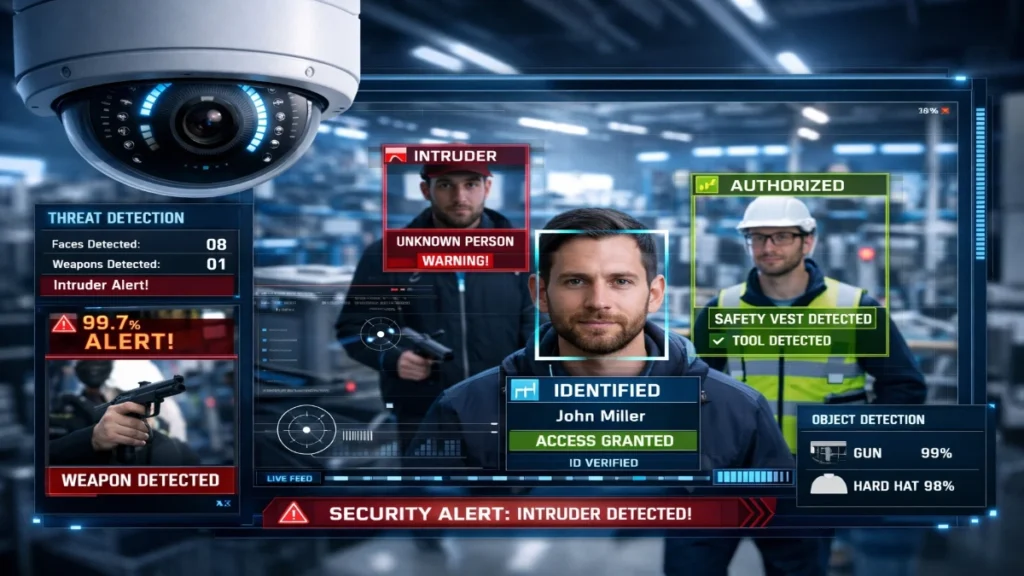
Security threats are becoming more complex. Traditional CCTV systems record footage, but they depend heavily on human monitoring. In large facilities, industrial plants, logistics hubs and commercial buildings, this approach leaves room for delay and human error. AI-based CCTV cameras change this completely. They do not just record events, they analyse, interpret and respond in real time. They transform passive surveillance into intelligent threat detection systems. In this article, you will learn: This guide is written in simple language, uses active voice and focuses on practical value. What Are AI-Based CCTV Cameras? AI-based CCTV cameras combine traditional video surveillance hardware with artificial intelligence software. These systems use: Unlike conventional cameras, AI cameras do not just capture footage. They analyse patterns, detect anomalies and trigger alerts automatically. For example, a traditional camera records someone entering a restricted zone. An AI-based camera detects unauthorised access instantly and sends an alert within seconds. This difference saves time, and sometimes lives. Why Traditional CCTV Systems Fall Short Traditional CCTV systems rely on human monitoring. In large facilities, operators must watch multiple screens simultaneously. Fatigue reduces attention. Important incidents get missed. Common limitations include: When engineers design safety systems, they prioritise reliability and response speed. Traditional CCTV systems often fail to meet these standards in dynamic environments. AI-based CCTV systems address these weaknesses directly. How AI Improves Threat Detection AI enhances surveillance systems through intelligent automation. Let’s break down the core improvements. 1. Real-Time Threat Detection AI algorithms process video streams instantly. They identify: Instead of reviewing footage after an incident, security teams receive immediate alerts. This drastically reduces response time. In industrial environments, even a few seconds can prevent major damage. 2. Reduced False Alarms Traditional motion detection systems trigger alerts for: AI models distinguish between humans, vehicles and environmental movement. This reduces nuisance alarms. Lower false alarms improve operational efficiency. Security teams respond only to genuine threats. 3. Behavioural Pattern Analysis AI systems learn normal patterns over time. They understand: When abnormal behaviour appears, the system flags it automatically. For example: If a warehouse normally closes at 8 PM and someone enters at 2 AM, the system marks this as suspicious immediately. This predictive capability improves risk management. 4. Facial Recognition and Identity Verification AI-enabled cameras can integrate facial recognition technology. This supports: In secure facilities, AI verifies identities in real time. If an unauthorised individual attempts entry, the system triggers an alert. Engineers designing secure infrastructure appreciate this automation because it reduces dependency on manual checks. 5. License Plate Recognition (LPR) AI-powered CCTV systems can read and log vehicle number plates automatically. Applications include: This helps in tracking suspicious vehicles and managing vehicle access efficiently. 6. Object Detection and Classification AI models detect specific objects such as: In manufacturing plants, AI cameras monitor compliance with safety rules. They detect whether workers wear protective gear. This adds a proactive safety layer beyond traditional surveillance. Core Technologies Behind AI-Based CCTV Engineers value understanding the technical backbone. Here are the main technologies that power intelligent surveillance. Computer Vision Computer vision enables cameras to interpret visual information. It converts images into structured data. The system detects shapes, movements and patterns. Deep Learning Deep learning models train on large datasets. These models improve accuracy over time. The more data they process, the better they recognise threats. Edge Computing Modern AI cameras process data at the device level. This is called edge computing. Benefits include: Edge processing is especially useful in industrial zones with limited connectivity. Cloud Integration Some AI CCTV systems integrate with cloud platforms. Cloud systems enable: Organisations with multiple sites benefit significantly from this architecture. Industrial Use Cases of AI-Based CCTV AI surveillance is no longer limited to smart cities. Industrial and enterprise environments use it widely. Manufacturing Plants AI cameras detect: Early detection reduces downtime and protects workers. Warehouses and Logistics Hubs AI-based CCTV improves: In high-value storage environments, real-time detection reduces financial risk. Data Centres Data centres require strict access control. AI cameras: They enhance cybersecurity by strengthening physical security. Critical Infrastructure Power plants, oil refineries, and water treatment facilities rely on intelligent surveillance. AI systems detect abnormal movement patterns that could indicate sabotage or intrusion. Engineers prefer automated systems in such high-risk environments because human-only monitoring is insufficient. Benefits for Engineers and Security Professionals AI-based CCTV cameras offer measurable advantages. Faster Response Time Immediate alerts reduce incident escalation. Operational Efficiency Reducing false alarms improves productivity. Data-Driven Insights AI systems generate analytics reports. Engineers use this data to optimise: Scalability AI solutions scale easily across multiple locations. Cost Optimization While initial investment may be higher, long-term cost savings include: AI-Based CCTV and Compliance Many industries must comply with safety and security regulations. AI systems support: In sectors like pharmaceuticals, logistics and manufacturing, compliance monitoring becomes easier with automated documentation. Privacy and Ethical Considerations Responsible implementation is essential. Organisations should: AI improves security, but ethical governance ensures trust. Best Practices for Implementing AI-Based CCTV Engineers planning deployment should consider the following: Conduct a Risk Assessment Identify critical areas. Define specific threats. Choose the Right Hardware Select cameras with sufficient resolution and edge-processing capabilities. Integrate with Existing Systems Ensure compatibility with: Train Security Personnel AI automates detection, but teams must understand alert protocols. Regular System Updates Update AI models and firmware to maintain accuracy. Future of AI-Based CCTV AI surveillance technology continues to evolve. Future developments may include: Smart infrastructure will increasingly rely on AI-driven monitoring systems. Engineers who adopt intelligent surveillance early will gain operational advantages. Note: AI-based CCTV cameras represent a major advancement in security technology. They transform passive surveillance into proactive threat detection systems. By using real-time analytics, behavioural pattern recognition and intelligent automation, these systems reduce risk, improve response time and enhance operational efficiency. For engineers and security leaders, AI-based CCTV is not just a technology upgrade. It is a strategic investment in smarter, safer infrastructure. Organisations that implement intelligent surveillance today will build more resilient security systems for the future. Read Also: 5 Signs Your Fire Detection System Might