
Why should you use Addressable Fire Alarm Systems for Large-Scale Projects?
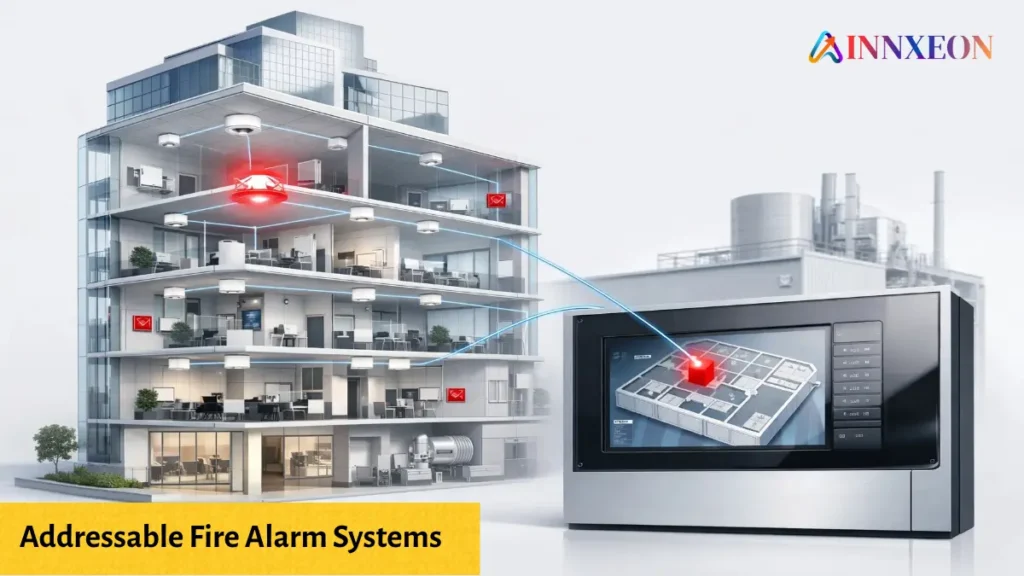
Large-scale projects introduce a level of fire-detection complexity far beyond that of standard buildings. When we design fire detection systems for industrial plants and high-rise buildings, we are not just installing detectors; we are building an intelligent safety infrastructure that must operate reliably across vast areas and thousands of devices. These environments present several critical challenges: In such environments, conventional fire alarm systems quickly reach their limitations. They cannot provide precise device-level identification or intelligent system diagnostics at scale. This is where modern intelligent systems, such as the GST addressable fire alarm system and advanced addressable fire alarm control panel architectures, become essential. Addressable fire alarm systems use digital communication and device-level monitoring to provide precise detection, faster response and scalable protection across large facilities. Instead of simply detecting that “something is wrong in Zone 4,” these systems identify the exact device, location and condition, transforming fire detection into a fully intelligent safety network. What is an Addressable Fire Alarm System An addressable fire alarm system is an intelligent fire detection system where every connected device has a unique digital address. The control panel communicates individually with each detector, module and notification device to monitor status in real time. Unlike conventional systems that monitor zones, addressable systems monitor individual devices. This architecture allows the control panel to identify: Modern platforms such as the GST addressable fire alarm system use loop-based communication networks that connect hundreds of devices on a single circuit while maintaining individual identification. Device-Level Communication and Monitoring In addressable systems, the addressable fire alarm control panel continuously communicates with every device connected to the loop. Each device responds with: This continuous communication ensures full system visibility. According to the National Fire Protection Association, intelligent systems improve response efficiency by providing precise alarm location information and real-time monitoring. You can explore their educational resources here:https://www.nfpa.org/news-and-research/resources Difference Between Addressable and Conventional Systems The key difference lies in identification and intelligence. Conventional system: Addressable system: This difference becomes critical in large facilities. Core Components of Addressable System Architecture Addressable fire alarm systems include several key components: 1. Control Panel The addressable fire alarm control panel acts as the system brain. It processes device data, manages communication and activates alarms. 2. Detection Loops Loops are communication circuits connecting addressable devices to the panel. 3. Addressable Detectors Modern addressable fire alarm detectors include: Each detector has a unique digital identity. 4. Interface Modules Modules connect external systems such as: These modules enable system integration and automation. Benefits of Using Addressable Fire Alarm Systems Addressable systems offer several critical advantages that directly improve safety, reliability and operational efficiency in large-scale projects. Precise Fire Location Identification This is one of the most important advantages. When an alarm occurs, the control panel displays the exact device location. For example: Instead of showing: “Zone 3 alarm” It shows: “Smoke detector – Level 5 – Electrical Room 2” This precise information allows emergency teams to respond immediately without wasting time searching. According to IFSEC Global’s fire detection guidance:https://www.ifsecglobal.com/fire-news/fire-alarm-systems-guide/ Precise alarm identification significantly improves emergency response efficiency in large facilities. Faster Fault Detection and Maintenance Addressable systems continuously monitor system health. They detect: The addressable fire alarm control panel immediately displays faults. Maintenance teams can locate and fix issues quickly without manual inspection of entire zones. This reduces downtime and improves system availability. Scalability for Large Projects This makes them ideal for: Reduced False Alarms Improved System Reliability Addressable systems improve reliability through advanced communication and fault isolation. Features include: If a wiring fault occurs, only a small portion of the loop is affected, not the entire system. This ensures continuous protection. Lower Long-Term Maintenance Cost Addressable systems reduce maintenance costs by enabling targeted servicing. Instead of testing entire zones, technicians can identify specific devices requiring maintenance. This reduces: The addressable fire alarm detectors also provide contamination alerts, allowing predictive maintenance. Why Addressable Systems Are the Best Choice for Large-Scale Projects Large-scale facilities require intelligent fire detection systems capable of managing thousands of devices reliably. Handling Large Device Counts Efficiently Addressable systems provide efficient device management and improved monitoring capabilities. Faster Emergency Response in Critical Environments Better System Monitoring and Control Addressable systems provide real-time system visibility. The fire alarm control panel displays: Facility teams can monitor the entire system from one interface. This improves safety management. Integration with Other Safety and Building Systems Modern addressable systems integrate with: This integration enables an automated response. For example: If a detector activates: The integrated fire detection system provides a coordinated safety response. Real-World Example: Industrial Manufacturing Plant; Why Addressable Systems Make a Critical Difference To understand the true impact of addressable fire alarm systems, let us consider a realistic, large-scale industrial manufacturing facility. This facility includes: The total covered area exceeds 85,000 square meters, with high ceilings, multiple hazard zones and different fire risk profiles. The fire detection system includes approximately: Total connected devices: 2,500+ This is a typical device scale in modern industrial environments. Scenario 1: If This Facility Used a Conventional Fire Alarm System In a conventional architecture, detectors are grouped into zones. To cover this facility properly, the system would require: Now consider a real incident scenario. At 2:15 AM, a smoke detector activates inside the warehouse’s electrical maintenance room. The control panel displays: “Zone 117 Alarm – Warehouse Section B” This creates several operational challenges: 1. No Precise Location Visibility The maintenance team only knows the alarm originated somewhere in Zone 117. This zone could include: The response team must physically search the entire zone. This wastes critical response time. 2. Slower Emergency Response Even a delay of 3–5 minutes in locating the fire source can significantly increase fire spread risk. In industrial environments, fire growth can accelerate due to: Delayed identification increases potential damage and safety risk. 3. Difficult Fault Identification Now consider a wiring fault in the same zone. The panel displays: “Zone 117 Fault” Technicians must manually inspect: This process may take hours or even days. During this period, the affected zone