
Importance of Redundancy and Fault Tolerance in Fire Alarm Systems
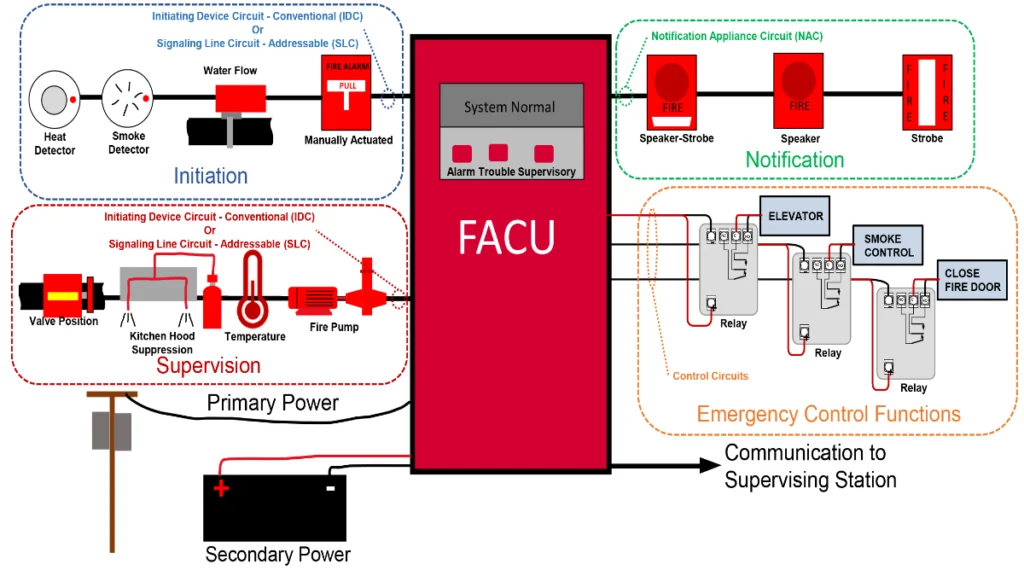
Introduction: Why Fire Alarm Systems Must Never Fail In fire protection engineering, few systems carry the same level of responsibility as a fire alarm system. Unlike conventional building technologies that improve convenience or efficiency, fire detection and alarm systems are life-safety critical infrastructure. Their primary function is to detect fire conditions early, alert occupants, and trigger emergency response actions that protect lives and assets. When a fire alarm system fails, the consequences extend far beyond equipment malfunction. A system failure can directly delay evacuation, prevent suppression systems from activating, and compromise the safety of everyone inside the building. For this reason, engineers treat fire detection networks differently from other building systems. The design philosophy prioritises continuous availability, fault tolerance and redundancy to ensure the system remains operational even when individual components fail. Life Safety Dependency on Fire Detection In most facilities, occupants rely entirely on the fire alarm system to detect emergencies. People cannot visually monitor every area of a building. Fires often start in concealed spaces such as: A properly designed GST Addressable Fire Alarm System continuously monitors these areas using distributed detectors and signalling networks. The moment abnormal conditions such as smoke or heat appear, the system processes signals and activates alarms. Without this early detection capability, occupants may not recognise a developing fire until conditions become dangerous. Consequences of Fire Alarm System Failure When a fire alarm system becomes unavailable or partially disabled, several risks immediately emerge. Delayed Fire Detection If detectors cannot transmit signals due to network failure or control panel malfunction, the fire may remain undetected for critical minutes. Notification Failure Even if detectors identify a fire, a fault in notification circuits could prevent alarms from sounding. Occupants would remain unaware of the danger. Evacuation Delay Delayed or absent alarms significantly slow evacuation. In large buildings, evacuation depends on coordinated alarm signalling and voice instructions. Suppression System Activation Delay Many suppression systems, including sprinklers, gas suppression systems and smoke control systems, integrate with fire alarm controls. A control panel failure may prevent automatic activation. High-Risk Environments Certain facilities depend heavily on uninterrupted fire detection systems. High-Rise Buildings Vertical evacuation complexity makes early detection essential. Hospitals Patients may not be able to evacuate quickly, requiring a compartmentalised fire response. Airports Large passenger volumes and complex infrastructure demand highly reliable detection networks. Industrial Plants Flammable materials and hazardous processes require immediate alarm signalling. Data Centres Even a small fire can cause catastrophic equipment damage and service disruption. Warehouses Large open storage areas can allow fires to spread rapidly before manual detection occurs. In these environments, the reliability of fire alarm systems directly affects life safety outcomes. Reliability Engineering in Fire Protection Modern fire alarm design integrates principles from reliability engineering, a discipline focused on maintaining system operation under failure conditions. Two key concepts dominate reliability-focused system design: RedundancyInstalling backup components or pathways that allow the system to continue operating when a primary component fails. Fault ToleranceDesigning the system so it continues functioning even when faults occur within the network. A well-designed fire detection network architecture, similar to those found within the Fire Detection System Category, uses these principles extensively. Redundant communication loops, backup power systems and distributed controllers ensure that single failures do not compromise life safety. In the sections that follow, we will explore how redundancy and fault tolerance work in modern fire alarm systems, why they are critical for compliance and reliability and how engineers implement them in real-world projects. Understanding Redundancy and Fault Tolerance in Fire Alarm Systems When engineers design life-safety systems, reliability becomes the central design objective. Fire alarm systems must remain operational during equipment failures, electrical disturbances, or network disruptions. Achieving this level of reliability requires a structured approach built on redundancy and fault tolerance. Although these terms are often used interchangeably, they represent distinct engineering principles that work together to improve system availability. Redundancy: Backup Components for Continuous Operation Redundancy refers to the practice of installing additional components or pathways so the system can continue operating if a primary element fails. In a fire alarm system, redundancy may exist in multiple areas: For example, a modern Addressable Fire Alarm Control Panel may include dual power modules. If the primary module fails, the secondary module automatically maintains power to the panel and field devices. Similarly, redundant communication loops allow detection devices to remain connected even if part of the loop is damaged. The goal of redundancy is simple: eliminate single points of failure. Fault Tolerance: Systems That Continue Operating During Faults While redundancy provides backup components, fault tolerance ensures the system continues functioning even when faults occur within the network. A fault-tolerant fire alarm system detects issues such as: Instead of shutting down the entire system, fault-tolerant architectures isolate the affected section while allowing the rest of the network to operate normally. For example, loop isolation modules can automatically isolate a short circuit on a detection loop. The remaining devices continue communicating with the control panel. Fail-Safe Design vs Fault Tolerance Fire alarm engineers must also distinguish between fail-safe design and fault tolerance. Fail-Safe Design A fail-safe system transitions into a safe condition when a failure occurs. For example, a suppression system valve may open automatically if control signals are lost. Fault Tolerance Fault tolerance allows the system to continue functioning despite faults, preventing the need for fail-safe activation in many cases. Both approaches play roles in fire protection engineering. System Availability and Reliability Metrics Engineers evaluate fire alarm reliability using measurable metrics. Mean Time Between Failures (MTBF) MTBF represents the expected operational time between equipment failures. Higher MTBF values indicate more reliable equipment. Mean Time To Repair (MTTR) MTTR measures how quickly technicians can restore the system after a failure occurs. Lower MTTR values improve system availability. System Uptime Targets Life-safety systems typically aim for very high availability levels, often exceeding 99.99%. Achieving this level of uptime requires redundant components, fault monitoring and rapid fault isolation. How Modern Addressable Systems Implement Redundancy Modern addressable fire alarm systems incorporate redundancy