
What Are the Legal Fire Safety Requirements for Businesses in India?
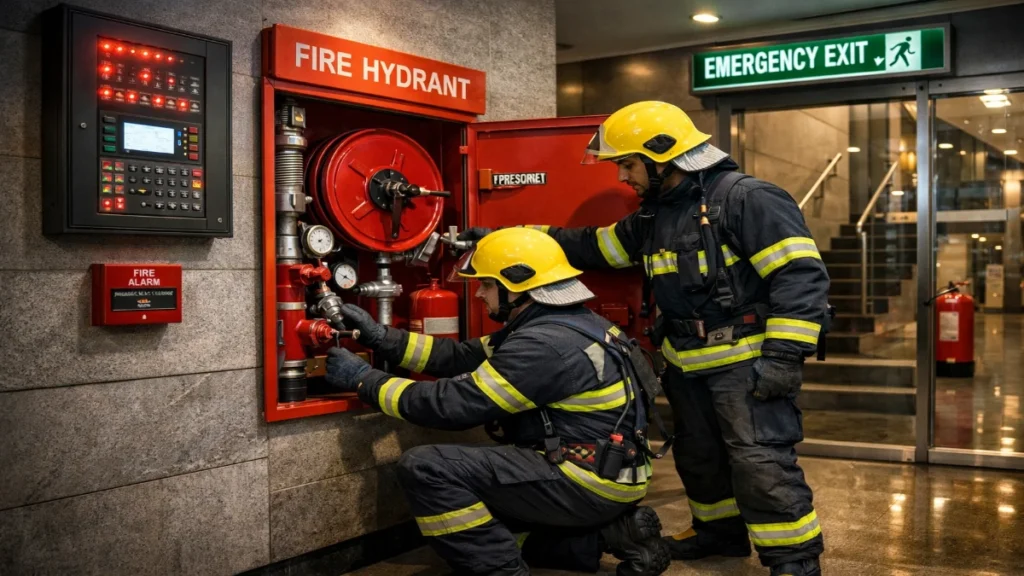
Fire safety is not just a regulatory requirement in India; it is a critical responsibility for every business owner, facility manager and safety professional. Every year, fire incidents in commercial buildings, factories, warehouses and offices lead to severe property damage, business disruption and tragic loss of life. To reduce these risks, India has established strict fire safety regulations that businesses must follow. These rules ensure that buildings are designed with proper fire protection systems, emergency exits, alarm systems and trained personnel who can respond quickly during emergencies. However, many organisations still misunderstand the legal fire safety requirements. Some assume installing a few fire extinguishers is enough. Others believe compliance only matters during inspections. In reality, fire safety compliance in India involves multiple laws, building codes and operational practices that must work together. In this detailed guide, we will explain the legal fire safety requirements for businesses in India, including applicable laws, mandatory systems, compliance procedures and best practices for maintaining a safe workplace. Why Fire Safety Compliance Is Critical for Businesses Before we explore the legal framework, it is important to understand why fire safety compliance matters for businesses. Fire incidents can escalate within minutes. Without proper detection, alarm systems and evacuation planning, employees and visitors may not receive enough warning to escape safely. Fire safety compliance helps businesses: For industrial facilities, manufacturing plants and commercial complexes, fire safety compliance is even more critical because the risk of ignition sources and combustible materials is higher. Key Fire Safety Laws and Regulations in India India does not rely on a single national fire safety law. Instead, fire safety compliance is governed by a combination of national codes, state regulations and building approval processes. The most important regulations include: 1. National Building Code of India (NBC) The National Building Code (NBC) 2016 is the primary guideline for fire and life safety in buildings across India. The NBC provides detailed standards for: Although NBC itself is a code and not a law, most state governments adopt it into their local building regulations. As a result, compliance with NBC fire safety guidelines is effectively mandatory. 2. State Fire Service Acts Each Indian state has its own Fire Service Act, which empowers the fire department to enforce fire safety regulations. Examples include: These laws allow authorities to: Businesses must comply with both NBC guidelines and state fire safety regulations. 3. Factories Act, 1948 Industrial facilities and manufacturing plants must also follow the Factories Act, 1948, which includes fire safety provisions for worker protection. Under this act, factories must provide: Failure to comply can result in legal penalties and operational restrictions. 4. Occupational Safety, Health and Working Conditions Code (OSH Code) India’s modern OSH Code strengthens workplace safety regulations, including fire safety responsibilities for employers. Businesses must ensure: This law emphasises proactive safety management rather than reactive compliance. Fire Safety Certificate (Fire NOC): A Mandatory Requirement One of the most important legal requirements for businesses in India is obtaining a Fire NOC (No Objection Certificate). A Fire NOC confirms that a building complies with fire safety regulations and can be safely occupied. When Is Fire NOC Required? A Fire NOC is typically required for: Without this certificate, a building may not receive occupancy approval. How Businesses Obtain a Fire NOC The typical process involves several steps. 1. Fire Safety Design Approval Before construction begins, building plans must include fire safety systems such as: These designs must be submitted to the fire department for approval. 2. Installation of Fire Safety Systems During construction, businesses must install all fire protection systems according to approved plans. These systems may include: Proper installation and testing are essential. 3. Inspection by Fire Authorities After installation, the fire department conducts a site inspection to verify that the building meets safety standards. Inspectors typically check: 4. Issuance of Fire NOC If the building passes inspection, the fire department issues the Fire NOC. However, compliance does not end here. Many states require periodic renewal of Fire NOC, especially for commercial and industrial buildings. Mandatory Fire Safety Systems for Businesses To meet legal requirements, businesses must install specific fire protection systems depending on building type and occupancy. Let us explore the most common mandatory systems. 1. Fire Detection and Alarm Systems Early detection is essential to prevent fire disasters. Businesses must install fire detection systems such as: These systems provide early warning and allow occupants to evacuate safely. In large facilities, addressable fire alarm systems are commonly required because they identify the exact location of a fire. 2. Fire Suppression Systems Fire suppression systems control or extinguish fires before they spread. Common systems include: Industrial facilities often require specialised suppression systems depending on fire hazards. 3. Fire Hydrant Systems Fire hydrant systems allow firefighters to access water quickly during emergencies. A typical hydrant system includes: Large buildings and factories must install both internal and external hydrant systems. 4. Portable Fire Extinguishers Portable extinguishers are mandatory in almost all commercial buildings. Different types are used for different fire classes: Proper placement and regular inspection are required. 5. Emergency Exits and Evacuation Routes Legal fire safety requirements also include building design elements that enable safe evacuation. Buildings must provide: High-rise buildings must also include refuge areas for safe evacuation. Fire Safety Training and Emergency Preparedness Fire safety compliance does not stop with equipment installation. Businesses must also ensure employees know how to respond during a fire emergency. Mandatory safety practices include: Regular drills help employees respond quickly and prevent panic during real incidents. Maintenance and Inspection Requirements Many fire safety systems fail not because of poor design but because of a lack of maintenance. Indian fire safety regulations require businesses to maintain systems in working condition. Routine maintenance typically includes: Maintenance records must be documented and available during inspections. Penalties for Non-Compliance Ignoring fire safety regulations can result in serious legal and financial consequences. Authorities may impose: In cases where negligence leads to loss of life, business owners and facility managers may face criminal liability. For