
Types of Fire Alarm Systems Used in Industrial Facilities
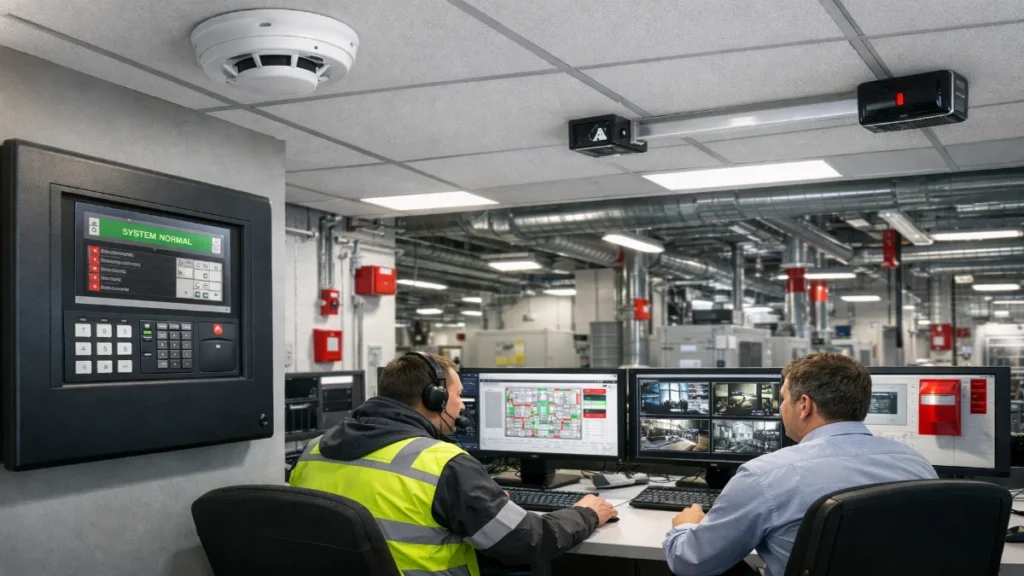
In industrial facilities, fire alarm systems are not just for compliance; they are critical safety systems that protect people, production and assets. Unlike small buildings, industrial environments have: Because of this, choosing the right fire alarm system is not simple. You need a system that can: This guide explains all major types of fire alarm systems used in industries, in simple but technical terms, so you can make the right decision. Understanding Fire Alarm Systems (Quick Technical View) A fire alarm system is a network of: In industrial setups, the focus is on:Speed + Accuracy + Reliability 1. Conventional Fire Alarm System How It Works The system divides the building into zones.If a detector triggers, the panel shows the zone, not the exact device. Key Points Where It Works Well Limitations (Important for Engineers) 👉 Use only where system complexity is low 2. Addressable Fire Alarm System How It Works Each device has a unique address.The panel shows the exact location of the alarm. Why Engineers Prefer It Technical Benefits Best Use Cases 👉 This is the standard choice for most industrial projects 3. Intelligent Fire Alarm System How It Works These systems analyse data, not just trigger alarms. They consider: Simple Example Instead of:👉 “Smoke detected = Alarm” It uses:👉 “Smoke + rising temperature + time = Alarm” Advantages Best Use Cases 👉 Best when false alarms are costly 4. Aspirating Smoke Detection (ASD) How It Works Instead of waiting for smoke to reach a detector: 👉 The system actively pulls air through pipes and analyses it. Why It’s Powerful Key Advantages Challenges Best Use Cases 👉 Use when early detection is critical 5. Beam Smoke Detection System How It Works A beam is sent across a large area.If smoke blocks the beam → alarm triggers. Advantages Limitations Best Use Cases 👉 Cost-effective for large open areas 6. Flame Detection System How It Works Detects radiation from flames (UV/IR). Key Strength Important for Engineers Best Use Cases 👉 Used where fire spreads instantly 7. Heat Detection System How It Works Triggers based on temperature increase. Types Advantages Limitation Best Use Cases 👉 Reliable but not for early detection 8. Wireless Fire Alarm System How It Works Devices communicate without cables. Advantages Limitations Best Use Cases 👉 Useful when wiring is difficult 9. Hybrid Fire Alarm System What It Is Combination of: Why Use It Best Use Cases 10. Gas Detection Integrated System Why It Matters In many industries:👉 Gas leak happens before fire What It Does Best Use Cases How to Choose the Right System (Engineer’s Approach) 1. Understand the Risk 2. Study the Environment 3. Define Your Goal 4. Select the Right Combination In most industrial facilities, one system is not enough. Example Combination 👉 Layered protection is the best strategy Common Mistakes Engineers Should Avoid Maintenance Essentials Even the best system fails without maintenance. Best Practices Final Thoughts In industrial environments, fire alarm systems should be designed, not just installed. The best approach is:👉 Right technology + Right placement + Right integration Most modern facilities rely on: Because in real-world engineering:👉 Early detection + low false alarms = true safety Read Also: What Happens If Your Fire Alarm System Fails During an Audit? Read Also: Is GST Fire Alarm System Worth the Investment?