Fire detection systems are designed for one purpose: to respond instantly when danger appears. But in real industrial environments, we’ve seen something uncomfortable: many systems look functional on paper yet fail under real emergency conditions.
As engineers and safety leaders, we rarely get a second chance when fire protection fails. A delayed alarm can mean production shutdown, legal exposure, asset loss or worse risk to life. The uncomfortable truth is that most failures are predictable. They leave warning signs long before the emergency.

In this discussion, let’s examine five practical signs your fire detection system might not perform when you need it most and how to fix those weaknesses before they become liabilities.
Understanding Fire Detection System Failure
A fire detection system fails when it cannot detect, communicate or respond to fire conditions within the required time. Failure may result from outdated components, poor maintenance, wiring faults, configuration errors or environmental mismatch. Most failures are gradual and preventable through engineering audits and performance testing.
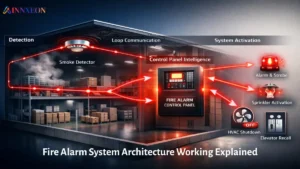
A modern system includes detectors, control panels, communication loops, power supplies and notification devices. Weakness in any one component can compromise the entire system.
We must think beyond “Does it turn on?” and instead ask:
- Will it detect early-stage smoke?
- Will it pinpoint the exact location?
- Will the alarm reach the right people?
- Will backup power sustain it?
Let’s walk through the five critical warning signs.
1. Ageing or Obsolete Detection Technology
If your system relies on outdated conventional detectors or panels installed more than 10-15 years ago, it may lack sensitivity, accuracy, intelligent diagnostics and fault isolation. Older systems are prone to false alarms, slower detection and component failure.
Why Ageing Systems Become Risky
Older systems, especially those built around a conventional fire alarm panel, divide buildings into zones rather than pinpointing exact device locations. When an alarm triggers, you know the zone, not the device.
In large factories or warehouses, that delay matters.
Additionally:
- Components may be discontinued
- Spare parts become unavailable
- Sensitivity drifts over time
- Diagnostic capabilities are limited
Engineering Perspective
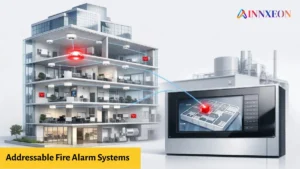
Modern addressable detectors communicate individually with an addressable fire alarm panel. They provide:
- Device-level identification
- Real-time status monitoring
- Drift compensation alerts
- Early fault detection
If your site still depends on conventional detectors, upgrading to a modern architecture like a GST fire alarm system improves reliability, scalability, and fault isolation.
Quick Audit Checklist:
- System older than 12 years?
- Spare parts hard to source?
- No event logging?
- Frequent unexplained false alarms?
If yes, your system may already be in decline.
2. Frequent False Alarms or Unexplained Faults
Repeated false alarms indicate sensor contamination, wiring instability, improper detector selection or calibration drift. A system that cries wolf trains occupants to ignore real emergencies, making it one of the most dangerous early warning signs of failure.
What False Alarms Really Mean
False alarms are rarely random. They usually signal:
- Dust buildup in optical chambers
- Heat detectors are installed in high-temperature zones
- Loose loop wiring
- Voltage instability
- Incorrect sensitivity settings
In industrial environments, dust, humidity, vapours and temperature swings significantly impact performance.
Conventional vs Addressable Behaviour
| Feature | Conventional Fire Alarm Panel | Addressable Fire Alarm Panel |
|---|---|---|
| Fault identification | Zone-level | Device-level |
| Contamination alerts | No | Yes |
| Maintenance alerts | Limited | Predictive |
| Troubleshooting time | Longer | Faster |
Addressable systems provide device-specific diagnostics, reducing downtime and improving response speed.
Warning Sign Summary:
- More than 3 false alarms in 6 months
- Frequent “loop fault” messages
- Random detector isolation
- Reset is required multiple times weekly
These are not minor inconveniences; they’re predictive indicators of system stress.
3. Inadequate Maintenance and Testing Protocols
A fire detection system without documented periodic testing and preventive maintenance is statistically more likely to fail. Dust accumulation, battery degradation and sensor drift reduce sensitivity and reliability over time.
The Reality of Maintenance Gaps
We often encounter facilities where:
- Annual inspection is the only test performed
- Backup batteries are never load-tested
- Sensitivity calibration isn’t verified
- Maintenance logs are incomplete
Fire detection systems are electronic systems, and electronics degrade.
What Proper Maintenance Includes
Step-by-step preventive checklist:
- Monthly visual inspection
- Quarterly functional testing of random devices
- Annual full system audit
- Battery load testing
- Sensitivity recalibration
Modern systems like a GST fire alarm system provide maintenance alerts, helping facility managers move from reactive to preventive strategies.
Engineering Insight:
Maintenance is not compliance; it’s performance assurance.
4. Poor System Design for Current Risk Profile
If your facility layout, storage materials, or production processes have changed without updating detection coverage, your system may no longer match the fire risk. Detection must evolve alongside operational changes.
When Design Becomes Outdated
Common real-world scenarios:
- Warehouse height increased
- Flammable materials introduced
- Partition walls added
- HVAC modifications affecting airflow
Yet the detector layout remains unchanged.
Detection Engineering Considerations
- Ceiling height impacts smoke stratification
- Airflow affects detection time
- Storage density alters fire growth rate
- Hazard classification determines detector type
Upgrading from conventional detectors to intelligent addressable detectors allows fine-tuned sensitivity and location-specific calibration.
Design Review Trigger Points:
- Renovation completed?
- Storage height changed?
- Production line modified?
- Hazard classification updated?
If yes, system redesign may be necessary.
5. Power Supply and Communication Vulnerabilities
A fire detection system fails if power redundancy or communication loops are compromised. Weak batteries, single-point wiring failures, or a lack of redundancy can disable detection during emergencies.
Hidden Weak Points
We’ve seen facilities where:
- Backup batteries had expired
- Loop wiring lacked isolation modules
- Panels were connected to unstable power circuits
- No redundancy planning existed
During a power failure, these weaknesses surface immediately.
Best Practice Engineering
Modern addressable fire alarm panel systems incorporate:
- Loop isolation modules
- Battery health monitoring
- Dual power supplies
- Networked panel redundancy
The difference between a minor fault and a total system blackout often comes down to design redundancy.
Critical Checks:
- Are batteries within their lifespan?
- Are isolation modules installed?
- Is wiring protected from mechanical damage?
- Is the power source surge-protected?
Real-World Application: What We See in Industrial Projects
In manufacturing plants, logistics hubs, and commercial complexes, the pattern is consistent:
- System was installed years ago
- Operational changes occur
- Maintenance becomes reactive
- False alarms increase
- Confidence in the system decreases
Eventually, the system becomes background noise instead of a trusted safety layer.
Organisations that proactively migrate to intelligent systems, such as those built around the GST fire alarm system architecture, experience:
- Faster fault resolution
- Reduced downtime
- Improved compliance documentation
- Higher insurance credibility
- Stronger life-safety assurance
Reliability is not accidental. It’s engineered.
Engineering Best Practices to Prevent Failure
Let’s summarise what proactive facilities do differently:
1. Conduct Annual Risk-Based System Audits
Not just inspection, but also engineering evaluation.
2. Upgrade from Conventional to Addressable Architecture
Improves precision and fault isolation.
3. Implement Predictive Maintenance
Use diagnostic alerts instead of reactive repairs.
4. Document All System Changes
Track device replacements, battery changes and firmware updates.
5. Plan for Scalability
Choose systems that support expansion and network integration.
Fire detection should evolve with the facility, not lag behind it.
Reliability Is an Engineering Decision
Fire detection systems rarely fail without warning. They show signs:
- Aging components
- False alarms
- Maintenance gaps
- Outdated design
- Power vulnerabilities
The difference between system survival and system failure lies in proactive engineering.
As safety professionals, consultants and project leaders, we must treat fire detection not as a regulatory checkbox but as mission-critical infrastructure.
When designed correctly, maintained intelligently and upgraded strategically, especially with modern addressable systems, detection becomes dependable, predictable and resilient.
And in fire safety, predictability saves everything.
Read Also: Why Large Enterprises Allocate Budget Early for Fire Safety