Fire safety systems have evolved significantly over the last decade. Modern industrial facilities, commercial complexes and large infrastructure projects now demand smarter, more reliable fire detection solutions. Traditional fire alarm systems often struggle to deliver precise information during emergencies, which can delay response times and increase risks.
This is where addressable GST fire alarm technology stands out. These systems use advanced communication protocols and intelligent detection devices to pinpoint the exact location of a fire. As a result, safety teams can respond faster and more effectively.
Industries across India increasingly rely on GST addressable fire alarm systems because they offer better monitoring, faster detection, easier maintenance and scalable protection for complex buildings.
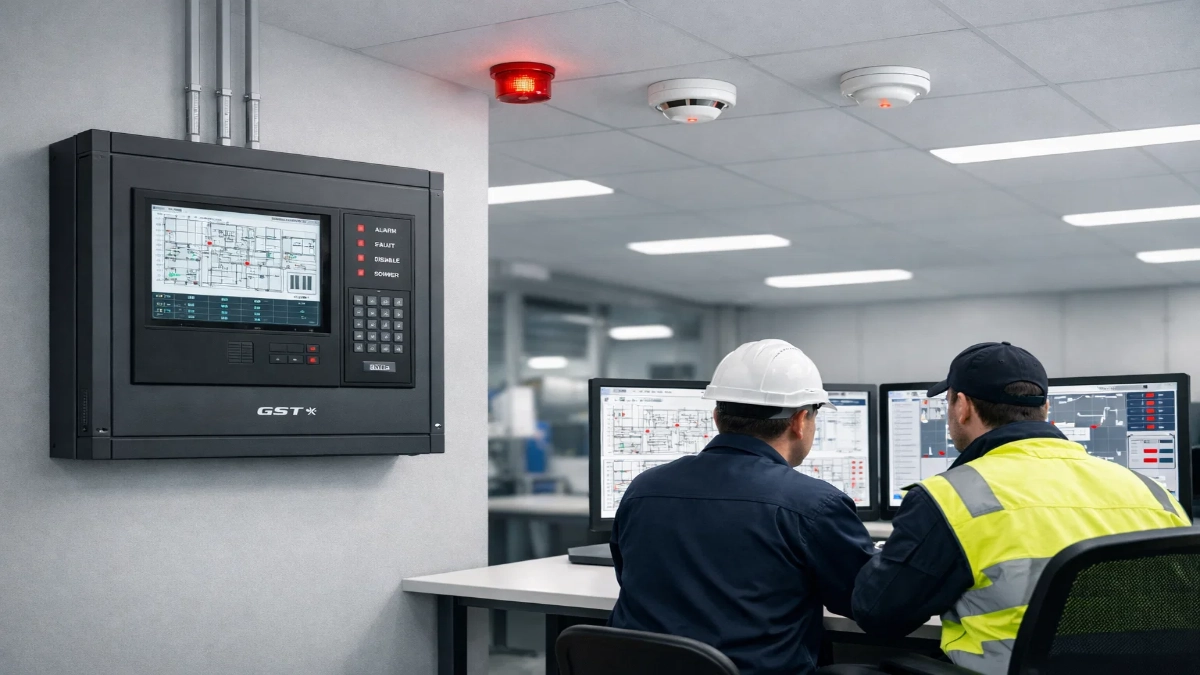
In this article, we will explore six major advantages of addressable GST fire alarm technology and explain why engineers, safety consultants and facility managers prefer these systems for modern fire protection.
What Is Addressable GST Fire Alarm Technology?
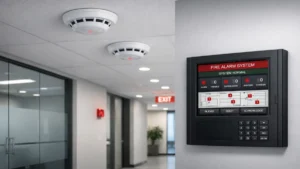
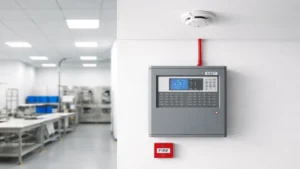
An addressable fire alarm system assigns a unique digital address to every detector, call point and device connected to the system. The control panel communicates with each device individually and continuously monitors its status.
In a GST addressable system, this communication happens through intelligent loops that connect multiple devices to a central fire alarm control panel.
Instead of identifying only a general zone, the system can pinpoint the exact device that triggered the alarm.
This ability dramatically improves response speed, troubleshooting and safety management.
1. Precise Fire Detection and Location Identification
One of the biggest advantages of addressable GST fire alarm technology is precise location identification.
In conventional systems, the control panel only identifies the zone where the alarm originates. For large facilities such as factories, warehouses, airports or hospitals, a zone may cover a very large area.
This creates confusion during emergencies.
Addressable systems solve this problem by giving every device a unique address.
When a detector senses smoke or heat, the control panel immediately displays:
- The exact device ID
- The specific location
- The type of alarm triggered
Why This Matters
Precise detection allows emergency teams to respond quickly and avoid unnecessary panic.
For example, instead of searching an entire warehouse, the system may show:
Smoke Detector – Rack Area B12 – Level 3
This level of detail significantly reduces response time and improves fire containment.
For industries with high-value assets, early detection can prevent major operational losses.
2. Faster Emergency Response
Speed is critical in fire emergencies. Even a few minutes can make the difference between minor damage and a catastrophic loss.
Addressable GST fire alarm systems help emergency teams act faster because the system provides real-time device-level alerts.
As soon as a detector activates, the control panel:
- Identifies the device instantly
- Displays the exact location
- Triggers programmed alarm sequences
Many facilities also integrate GST systems with:
- Voice evacuation systems
- Building management systems
- Fire suppression systems
This integration allows automated safety responses such as:
- Activating fire doors
- Shutting down HVAC systems
- Triggering sprinklers
Because of this automation, addressable systems provide faster and smarter fire response.
3. Reduced False Alarms
False alarms can cause serious operational disruptions in industries, offices and public buildings.
Frequent false alarms may lead to:
- Production downtime
- Unnecessary evacuations
- Reduced trust in the fire alarm system
Addressable GST fire alarm technology helps reduce these issues through advanced device intelligence.
Each detector constantly communicates its status to the control panel. The system can monitor:
- Sensor sensitivity
- Dust accumulation
- Environmental changes
- Device health
If a detector requires cleaning or recalibration, the system generates a maintenance alert instead of triggering a false alarm.
Many GST detectors also include intelligent algorithms that analyse smoke patterns before activating an alarm.
This smart detection capability dramatically reduces nuisance alarms.
4. Easier Maintenance and System Diagnostics
Maintaining fire safety systems across large facilities can be complex. Hundreds of detectors and devices may be installed across multiple floors.
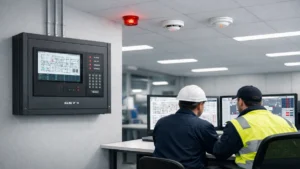
Addressable GST fire alarm systems simplify maintenance through automatic diagnostics and device monitoring.
The control panel continuously checks the status of every connected device.
If a problem occurs, the system can identify issues such as:
- Detector contamination
- Device malfunction
- Communication faults
- Loop failures
Instead of inspecting every device manually, technicians can directly locate the faulty component.
This improves maintenance efficiency and reduces downtime.
Maintenance Benefits
Addressable systems allow:
- Faster fault identification
- Predictive maintenance alerts
- Lower maintenance costs
- Minimal disruption during inspections
For large facilities, these benefits significantly improve operational reliability.
5. Scalability for Large and Complex Buildings
Modern buildings are becoming increasingly complex. Industrial plants, IT parks, data centres, hospitals and metro stations require fire detection systems that can expand as infrastructure grows.
Addressable GST fire alarm systems offer excellent scalability.
A single loop can support many devices, and multiple loops can connect to the same control panel.
This makes it easy to expand the system when:
- New floors are added
- Production units expand
- Additional detectors are required
Instead of replacing the entire system, engineers can simply add new addressable devices to the existing loop network.
This flexibility makes GST addressable systems ideal for:
- Industrial facilities
- Warehouses
- Airports
- Hospitals
- Commercial complexes
Scalable architecture also helps reduce future upgrade costs.
6. Advanced Integration With Smart Building Systems
Modern infrastructure increasingly relies on smart building technology.
Addressable GST fire alarm systems support integration with several advanced platforms, including:
- Building Management Systems (BMS)
- Access control systems
- CCTV monitoring systems
- Voice evacuation systems
- Fire suppression systems
This integration allows the fire alarm system to coordinate multiple safety functions during emergencies.
For example, when a fire alarm activates, the system can automatically:
- Unlock emergency exits
- Shut down the elevators
- Activate smoke extraction systems
- Trigger voice evacuation announcements
This coordinated response improves overall building safety and evacuation efficiency.
Smart integration also enables centralised monitoring, allowing facility managers to track fire alarm status from a single dashboard.
Why Engineers Prefer GST Addressable Fire Alarm Systems
Fire protection engineers and safety consultants often recommend GST systems because they combine reliability, intelligent monitoring and scalable design.
Some key reasons include:
- Advanced addressable technology
- High device reliability
- Smart detection algorithms
- Flexible system architecture
- Cost-effective long-term operation
GST systems also comply with many international fire safety standards, making them suitable for critical infrastructure projects.
Industries That Benefit the Most From Addressable Fire Alarm Systems
Several industries require advanced fire detection because of their operational complexity.
Addressable GST fire alarm systems are widely used in:
- Manufacturing plants
- Warehouses and logistics hubs
- Data centers
- Airports and metro stations
- Hospitals and healthcare facilities
- Commercial buildings
- Educational campuses
These environments require precise detection, fast response and scalable monitoring, which addressable technology delivers effectively.
The Future of Addressable Fire Alarm Technology
Fire safety technology continues to evolve rapidly. Addressable systems are becoming even more intelligent with features such as:
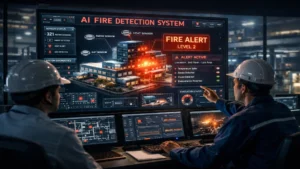
- AI-assisted detection algorithms
- Remote monitoring platforms
- Cloud-based diagnostics
- IoT-enabled detectors
These innovations will allow facility managers to monitor fire safety systems from any location in real time.
As buildings become smarter, addressable fire alarm systems will play a critical role in integrated safety infrastructure.
Note: Addressable GST fire alarm technology has transformed modern fire safety infrastructure. Unlike traditional systems, addressable systems provide precise detection, faster response, intelligent monitoring and scalable protection.
For industries that cannot afford operational disruptions or safety risks, these systems offer a reliable and future-ready solution.
The six advantages discussed in this article, precise detection, faster response, reduced false alarms, simplified maintenance, scalable design and smart integration, make addressable GST fire alarm systems an essential component of modern fire protection strategies.
As technology continues to evolve, these systems will play an even greater role in ensuring safer buildings, smarter monitoring and faster emergency response across industries.
Read Also: What Makes GST Fire Alarm Systems Popular in Industrial Facilities?
Read Also: How Compliance Failures Can Shut Down Industrial Operations