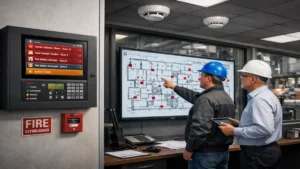
Fire safety is transforming faster than ever. With smart buildings, AI-driven systems and stricter compliance standards, the way buildings detect, respond to and prevent fire hazards is undergoing a major shift. By 2030, most commercial, residential and industrial buildings will rely on intelligent, future-ready systems instead of traditional manual solutions.
This article explores seven major fire safety innovations expected to become standard worldwide by 2030. These trends are driven by new technologies, global safety regulations and manufacturers like GST (Gulf Security Technology) introducing more advanced fire detection and alarm solutions suitable for modern building needs.
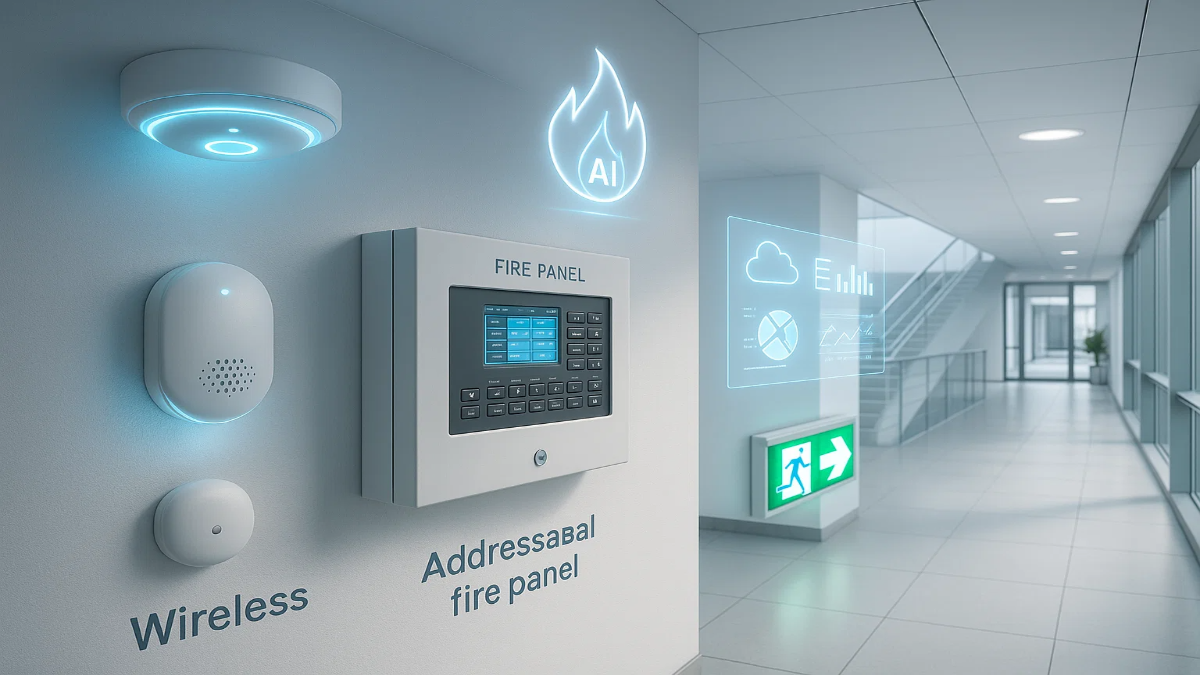
The goal is to help facility managers, building owners, consultants and safety engineers understand what’s coming and how to prepare.
Why Fire Safety Is Changing So Rapidly
Several major factors are influencing the shift toward smarter fire safety:
- Buildings are becoming more interconnected and digitally controlled.
- Fire hazards are increasing due to higher electrical loads and modern materials.
- Regulators are pushing for predictive, early-warning systems rather than reactive alarms.
- Brands like GST are developing new-age addressable systems, intelligent sensors and cloud-based monitoring.
- Fire departments worldwide are moving toward remote monitoring and automated response coordination.
By 2030, fire alarm systems will not just detect a fire, they will predict, communicate and automatically coordinate safety actions.
1. AI-Enabled Fire Detection Systems
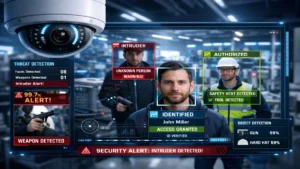
Traditional fire alarm systems respond only when smoke, heat or flames reach a certain threshold. But by 2030, AI-enabled detection will become standard in most buildings.
How AI-Based Detection Works
Artificial intelligence analyzes multiple data points in real time:
- Micro smoke particles
- Temperature patterns
- Human behavior
- Machine operations
- Electrical anomalies
- Environmental changes
AI can detect fire far earlier than humans or conventional detectors.
Why This Will Be Standard by 2030
- Faster response reduces damage and saves lives.
- AI reduces false alarms, a major cause of operational delays.
- Regulatory bodies worldwide are pushing for smarter detection technology.
Role of GST
GST already integrates intelligent algorithms in detectors and addressable systems. By 2030, AI-driven features will become more mature and universal.
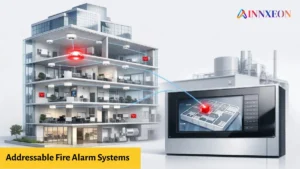
2. Smart Addressable Panels With Predictive Maintenance
Smart addressable panels have already replaced many conventional systems. But by 2030, they will go further with predictive maintenance, meaning they will detect internal faults before they cause device failures.
Features You Will See
- Self-checking detectors
- Real-time loop monitoring
- AI-based device health prediction
- Cloud-based performance tracking
- Automated maintenance scheduling
Why This Matters
Predictive maintenance helps facility teams fix issues before the system breaks down. This prevents:
- Surprise faults
- Non-working detectors
- Panel failures during emergencies
GST’s Contribution
GST’s addressable panels already include real-time loop diagnostics and device tracking, setting the foundation for predictive maintenance standards expected by 2030.
3. Cloud-Based Fire Monitoring & Remote Management
By 2030, buildings will no longer rely only on control rooms. Cloud-based monitoring will allow:
- Remote access
- Real-time alerts
- Device status monitoring
- System reporting
- Fire event playback
- Multi-site management
All accessible from smartphones, tablets or any secure web dashboard.
Why Cloud Fire Safety Will Become Mandatory
- Multi-location companies need centralized monitoring.
- Fire departments can receive live updates.
- Facility teams can respond faster.
- Data logging becomes automated.
GST and Cloud Integration
Many GST systems are already compatible with centralized monitoring software. As cloud adoption grows, such systems will become standard in every large building.
4. Multi-Criteria Detectors for Zero False Alarms
False alarms cause huge losses in industries, hotels, malls and hospitals. That’s why multi-criteria detectors, which analyze multiple fire indicators, will be common by 2030.
These detectors combine:
- Smoke
- Heat
- CO (carbon monoxide)
- Infrared flame monitoring
- Air quality analysis
Together, these ensure accuracy with near-zero false alarms.
Why All Buildings Will Use This
- Hotels and malls demand false-alarm suppression.
- IT parks and data centers need precision detection.
- New safety codes prioritize multi-criteria technology.
GST’s Product Evolution
GST already manufactures multi-sensor detectors used in airports, high-rise buildings and industries. Technology will only become more advanced by 2030.
5. Integrated Fire Safety with BMS, Access Control & IoT
By 2030, fire safety will be fully integrated with other building systems through IoT, BACnet and Modbus protocols.
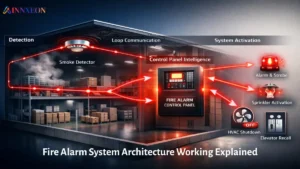
In a fire event, systems will automatically:
- Unlock emergency exits
- Shut down elevators
- Switch on pressurization fans
- Turn off HVAC
- Close fire dampers
- Activate sprinkler systems
- Alert security teams
- Transfer data to local fire stations
This creates a coordinated response, reducing confusion and human errors.
Why Integration Will Be Universal
- Smart buildings need centralized control.
- Integrated systems reduce evacuation delays.
- Compliance requirements are moving toward automation.
GST’s Integration Capability
GST addressable panels support integrations with BMS and IoT-based fire coordination, a feature that will be expected in all buildings by 2030.
6. Wireless Fire Detection Systems for Old & Complex Buildings
Wireless fire alarm technology will grow massively due to the rising need for:
- Quick installations
- Retrofits in old buildings
- Flexible layouts
- Expansion-ready systems
- Lower installation costs
Why Wireless Will Be Everywhere
Installing wired loops is expensive and often impossible in:
- Heritage sites
- Operational hotels
- Old hospitals
- Multi-building campuses
- Industrial plants with hazardous zones
Wireless systems speed up deployment and allow fast reconfiguration.
Future Wireless Innovations Expected by 2030
- Battery lives exceeding 10–12 years
- Longer communication ranges
- Advanced anti-interference technology
- Cloud-linked wireless panels
- Smart self-healing mesh networks
GST’s Technology Direction
GST already produces wireless and hybrid alarm solutions. By 2030, these systems will meet the same standards as wired panels.
7. Voice Evacuation & Intelligent Emergency Messaging
Voice evacuation will replace traditional sirens in most modern buildings by 2030.
Why Voice Evacuation Is More Effective
- Provides clear instructions
- Prevents panic
- Supports multilingual alerts
- Enables customized emergency messages
- Helps guide people to safe exits
Instead of just a bell ringing, systems can announce:
- “Fire detected on Level 3, please move to the nearest exit.”
- “Do not use elevators.”
- “Emergency team is responding, follow the marked signs.”
Advanced Features Coming by 2030
- AI-generated evacuation messages
- Directional speakers
- Real-time crowd analysis and routing
- Integration with digital signage
GST & Intelligent PA/VA
GST’s addressable systems already integrate with PA/VA for smart evacuation, creating a strong foundation for the advanced voice-based solutions coming in the next decade.
Fire Safety Data Will Drive Smarter Building Designs
By 2030, fire safety systems will collect and analyze huge amounts of data that architects and safety engineers can use to:
- Improve building layouts
- Identify high-risk zones
- Optimize evacuation routes
- Reduce future hazards
- Enhance safety regulations
Data-driven fire engineering will reduce risks before a fire even happens.
What Building Owners Should Do Today
To prepare for 2030 fire safety standards, building owners and developers should start:
- Moving from conventional to addressable panels
- Using multi-sensor detectors
- Planning for future cloud integration
- Choosing scalable systems
- Ensuring compatibility with BMS and IoT
- Maintaining strong documentation and data logging
Selecting brands like GST, known for reliable, standards-compliant fire systems can make upgrades smoother and more future-ready.
The Future of Fire Safety Is Intelligent, Integrated & Predictive
By 2030, every building from small offices to mega malls will depend on advanced, AI-enabled fire safety systems. These innovations will reduce risks, save costs and ensure faster emergency responses.
The transformation is already underway. With manufacturers like GST continuously improving their technologies, buildings can now adopt smarter detection, faster communication and more automated evacuation processes.
If you are designing, renovating or managing a property, investing in future-ready fire safety solutions today will ensure your building stays compliant, protected and technologically ahead in the coming decade.
Read Also: How to Future-Proof Your Fire Alarm System Using GST Panels
Read Also: How GST Panels Help You Get Fire NOC Faster