Fire safety is a non-negotiable part of any building’s infrastructure, whether it’s a hospital, hotel, commercial tower, industrial plant or educational campus. Yet, many organisations still struggle with the ongoing expenses related to fire alarm installation, maintenance, troubleshooting, upgrades and downtime. One of the most effective long-term financial decisions facility owners and engineers can make today is shifting from conventional fire alarm systems to addressable fire alarm systems.
Addressable systems are widely recognised for delivering higher performance and better control. But an equally important advantage, especially from a facility management and procurement perspective, is cost efficiency. While the upfront investment may seem higher, the life-cycle cost of ownership is substantially lower and the savings continue to compound over time.
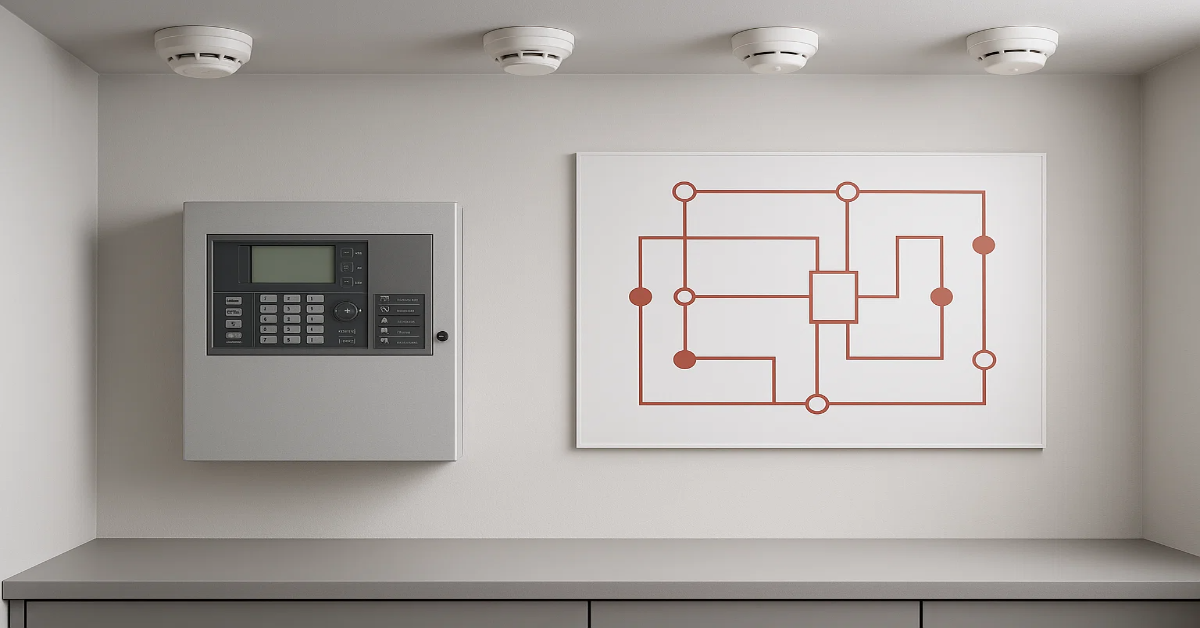
This article explains seven powerful and practical ways addressable fire alarm systems help organisations save money.
1. Reduced Wiring Costs: One Loop vs Multiple Circuits
In conventional systems, each zone requires separate wiring. As the building size increases, the complexity and cost of cabling multiply. Each floor or area may require its own circuit, significantly increasing installation expenditure.
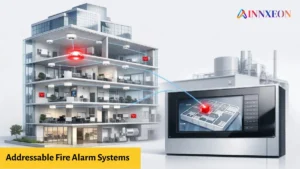
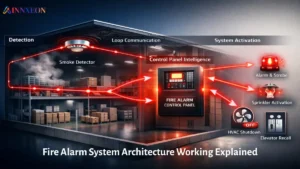
Addressable systems work differently. Instead of wiring each device individually to the control panel, all devices sit on a single communication loop. This results in:
- Less copper wire needed
- Shorter installation time
- Reduced labour cost
- Lower chances of wiring faults
In multi-storey buildings, hotels, hospitals, large warehouses or campuses, these savings become dramatic. Addressable loops can cover long distances, meaning engineers avoid the complications of installing dozens of parallel circuits.
Why This Saves Money
- Fewer spools of cable
- Lower conduit requirement
- Reduced labour intensity
- Faster commissioning
- Minimal risk of wiring-related troubleshooting later
Even though the devices used may be more advanced, the overall installation cost in many medium- and large-scale facilities is significantly lower compared to conventional systems.
2. Faster Fault Detection Minimises Downtime & Technicians’ Visits
Conventional fire alarm systems only report a problem at the zone level. If a zone enters fault mode, technicians must search manually, sometimes checking dozens of devices across several rooms or floors.
This leads to:
- Extra labour hours
- Longer system downtime
- Frequent service visits
- High troubleshooting expenses
Addressable systems solve this issue instantly. Every detector, module or device has a unique address, so the panel shows exactly which device has a problem.
How This Results in Savings
- Technicians find the faulty device in minutes, not hours
- Reduced labour charges
- Lower AMC (Annual Maintenance Contract) costs
- Less operational disruption for hotels, hospitals and industries
- No downtime penalties for high-sensitivity environments
In facilities where downtime equals revenue loss, such as data centres, manufacturing units and hospitals, this alone can deliver significant financial benefit over the system’s lifespan.
3. Lower False Alarm–Related Losses
False alarms are more than an inconvenience, they are expensive. They cause:
- Evacuation delays
- Disruption of hospital operations
- Loss of productivity in manufacturing
- Unnecessary shutdown of lifts, AHUs and other integrated systems
- Potential penalties or fire brigade response charges
- Customer dissatisfaction in hotels or malls
Conventional systems struggle with distinguishing between smoke, dust, steam and environmental disturbances. They only relay zone-level alerts.
Addressable systems, however, use advanced detection algorithms and offer device-level intelligence. Many models allow engineers to adjust sensitivity levels based on the environment.
Cost Savings from Reduced False Alarms
- Avoid evacuation-related business interruption
- Prevent production line stoppage
- Improve guest experience in hotels
- Protect sensitive hospital environments
- Reduce unwanted fire brigade dispatch charges
Over a span of 5-10 years, false-alarm avoidance alone can save organisations ** lakhs of rupees**.
4. Lower Maintenance & AMC Costs Due to Device-Level Monitoring
With conventional systems, maintenance teams must physically inspect every detector at regular intervals. This manual checking increases AMC costs and consumes valuable time.
Addressable systems continuously monitor and self-diagnose each device. Panels can show:
- Detector contamination
- Communication issues
- Battery or power faults
- Missing or removed devices
- Loop integrity issues
This means maintenance becomes more predictive and efficient, reducing unnecessary labour hours.
Savings Include
- Less time required for inspections
- Lower AMC contracts due to reduced workload
- No need for emergency maintenance calls
- Better planning of repairs without disruption
Facility managers can plan maintenance without wasting time on guesswork.
5. Cheaper Long-Term Scalability & Expansion
Buildings evolve. New floors get added. Industrial areas expand. Hotels renovate. Hospitals add departments. A system that was enough five years ago becomes insufficient today.
Conventional systems struggle with expansion because:
- Each new area needs a new zone
- New wiring must be routed
- Panels may need upgrading
- Infrastructure disruption increases engineering costs
Addressable systems are built for long-term scalability. You can add new detectors or modules to the existing loop without redesigning entire circuits.
Financial Advantages
- Lower expansion cost
- No need for additional panels unless drastically scaling
- Minimal renovation disruption
- Reduced cabling and labour expenses
For buildings that expect future expansion, addressable systems provide unmatched lifecycle cost benefits.
6. Longer System Lifespan & Less Hardware Replacement
Conventional panels and detectors rely on older technology and components often need replacement sooner due to limited diagnostic abilities. Dust buildup, ageing circuits and non-intelligent sensors degrade over time, often without detection.
Addressable devices are designed with:
- Built-in diagnostics
- Drift compensation
- Real-time sensitivity adjustments
- Smarter communication protocols
This keeps the system healthier for longer and reduces premature replacement.
This Reduces Long-Term Expenses Through
- Fewer device failures
- Less frequent panel upgrades
- Extended usable lifecycle of detectors
- Lower spare-part consumption
- Improved reliability during annual inspections
A well-maintained addressable system often lasts 15+ years with minimal operational cost.
7. Better Energy Efficiency & Lower Operational Costs
Addressable systems are engineered to be power-efficient. Even with advanced intelligence, they require less current compared to many conventional installations that depend on multiple circuits and higher load per zone.
This contributes to long-term savings through:
- Reduced battery load
- Smaller power supply units
- Lower running energy costs
- Optimised standby power consumption
In large commercial, industrial or institutional facilities, the reduction in power consumption is a meaningful cost advantage that compounds annually.
Real-World Examples of Savings
Hotels
Hotels using addressable systems reduce operational disruption, avoid false alarms and minimise maintenance visits, improving guest satisfaction and operational efficiency.
Hospitals
Addressable systems help maintain sensitive environments (ICUs, labs, OTs) with fewer false alarms and faster detection accuracy, saving money and protecting patient safety.
Industries
Manufacturing units benefit from predictive maintenance, fewer line stoppages and reduced power consumption.
Commercial Buildings
Malls, offices and IT parks reduce facility management efforts, wiring complexity and long-term operational costs.
How Addressable Systems Deliver Better ROI
When facilities move from conventional to addressable systems, they experience savings in:
- Installation costs
- AMC & technician labour
- False-alarm expenses
- Downtime-related business losses
- Device replacement
- System expansion
- Energy consumption
Even though the initial investment is slightly higher, the 5-year and 10-year total cost of ownership (TCO) is significantly lower.
Addressable technology also aligns with modern building codes, smart infrastructure, future-proof planning and digital facility management practices.
Note: Choosing between conventional and addressable fire alarm systems isn’t just a technical decision, it’s a financial one. Addressable systems provide clear and measurable savings across installation, operation, maintenance, scalability and long-term ownership.
For organisations looking to optimise both safety and cost-effectiveness, addressable systems offer a smarter, more sustainable and more economical solution. They deliver enhanced reliability, greater control and long-term value without adding complexity.
In the modern era of intelligent buildings and advanced life safety standards, an addressable fire alarm system is not just an upgrade, it’s an investment that pays for itself over time.
Read Also: The Real Reason Your Fire Alarm System Has Frequent False Alarms
Read Also: Why Addressable Panels Offer Higher ROI Than Conventional Panels