Critical facilities don’t get “off-hours.” Whether it’s a hospital ICU, a data centre, an airport terminal, a metro station, a pharmaceutical plant or a large manufacturing unit, operations run 24×7. That also means fire safety systems must stay ready every second, without excuses.
In these environments, a fire alarm panel is not just a compliance requirement. It is a continuous monitoring backbone that protects people, assets, uptime and reputation. That is why most critical sites prefer advanced and reliable solutions like GST fire alarm systems because they are built for performance, stability and real-world reliability in demanding conditions.
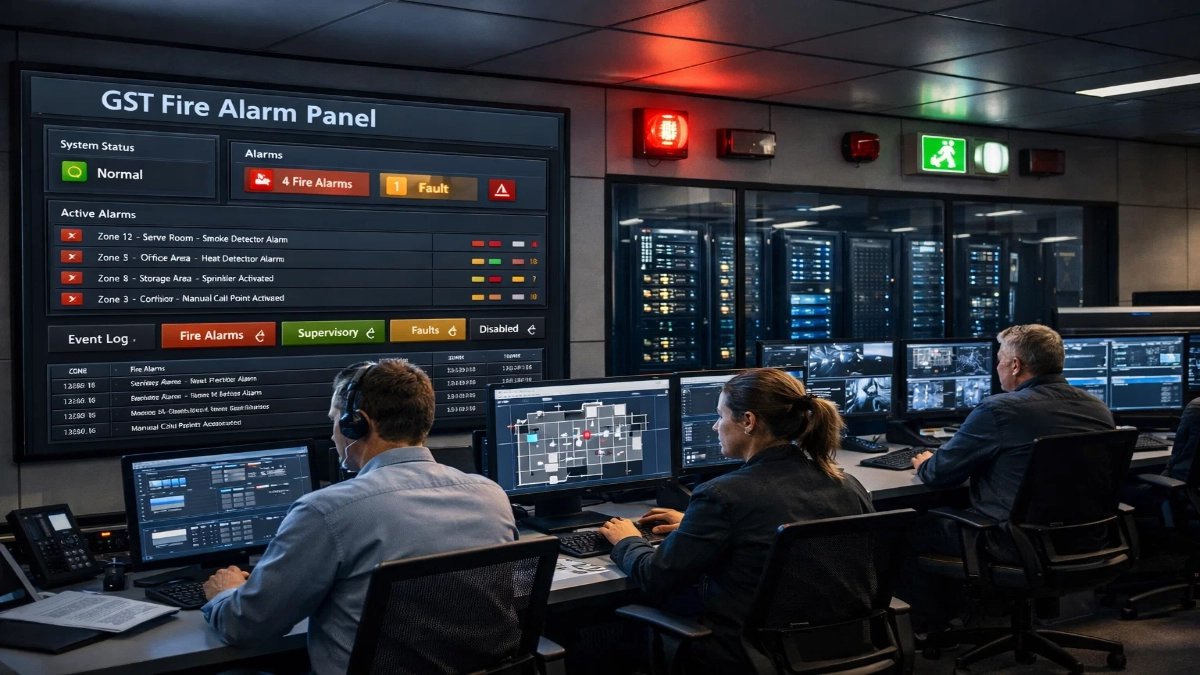
In this article, we will break down why GST fire alarm panels are preferred for 24×7 critical facilities, what problems they solve better than generic systems and what decision-makers should look for when choosing a panel.
What Makes a Facility “24×7 Critical”?
A critical facility is any site where downtime, evacuation errors or delayed response can cause severe consequences, such as:
- Risk to human life
- Service disruption and public safety issues
- Expensive equipment damage
- Regulatory penalties and audit failures
- High operational losses per minute of downtime
Examples of 24×7 critical facilities include:
- Hospitals, clinics, and diagnostic centres
- Data centres and telecom exchange rooms
- Airports, railway stations and metro infrastructure
- Hotels, malls and high-occupancy buildings
- Oil & gas facilities, refineries and chemical plants
- Warehouses, FMCG plants and manufacturing lines
- Government buildings and command centres
For these environments, a fire alarm system must deliver two things:
- Early detection and accurate alerts
- Stable, uninterrupted monitoring without false alarms
This is where GST stands out.
Why Fire Alarm Reliability Matters More in Critical Facilities
In normal buildings, even a short disruption in monitoring might not feel like a disaster. But in 24×7 facilities, reliability is everything.
Real risks in critical environments
- False alarms can trigger evacuations, panic, shutdowns and loss of trust.
- Missed alarms can become catastrophic within minutes.
- Delayed alerts waste crucial response time.
- Frequent faults increase maintenance workload and operational stress.
A panel that works smoothly under real conditions, power changes, electrical noise, complex cabling, high occupancy and around-the-clock load becomes the best long-term choice.
1) Built for Continuous Monitoring Without Performance Drops
A major reason GST panels are preferred is their consistent performance for long durations. 24×7 facilities don’t “restart systems” daily. Panels operate continuously for months and years.
GST fire alarm systems are designed to maintain stable operation with:
- Efficient system processing
- Consistent device supervision
- Reliable event logging
- Continuous fault monitoring
This is essential when your safety depends on real-time status updates from every device every hour, every day.
Result: Higher uptime, fewer interruptions, smoother operations.
2) Faster Fault Detection and Clear Maintenance Alerts
In critical facilities, small issues must be identified early before they become failures.
Common fault situations include:
- Detector contamination or dust buildup
- Loop wiring issues
- Device disconnection
- Short circuits and open circuits
- Power supply or battery warnings
A strong panel should not only detect faults but also explain them clearly.
GST panels are preferred because they provide:
- Better fault visibility
- Faster fault reporting
- Clear zone/device-level information
- Practical troubleshooting support for technicians
When your maintenance team can locate and fix issues faster, you reduce system downtime and avoid repeated false alerts.
3) Addressable Technology That Improves Accuracy and Response
Most critical facilities choose an addressable fire alarm panel because it offers precise control and location identification.
Why addressable matters in 24×7 environments
In a hospital, data centre or metro station, you cannot afford confusion. You need accurate information like:
- Which exact detector triggered the alarm
- Which floor, section, or room is affected
- Whether the alarm is smoke, heat, or a manual call point
- How quickly the event is spreading
A GST fire alarm system paired with addressable detectors helps facilities:
- Identify the exact device in the alarm
- Trigger faster response
- Reduce time wasted searching for the source
- Support phased evacuation strategies
Result: Faster action with fewer mistakes.
4) Better Handling of High Device Count in Large Facilities
Critical facilities are usually large. They have:
- Multiple floors
- Server rooms and electrical zones
- Fire compartments
- High-occupancy public areas
- Separate buildings and blocks
That means the system can include hundreds or thousands of detection devices and notification appliances.
GST panels are preferred because they are better suited for:
- Large device networks
- Complex layouts
- Multi-loop configurations
- Structured fire safety planning
Generic panels may work fine for small buildings, but large 24×7 sites need systems that scale without becoming unstable.
Result: Smooth operation even in large installations.
5) Smarter Event Management During Multiple Alarm Situations
In real fires, alarms don’t always come one-by-one. Smoke can spread quickly, or multiple devices may activate across an area.
A critical facility panel must:
- Process multiple events reliably
- Display clear alarm priority
- Keep the system responsive during peak activity
GST fire alarm panels are often preferred because they manage events without lag and provide a clear sequence of alarms and faults.
This helps emergency teams and security control rooms:
- Understand the situation instantly
- Avoid confusion between alarms and faults
- Make better decisions under pressure
Result: Better incident control when it matters most.
6) Reduced False Alarms Through Better Device Supervision
False alarms are not just annoying in 24×7 sites; they are expensive and disruptive.
What false alarms cause:
- Unnecessary evacuations
- Panic and loss of public confidence
- Operational shutdowns
- Security and fire team fatigue
- Higher maintenance cost
GST panels, when designed properly with the right devices, offer better stability for day-to-day challenges like:
- Dust-prone environments
- Temperature fluctuations
- Electrical noise near heavy machinery
- Complex cable routing
When paired with quality addressable detectors, the system becomes more reliable for real-world conditions.
Result: Fewer false alarms and smoother operations.
7) Strong Compatibility With Facility Response Systems
In critical facilities, the fire alarm panel is not standalone. It often needs to connect with:
- Fire pumps and sprinkler systems
- HVAC shutdown and smoke control
- Lift recall and access control
- Public address and evacuation systems
- Building Management Systems (BMS)
GST fire alarm panels are preferred because they support structured integration planning.
This improves safety because automation can:
- Control smoke spread faster
- Protect escape routes
- Reduce manual dependency
- Prevent wrong decisions in panic situations
Result: More coordinated emergency response.
8) Designed for Easier Testing, Audits and Compliance
24×7 facilities are regularly inspected. They go through:
- Fire department checks
- Consultant audits
- Insurance compliance requirements
- Safety standard audits
- Internal SOP-based inspections
A panel must support:
- Clear event logs
- Proper fault history
- Test mode features
- Structured reporting and documentation
GST panels are preferred because they help teams maintain better documentation and system visibility, especially when audits happen frequently.
Result: Easier compliance and more confidence in system readiness.
9) Improved Isolation and Redundancy Planning
Critical facilities need continuity, even during a fault. One wiring issue should not affect the entire system.
That is why strong designs focus on:
- Isolation planning
- Segmented loops
- Controlled device grouping
- Better survivability during partial failures
GST panels allow better engineering planning for these scenarios, ensuring that operations remain protected and alarms remain functional even when faults occur.
Result: Better reliability and reduced risk during failures.
10) Better Long-Term Value for 24×7 Facilities
The panel may look like a one-time purchase. But for 24×7 facilities, the real costs happen over time.
Long-term costs include:
- Fault troubleshooting hours
- Spare replacement cycles
- False alarm downtime
- Maintenance staff workload
- System expansion and upgrades
Choosing a stable and scalable GST fire alarm system often results in:
- Lower operational stress
- Reduced downtime incidents
- Better service continuity
- Easier future expansion
Result: Better ROI over the system lifetime.
Addressable vs Conventional: What’s Better for Critical Facilities?
Both types have their place, but the facility type decides the best option.
Addressable Fire Alarm Panel (Best for critical facilities)
Recommended for:
- Hospitals
- Data centers
- Airports and metro stations
- Large public and commercial spaces
- Multi-building campuses
Why it works better:
- Exact device identification
- Better scalability
- Faster response and troubleshooting
- Stronger supervision
Conventional Fire Alarm Panel (Suitable for smaller or low-risk zones)
Recommended for:
- Small offices
- Small warehouses
- Basic shops or low-occupancy buildings
Why it may not be ideal for critical 24×7 sites:
- Alarm shows zone, not exact device
- Troubleshooting takes longer
- Expanding becomes complex
Where GST Panels Fit Best in 24×7 Critical Facilities
GST panels are widely preferred in environments such as:
Hospitals & Healthcare Facilities
- Faster pinpointing of alarm location
- Better safety response planning
- Reduced false alarms improves trust
Data Centres & Server Rooms
- Quick detection protects high-value equipment
- Helps prevent major downtime events
- Supports structured integration with facility control
Airports, Metro Stations & Public Infrastructure
- Handles large device networks
- Supports phased evacuation planning
- Helps response teams locate alarms accurately
Industrial Plants & Warehousing
- Strong fault monitoring for harsh conditions
- Better event control with high device count
- Supports safer operations in large spaces
Best Practices to Get Maximum Performance From GST Fire Alarm Panels
Even the best system depends on correct planning and installation. For critical facilities, follow these best practices:
- Use addressable detectors in key zones for accuracy
- Plan loops intelligently to reduce disruption
- Ensure isolation strategy is included in design
- Use proper cable routing and earthing
- Keep periodic testing schedules strict
- Train staff for real alarm response SOPs
- Maintain clean device environments to reduce contamination issues
GST Panels: The Smart Choice for Mission-Critical Fire Safety
In 24×7 critical facilities, every second matters. A fire alarm system must be stable, accurate, scalable and easy to maintain. This is why GST fire alarm panels are preferred; they support continuous monitoring, handle complex installations effectively and help safety teams respond faster with confidence.
If your facility cannot afford uncertainty, missed alerts or operational disruption, investing in a well-designed GST fire alarm system is not just a choice; it’s a long-term safety strategy.
Read Also: How GST Fire Alarm Panels Passed Consultant Technical Audits
Read Also: Power Management and Redundancy Strategies in the GST-IFP8 Panel
FAQs: Why GST Fire Alarm Panels Are Preferred for 24×7 Facilities
Because they are designed for continuous monitoring, stable processing, faster fault identification and reliable alarm handling, especially in large environments.
For critical facilities, yes, because addressable panels identify the exact device, simplify troubleshooting, reduce downtime and support large expansions.
An addressable fire alarm panel is preferred in hospitals due to its accuracy, fast response and improved event management.
Yes. With the correct device selection, installation and maintenance, a GST fire alarm system enhances supervision and reduces unwanted activations.
Yes. Fire alarm panels often integrate with HVAC shutdown, smoke control, lifts, BMS and access control for coordinated emergency response.