Fire alarm systems are not just “another electrical installation.” They are life-safety systems designed to detect fire early, alert occupants and trigger emergency actions like evacuation and firefighting response. That is why fire alarm projects must follow strict codes, standards and best practices.
But here is the reality: even a high-quality fire alarm brand can fail in the field if the system design, device selection, installation, programming and testing are not done properly.
This is exactly where authorised GST distributors play a critical role.
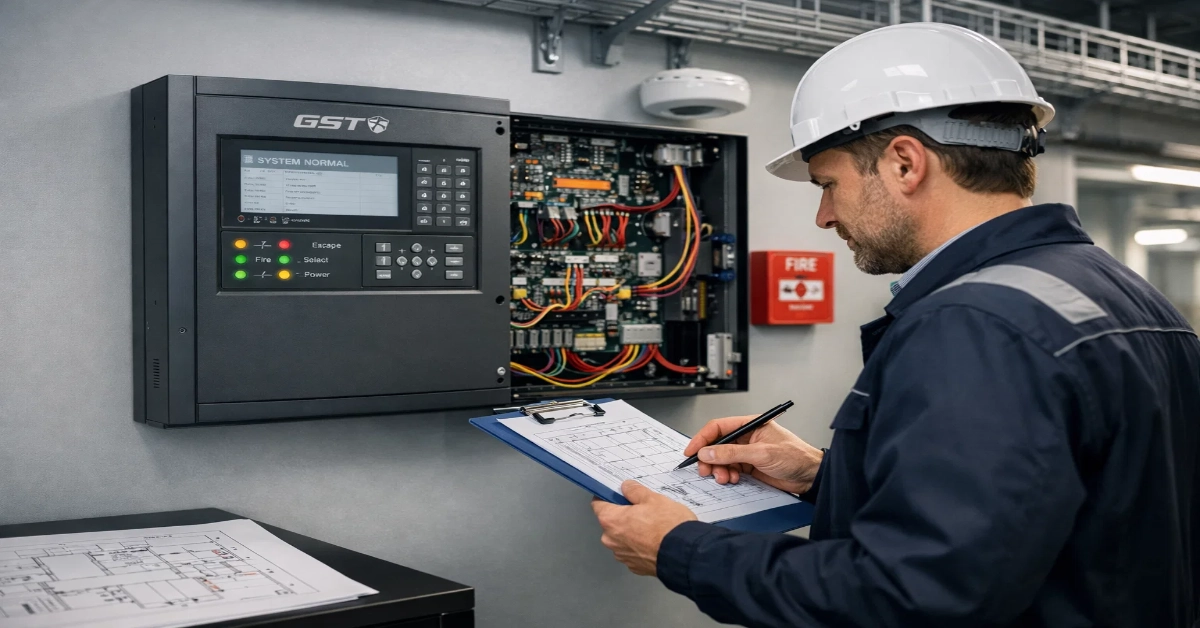
A GST distributor does much more than supply hardware. A professional distributor supports code-compliant fire alarm execution by guiding correct product selection, loop planning, documentation, commissioning and after-sales support, so the system performs correctly during audits, inspections and real emergencies.
In this article, you’ll learn how GST distributors help ensure code compliance from planning to handover and why this makes a measurable difference in safety, approvals and long-term reliability.
What Does “Code-Compliant Fire Alarm System” Really Mean?
A code-compliant fire alarm system meets the requirements of applicable fire and building safety standards. Depending on your country and project type, compliance may include:
- Correct system type selection (addressable or conventional)
- Proper device placement and zoning
- Approved wiring practices and loop calculations
- Correct alarm sequences and cause-and-effect programming
- Verified audibility and visibility levels
- Documented testing, commissioning and maintenance process
- Compatibility across panels, detectors, modules and accessories
In short, compliance is not only about installing a panel. It’s about ensuring every part of the system works together and satisfies the authority requirements.
This is where a trusted GST distributor adds structured value.
Why Authorised GST Distributors Matter for Compliance
There are many fire alarm suppliers in the market, but not all are trained, authorised, or updated on correct fire alarm implementation. Unauthorised sourcing creates common risks:
- Wrong model selection
- Missing modules or improper loop design
- Incomplete documentation
- No technical support during commissioning
- Compromised warranty or unknown product authenticity
Authorised GST distributors reduce these risks by ensuring you receive:
- Genuine products
- Correct configuration support
- Application engineering guidance
- Technical documentation
- Commissioning assistance
- Long-term service continuity
This support becomes extremely important when your site is inspected by consultants, third-party auditors, or fire authorities.
Step-by-Step: How GST Distributors Ensure Code-Compliant Fire Alarm Systems
Let’s break down the real workflow. A good distributor contributes at every stage.
1) They Help You Choose the Correct System Type: Addressable vs Conventional
One of the first compliance decisions is selecting the right architecture.
A professional GST distributor will ask key questions:
- What is the building type (industrial, commercial, hospital, warehouse)?
- What is the occupant load and evacuation requirement?
- Is there a requirement for device-level identification?
- How many zones, floors, or sections are involved?
- What is the expected future expansion?
Based on this, they recommend the right solution:
- Addressable fire alarm panel for complex sites requiring detailed event identification and scalable loops.
- Conventional fire alarm panel for smaller or segmented buildings with simpler zoning needs.
This step prevents under-designing (audit failure risk) or over-designing (unnecessary cost).
2) They Guide Correct Detector Selection for Real-World Conditions
Incorrect detector selection is one of the biggest reasons false alarms and inspection failures happen.
Authorised GST distributors help you select the correct detectors based on:
- Dust levels (warehouses, factories)
- Humidity and steam (kitchens, wash areas)
- Ceiling height (racking zones, atriums)
- Airflow (AHU rooms, server rooms)
- Presence of fumes or aerosols (industrial processes)
They ensure the correct mix of:
- Addressable detectors (for intelligent identification and advanced diagnostics)
- Conventional detectors (for simple zoned deployments)
This makes the system both compliant and operationally reliable.
3) They Support Proper Loop Planning, Load Calculation and Device Count
For addressable systems, loop planning is not a casual step. It impacts:
- System response time
- Device communication stability
- Short-circuit survivability
- Future expansion capacity
- Commissioning success rate
A trained GST distributor helps integrators plan:
- Maximum devices per loop (as per panel capability)
- Total current draw of sounders, modules and interfaces
- Power supply sizing and battery backup planning
- Placement of isolators for survivability in faults
This guidance helps ensure the installed GST fire alarm system meets project expectations and code needs.
4) They Ensure Proper Zoning Strategy and Fire Alarm Logic
Code compliance is not only electrical, but it’s also logical.
Fire alarm zoning must match the building’s layout and evacuation strategy. A GST distributor supports best-practice zoning, such as:
- Floor-wise zoning in multi-storey buildings
- Separate zones for high-risk areas (DG rooms, electrical rooms)
- Distinct zones for critical facilities and evacuation routes
For addressable systems, they also support cause-and-effect logic, such as:
- Fire triggers on detectors
- Sounders activate per alarm strategy
- Interface to fire pumps, HVAC shutdown and access control
- Alarm verification where permitted
These details make the difference between “installed” and “approved.”
5) They Provide Correct Documentation for Consultant Approvals
In most commercial and industrial projects, approvals depend on documentation. Authorised GST distributors help consultants and contractors by providing:
- Product datasheets and compliance documents
- Wiring diagrams and architecture references
- Device compatibility guidance
- Standard installation practices and recommended layout approach
This makes it easier for consultants to validate and sign off on the system design.
If you want smooth approvals, documentation must be complete and clear and distributors help build that foundation.
6) They Support Correct Installation Practices Through On-Ground Guidance
A major reason systems fail audits is not because of the brand, but because of poor installation practices, such as:
- Wrong cable type or routing
- Improper termination and loose connections
- Wrong device mounting height
- Missing labelling and identification
- Incorrect end-of-line components (especially in conventional)
A GST distributor often supports:
- Site coordination during installation
- Best practices for wiring and loop segmentation
- Guidelines for device placement and mounting
- System verification support before testing
This practical guidance reduces rework and prevents inspection objections.
7) They Assist in Programming, Configuration, and Panel Setup
Fire alarm panels are not plug-and-play systems. Even the best addressable fire alarm panel needs a correct configuration to work as intended.
Distributors help with:
- Device addressing and mapping
- Zone allocation and naming conventions
- Alarm cause-and-effect programming
- Sensitivity settings (where applicable)
- Sounder grouping, evacuation logic and delay settings (as per permitted rules)
Correct programming ensures:
- Faster fault identification
- Accurate event reporting
- Smooth handover to facility teams
- Easier maintenance in the future
This step is often where audits are won or lost.
8) They Ensure Testing and Commissioning Is Done the Right Way
Commissioning is not “turning ON the system.”
Code-compliant commissioning includes:
- Device testing: smoke, heat, manual call points
- Sounder test and audibility verification
- Fault simulations: open loop, short circuit, power failure
- Battery backup check and load performance
- Interface testing with pumps, lifts, HVAC and BMS
GST distributors often support integrators by providing:
- Pre-commissioning checklist
- Standard testing procedures
- Configuration validation support
When commissioning is structured, the system passes technical audits faster and performs reliably after handover.
9) They Help Ensure Long-Term Compliance Through Maintenance Support
Fire alarm compliance doesn’t end at handover. Most regulations require periodic testing and maintenance.
Authorised GST distributors support system owners and facility managers through:
- Spare availability for quick replacements
- Compatibility guidance for expansions
- Service support and troubleshooting
- Recommended maintenance schedules
- Upgrade options for system modernisation
This keeps the system compliant year after year, not just on the day of inspection.
Common Compliance Issues GST Distributors Help You Avoid
Here are typical mistakes that cause rejections during audits and how distributors prevent them:
Wrong Detector Choice
Fix: Match detector type to environment using distributor guidance.
Poor Zoning or No Zone Clarity
Fix: Distributor helps structure zones logically as per layout.
Loop Overloading in Addressable Systems
Fix: Correct device count and power planning.
Incorrect Panel Programming
Fix: Proper mapping and event logic configuration.
No Documentation for Approvals
Fix: Distributor provides datasheets and support material.
Poor Commissioning Practices
Fix: Commissioning checklist and testing support.
How GST Distributors Add Value Beyond Product Supply
When you work with a GST distributor, you benefit from a complete support ecosystem:
Engineering Assistance
They help choose the correct architecture and device set.
Risk Reduction
They prevent non-compliant selections and installation mistakes.
Faster Approvals
Better documentation and smoother consultant satisfaction.
Faster Commissioning
Correct configuration reduces rework and project delays.
Better Warranty and Authenticity
Authorised channels ensure genuine equipment and support.
Long-Term Continuity
Spare and service support keep systems running properly for years.
This is why many consultants and project managers prefer procurement only through authorised networks.
Addressable vs Conventional: Compliance Use Cases
When a Conventional Fire Alarm Panel Works Best
A conventional fire alarm panel is ideal for:
- Smaller buildings
- Simple zoning requirements
- Low device count installations
- Basic compliance needs
It provides reliable performance when zoning is planned properly and end-of-line practices are correct.
When an Addressable Fire Alarm Panel Becomes Necessary
An addressable fire alarm panel is best for:
- Large commercial or industrial facilities
- Multi-floor layouts with many devices
- Critical facilities needing exact alarm location
- Sites requiring future expansion
It helps facility teams identify exactly which device triggered and speeds up response.
Both can be code-compliant; what matters is correct design and implementation support.
Compliance Is a Process, Not a Product
Buying a fire alarm system is not the same as buying a regular electrical item. Fire safety is judged by performance under pressure during inspections and in real emergencies.
A GST fire alarm system delivers strong performance, but compliance depends on correct design, execution and support. That is why professional buyers, consultants and engineers prefer working with authorised GST distributors.
They don’t just sell equipment. They help deliver a code-compliant, audit-ready, reliable fire alarm system that protects people, property and business continuity.
Read Also: How GST Fire Alarm Panels Passed Consultant Technical Audits
Read Also: Why GST Fire Alarm Panels Are Preferred for 24×7 Critical Facilities