Fire alarm systems are no longer just compliance tools mounted on a wall. Today, they act as the central nervous system of life safety, coordinating detection, alerts, evacuation and emergency communication across entire buildings and campuses.
At the heart of this ecosystem sits the fire alarm control panel (FACP), the decision-making brain that connects sensors, devices and people in real time.
But here’s the reality many facility managers overlook:
If the fire alarm panel fails, everything fails.
Detection stops. Alerts don’t trigger. Occupants remain uninformed. Emergency teams lose visibility.
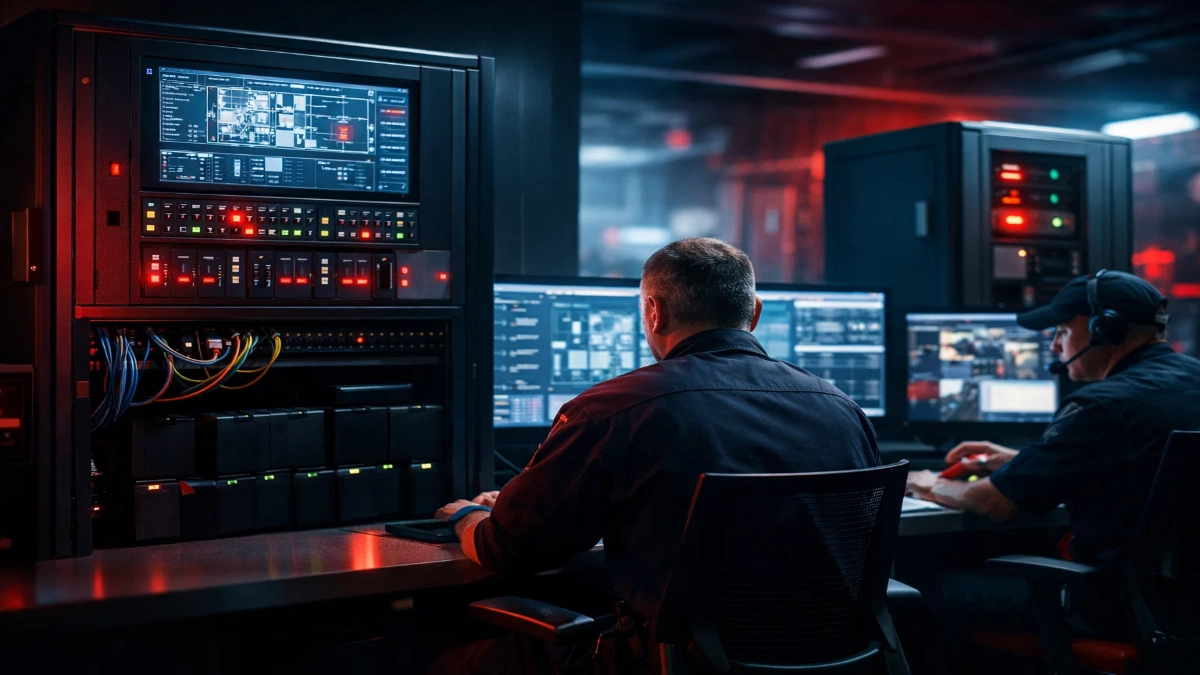
That’s why modern organisations now treat fire alarm panels as critical infrastructure, similar to data centres, cybersecurity systems and power distribution units.
In this guide, we’ll break down:
- Why fire alarm panels are mission-critical
- Key security risks and reliability threats
- Compliance and operational impacts
- How intelligent systems like the Gulf Security Technology (GST) platform mitigate these risks
- Best practices for resilient fire protection design
Let’s dive in.
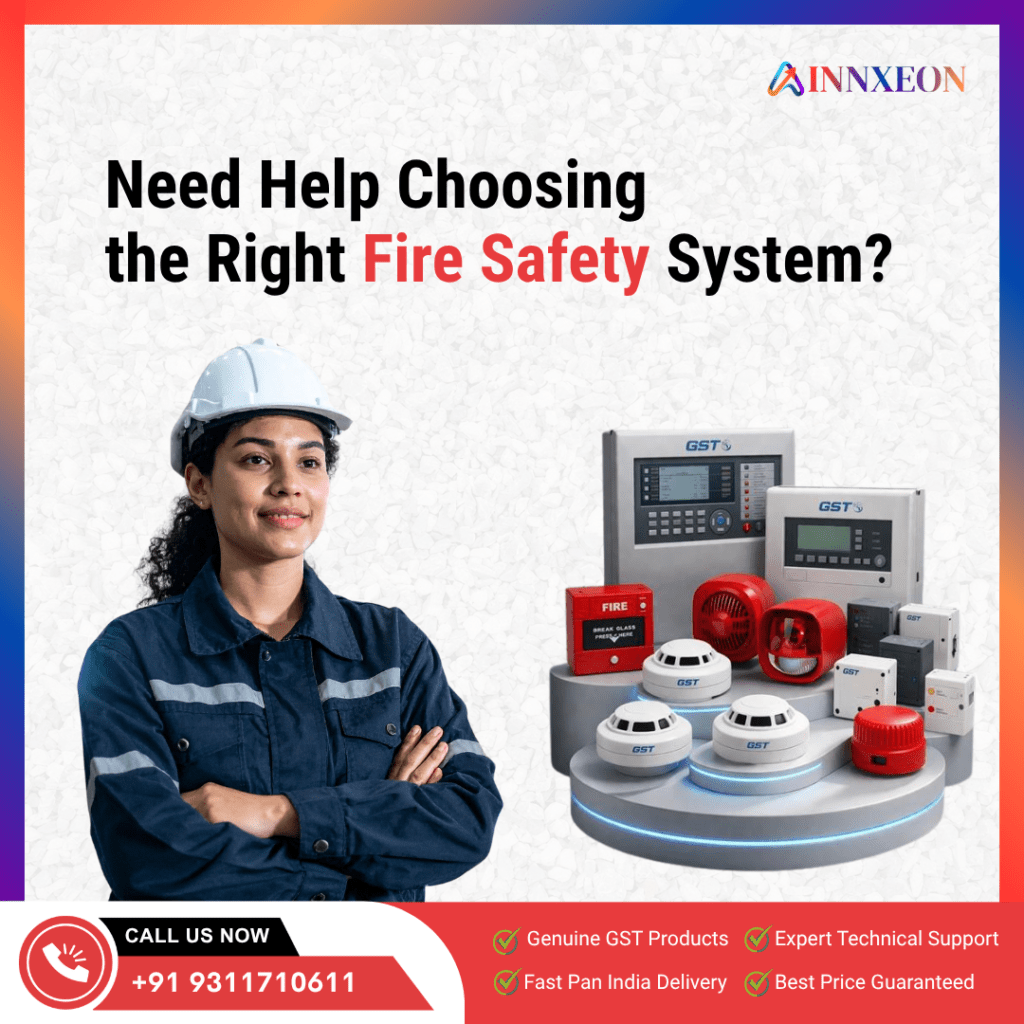
What Is a Fire Alarm Control Panel (FACP)?
A fire alarm control panel is the central unit that:
- Receives signals from detectors
- Processes alarm conditions
- Activates sirens and strobes
- Sends alerts to security teams
- Interfaces with HVAC, elevators, CCTV and PAVA
- Logs events for investigation
Think of it as the brain + command centre of the entire life safety network.
Without it, even the most advanced sensors become useless hardware.
Why Fire Alarm Panels Qualify as Critical Infrastructure
Critical infrastructure refers to systems whose failure can cause:
- Loss of life
- Major financial damage
- Legal consequences
- Operational shutdown
Fire alarm panels meet all four conditions.
Real-world impact of panel failure:
- Hospitals: patient evacuation delays
- Airports: panic and mass disruption
- Warehouses: inventory loss
- Data centres: catastrophic downtime
- High-rises: trapped occupants
This is why fire panels must deliver:
- 24/7 uptime
- Cybersecurity
- Redundancy
- Rapid fault detection
- Regulatory compliance
Security Risks in Fire Alarm Panels
1. Cybersecurity Vulnerabilities
Modern panels are IP-enabled and connected to:
- Building Management Systems (BMS)
- Cloud dashboards
- Remote monitoring
- Mobile apps
Connectivity improves control, but increases risk.
Threats include:
- Unauthorised remote access
- Alarm suppression
- Data manipulation
- False alarms
- Ransomware on life-safety networks
Why this is dangerous:
Imagine an attacker disabling alarms during an emergency.
That becomes a life-threatening scenario, not just IT downtime.
Protection strategies:
- Encrypted communication
- Network segmentation
- Secure firmware
- Access logs
- Role-based permissions
Advanced GST fire alarm system architectures already integrate many of these protections.
2. Physical Tampering & Sabotage
Panels located in:
- Parking basements
- Public corridors
- Warehouses
can be exposed to:
- Accidental damage
- Unauthorized access
- Vandalism
Solutions:
- Locked cabinets
- Access-controlled rooms
- Tamper alarms
- CCTV integration
3. Configuration Errors
Human mistakes often cause more failures than hardware.
Common issues:
- Disabled zones
- Incorrect detector mapping
- Improper wiring
- Firmware mismatches
Result?
Alarms don’t activate when needed.
Modern addressable fire alarm panel systems reduce this risk with:
- Auto-device discovery
- Graphical zone mapping
- Intelligent diagnostics
Reliability Risks That Facilities Often Ignore
4. Single Point of Failure
If one panel controls everything without backup:
Failure = Total shutdown.
Causes:
- Power loss
- CPU crash
- Firmware bugs
- Overheating
Best practice:
- Redundant panels
- Loop isolation
- Dual processors
- Backup batteries
- Distributed architecture
Enterprise-grade GST fire alarm system solutions offer modular expansion and redundancy.
5. Power Failures
Fire alarm panels must work even during blackouts.
Risks include:
- Dead batteries
- Undersized backup
- Charger failure
Standards require:
- 24 hours standby
- 15–30 minutes alarm load
Always test battery health quarterly.
6. Ageing Hardware
Old panels create:
- Slow response
- Spare part shortages
- Compatibility issues
- Compliance risks
If your panel is 10+ years old, consider upgrades.
Life safety tech evolves quickly.
Detection Layer: Addressable vs Conventional
Addressable Systems
Addressable detectors offer:
- Exact device location
- Faster troubleshooting
- Reduced false alarms
- Scalable networks
Ideal for:
- Airports
- Hospitals
- Malls
- High-rises
Use cases: addressable detectors + addressable fire alarm panel
Conventional Systems
Conventional detectors provide:
- Zone-level detection
- Lower cost
- Simple wiring
Best for:
- Small offices
- Retail shops
- Warehouses
Use cases: conventional detectors + conventional fire alarm panel
Compliance & Legal Risks
Failure to maintain fire alarm reliability can lead to:
- Authority penalties
- Insurance rejection
- Litigation
- Facility closure
Panels must comply with:
- NFPA / EN standards
- Local fire codes
- Routine testing schedules
Digital logs help during audits.
Why Smart Infrastructure Needs GST
Gulf Security Technology (GST)
GST designs fire alarm panels specifically for mission-critical environments.
Key strengths:
Reliability
- Redundant architecture
- Stable processors
- Long lifecycle components
Security
- Secure networking
- Event logging
- Controlled access
Intelligence
- Smart addressable detection
- Self-diagnostics
- Integration ready (BMS, CCTV, PAVA)
Scalability
- Small buildings → large campuses
That’s why integrators prefer GST for enterprise and industrial safety projects.
Best Practices for Secure & Reliable Fire Alarm Infrastructure
Follow this checklist:
Design Stage
- Risk assessment
- Choose addressable architecture
- Provide redundancy
Installation
- Secure panel rooms
- Proper cable routing
- Loop isolation
Operations
- Quarterly testing
- Battery checks
- Firmware updates
- Cybersecurity audits
Monitoring
- Event logs
- Remote alerts
- Preventive maintenance
Conclusion
Fire alarm panels are not just hardware.
They are critical infrastructure assets that protect:
- Lives
- Property
- Business continuity
Ignoring their security or reliability risks invites disaster.
Organisations must:
- Upgrade outdated systems
- Strengthen cybersecurity
- Adopt intelligent architectures
- Choose trusted platforms like GST
Because when emergencies happen, every second counts, and your panel must respond instantly.
Read Also: Inside Innxeon Technologies: Brands, Expertise & PAN-India Fire Safety Vision
Read Also: What Makes GST Fire Alarm Systems Commercially Viable for Large Projects