Fire alarm systems are no longer simple bells and lights chained to a manual call point. In modern commercial buildings, they’re evolving into intelligent, networked safety platforms that save lives, reduce downtime and lower total cost of ownership. This shift matters for architects, facility managers, MEP engineers and safety teams who must design, operate and maintain resilient buildings that meet strict codes while keeping occupants safe.
This article explains the practical trends and technologies reshaping fire alarm systems in smart commercial buildings.
Quick overview: Why the change matters
Commercial building owners face three pressures:
- Stronger safety codes and insurance requirements.
- Demand for minimal business disruption.
- Desire to centralise building operations (HVAC, lighting, fire, access) under a single building management strategy.
The fire alarm market is growing rapidly as systems become smarter and more connected, reflecting higher demand for integrated and predictive safety technology.
1) From zones to addresses: Addressable systems lead the way
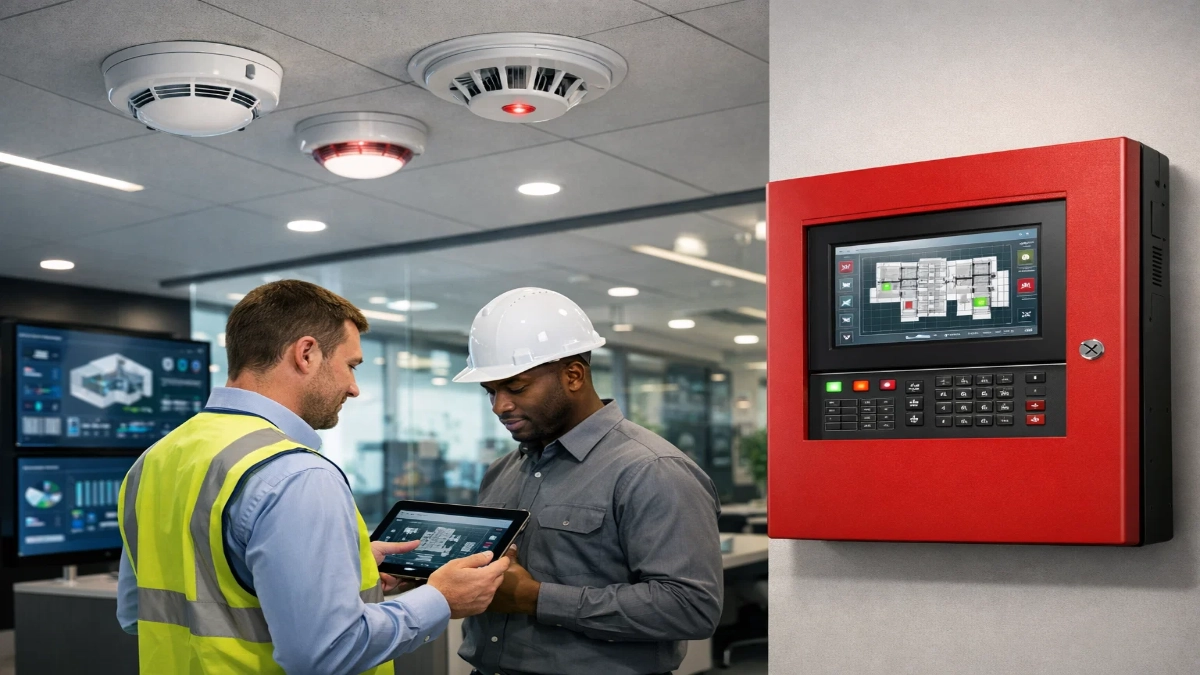
Traditional systems divide a floor into “zones”; each zone triggers an alarm, but not a precise location. Addressable systems assign a unique ID to every device on the loop. When an addressable detector goes into alarm, the control panel identifies the exact device and its location, which speeds response and reduces search time.
Key practical benefits:
- Faster, targeted response (exact device location on panel).
- Fewer false evacuations thanks to advanced algorithms and multi-criteria detectors.
- Easier troubleshooting with device health reports and loop diagnostics.
- Scalable wiring topologies that reduce cable runs in large buildings.
For commercial properties that require precision and minimal disruption, addressable fire alarm panel systems offer measurable operational advantages over conventional setups.
2) Why conventional panels still have a role
Conventional fire alarm panels remain relevant for small or simple installations. They are typically:
- Lower cost to purchase.
- Simpler to install and maintain in small layouts.
- Reliable when the number of devices and area coverage are limited.
However, conventional systems struggle with scalability and precise location reporting. For larger smart buildings that plan to integrate alarms with other systems, addressable systems are usually the better long-term choice, though conventional detectors and panels still suit many smaller projects.
3) Integration: Fire alarm systems join the building brain (BMS & IoT)
Smart commercial buildings rely on a centralised Building Management System (BMS). Modern fire alarm systems offer APIs, gateways and standardised protocols (BACnet, Modbus, LonWorks, etc.) so they can:
- Trigger HVAC shut-downs to prevent smoke spread.
- Unlock/lock emergency egress routes.
- Route cameras to the alarmed zone for verification.
- Push alerts to facility dashboards and mobile teams.
This integration enables coordinated automated responses that reduce damage and speed evacuation. As fire systems adopt standardised integration modules, they become a core part of a building’s operational intelligence.
4) Wireless & Hybrid deployments: Flexible coverage where wiring is hard
Wireless detectors and hybrid loops let building owners protect areas where cabling is impractical (heritage buildings, temporary zones, retrofits). Modern wireless nodes use robust encryption, mesh networking and battery-health telemetry to meet NFPA and EN standards. Expect wireless to appear in more commercial niches where speed and flexibility matter. Market reports show wireless fire detection is a fast-growing segment as smart buildings favour flexible installations.
5) AI, analytics & predictive maintenance: Beyond “alarm/no alarm”
The next step in smart systems is intelligence:
- AI and analytics can detect subtle patterns (smouldering fires, sensor drift, environmental trends) and reduce false positives while improving early detection.
- Predictive maintenance uses detector health data (polling results, response time, contamination indices) to schedule service only when needed, saving operating costs and ensuring readiness.
When combined with centralised logs and analytics, fire alarm systems evolve into condition-monitoring platforms that extend equipment life and increase reliability.
6) Multi-hazard detection and multi-criteria sensors
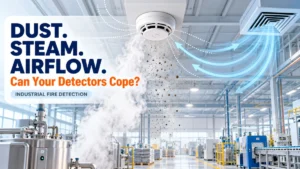
Modern detectors combine smoke, heat, CO and even air-particulate sensing into a single device. Multi-criteria (or triple-technology) detectors are less likely to falsely alarm from cooking steam or dust, yet they detect real threats faster. For commercial kitchens, warehouses with dust or facilities with complex environments, these sensors dramatically raise detection accuracy.
7) Mobile-first alerts, role-based notifications and remote management
Smart systems push structured alerts to:
- Security and facilities teams via mobile apps.
- Occupants through PA/voice evacuation systems.
- Third-party monitoring centres for 24/7 verification and dispatch.
Remote management consoles let engineers run diagnostics, update firmware and view system state without being on-site, a big win for multi-site portfolios and quick incident handling.
8) Standards, compliance and testing in a smarter world
Smarter systems change how testing and compliance work:
- Code authorities still require documented inspection, testing and maintenance.
- Addressable systems simplify compliance by logging device tests and faults automatically.
- Integration with monitoring platforms creates tamper-proof audit trails that speed inspections and claims processing.
Because codes evolve as technology advances, design teams should choose equipment from reputable suppliers with clear compliance data and lifecycle support.
9) Choosing the right architecture for your building
A brief decision guide:
- Small retail shop or single-room office: Conventional fire alarm panel – Cost-effective and simple.
- Medium to large office, hotel, or campus: Addressable fire alarm panel – Precise location, scalability and integration.
- Heritage buildings or difficult cabling: hybrid wired + wireless approach with addressable detectors in key zones.
- High-occupancy, high-risk spaces: addressable system + multi-criteria detectors + direct BMS integration.
For organisations seeking a proven partner and large-system expertise, consider solutions from established manufacturers such as GST fire alarm system lines that offer modular addressable panels, network repeaters and integration modules.
10) Practical ROI: How smarter systems save money
Upfront cost for addressable systems can be higher than conventional equivalents, but savings accumulate through:
- Reduced false evacuations and associated business interruption.
- Lower cabling and labour in complex buildings.
- Fewer routine site visits due to remote diagnostics and predictive maintenance.
- Faster emergency response and less property damage.
When presenting ROI to stakeholders, quantify avoided downtime and insurance benefits alongside direct maintenance savings.
11) Implementation checklist (for MEP and facility teams)
- Map critical zones: server rooms, kitchens, loading docks, plant areas.
- Decide device types: smoke, heat, CO, multi-criteria.
- Select panel topology: single addressable panel vs. networked panels with repeaters.
- Plan BMS integration points and protocols (BACnet/Modbus).
- Add wireless nodes for hard-to-wire areas.
- Define notification & escalation flows (who gets alerted and how).
- Specify testing, maintenance schedules, and remote monitoring access.
- Verify supplier compliance documentation and local approvals.
The future is connected and intelligent
Fire alarm systems in commercial buildings are shifting from isolated safety devices to integrated, intelligent platforms. Addressable technology, BMS integration, wireless flexibility, AI-driven analytics and multi-criteria detection all contribute to faster response, better accuracy and lower lifecycle cost. Choosing the right architecture depends on building size, risk profile and operational goals, and partnering with experienced suppliers (like GST) helps ensure systems are code-compliant, scalable and serviceable for years to come.
Read Also: Why Fire Alarm Systems Should Be Integrated with CCTV for Maximum Safety
Read Also: Choosing a PAN-India Fire Alarm Supplier: What Consultants Should Look For