Fire safety projects rarely fail because of technology. They fail because of execution delays, poor coordination, incorrect system selection and inexperienced vendors. In commercial buildings, factories, hospitals, data centres and campuses, even small fire-safety delays can cause compliance issues, operational disruption and financial losses.
Many project managers focus on product specifications, but experienced engineers know the real difference lies in vendor capability, planning, design expertise, commissioning knowledge and long-term support.
In modern infrastructure projects, selecting the right fire alarm vendor is not just a procurement decision. It is a risk-management decision.
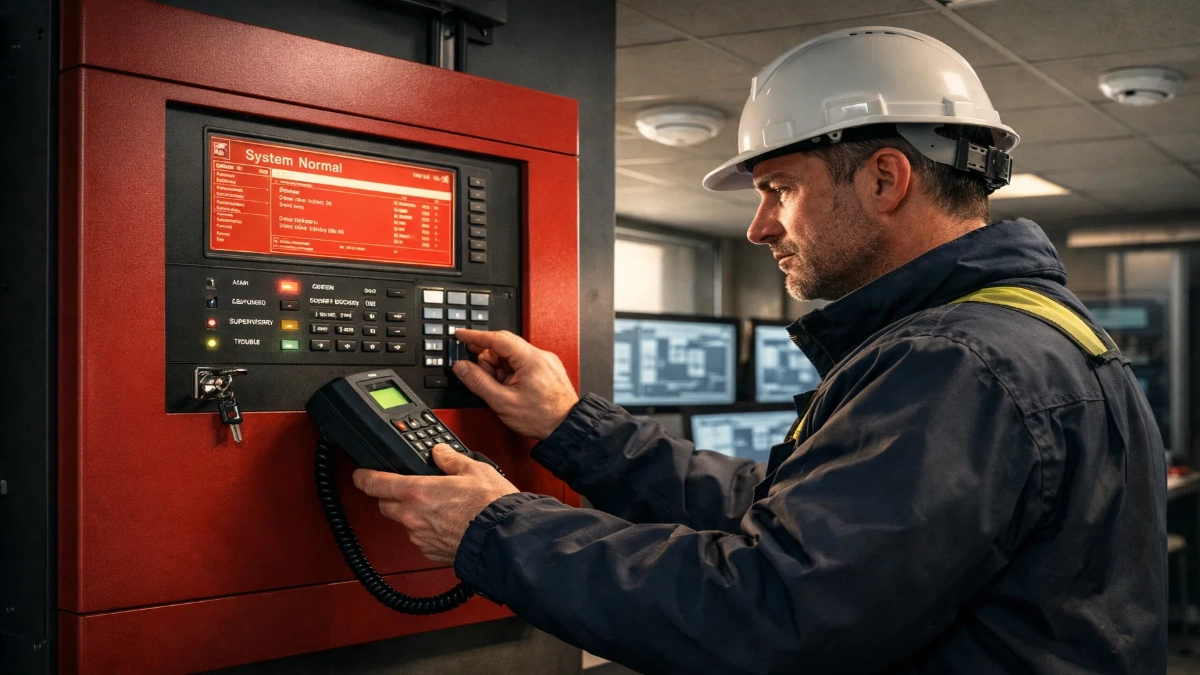
This article explains why vendor capability plays a critical role in avoiding fire safety delays and how organisations can ensure smooth implementation of reliable fire detection systems.
The Real Cost of Fire Safety Delays
Fire safety delays impact more than installation timelines. They affect:
- Occupancy approvals
- Insurance compliance
- Project handover schedules
- Safety audits
- Operational readiness
- Legal compliance requirements
In India and across global markets, fire safety clearance is mandatory before building operations begin. A delay in commissioning the fire alarm system can delay the entire project.
When vendors lack technical capability, common problems include:
- Incorrect detector placement
- Improper loop design
- Wiring errors
- Integration failures
- False alarms
- System instability
- Incomplete documentation
- Failed inspections
These issues create rework cycles, which significantly extend project timelines.
Fire Alarm Systems Require Engineering Expertise, Not Just Installation
Fire alarm systems are engineering-driven safety systems. They require proper planning before installation begins.
A capable vendor understands:
- Fire load analysis
- Detection coverage requirements
- Device compatibility
- Loop capacity planning
- Cause-and-effect programming
- Integration with BMS, PA, and suppression systems
- Regulatory compliance
Without this expertise, even high-quality products cannot deliver reliable performance.
For example, selecting between an addressable fire alarm panel and a conventional fire alarm panel
depends on building size, complexity and expansion requirements, not just budget.
Experienced vendors guide clients through these decisions early in the project lifecycle.
Why Vendor Capability Directly Impacts Project Timelines
Let’s look at how vendor capability influences different phases of a fire safety project.
1. Design Phase
A capable vendor prevents delays by:
- Creating compliant system designs
- Performing device load calculations
- Planning cable routing properly
- Selecting the correct detection technology
Poor design leads to redesign approvals, material changes and inspection failures.
This is one of the biggest causes of fire safety delays.
2. Product Selection Phase
Reliable vendors select systems that match project complexity.
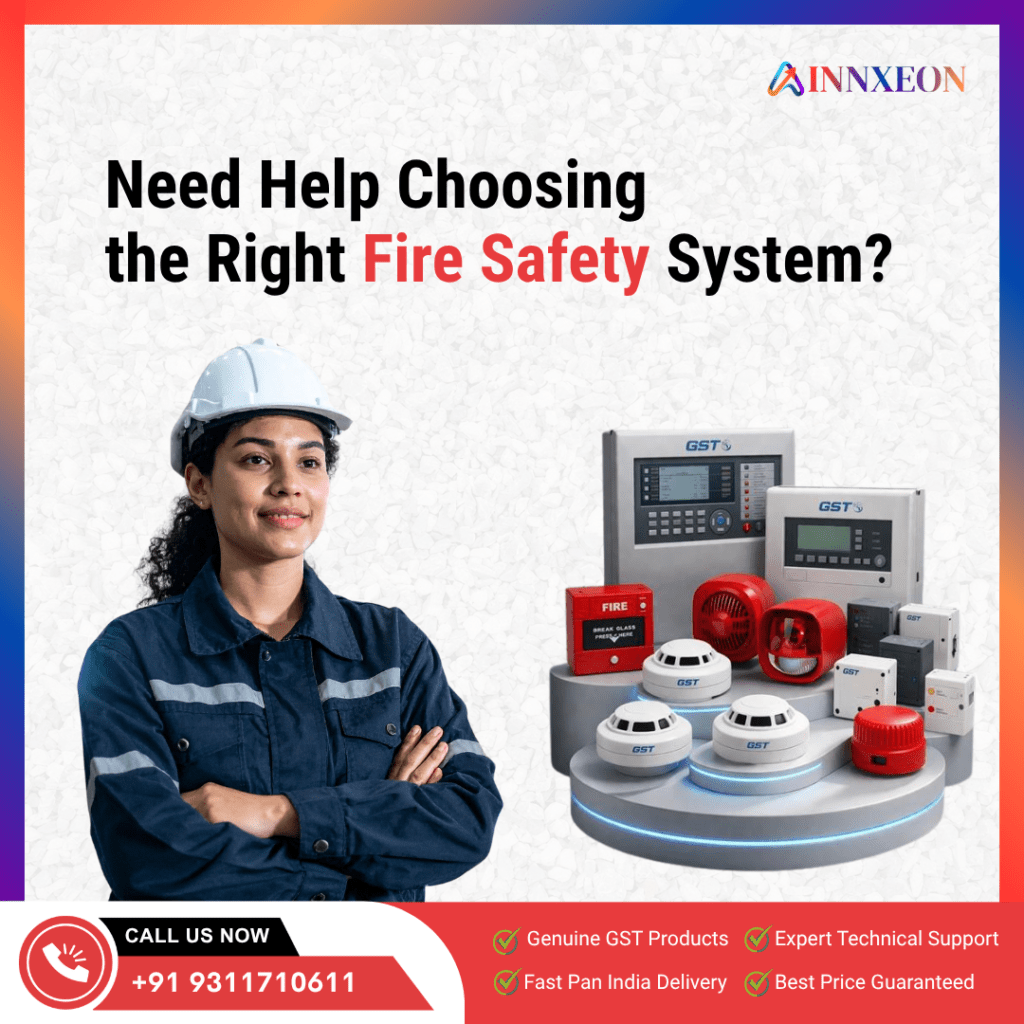
For example, large commercial buildings benefit from a GST fire alarm system, which offers scalability, intelligent detection and reliable networking capability.
Selecting the wrong system often results in:
- Expansion limitations
- Integration problems
- Performance issues
- Future replacement costs
Experienced vendors prevent these risks.
3. Installation Phase
Professional vendors ensure:
- Correct device placement
- Proper loop wiring
- Labelling and documentation
- Panel configuration
- Testing procedures
This prevents inspection failures later.
Inexperienced contractors often install devices incorrectly, especially addressable detectors and conventional detectors, which must follow specific spacing and placement standards.
Even small placement errors can cause compliance rejection.
4. Commissioning Phase
Commissioning is where many vendors struggle.
A capable vendor ensures:
- Loop testing
- Device addressing validation
- Alarm simulation testing
- Cause-and-effect verification
- Integration testing
- Panel programming validation
Improper commissioning leads to:
- False alarms
- Non-functional zones
- Detection failures
- system instability
This phase determines whether the fire alarm system will operate reliably for years.
The Importance of Manufacturer-Authorised Vendors
Working with manufacturer-authorised vendors significantly reduces fire safety delays.
Authorised vendors typically provide:
- Certified engineers
- Technical training
- Firmware support
- Configuration tools
- Spare parts availability
- Direct manufacturer coordination
This is particularly important for advanced systems like GST.
A properly deployed GST fire alarm system ensures:
- Reliable communication loops
- Accurate detection
- Faster commissioning
- Long-term serviceability
Manufacturer-supported vendors resolve issues faster and avoid trial-and-error troubleshooting.
Capability vs Price: A Common Procurement Mistake
Many organisations select vendors based on the lowest quotation.
This often results in:
- Delayed commissioning
- Rework costs
- System instability
- Compliance issues
- Maintenance problems
The initial savings often become more expensive later.
Fire safety systems should be evaluated based on:
- Technical capability
- Past project experience
- System knowledge
- Support availability
- Commissioning expertise
Not just price.
Fire safety is a life-safety system, not a commodity purchase.
Signs of a Capable Fire Alarm Vendor
When evaluating vendors, look for these indicators.
Technical Indicators
- Certified fire alarm engineers
- Experience with large buildings
- Knowledge of both system types
- Integration capability
System Knowledge
Ability to work with:
- Addressable fire alarm panel
- Conventional fire alarm panel
- Addressable detectors
- Conventional detectors
Project Capability
- Design documentation support
- Testing procedures
- Compliance readiness
- Maintenance planning
Strong vendors provide solutions, not just equipment.
How GST Systems Help Reduce Project Risk
Modern buildings require fire alarm systems that are scalable, reliable and easy to commission.
GST systems are widely used in:
- Commercial buildings
- Airports
- Hospitals
- Industrial facilities
- Data centers
- Educational campuses
A GST fire alarm system supports:
- Intelligent detection algorithms
- Stable communication loops
- Networked panels
- Flexible expansion
- Integration capability
These features reduce commissioning complexity and long-term maintenance challenges.
Engineers prefer systems that simplify diagnostics and troubleshooting; GST platforms are designed with this in mind.
Long-Term Support Matters as Much as Installation
Fire alarm systems operate for decades. Vendor capability must extend beyond installation.
A reliable vendor provides:
- Annual maintenance support
- Spare device availability
- Software updates
- Loop expansion capability
- Troubleshooting expertise
Without long-term support, systems become unreliable over time.
This is especially critical when using intelligent systems with addressable detectors, which require periodic testing and maintenance.
Fire Safety Compliance Depends on Execution Quality
Authorities evaluate fire alarm systems based on:
- Detection coverage
- Alarm functionality
- System reliability
- Documentation
- Integration performance
A capable vendor ensures all compliance requirements are met before inspection.
This prevents last-minute delays during building handover.
Compliance success is rarely about the product; it is about execution quality.
Fire Safety Projects Are Time-Critical
Fire alarm installation usually happens near project completion. Any delay at this stage impacts the entire construction schedule.
A capable vendor prevents:
- Reinstallation work
- Inspection failures
- Configuration errors
- Integration delays
They plan commissioning activities and coordinate with other contractors.
This coordination is often the difference between a smooth project handover and costly delays.
The Engineering Perspective
Experienced fire protection engineers understand a key truth:
The reliability of a fire alarm system depends as much on the vendor as on the technology.
Even the best systems fail when installed incorrectly.
A skilled vendor ensures:
- Correct system architecture
- Proper device configuration
- Reliable communication loops
- Stable alarm operation
This is why vendor selection is one of the most important decisions in fire safety projects.
Note: Fire safety delays are rarely caused by equipment. They are caused by poor planning, incorrect system selection and inexperienced vendors.
Choosing a capable vendor ensures:
- Faster installation
- Smooth commissioning
- Compliance readiness
- Reliable operation
- Long-term support
Modern intelligent systems like GST provide strong technological foundations, but vendor expertise ensures those systems perform as intended.
When organizations prioritize vendor capability over short-term cost savings, they avoid project delays and build safer environments.
Fire safety is not just about installing detectors and panels; it is about delivering a dependable life-safety system.
And that depends on the vendor.
Read Also: Fire Alarm Panels as Critical Infrastructure: Security & Reliability Risks
Read Also: Common Commissioning Mistakes in Addressable Fire Alarm Systems