Introduction: Are We Trusting a System That No Longer Protects Us?
We’ve all seen it in older facilities: a fire alarm panel tucked inside a dusty control room, detectors that haven’t been replaced in years, wiring diagrams that nobody fully understands anymore.
On the surface, the system “works.” But the real question we should ask ourselves is this:
Would it perform flawlessly during a real emergency?
Fire detection systems are not a static infrastructure. Industrial risks evolve. Building layouts change. Electrical loads increase. Compliance codes update. When the protection system stays frozen in time while everything else moves forward, gaps appear, and those gaps can be costly.
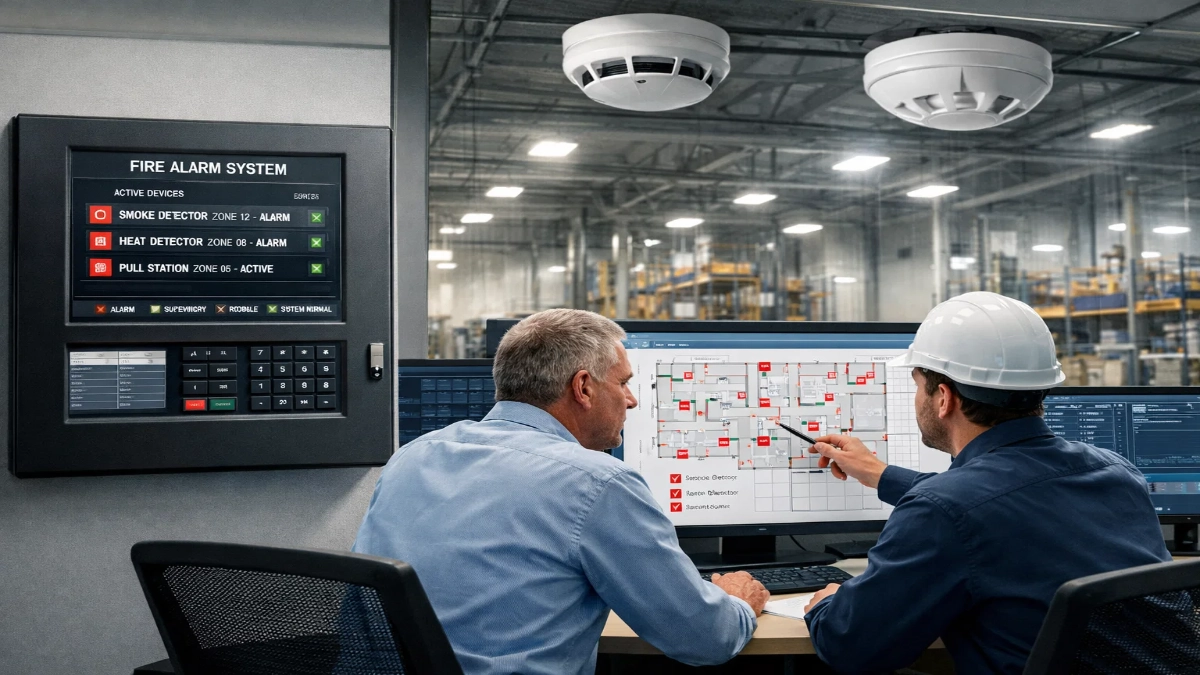
In this article, we’ll walk through seven practical engineering signs that indicate it’s time to upgrade your existing fire detection system. We’ll explore real-world scenarios, technical implications and how modern solutions like a well-designed GST fire alarm system can address these challenges without unnecessary complexity.
Understanding Fire Detection Upgrades: What Does It Really Mean?
Upgrading a fire detection system means replacing outdated panels, detectors and infrastructure with modern, compliant and intelligent equipment that improves reliability, monitoring accuracy and emergency response time. It ensures regulatory compliance, reduces false alarms and enhances system scalability for growing facilities.
Upgrading does not always mean ripping out everything. Sometimes it involves migrating from a conventional fire alarm panel to an addressable fire alarm panel, replacing ageing detectors, or integrating monitoring software.
The core goal is simple:
Improve detection speed, accuracy, system visibility and long-term reliability.
1. Frequent False Alarms Are Disrupting Operations
Frequent false alarms indicate sensor contamination, outdated detection technology, wiring issues, or system instability. When nuisance alarms interrupt production or evacuations, it signals declining system reliability. Persistent false triggers reduce trust in the alarm system and may delay real emergency responses.
False alarms are not just inconvenient. In industrial environments, they stop production lines, interrupt processes and cause unnecessary evacuation fatigue. Over time, staff begin to ignore alarm signals, and that’s dangerous.
Why False Alarms Increase in Older Systems
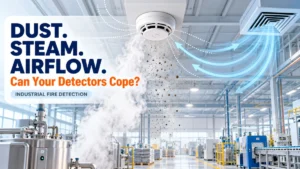
Older conventional detectors rely on basic threshold-based sensing. Dust, humidity and industrial fumes can trigger them unintentionally. Ageing sensors lose calibration accuracy.
Modern addressable detectors use intelligent algorithms to distinguish between environmental noise and actual fire signatures. They provide:
- Drift compensation
- Contamination alerts
- Precise device-level diagnostics
This is where transitioning to a modern addressable fire alarm panel significantly improves operational stability.
Key Takeaway:
- False alarms = reliability issue
- Reliability issue = safety risk
- Upgrade improves signal accuracy and system credibility
2. Your System Lacks Device-Level Identification
If your system cannot identify the exact detector or location of an alarm, it is likely conventional and outdated. Modern fire detection requires pinpoint device-level identification to reduce response time, enable targeted evacuation and improve troubleshooting efficiency.
Let’s imagine a scenario.
An alarm triggers in a 30,000 sq. ft. manufacturing unit. The panel only shows “Zone 4.” Now we must physically search that zone to locate the source.
In high-risk environments, every minute matters.
Conventional vs Addressable: Why It Matters
- Zone-based detection
- Limited location accuracy
- Complex troubleshooting
- Exact device identification
- Real-time status monitoring
- Faster emergency verification
A modern GST fire alarm system offers an addressable architecture that allows operators to immediately identify:
- Which detector triggered
- Its exact location
- Whether it’s smoke, heat, or fault
Bullet Summary:
- Faster emergency response
- Reduced downtime
- Simplified maintenance
3. Spare Parts Are Hard to Find
When replacement detectors, panels, or modules become unavailable due to discontinued models, the system becomes unreliable. Lack of spare parts increases downtime, repair delays and long-term operational risk.
Many facilities still operate panels that are no longer manufactured. When a module fails, sourcing replacement parts becomes difficult.
Why Obsolete Systems Increase Risk
- Manufacturer support ends
- Firmware updates stop
- Compliance upgrades become impossible
Upgrading to a currently supported platform ensures long-term component availability and compatibility.
Modern GST systems offer scalable and supported product lines, ensuring:
- Spare availability
- Backward compatibility
- Firmware updates
Engineering Insight:
If procurement teams struggle to source original parts within 2–3 weeks, your system is already operationally vulnerable.
4. Expansion Is No Longer Possible
If your fire alarm panel has reached maximum loop capacity or cannot support additional devices, expansion becomes impossible. Growing facilities require scalable detection systems that support future growth without requiring full replacement.
Facilities evolve. We add new warehouses, production lines, server rooms or hazardous storage areas.
But older panels often:
- Have fixed zone limits
- Lack of loop expansion capability
- Cannot integrate with monitoring systems
Why Scalability Matters
An upgrade to a modular addressable architecture enables:
- Additional loops
- Networked panels
- Remote monitoring integration
A GST fire alarm system is designed with modular scalability, allowing incremental upgrades instead of complete system replacement.
Step-by-Step Decision Check:
- Are all panel loops occupied?
- Are additional devices required?
- Does expansion require panel replacement?
If yes, it’s upgrade time.
5. Maintenance Costs Keep Increasing
Rising maintenance costs often indicate ageing wiring, sensor drift and repeated device failures. When annual service expenses approach the cost of partial system replacement, upgrading becomes more economical long-term.
Older systems require:
- Frequent recalibration
- Rewiring
- Manual fault tracing
Hidden Cost of Ageing Systems
Maintenance teams spend more time diagnosing issues in conventional panels because faults are zone-based, not device-specific.
With intelligent addressable systems:
- Fault location is immediate
- Preventive maintenance becomes data-driven
- Downtime reduces significantly
Modern addressable detectors provide contamination alerts before failure, enabling proactive replacement.
Cost Reality:
Spending repeatedly on repairs is often more expensive than strategic upgrading.
6. Your System Does Not Meet Current Compliance Standards
If your fire detection system does not meet updated national or industrial safety codes, it exposes your facility to legal penalties, insurance risks and operational shutdown. Regulatory compliance evolves, and outdated systems may fail inspection requirements.
Standards evolve. Insurance audits become stricter. Authorities demand documented testing and reporting.
Compliance Risks of Older Systems
- Limited event logging
- No digital records
- Inadequate integration with suppression systems
Modern panels provide:
- Event history storage
- Remote diagnostics
- Integration with suppression and monitoring systems
A current-generation GST platform is built to align with modern safety and performance expectations.
Compliance Checklist:
- Digital event logs available?
- Third-party certification current?
- Integrated evacuation control?
7. No Integration With Central Monitoring
If your fire detection system cannot integrate with centralised monitoring or building management systems, response coordination becomes slower. Modern facilities require integrated safety ecosystems that unify detection, surveillance and emergency response systems.
Today’s facilities rely on centralised emergency management.
When fire detection operates in isolation:
- Response teams lack full visibility
- Alarm verification takes longer
- Data analysis becomes impossible
Why Integration Is Essential
Modern addressable systems support:
- Networked panels
- Central monitoring software
- Remote diagnostics
Upgrading to a scalable GST architecture enables integration with broader safety infrastructure without excessive redesign.
Real-World Application: When Should We Actually Upgrade?
Let’s simplify the decision-making process.
Upgrade when:
- False alarms increase
- Expansion is blocked
- Maintenance costs escalate
- Compliance risks appear
- Spare parts are discontinued
- Detection accuracy is limited
- Central monitoring is missing
Engineering Rule of Thumb:
If three or more of these signs apply, conduct a formal system audit immediately.
Engineering Best Practices for Upgrading
Step 1: Conduct a Technical Audit
Assess panel capacity, detector health, wiring condition and compliance status.
Step 2: Compare Conventional vs Addressable Architecture
Evaluate whether transitioning from conventional detectors to addressable detectors will improve response efficiency.
Step 3: Plan Phased Migration
Avoid total shutdown. Upgrade loop by loop where possible.
Step 4: Ensure Scalability
Select a system that allows future expansion without replacement.
Step 5: Choose a Reliable Platform
Select a manufacturer-supported system, such as a modern GST fire alarm system that offers long-term stability and integration flexibility.
Protecting the Future Starts With an Honest Assessment
When we evaluate our existing fire detection system, the goal is not just compliance; it is confidence.
We want to know that:
- Every detector works reliably
- Every alarm is accurate
- Every response is fast
- Every expansion is possible
Upgrading is not about replacing hardware for the sake of modernisation. It’s about reducing risk, improving operational continuity and building long-term safety resilience.
If your facility shows multiple warning signs discussed above, it may be time to move toward a scalable, intelligent platform like a modern GST fire alarm system, one that supports addressable architecture, expansion flexibility and integrated safety management.
Because in fire safety, waiting for failure is never a strategy.
And together, we can make sure our protection systems are ready before they’re tested.
Read Also: Designing a Centralised Emergency Monitoring Ecosystem
Read Also: Industrial Surveillance + Fire Safety: A Unified Protection Strategy