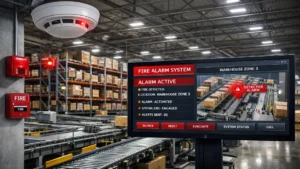
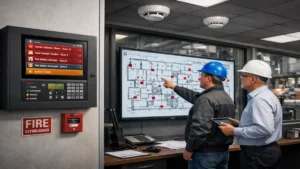
Fire alarm accessories are essential components of any modern fire safety system. These accessories help detect fire, alert occupants, communicate with the control panel and activate safety equipment. Whether you are setting up a new fire alarm system or upgrading an existing installation, choosing the right accessories ensures fast response, fewer false alarms and full compliance with fire safety norms.
In 2025, the options available online have increased significantly. This makes buying easier, but also more confusing. Different brands, communication protocols, certifications and compatibility factors must be considered before making a purchase.
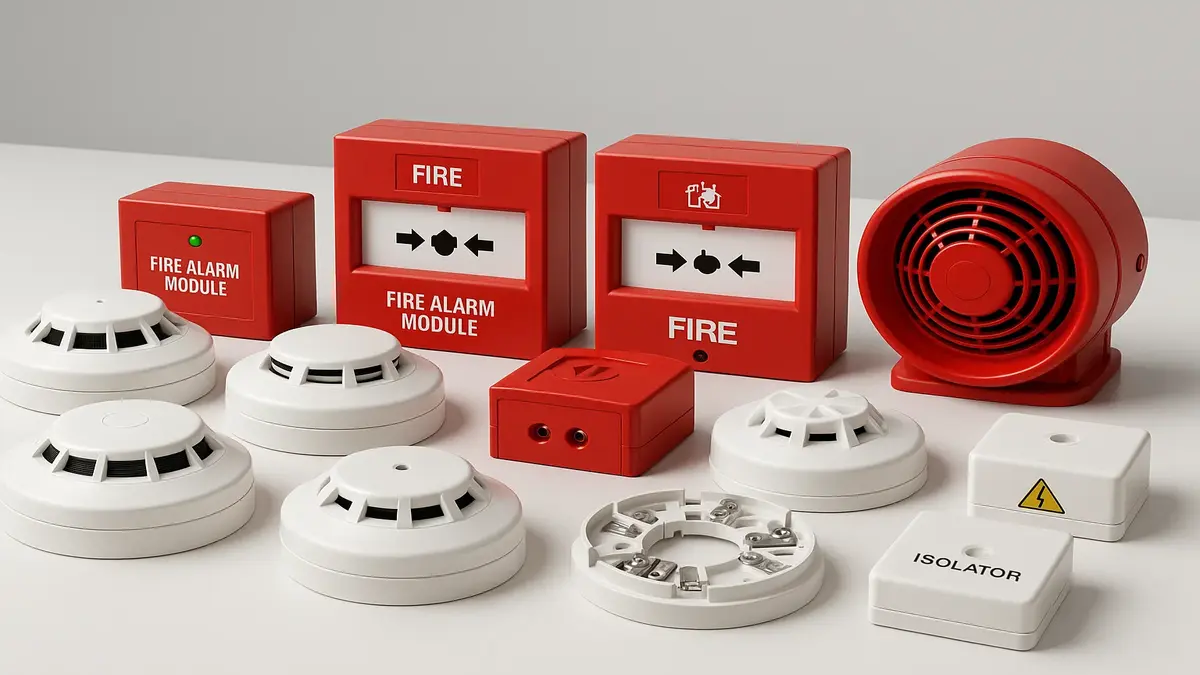
This detailed guide explains everything you need to check before buying fire alarm accessories such as detectors, hooters, modules, isolators and MCPs so that your system stays reliable and compliant.
Understanding Fire Alarm Accessories
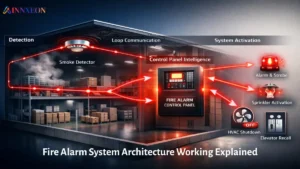
Fire alarm accessories work together to detect fire and respond instantly. Each accessory plays a unique role:
Detectors
These sense an abnormal condition such as smoke, heat, flame or gas.
Common types include smoke detectors, heat detectors, multi-sensor detectors, beam detectors, gas sensors and flame detectors.
Notification Appliances
These inform occupants visually or audibly when a fire is detected.
Examples include hooters, sounders, strobes and sounder-cum-strobes.
Manual Call Points (MCPs)
These allow any person to manually trigger the alarm in case of emergency.
Modules
Modules act as communication bridges between the fire alarm panel and external devices.
Popular module types include input modules, output modules, monitor modules, relay modules, loop isolator modules and dual modules.
Power & Installation Accessories
Batteries, SMPS power units, mounting bases, back boxes, housings, relay bases and connectors all support the system’s operation.
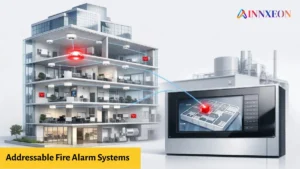
A fire alarm panel whether addressable or conventional works properly only when paired with the correct accessories.
Checklist to Use Before Buying Fire Alarm Accessories (2025 Edition)
This checklist ensures you buy the right components that match your building’s fire safety requirements.
Panel Compatibility
Compatibility is the most important factor. Check whether your panel is addressable or conventional. Accessories must match the panel’s operating method, communication protocol and wiring requirements.
Addressable panels use unique communication languages. For example, GST addressable systems communicate on their own protocol. Accessories such as detectors, MCPs and modules must support the same protocol for error-free functioning.
Conventional panels are simpler, but the voltage ratings and wiring style must still match.
Using incompatible accessories can cause:
- False alarms
- No communication between devices and panel
- Loop failures
- Panel malfunction
Always confirm compatibility before purchase.
Certification and Standards
Fire alarm accessories should follow approved safety certifications. Look for:
- EN54 certification
- BIS or IS/IEC compliance
- CE marking
Certified devices provide reliable performance and smoother fire NOC approvals.
Building Requirements
Every building has different fire safety needs. The accessories you choose depend on the environment, occupancy and hazard level.
Homes and Small Offices
Smoke detectors and compact sounders are usually enough.
Commercial Spaces
Multi-sensor detectors, sounder-strobes and control modules are commonly required.
Factories and Warehouses
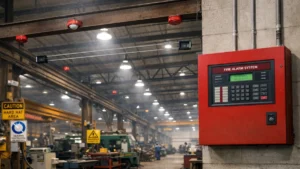
Heat detectors, beam detectors, industrial hooters and loop isolators are important due to harsh environments.
Hotels and Hospitals
Addressable systems with intelligent detectors offer better control and monitoring.
Choosing accessories based on building type ensures accurate detection with minimal false alarms.
Wiring and Voltage Needs
Before buying any accessory, check the wiring method required. Fire alarm cables must be high-quality FRLS or FRLSH cables.
Also confirm:
- Operating voltage
- Standby current
- Alarm current
- Polarity requirements
- Loop in-loop out wiring (for addressable modules)
Incorrect wiring can overload the panel or cause system failure.
Brand Ecosystem
Most fire alarm systems work best when accessories match the panel’s brand ecosystem. For example, GST addressable panels perform optimally with GST detectors, hooters, modules and loop isolators because the communication language is fully synchronized.
Mixing accessories from multiple brands may cause:
- Slow response
- No communication
- Loop faults
- Warranty concerns
Matching accessories to your panel brand ensures safer and smoother system operation.
Documentation and Installation Guides
Always check whether the accessory comes with:
- Data sheet
- Technical manual
- Wiring diagram
- Addressing instructions
These documents help installers avoid mistakes and allow easy troubleshooting.
Spare Availability and Durability
Fire alarm accessories should be durable and easy to replace. Check whether spare parts like detector bases, MCP glasses and batteries are easily available. The typical life of detectors is 8–10 years depending on the environment.
How to Choose Each Type of Fire Alarm Accessory
Below is a simple selection guide for key accessories.
Choosing Detectors
A detector must match the environment, temperature, risk zone and building layout. Smoke detectors work well in clean indoor environments, while heat detectors suit hot or dusty spaces. Multi-sensor detectors provide high accuracy in modern buildings.
If you are using a GST system, choose detectors that follow the same addressable loop communication protocol for maximum stability.
Choosing Hooters and Sounders
Hooters should be selected based on sound level, usually 85–120 dB depending on the building. Sounder-cum-strobes are preferred in noisy areas or for visually impaired zones. Always check power consumption and voltage ratings.
Choosing Modules
Modules connect your fire panel with external devices such as sprinklers, smoke extract systems, fan controls, lifts and relays. Choose modules based on:
- Input or output requirement
- Monitor or control needs
- Loop isolation requirements
- Addressing method
Addressable modules must match the panel protocol.
Choosing Manual Call Points
MCPs should be easy to operate, clearly visible and durable. Options include break-glass and resettable types. Outdoor areas may need weatherproof MCPs.
Choosing Batteries and Power Supplies
Always choose SMF (Sealed Maintenance Free) batteries of the correct voltage and Ah capacity. Addressable panels require enough battery backup to run in standby mode for 24 hours and in alarm mode for at least 30 minutes.
Common Mistakes to Avoid When Buying Fire Alarm Accessories
Avoiding these mistakes ensures your system stays safe:
- Using non-certified accessories
- Mixing incompatible brands
- Buying detectors without bases
- Using hooters with higher current than supported
- Ignoring loop isolators
- Using local batteries with low backup time
Good planning helps avoid costly corrections.
Why Many Buyers Prefer GST Accessories
GST (Gulf Security Technology) is widely used across commercial and industrial buildings. Many buyers prefer using GST-compatible accessories because:
- They offer EN-certified detectors and modules
- Their addressable communication is stable and reliable
- Spare parts and replacements are easily available
- Their ecosystem is designed for consistent performance
Final Buying Checklist
Keep this simple checklist in mind before you purchase:
- Accessories match the fire alarm panel brand and protocol
- All devices are EN54/BIS certified
- Voltage and wiring requirements are correct
- Building-specific risks are considered
- Installation manuals and datasheets are available
- Spares and replacements can be sourced easily
- Long-term durability and service life are verified
When all accessories are correctly selected and installed, your fire alarm system works smoothly and reliably.
Read Also: Buy GST Fire Alarm Panel Online in India
Read Also: 7 Fire Safety Innovations You’ll See in Every Building by 2030