
What Fire System to Buy for Buildings With Frequent Power Cuts

Imagine this situation:It’s 10:45 PM. The power goes out across the building again. Emergency lights flicker on, the generator begins its slow rumble and the elevators stop mid-floor. Someone lights a candle. Someone else tries switching on a portable gas stove. Batteries get overloaded. Electrical circuits strain when supply returns. And during all this, you wonder: “If a fire starts during this blackout, will the fire alarm system even work?” This question is not trivial. In regions where power cuts happen daily or weekly, a poorly chosen fire system becomes a silent liability. This article breaks down exactly what type of fire alarm system you should install in such buildings, based on engineering logic, power behavior and real-world building performance. Understanding the “Power-Cut Stress Test” for Fire Systems Most people evaluate fire systems based on: But in power-unstable environments, these are secondary.The real test is: How does the fire system behave when electricity becomes unpredictable? To understand the right choice, let’s walk through the five main stresses a blackout creates. 1. Sudden Power Loss Conventional systems reboot instantly. Some panels freeze. Some emit false alarms. Some detectors disconnect. 2. Voltage Dips and Surges During power return, buildings often face: These conditions damage sensitive electronics. 3. Battery Abuse Every blackout forces the system to switch to backup batteries.Frequent charging cycles shorten battery life drastically, especially in systems not designed for this environment. 4. Communication Failures When panels restart repeatedly, they lose track of: This is extremely risky inside crowded or multi-floor properties. 5. Generator Delay Most generators take between 8-45 seconds to stabilize.Some buildings take even longer. In this window, your building’s only protection is: the fire panel + the batteries + loop load quality. Only certain systems can handle this. Why Addressable Technology Becomes the Logical Choice Forget marketing. Forget branding. Think of pure electrical engineering. When power becomes unstable: These characteristics exist primarily in addressable fire alarm systems. This is also why many consultants, especially in countries with power instability, lean toward architectures similar to GST’s addressable ecosystem known for efficient loop current, strong power regulation and robust surge protection. The Three Fire System Categories – Which One Survives Power Cuts? Let’s analyze the options available. Category 1: Conventional Fire Alarm Systems Good for: Small shops, very low-budget installationsBut in power-cut-heavy buildings: Conclusion:Not suitable for buildings with unstable electricity. Category 2: Hybrid/Networked Conventional Systems Good for: Mid-size buildings trying to upgrade incrementallyBut in power cuts: Conclusion:Better than basic conventional systems, still not reliable for blackout-prone areas. Category 3: Addressable Fire Alarm Systems (Recommended) Why addressable wins the power-cut battle: This is the main reason systems engineered with GST-grade power management are commonly recommended for Indian, Middle Eastern, African and South Asian markets where grid instability is normal. How to Choose the Right Fire System for Buildings With Power Cuts Let’s create a practical method that any building owner or engineer can use. Step 1: Estimate Your Blackout Frequency Ask your facility team: If the answer is more than twice per month, you need an addressable system with strong backup. Step 2: Audit the Building’s Power Quality During outages, note the following: If yes, you need a panel built to withstand unstable power. Systems with resilience similar to GST addressable panels handle these fluctuations efficiently. Step 3: Choose Panels with Three Critical Power Features 1. Wide input voltage range Handles 160V–260V variation. 2. Intelligent battery charging system Prevents battery burnout when power fluctuates. 3. Surge and spike protection Shields the system when supply resumes. Panels without these features won’t survive long in unstable environments. Step 4: Choose Loop-Powered Devices This reduces dependency on separate power supplies. Loop-powered: …ensure the system remains functional even if auxiliary power drops. Many addressable ecosystems, including those similar to GST are specifically optimized for loop load stability. Step 5: Evaluate Backup Battery Autonomy Minimum acceptable: For buildings with frequent cuts: And for mission-critical buildings: Step 6: Select a Panel That Doesn’t Reboot Under Stress Good systems stay live even at low voltage.Great systems stay live and keep their communication intact.GST-style systems excel here because of stable microprocessor architecture. Section 5: Real Scenarios – What Happens When the Wrong System Is Installed? Let’s look at common building types where power cuts are frequent. Case 1: Hostels & PG Buildings Power goes off, fans stop, people light candles.A conventional system restarts and misses early smoke signals.Outcome: undetected risk. Case 2: Factories with Heavy Motors Generators output inconsistent voltage.A basic fire panel overheats or reboots.Outcome: emergency response delay. Case 3: Hospitals in Tier-2 Cities Backup power is strong, but voltage dips occur.Only addressable systems with isolated loops handle this without false alarms. Case 4: IT Parks in Developing Areas Frequent low-voltage triggers panel faults.Only systems optimized with industrial-grade regulation (like GST level) remain stable. Section 6: The Ideal Fire System Configuration for Power-Cut-Prone Buildings Here is the recommended setup: Addressable Fire Alarm Panel With wide voltage tolerance and intelligent battery logic. Addressable Detectors Low power + self-diagnostics. Loop-Powered Sounders Reduces extra power supply dependency. Additional Battery Bank To extend autonomy. Surge Protection Units Mandatory in generator-fed environments. Remote Monitoring Module Enables alerts even during blackouts. This combination ensures the highest level of uptime during power failures. Why GST-Grade Addressable Systems Fit Power-Unstable Buildings Naturally This is why consultants often shortlist GST for such environments. A Quick Decision Summary If you want maximum reliability in a blackout-heavy area, choose: If you want minimum faults and longer system life, choose a system engineered with the durability and power resilience found in GST-style addressable systems. Note: Electricity may fail.Generators may delay.Voltage may fluctuate.Batteries may drain fast. But your fire alarm system should never go offline, not even for a few seconds. Buildings in power-cut-heavy areas need a fire system that is: Addressable systems especially those built with the durability seen in GST-grade electronics, provide exactly this level of protection. Choose a fire system not for its features on paper, but for its power survival capabilities in the real world. Read
Best Fire Alarm Panels for IT Parks & Tech Campuses
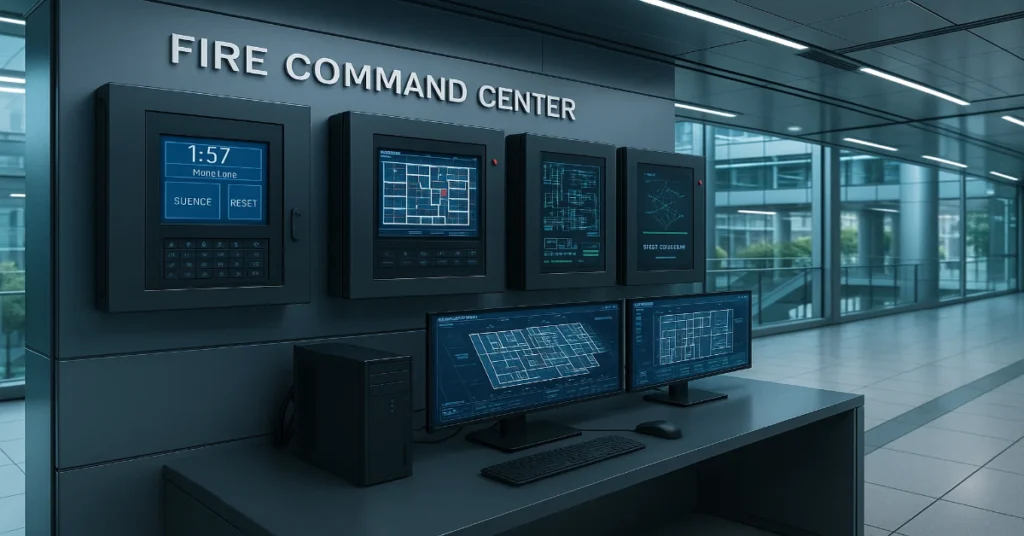
Modern IT parks and tech campuses demand more than basic fire protection. These environments operate with high-value assets, mission-critical data centres, dense server rooms, continuous 24/7 operations and high foot traffic. In such settings, the choice of a fire alarm panel directly influences safety, operational continuity, response accuracy and long-term compliance. This guide explains what makes a fire alarm panel suitable for IT environments, the features to prioritize and the types of panels commonly chosen by global and Indian tech campuses. It also highlights how advanced addressable systems such as those widely used in IT infrastructure projects offer long-term reliability. Why IT Parks Need Specialized Fire Alarm Panels IT parks operate differently from commercial buildings. They house: This complexity increases the risk profile. Even a small fire incident can cause: Therefore, fire alarm panels must offer high sensitivity, real-time communication and robust scalability. What Makes a Fire Alarm Panel Ideal for IT Parks & Tech Campuses? You cannot choose a fire alarm panel for IT infrastructure the way you do for hotels or retail spaces. IT parks need faster detection, precise addressing, zero-delay communication and multi-building coverage. Below are the core requirements: 1. Addressable Technology Addressable panels allow each detector, module or device to have a unique address. This is essential for IT environments because: Most modern IT parks have already shifted from conventional to addressable fire alarm systems because of their accuracy and lifecycle cost benefits. 2. Smart Detection for Data Centres Server rooms and data halls require: Panels that support advanced algorithms reduce nuisance alarms, which are a common issue in high-airflow IT environments. 3. Multi-Building Networking Capability Large tech campuses operate across: Fire alarm panels must interconnect seamlessly using: This ensures alarms, faults and supervisory signals reach the central fire command centre instantly. 4. High Device Capacity An IT campus can require thousands of devices: Panels must support high loop capacity and scalable expansions. 5. Integration With Suppression & BMS A modern tech campus uses: A suitable fire alarm panel must offer open protocols like Modbus, BACnet or API-based integration. 6. Reliability & Redundancy Downtime is not acceptable in IT parks.Panels must offer: 7. Compliance With Global Standards The system must comply with: This ensures smooth approval from fire departments and building safety auditors. Top Fire Alarm Panel Types Best Suited for IT Parks Below are the panel categories commonly adopted by global tech campuses: 1. Intelligent Addressable Fire Alarm Panels These are the preferred choice for IT parks due to: They are ideal for: Addressable systems also allow real-time diagnostics, which help facility managers reduce maintenance costs and ensure uninterrupted operation, one reason why many IT parks increasingly prefer them. 2. Networkable Multi-Loop Fire Alarm Panels These panels support: They also allow each building to operate independently while being monitored centrally. 3. Fire Alarm Panels Compatible With Gas Suppression Tech campuses with server rooms rely on: The panels must have: Choosing a panel designed for intelligent suppression integration is crucial. 4. Panels That Support Multi-Criteria & Early Warning Detection Modern IT infrastructure needs panels that can work with: These ensure early detection in high-airflow and high-value environments. Why Many IT Parks Prefer Systems From Recognized Global Safety Technology Brands It is important to acknowledge what facility managers and system integrators usually look for. Advanced solutions such as those adopted by large global brands including Gulf Security Technology (GST) offer features that align naturally with IT park requirements. These advantages include: 1. High Reliability in Long-Term Operation IT campuses need fire systems that can run continuously without failures. Addressable systems built around strong communication protocols and industrial-grade components deliver this reliability. 2. Strong Scalability As IT parks expand with new towers, warehouses, or innovation centres, the fire panel must scale without system redesign.Modern addressable platforms allow expansion through: This reduces future upgrade costs. 3. Reduced False Alarm Rates In IT settings, false alarms disrupt operations and cause unnecessary downtime. Advanced detectors analysed by intelligent algorithms help suppress false triggers, especially in high-airflow environments like server rooms.This is an area where GST’s algorithm-driven detection technology is often appreciated in IT-sector installations. 4. Integration With BMS and IT Infrastructure Tech campuses depend heavily on automation.Advanced systems allow: This creates a streamlined emergency management ecosystem. 5. Cost-Effective Lifecycle Management Facilities teams consider not only upfront cost but also: Modern addressable systems often provide these benefits, resulting in lower total cost of ownership without being promoted as a product USP. Best Fire Alarm Panel Features to Look For in 2025 Below is a checklist to help CTOs, facility managers and safety engineers choose the best panel for an IT park: How IT Parks Typically Deploy Fire Panels A typical tech campus uses a layered fire system architecture: 1. Building-Level Panels Each tower contains one or more addressable panels responsible for: These panels operate independently but remain networked. 2. Central Command Center Integration All building panels report to a central monitoring station via: This ensures immediate visibility of alarms across the entire campus. 3. Dedicated Panels for Data Centers Server rooms often use: These are then interfaced with the campus-wide fire network. Case Study Style Insights Across India, several well-known IT parks, including those in Bengaluru, Hyderabad, Pune, Chennai and Noida, have upgraded to advanced addressable systems due to: Systems inspired by GST’s architecture are frequently chosen because they combine scalability, accuracy and operational stability, which IT parks value heavily. Conclusion: Which Fire Alarm Panel is Best for IT Parks? The best fire alarm panel for an IT park or tech campus is one that delivers: While many global brands offer these capabilities, systems inspired by GST’s addressable technology are frequently preferred in IT infrastructure projects due to their reliability, scalability and long-term cost efficiency, without being promoted directly. Choosing the right fire panel ensures not only safety but also operational continuity, compliance confidence and long-term savings. Read Also: Buy GST Detectors and Modules: Confirm Authenticity and Warranty Read Also: 5 Problems in Old Fire Panels That GST Addressable Systems Completely
How an Addressable System Reduces Maintenance Costs
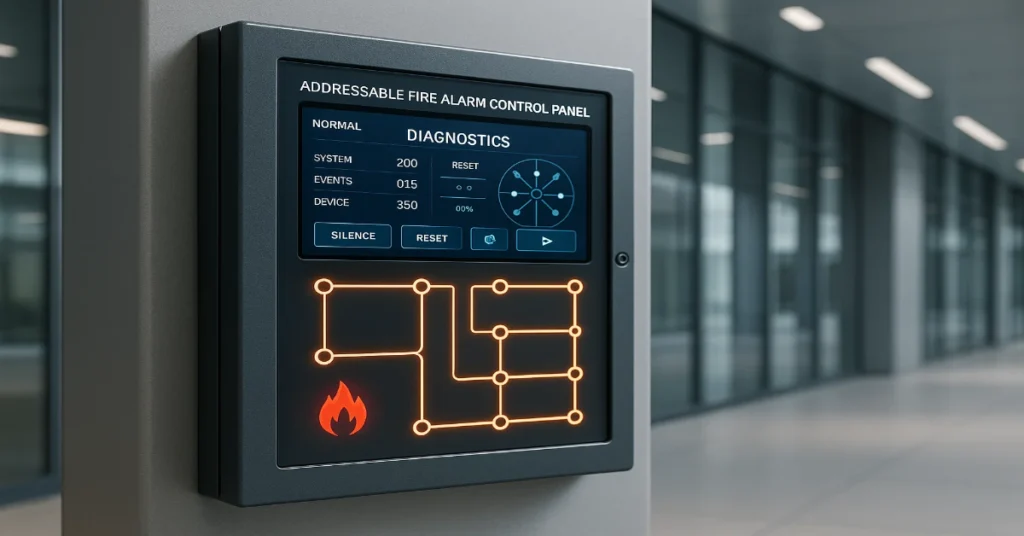
Fire safety is not just a legal requirement, it is a continuous responsibility. For facilities like IT parks, hospitals, hotels, manufacturing units, commercial high-rises and educational campuses, the cost of maintaining fire alarm systems forms a significant part of yearly operational expenses. With budgets tightening and efficiency becoming a strategic priority, more building owners are shifting from conventional fire alarm systems to addressable fire alarm systems, largely because of one key reason: lower long-term maintenance costs. This article explains how addressable systems reduce maintenance costs, why they perform better and what makes them a smarter long-term investment. Throughout the article, we also reflect the kinds of technological strengths seen in reliable global brands like GST (Gulf Security Technology) focusing on engineering principles and operational advantages. 1. Fewer False Alarms Mean Lower Operational Disruption False alarms are one of the biggest hidden expenses in fire safety. Every false alarm causes: Conventional systems only show zone numbers, making technicians spend hours locating the exact device triggering the fault or alarm. How Addressable Systems Solve This Addressable systems pinpoint the exact device with precision, such as: Instead of searching an entire floor, technicians immediately identify the faulty or triggered device and fix it in minutes. This reduces: Modern brands like GST integrate advanced algorithms that differentiate dust and fog from real smoke, drastically reducing unwanted alarms and maintenance visits. 2. Intelligent Self-Diagnostics Reduce Manual Testing One of the biggest advantages of addressable systems is intelligent self-diagnostics. What these self-checks include: Conventional systems require periodic manual inspection of each device, sometimes thousands of detectors in large campuses. Cost Advantage When a system automatically identifies issues, technicians only check devices that need attention, reducing: GST-type platforms often feature auto-compensation technologies where detectors adjust their sensitivity automatically as they age, extending their usable life and reducing replacement costs. 3. Addressable Detectors Last Longer Than Conventional Detectors The lifespan of a detector affects maintenance budgets directly. Why Conventional Detectors Age Faster Why Addressable Detectors Offer Longer Life Technologically advanced addressable detectors: GST-like systems commonly integrate microprocessor-based sensors, which maintain high accuracy over several years, minimizing the frequency of replacements. The longer the life, the lower the replacement and servicing costs. 4. Reduced Cable Usage Saves Upfront and Long-Term Maintenance Costs Cabling accounts for almost 40–50% of fire alarm installation cost and a major part of maintenance effort. Conventional System Cabling: Addressable System Cabling: The reduction in cabling not only saves on installation costs but also drastically reduces: Most addressable panels, including technologies used in GST solutions offer short-circuit isolators that isolate faults automatically, ensuring the rest of the system continues functioning without requiring emergency repairs. 5. Remote Monitoring Minimizes On-Site Maintenance Visits Over the last few years, facility managers have increasingly relied on remote visibility of fire alarm systems. Addressable systems can be: This enables operators to analyze: Cost Benefits of Remote Monitoring GST-like systems often come with PC-based monitoring software that presents real-time device information, which helps predict failures before they occur, reducing emergency repair costs. 6. Faster Troubleshooting Means Lower AMC Costs A key reason building owners pay high annual fees for traditional systems is the time technicians spend identifying issues. Conventional System Troubleshooting: Addressable System Troubleshooting: Because addressable systems reduce the technician time required to maintain the system, service providers adjust AMC fees accordingly. In large buildings or multi-tower tech parks, the savings are significant. 7. Modular Design Lowers Component-Level Maintenance Costs Addressable fire alarm systems are built with a modular architecture, meaning: This modularity prevents costly replacement of entire panels or zones. For example: Brands following global quality standards like GST usually design systems that allow component-level maintenance to keep long-term costs low. 8. Predictive Maintenance Replaces Reactive Maintenance The newest generation of addressable systems supports predictive analytics, helping identify issues before they grow. Examples of predictive alerts: Result: Technicians fix problems before they cause alarms, failures, or shutdowns, dramatically reducing emergency visits and corrective maintenance costs. GST-class systems integrate microprocessor technology that provides predictive device data for more reliable planning. 9. Scalable Expansion Avoids Costly System Replacement One hidden cost in fire safety is system expansion when a building grows. In conventional systems, adding new rooms or floors often requires: Addressable systems support seamless scalability: This reduces long-term upgrade and maintenance expenditure drastically, especially in: Systems that follow global standards, such as those seen in GST solutions, support high loop capacities and modular expansion, ensuring long-term cost stability. 10. Improved System Reliability Means Fewer Emergency Repairs Addressable systems are far more reliable due to: As a result, buildings experience: GST-like addressable platforms are known for strong fault-monitoring and redundancy, which reduces unexpected downtime and repair budgets. 11. Simplified Documentation and Compliance Reduce Audit Costs Fire compliance involves extensive: Addressable systems automatically store: This dramatically reduces the time spent preparing compliance reports. During inspections: This saves manpower and prevents penalties due to incomplete documentation. 12. Lower Life Cycle Cost Compared to Conventional Systems When evaluating fire systems, the purchase price is only a small part of total cost. The life cycle cost (LCC) includes: Studies consistently show that although an addressable system may cost slightly more upfront, its lifetime savings far outweigh the initial investment. Where It Saves the Most: Many global manufacturers, including GST, design systems to minimise LCC, making addressable systems the smarter long-term choice. Addressable Systems Deliver Real, Measurable Maintenance Savings Addressable fire alarm systems have transformed how modern buildings manage fire safety. They are not just technologically advanced, they are economically efficient, reducing maintenance costs through: Whether it’s a hospital, hotel, IT campus, industrial site, commercial tower or logistics facility, the shift to addressable systems is driven by long-term savings and smarter operations. Reliable global brands like GST (Gulf Security Technology) demonstrate how advanced engineering, device intelligence and long-term stability can naturally lower maintenance costs. For building owners, facility managers and engineers, the financial advantage is clear:An addressable fire alarm system is not just a safety investment, it is a cost-saving strategy. Read Also: The Real Reason Your
Which Type of Detector Should You Buy for Hospitals, Hotels & Industrial Sites?
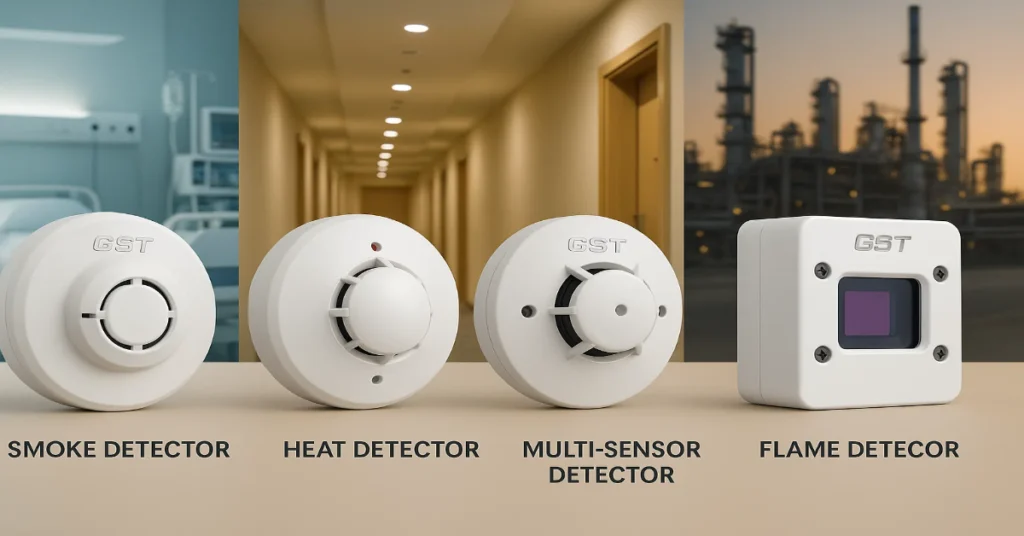
Fire detection requirements vary widely across different types of buildings. A detector suitable for a hotel corridor may not work efficiently in a hospital ICU and a device meant for a chemical plant could be unsafe in a commercial kitchen. This is why engineers, safety managers and facility owners must understand which type of fire detector is ideal for each environment, based on risk levels, occupancy type, sensitivity needs and local fire codes. Modern detector manufacturers, including GST, offer a wide range of devices engineered for diverse applications. While each brand has its own strengths, the real decision lies in matching the right technology with the right setting rather than relying on generic “one-type-fits-all” solutions. This article will guide you through: Let’s begin. Why Different Buildings Need Different Types of Detectors Every building has unique fire risks. Hospitals are filled with oxygen cylinders and bedsheets. Hotels have kitchens, laundries and high footfall. Industrial plants handle chemicals, machinery and heavy electrical loads. Choosing a suitable detector depends on factors such as: 1. Fire Risk Type 2. Environmental Conditions 3. Occupant Sensitivity Hospitals need early detection with minimal disruption. Hotels need quiet environments without false alarms. Industrial sites prioritize robustness and hazard-compatible designs. 4. Compliance With Local Codes Fire norms for healthcare differ from hospitality and heavy industries. The detector choice must satisfy local authority requirements. This is why leading fire detection brands, including GST, offer multiple models, optical, thermal, multi-sensor and specialized detectors, so engineers can tailor solutions for each application without relying on generic options. Types of Fire Detectors: A Simple Breakdown To choose correctly, you must know how each detector works and where it is most effective. 1. Smoke Detectors Types Where They Work Best Limitations Modern detectors, including those available from advanced brands like GST, now incorporate improved optical chambers to reduce false alarms in typical hospitality and healthcare zones. 2. Heat Detectors Types Where They Work Best Limitations Heat detectors are reliable in environments where smoke is common and could trigger false alarms. 3. Multi-Sensor Detectors These detectors combine: Advantages Where They Work Best Many brands (GST included) offer multi-sensor detectors engineered to intelligently differentiate between real fire signatures and harmless aerosols. 4. Carbon Monoxide (CO) Fire Detectors These do not detect CO poisoning; they detect CO generated from a fire. Where They Work Best Limitations 5. Flame Detectors Types Where They Work Best Limitations These are specialty detectors used only in high-risk zones. 6. Gas Detectors Gas detectors are not fire detectors but are often part of fire safety systems. Where They Work Best Detector Recommendations for Different Facility Types Now let’s match building needs with detector categories. Best Detectors for Hospitals Hospitals require the fastest possible detection with the lowest disturbance. Critical areas like ICU, NICU and OT have stricter requirements. Recommended Detector Types 1. Optical Smoke Detectors Ideal for: Optical detectors in brands like GST often come with enhanced algorithms to reduce false alarms caused by disinfectants or aerosol sprays, common in hospitals. 2. Multi-Sensor Smoke + Heat Detectors Ideal for: These detectors provide: 3. Aspirating Smoke Detectors (ASD) Ideal for: This is because ASD: 4. Heat Detectors For: Best Detectors for Hotels Hotels face a variety of environments: guest rooms, kitchens, corridors, banquet halls and mechanical rooms. Recommended Detector Types 1. Multi-Sensor Detectors (Smoke + Heat) Best for: Hotels need detectors that: Modern multi-sensor detectors, including those from GST, use intelligent algorithms to distinguish real fire particles from harmless aerosols. 2. Optical Smoke Detectors Used for: These areas benefit from early detection without requiring the complexity of multi-sensor units. 3. Heat Detectors Used for: Heat detectors prevent false alarms from steam and cooking smoke. 4. CO Fire Detectors Used for: Hotels with underground parking should combine CO fire detectors with exhaust control systems. Best Detectors for Industrial Sites Industrial environments are the most complex due to: Recommended Detector Types 1. Heat Detectors For: Heat detectors withstand tough conditions where smoke detectors might fail. 2. Flame Detectors For: UV/IR or triple-IR flame detectors provide rapid detection even in dusty or large open spaces. 3. Gas Detectors For: 4. Optical Smoke Detectors (Industrial-Grade) Used in: Modern detectors from brands like GST are designed with anti-dust structures to operate effectively in light-industrial conditions. 5. Aspirating Detectors Used in: ASD ensures early fire detection, helping to prevent downtime in critical industrial operations. Common Mistakes to Avoid While Choosing Fire Detectors 1. Using the same detector type throughout a facility A hotel room and a boiler room cannot use the same device. Tailor choices per zone. 2. Ignoring environmental factors Heat, humidity, or dust can impair detector performance. 3. Not evaluating false alarm reduction features Modern detectors, including those by GST and other reputed brands, use digital algorithms to differentiate real fire from nuisances. 4. Installing detectors without compatibility checks If you use a specific brand panel, ensure the detectors are approved for that system. 5. Overlooking maintenance requirements Dirty environments require detectors with anti-dust design and easier maintenance. 6. Ignoring local fire code requirements Healthcare codes differ from industrial norms. Compliance is mandatory. Engineering Considerations 1. Response Time Hospitals: Need ultra-fastHotels: Fast but stableIndustries: Depends on zone 2. Sensitivity Level High sensitivity needed in: Moderate sensitivity for: Lower sensitivity for: 3. Redundancy Requirements Critical zones require: 4. Integration with Addressable Panels Today, most large buildings shift to addressable systems for: Choosing the right fire detector is not about selecting a brand first, it’s about selecting the right technology for the environment. Hospitals, hotels and industrial sites each have unique fire risks, occupancy patterns and environmental conditions. In general: Advanced detector lines offered by established manufacturers such as GST provide a wide range of options suitable for all these sectors. Their engineering depth ensures you can design systems that enhance safety without being dependent on promotional claims. A well-chosen detector not only saves lives but also reduces false alarms, maintenance downtime and long-term operational risks. The right selection today becomes the foundation of safer infrastructure tomorrow. Read
7 Ways Addressable Systems Save Money Over Conventional Systems
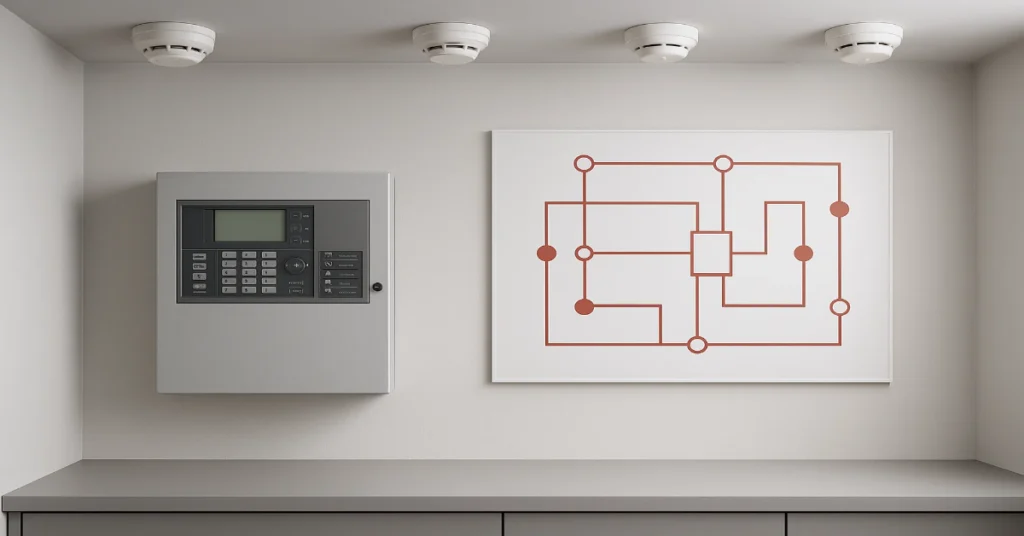
Fire safety is a non-negotiable part of any building’s infrastructure, whether it’s a hospital, hotel, commercial tower, industrial plant or educational campus. Yet, many organisations still struggle with the ongoing expenses related to fire alarm installation, maintenance, troubleshooting, upgrades and downtime. One of the most effective long-term financial decisions facility owners and engineers can make today is shifting from conventional fire alarm systems to addressable fire alarm systems. Addressable systems are widely recognised for delivering higher performance and better control. But an equally important advantage, especially from a facility management and procurement perspective, is cost efficiency. While the upfront investment may seem higher, the life-cycle cost of ownership is substantially lower and the savings continue to compound over time. This article explains seven powerful and practical ways addressable fire alarm systems help organisations save money. 1. Reduced Wiring Costs: One Loop vs Multiple Circuits In conventional systems, each zone requires separate wiring. As the building size increases, the complexity and cost of cabling multiply. Each floor or area may require its own circuit, significantly increasing installation expenditure. Addressable systems work differently. Instead of wiring each device individually to the control panel, all devices sit on a single communication loop. This results in: In multi-storey buildings, hotels, hospitals, large warehouses or campuses, these savings become dramatic. Addressable loops can cover long distances, meaning engineers avoid the complications of installing dozens of parallel circuits. Why This Saves Money Even though the devices used may be more advanced, the overall installation cost in many medium- and large-scale facilities is significantly lower compared to conventional systems. 2. Faster Fault Detection Minimises Downtime & Technicians’ Visits Conventional fire alarm systems only report a problem at the zone level. If a zone enters fault mode, technicians must search manually, sometimes checking dozens of devices across several rooms or floors. This leads to: Addressable systems solve this issue instantly. Every detector, module or device has a unique address, so the panel shows exactly which device has a problem. How This Results in Savings In facilities where downtime equals revenue loss, such as data centres, manufacturing units and hospitals, this alone can deliver significant financial benefit over the system’s lifespan. 3. Lower False Alarm–Related Losses False alarms are more than an inconvenience, they are expensive. They cause: Conventional systems struggle with distinguishing between smoke, dust, steam and environmental disturbances. They only relay zone-level alerts. Addressable systems, however, use advanced detection algorithms and offer device-level intelligence. Many models allow engineers to adjust sensitivity levels based on the environment. Cost Savings from Reduced False Alarms Over a span of 5-10 years, false-alarm avoidance alone can save organisations ** lakhs of rupees**. 4. Lower Maintenance & AMC Costs Due to Device-Level Monitoring With conventional systems, maintenance teams must physically inspect every detector at regular intervals. This manual checking increases AMC costs and consumes valuable time. Addressable systems continuously monitor and self-diagnose each device. Panels can show: This means maintenance becomes more predictive and efficient, reducing unnecessary labour hours. Savings Include Facility managers can plan maintenance without wasting time on guesswork. 5. Cheaper Long-Term Scalability & Expansion Buildings evolve. New floors get added. Industrial areas expand. Hotels renovate. Hospitals add departments. A system that was enough five years ago becomes insufficient today. Conventional systems struggle with expansion because: Addressable systems are built for long-term scalability. You can add new detectors or modules to the existing loop without redesigning entire circuits. Financial Advantages For buildings that expect future expansion, addressable systems provide unmatched lifecycle cost benefits. 6. Longer System Lifespan & Less Hardware Replacement Conventional panels and detectors rely on older technology and components often need replacement sooner due to limited diagnostic abilities. Dust buildup, ageing circuits and non-intelligent sensors degrade over time, often without detection. Addressable devices are designed with: This keeps the system healthier for longer and reduces premature replacement. This Reduces Long-Term Expenses Through A well-maintained addressable system often lasts 15+ years with minimal operational cost. 7. Better Energy Efficiency & Lower Operational Costs Addressable systems are engineered to be power-efficient. Even with advanced intelligence, they require less current compared to many conventional installations that depend on multiple circuits and higher load per zone. This contributes to long-term savings through: In large commercial, industrial or institutional facilities, the reduction in power consumption is a meaningful cost advantage that compounds annually. Real-World Examples of Savings Hotels Hotels using addressable systems reduce operational disruption, avoid false alarms and minimise maintenance visits, improving guest satisfaction and operational efficiency. Hospitals Addressable systems help maintain sensitive environments (ICUs, labs, OTs) with fewer false alarms and faster detection accuracy, saving money and protecting patient safety. Industries Manufacturing units benefit from predictive maintenance, fewer line stoppages and reduced power consumption. Commercial Buildings Malls, offices and IT parks reduce facility management efforts, wiring complexity and long-term operational costs. How Addressable Systems Deliver Better ROI When facilities move from conventional to addressable systems, they experience savings in: Even though the initial investment is slightly higher, the 5-year and 10-year total cost of ownership (TCO) is significantly lower. Addressable technology also aligns with modern building codes, smart infrastructure, future-proof planning and digital facility management practices. Note: Choosing between conventional and addressable fire alarm systems isn’t just a technical decision, it’s a financial one. Addressable systems provide clear and measurable savings across installation, operation, maintenance, scalability and long-term ownership. For organisations looking to optimise both safety and cost-effectiveness, addressable systems offer a smarter, more sustainable and more economical solution. They deliver enhanced reliability, greater control and long-term value without adding complexity. In the modern era of intelligent buildings and advanced life safety standards, an addressable fire alarm system is not just an upgrade, it’s an investment that pays for itself over time. Read Also: The Real Reason Your Fire Alarm System Has Frequent False Alarms Read Also: Why Addressable Panels Offer Higher ROI Than Conventional Panels
Why Addressable Panels Offer Higher ROI Than Conventional Panels
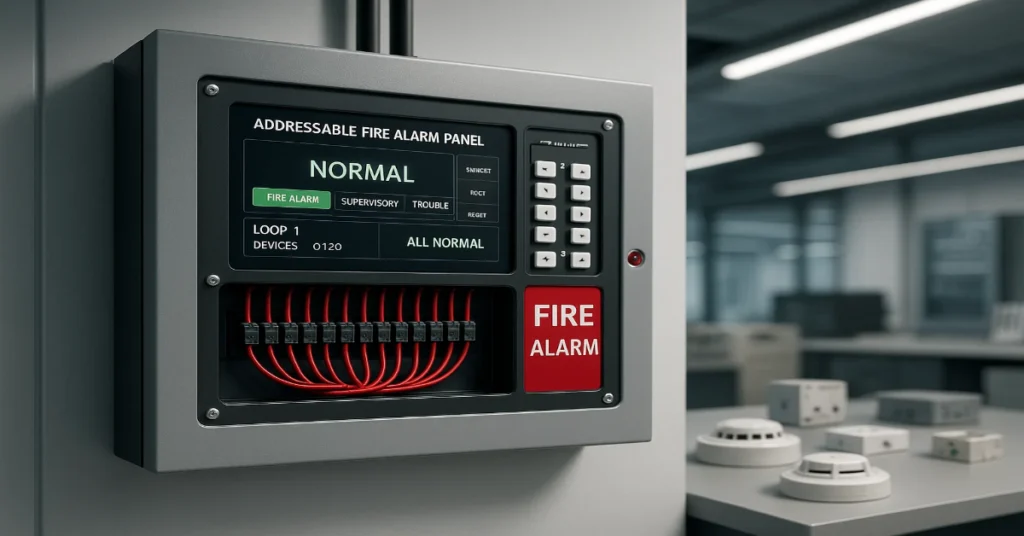
Fire safety technology has seen a major shift over the last decade, especially in medium and large-scale facilities. While conventional fire alarm systems were once the standard, modern businesses now prioritize long-term value, higher accuracy and cost efficiency. This shift has pushed addressable fire alarm panels into the spotlight, not simply as an upgrade, but as a better Return on Investment (ROI) decision. Today, facility owners, engineers and safety consultants are increasingly selecting addressable systems because they deliver measurable economic and operational benefits over time. This article breaks down those advantages and explains why addressable panels offer a significantly higher ROI compared to conventional panels. The discussion is based on real industry needs, life-cycle costs and performance expectations. 1. The Real Cost of Fire Alarm Systems: Not Just the Panel Price Most procurement teams still initiate fire alarm purchases by comparing the panel’s upfront cost. A conventional panel appears cheaper at first glance, but hidden costs add up over the life of the system. Key cost factors often overlooked Conventional panels often seem economical during purchase but become cost-heavy in long-term operation. Addressable panels reduce these expenses significantly. 2. Addressable Panels Reduce Cabling Costs by Up to 40% Cabling is a major portion of the project budget, especially in larger buildings. Conventional panels require separate wiring for each device (multiple loops), making them cable-intensive. How addressable panels improve cabling efficiency This structure can reduce cabling and installation costs by up to 40% depending on project scale. Why this adds to ROI Less cabling means: Addressable systems such as those typically used in modern commercial sites are designed to minimize infrastructure waste. This delivers immediate and long-term financial benefits. 3. Faster, More Accurate Detection Reduces Downtime Costs One of the biggest contributors to ROI is the system’s performance during an actual event. Addressable systems pinpoint the exact device or room in alarm. Conventional systems only show “Zone 3 Alarm” or “Zone 6 Fault,” leaving teams to search for the source. Impact of improved accuracy For facilities like hotels, hospitals, IT parks and manufacturing plants, every minute saved during an alarm reduces financial risk. Addressable panels offer this precision, making them a safer and more financially sound choice in the long run. 4. False Alarm Reduction Directly Saves Money False alarms are not just annoying; they are expensive. Each false alarm can disrupt: Conventional panels are more prone to false alarms because the system cannot identify which device is causing the issue. How addressable systems reduce false alarms Many modern addressable systems (including those widely used across global projects) incorporate intelligent detection to minimize nuisance alarms. ROI advantage Fewer false alarms mean: Over the life of a building, this can save lakhs of rupees. 5. Simplified Maintenance Lowers Life-Cycle Costs Maintenance often becomes the biggest cost over a fire alarm system’s lifespan. Conventional systems require manual checking, zone-by-zone testing and time-consuming inspections. Addressable panels deliver smarter maintenance Technicians spend less time troubleshooting, which translates into reduced maintenance contracts and fewer emergency repairs. Long-term ROI impact By making maintenance faster and more predictable: This is one of the strongest reasons modern buildings prefer addressable systems. 6. Scalable Architecture Reduces Upgrade Costs Most buildings expand and remodel over time. Conventional systems are rigid, while addressable panels are designed to grow with the building. Advantages of scalability A scalable system ensures your initial investment stays relevant even as your facility evolves. For example, many addressable platforms (including those widely used in commercial infrastructure) support modular expansions, making them suitable for multi-phase projects. This adaptability contributes heavily to long-term savings. 7. Integration With Modern Building Systems Enhances Value Modern buildings rely on automation, HVAC control, access systems, CCTV, BMS platforms and emergency communication networks. Addressable systems integrate seamlessly with: Conventional systems struggle with advanced integration because of their limited communication ability. ROI gains from integration Integration readiness ensures that the system remains valuable for decades. 8. Higher Data Transparency Helps Improve Safety Planning Addressable fire panels generate detailed logs: This data supports reliable audits and compliance reporting. How data transparency boosts ROI Better data leads to better decisions and long-term operational savings. 9. Longer Lifespan Compared to Conventional Panels Addressable systems typically have a longer service life because: Conventional panels often require complete replacement once hardware becomes obsolete. Lifecycle impact A longer lifespan means: This dramatically increases overall ROI. 10. Future-Proof Technology Ensures Sustained Value Building safety is evolving rapidly. Addressable systems are continuously upgraded with new: This technology-forward nature ensures the system remains compliant with future fire safety standards. Many well-established brands including those commonly used in airports, malls, hospitals and hotels, design addressable platforms with long-term growth in mind. ROI impact By choosing a future-ready system, businesses avoid: Future-proofing is one of the most underrated ROI factors. Comparison Table: Addressable vs Conventional Panels (ROI Perspective) Feature / Cost Factor Conventional Panel Addressable Panel Cabling Cost High Low False Alarms Higher chance Very low due to intelligent detection Maintenance Manual & time-consuming Automated, faster, predictive Scalability Limited High Fault Identification Only zone-level Exact device-level Integration Capability Basic Advanced Lifespan Medium Higher Long-Term ROI Moderate to low High 11. Why Businesses Specifically Prefer Addressable Systems Today Growing building complexity Modern buildings have more floors, more occupants and more interconnected services. Stricter compliance requirements Auditors now prefer detailed logs and reporting, only possible with addressable systems. Higher risk management awareness Businesses today quantify operational risks, making addressable systems the logical choice. Better facility management culture FM teams value data-driven monitoring and quick troubleshooting. 12. GST Addressable Panels as Industry Benchmark When engineers look for reliability, they often compare addressable systems based on: Systems like those widely deployed in commercial, industrial and hospitality projects are frequently used as benchmarks because they deliver proven long-term value. GST panels are known for dependable loop performance, intelligent device communication and stable architecture, qualities that naturally contribute to higher ROI. Addressable Panels Deliver Long-Term ROI That Conventional Panels Cannot Match Addressable fire alarm panels are not just a technical upgrade, they
The Real Reason Your Fire Alarm System Has Frequent False Alarms
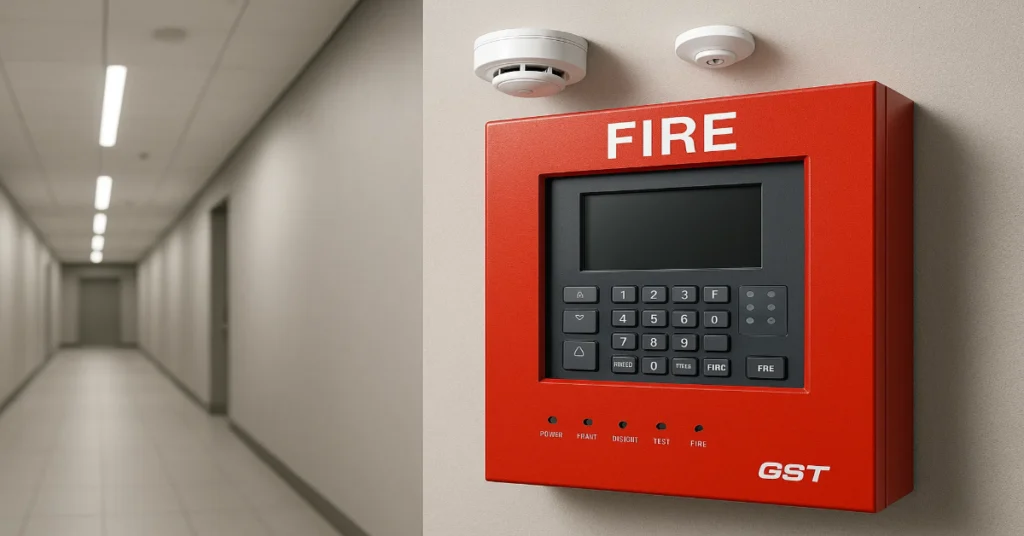
False alarms are more than an inconvenience. They disrupt operations, create panic, waste manpower and most dangerously make people ignore fire alarms altogether. When a business faces repeated false alarms, it’s a clear sign that something is fundamentally wrong with the system. Many facility managers assume false alarms happen due to poor-quality detectors or accidental triggers. But the real reasons often lie much deeper within system design, environmental compatibility, incorrect installation practices, outdated conventional technology and long-ignored maintenance issues. In this comprehensive guide, you will learn: Let’s break down the truth behind recurring false alarms and what you can do to stop them for good. 1. False Alarms Are Not Random, They’re a Symptom of System Weakness False alarms don’t “just happen.”If your system is triggering alarms frequently, it means it is: ✔ Misreading the environment✔ Receiving inaccurate data✔ Failing to distinguish between real fire indicators and disturbances✔ Unable to self-correct or isolate problematic devices In short, false alarms are a diagnostic indicator, not an accident. They reveal underlying gaps in: A fire alarm system should be stable, predictable and resilient. When it isn’t, it means something in the design or hardware ecosystem isn’t working the way it should. 2. Poor Detector Placement Is the Hidden Root Cause One of the biggest and least understood causes of false alarms is incorrect device placement. Many installers treat detectors as plug-and-play devices. But every detector type has strict environmental rules. When detectors are placed incorrectly, they behave unpredictably. Common placement mistakes include: ❌ Installing smoke detectors near HVAC vents Airflow can confuse a detector’s sensing chamber, causing turbulence and nuisance alarms. ❌ Installing detectors near kitchens or pantry areas Cooking vapors, steam and aerosols can easily trigger them. ❌ Mounting heat detectors too close to machinery Equipment generates sporadic heat spikes that mimic fire signatures. ❌ Placing detectors in dusty, humid or polluted zones Dust buildup is one of the fastest ways to cause false alarms. ❌ Installing the wrong detector type for the environment For example: When detectors are mismatched to the environment, false alarms become inevitable. 3. Poor Maintenance Turns Small Issues Into False Alarm Cycles Fire alarm systems require routine cleaning, calibration and inspection. When these steps are ignored, the system becomes unstable. Common maintenance-related triggers include: Most detectors have a lifespan of 8–10 years. After that, sensitivity drifts and false alarms escalate dramatically. If your system is older, frequent false alarms are a warning that devices need replacement. 4. Environmental Factors You Don’t Usually Notice Your environment is far more dynamic than you think. A fire alarm system must account for: ✔ Temperature fluctuations Heat detectors may interpret sudden, non-fire heat surges as danger. ✔ Humidity Moisture can obstruct sensor chambers or trigger condensation alarms. ✔ Aerosols from cleaning sprays Cleaning staff often unknowingly trigger smoke detectors at night. ✔ Renovation or construction work Dust, paint fumes, welding smoke, all confuse sensors. ✔ High-voltage equipment Electrical noise and electromagnetic interference affect older systems. Most of these do not indicate system failure but they indicate a mismatch between detector type, system intelligence and environmental behavior. 5. Old Conventional Systems Are Naturally Prone to False Alarms Conventional systems treat the building as zones, not individual devices. This lack of detail creates instability because: ✔ The system cannot identify which device is misbehaving If one detector drifts or malfunctions, the entire zone can go into alarm. ✔ Sensitivity levels cannot be adjusted individually All detectors in a zone must operate at the same sensitivity, even if they are in different environments. ✔ No real-time diagnostics You cannot track device health trends, contamination levels or communication issues. ✔ Wiring faults often resemble fire signals A loose wire or short circuit can look like a fire condition. ✔ The system cannot differentiate between genuine smoke and disturbances Conventional panels lack algorithmic intelligence to filter out nuisances. This is why older conventional panels often create recurring, untraceable false alarms that become expensive to diagnose. 6. Devices Reaching End-of-Life Lead to Sensitivity Drift Every detector has a manufacturer-specified lifespan. Beyond this period: Many facilities continue using detectors far past their expiry date, assuming they are still functional. But aged sensors are one of the most common causes of persistent nuisance alarms. A modern addressable system alerts you in advance when a detector is nearing end-of-life, something conventional systems cannot do. 7. Faulty Wiring and Loose Connections Mimic Fire Conditions In older systems, wiring issues are often mistaken as fire signals. Common wiring-related causes: Conventional panels see these faults as abnormal current patterns and interpret them as alarms. Addressable systems, in contrast, can identify: This makes troubleshooting far simpler and prevents false alarms caused by wiring instability. 8. Using Low-Quality or Uncertified Detectors Many false alarm cycles begin when buildings use: Fire detection is not a place to cut costs.Non-certified devices degrade faster and behave unpredictably, especially under environmental stress. A robust system uses: ✔ Certified detectors✔ Matched panels and modules✔ Proper calibration✔ Reliable device communication This drastically reduces false alarms and increases system stability. 9. Changing Building Usage Without Updating the Detection Plan If your building started using: …then your old fire detection plan is no longer suitable. Detectors designed for your original building conditions may not be compatible with new environmental behavior. For example: When building activities evolve, the fire alarm design must evolve too. 10. Why Modern Addressable Systems Reduce False Alarms Significantly Modern addressable fire alarm systems use intelligent algorithms and device-level communication to differentiate real fires from disturbances. Key advantages include: ✔ Device-level monitoring The system identifies exactly which detector is misbehaving. ✔ Adjustable sensitivity settings Each detector can be calibrated for its unique environment. ✔ Drift compensation Smart detectors automatically balance their sensitivity as they age, reducing false alarms. ✔ Real-time diagnostics The panel monitors contamination, chamber blockages, wiring issues and signal deviations. ✔ Event history and trend analysis Engineers can track and prevent false alarms before they happen. ✔ Reduced wiring faults Addressable loops are more resilient and
What Brands Don’t Tell You About Fire Alarm System Lifespan
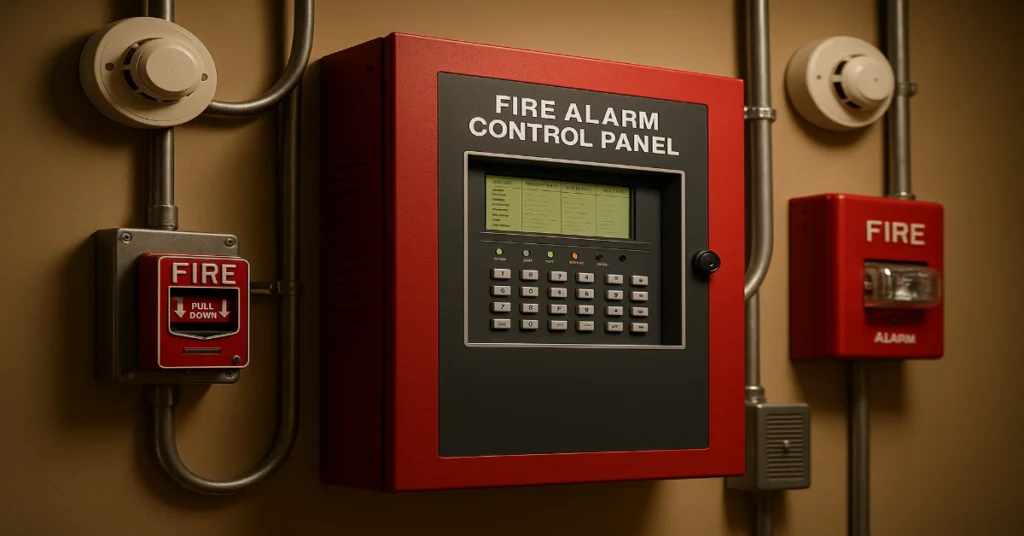
Fire alarm systems are marketed as long-term safety investments. Most brands highlight certifications, features, aesthetics and pricing. But one crucial topic rarely appears in brochures or sales pitches, the real lifespan of a fire alarm system. The truth is that a fire alarm system has more than one lifespan. Its electronics, sensors, cabling, software and field devices age differently. Environmental conditions, maintenance quality and technology updates also influence how long the system remains reliable. This article breaks down the hidden aspects of fire alarm lifespan many brands don’t openly discuss, using engineering insights. You will also see how modern addressable ecosystems such as GST systems handle these lifecycle challenges better, without turning this into a promotional piece. By the end, you will understand exactly what affects system longevity, how to plan replacements and what specifications help extend operational life. 1. The “Promised Lifespan” vs. the “Practical Lifespan” Most brands claim a fire alarm panel lasts 8 to 15 years. While this is technically true, it can be misleading because it refers only to the control panel hardware. In real-world conditions, fire alarm systems function as ecosystems. Their lifespan depends on: Many brands advertise only the maximum theoretical lifespan. Engineers know the practical lifespan varies based on: Component Ideal Lifespan Practical Real-World Lifespan Control panel 10–15 years 8–12 years Addressable detectors 8–10 years 5–8 years (depending on dust exposure) Batteries 3–5 years 2–3 years Sounders 10–15 years 7–10 years Cabling 15–20 years 10–15 years Software/firmware No fixed lifespan Needs update every 3–4 years What brands don’t tell you:A fire alarm system does not fail at once. It ages in layers. Addressable systems like GST handle this well because they support modular replacements. You can replace only outdated components while keeping the existing loop infrastructure active. 2. Technology Becomes Obsolete Faster Than Hardware Even when the hardware is functioning, technology on which it runs becomes outdated. This is one of the biggest industry secrets. What becomes obsolete first? A. Protocols Older systems operate on outdated communication protocols that are either slow or incompatible with new detectors. B. Firmware Many brands lock firmware updates or discontinue support after 7–10 years. C. Panel Expandability An old panel may not support new: Modern ecosystems like GST addressable systems typically ensure backward compatibility. As a result, outdated devices can still operate with new-generation panels or loop cards, which extends the usable life. 3. Dust, Humidity and Heat Cut Detector Lifespan by 30–50% Most marketing materials specify detector lifespan assuming: In reality, industries like manufacturing, hotels, warehouses and malls have: This reduces detector efficiency drastically. What brands don’t usually clarify: Addressable ecosystems (like GST) mitigate this with: These features extend the operational life without needing premature replacement. 4. The Lifespan of Cabling Is Often Ignored But Critical Brands emphasize devices, not cabling. But cables form 70% of the physical system. Cabling failure reasons: Even high-quality panels cannot compensate for bad cable health. GST and similar modern addressable systems support loop isolation, meaning even if a cable section fails, the loop survives. This reduces system downtime and extends overall reliability. 5. Sensor Drift Is the Silent Reason Most Systems Fail Early Every detector’s sensitivity changes over time. This phenomenon, called drift, is rarely discussed in brand literature. Why drift matters: Most conventional systems require manual recalibration. Engineers often miss this step, shortening system life. Addressable detectors in systems like GST come with: This allows detectors to maintain accurate sensitivity for longer, extending lifespan naturally. 6. Battery Replacement Determines Whether Your System Lives or Dies Brands highlight panel lifespan……but the system runs on batteries, not mains. Batteries degrade due to: If batteries fail, the entire system fails, even if the panel and detectors are new. Best practice: Good addressable systems monitor battery health and alert maintenance teams early. 7. Maintenance Quality Influences 40% of the System’s Longevity Most brands avoid discussing maintenance responsibility because: Poor maintenance includes: Maintenance-friendly systems like GST have: These help engineers protect system lifespan more effectively. 8. Software Support Controls the Life of Your Fire Alarm Panel As buildings expand, merge floors, or add new areas, the fire alarm system must adapt. Many brands restrict: Once software support ends, the system becomes technologically outdated even if the hardware works. Addressable systems known for long support cycles (GST included) allow: This keeps the system functional beyond its standard lifespan. 9. False Alarms Destroy System Life Faster Than Actual Fires Frequent false alarms cause: Most false alarms occur due to: Addressable systems minimize false alarms by: This drastically extends device lifespan. 10. Replacement Cycles Are Not Uniform and Brands Don’t Highlight This The truth: No fire alarm system ages uniformly. Engineers must plan for: Brands rarely reveal these staggered replacement cycles because they complicate buying decisions. Modern addressable systems minimize these cycles through: This lowers lifetime cost without heavy early replacements. 11. End-of-Life Announcements Are Often Delayed Brands avoid early end-of-life (EOL) announcements because: Many users find out too late that their system: Well-established ecosystems like GST generally maintain transparent support cycles and ensure long-term compatibility. 12. System Life Depends on How Smartly It Adapts to Building Growth If your building evolves, your system must evolve too. A system’s lifespan shortens drastically when: Addressable platforms that support: …naturally last longer, even if you don’t replace them fully. The Real Lifespan of a Fire Alarm System Depends on Engineering, Not Branding Fire alarm systems do not fail because they are “old.”They fail because: Brands don’t openly discuss these factors, but engineers must. Addressable fire alarm systems like those in the GST ecosystem extend real-world lifespan by offering: These engineering advantages help preserve operational lifespan naturally, without needing promotional claims. A well-installed, well-maintained and technologically supported system can protect a building for 15–20 years, even if individual components need scheduled replacements. That is the real truth most fire alarm brands never openly tell you. Read Also: 5 Problems in Old Fire Panels That GST Addressable Systems Completely Solve Read Also: 12 Technical Specs Engineers Must Check Before Choosing
12 Technical Specs Engineers Must Check Before Choosing a Fire Alarm Panel
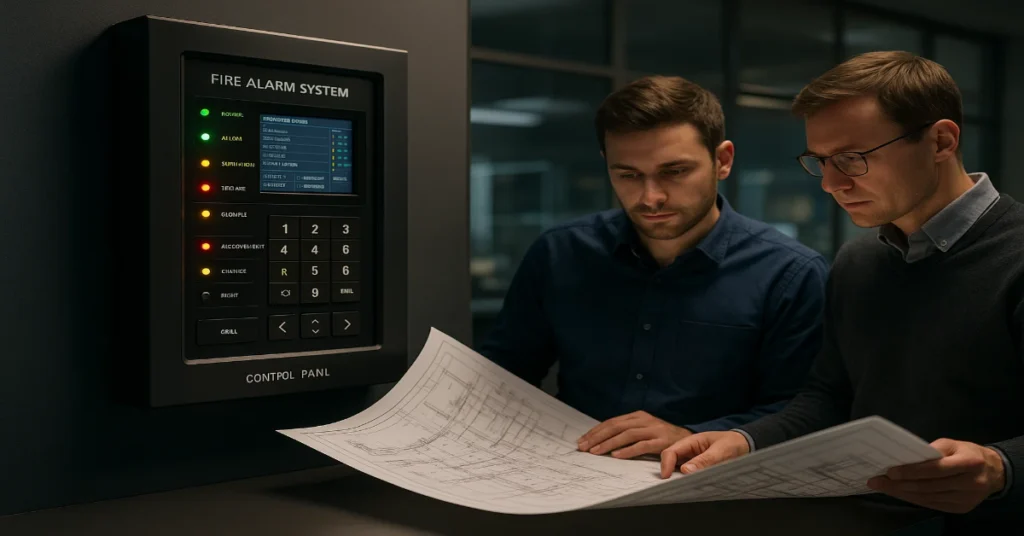
Selecting the right fire alarm panel is one of the most critical engineering decisions in any building project. Whether it is an industrial plant, commercial tower, hospital, hotel or data centre, the fire panel functions as the brain of the entire fire detection ecosystem. A wrong choice can lead to high false alarms, maintenance challenges, integration issues and non-compliance with local safety codes. Modern buildings, especially smart infrastructures, require panels that deliver accuracy, scalability, interoperability and long-term reliability. Because of this, engineers cannot rely on assumptions or vendor claims. They must evaluate a fire alarm panel purely based on technical specifications, system architecture and performance parameters. This article explains 12 essential technical specifications engineers must verify before selecting a fire alarm panel. Each specification is suitable for engineering, EPC and facility management teams. Importance Of Technical Evaluation In Fire Alarm Engineering Fire alarm selection is no longer just about choosing between “conventional” or “addressable.” Today, stakeholders expect: Engineers therefore require a structured technical evaluation checklist. The following 12 parameters form the backbone of that checklist. 1. System Architecture: Addressable Vs. Conventional Capability The first technical specification engineers must evaluate is the system architecture itself. Addressable systems provide: Conventional systems, although cheaper initially, become more expensive when scaling, rewiring, or troubleshooting. Most modern industrial and commercial projects now prefer addressable panels because they support programmable logic, mapping, device isolation and large system expansions. Tip For Engineers:Check whether the panel supports true digital addressable communication rather than pseudo-addressable loops. 2. Loop Capacity And Total Number Of Addresses Supported Loop capacity determines how many devices the panel can manage. Engineers should examine: Large facilities such as airports, malls or manufacturing plants require higher loop density and better power distribution. A panel with sufficient loop capacity reduces the need for multiple interconnected systems. 3. Communication Protocol And Device Compatibility Every fire alarm panel communicates with detectors, modules and call points using a specific protocol. Engineers must verify: A stable and open communication protocol ensures long-term reliability. Proprietary or restricted protocols may limit device choices or increase future maintenance and purchasing costs. 4. Networkability And Panel-to-Panel Communication For medium and large projects, the ability to network multiple panels is essential. Engineers should confirm: A robust networking capability ensures the entire facility operates as one unified system, even if panels are installed in different sections of the building. 5. Response Time And Event Processing Speed Fire detection requires fast action. Engineers must evaluate: Modern panels use intelligent algorithms to differentiate smoke, heat and pre-alarm conditions. Faster processing improves occupant safety and reduces emergency response delays. 6. Display Interface And Human-Machine Interaction A clear and intuitive display improves operational efficiency. Engineers should assess: Advanced user interfaces help reduce training requirements for facility management teams. 7. Integration Capability With BMS, CCTV and Automation Systems Modern smart buildings depend on interconnected systems. Engineers must verify whether the fire panel can integrate with: Integration typically uses protocols such as: Panels that support standard communication protocols offer seamless interoperability across platforms. 8. Power Supply Capacity and Battery Backup Specifications Fire alarm panels require stable power and reliable backup. Engineers must evaluate: Insufficient power supply can lead to unexpected shutdowns and premature battery failure. 9. Detector and Module Compatibility Range A panel’s capabilities depend significantly on the range of compatible devices. Engineers should check compatibility with: A wider device ecosystem offers greater flexibility during design and commissioning. 10. Event Logging, History Storage and Reporting Features A professional-grade panel must maintain detailed logs of all critical activities, including: Engineers should review: Strong reporting functions help with audits, insurance reviews and compliance inspections. 11. Compliance with Global and Local Standards A fire alarm panel must comply with widely accepted testing and certification standards. Engineers should check for approvals such as: Compliance ensures safety reliability and smooth approval from local fire departments. 12. Scalability and Long-Term Upgrade Potential Fire alarm systems typically have a lifecycle of 10 to 20 years. Engineers must ensure the selected panel can grow and upgrade over time. Key factors include: A future-ready panel lowers long-term costs and prevents premature system replacement. How Engineers Can Use These 12 Specs To Build A Selection Framework Engineers can convert these specifications into a technical comparison sheet. This may include: This matrix enables fast and unbiased comparison across different brands and models. Why Technical Specifications Matter More Than Initial Price Procurement teams often focus on pricing, but engineers must highlight that: A technically superior panel reduces long-term system failures and maintenance costs. Practical Tips For Engineers Before Final Selection To ensure a smooth implementation, engineers should: These steps help prevent risks during commissioning and ensure system reliability. Note: Choosing a fire alarm panel is not just a procurement task; it is a vital engineering responsibility. It directly influences life safety, regulatory approvals and operational continuity. By evaluating these 12 technical specifications, engineers can confidently select a fire alarm panel that delivers stability, accuracy, integration capability and long-term performance. A systematic technical approach ensures the chosen panel meets both current and future building requirements while maintaining the highest level of fire safety assurance. Read Also: Why Hotel Chains Are Switching to Addressable Fire Alarm Panels Read Also: Fire Safety Myths That Put Your Business at Risk
Fire Safety Myths That Put Your Business at Risk
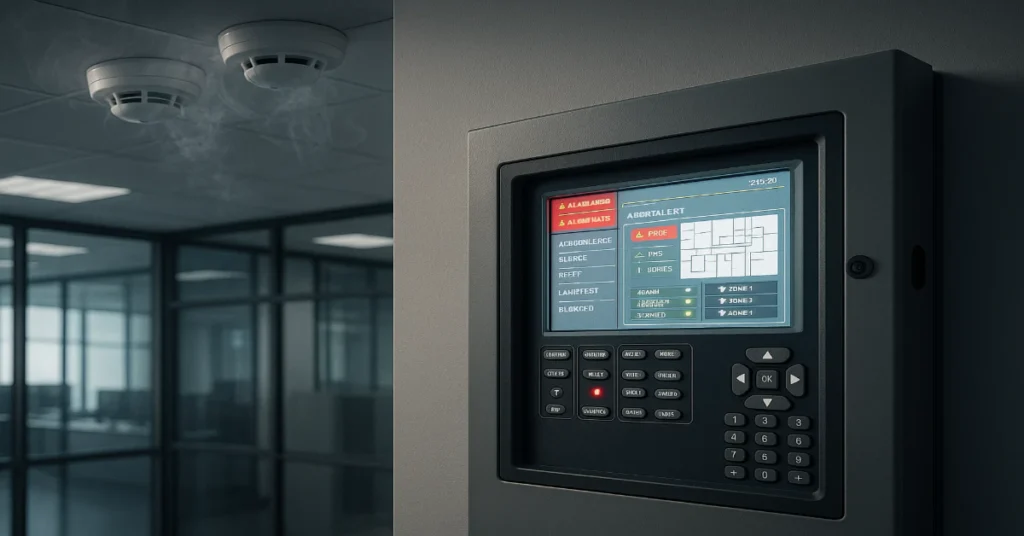
Fire safety in workplaces and commercial buildings often suffers due to misinformation. Many business owners believe their existing safety measures are enough, simply because “nothing has gone wrong yet.” However, fire hazards do not wait for the right time. A small spark, unnoticed smoke, or delayed response can turn into a catastrophic incident within minutes. This is why understanding common fire safety myths is essential for every business, whether it is a hotel, warehouse, office, retail outlet, data centre, or manufacturing plant. Fire protection is not just a compliance requirement but a fundamental part of risk management and business continuity planning. This detailed guide breaks down the most dangerous fire safety myths that put businesses at risk, explains the truth behind each and highlights how modern systems, such as addressable fire alarm technologies including those used by GST, are helping organizations strengthen their safety infrastructure. Why Fire Safety Myths Are Dangerous for Businesses Myths create a false sense of security. Many organizations assume basic fire equipment, occasional inspections or old fire alarm panels are enough to protect their premises. Unfortunately, this mindset often leads to: • delayed detection• slow evacuation• ineffective response• uncontrolled fire spread• higher property losses• legal consequences• downtime and operational shutdown Fire safety is not just about having equipment, it is about system reliability, updated technology and people being aware of how to react during emergencies. Let’s look at the most common myths businesses still believe and understand the real risks behind them. Myth 1: “A Basic Fire Alarm System Is Enough for Any Business.” Many businesses think that having any fire alarm panel, especially an old or conventional one is sufficient. This assumption becomes dangerous when premises expand, occupancy increases or operations become more complex. The Reality Basic or outdated systems cannot provide: • pinpoint accuracy of where the fire started• differentiated alerts for smoke, heat, or system faults• early warning in large or multi-floor buildings• automatic diagnostic reporting• networked communication with other safety systems Modern buildings require modern systems. That is why many industries are moving toward addressable fire alarm technology, including solutions offered by GST, which help identify exact detector locations and reduce reaction time. This is not about brand promotion; it is simply the direction in which fire technology has evolved. Myth 2: “Fire Safety Is Only Needed for Industrial Sites.” Some business owners assume that industries like manufacturing, oil & gas or chemical plants face high fire risks, while offices, hotels or commercial outlets do not. This thinking leads to minimal investment in fire protection for so-called “low risk” buildings. The Reality Fire incidents happen everywhere. Offices, malls, hospitals and hotels experience fires due to: • overloaded electrical circuits• AC compressor failures• short circuits in lighting systems• kitchen accidents• UPS room overheating• server room smoke• smoking in prohibited areas Even a small retail shop contains flammable materials like paper, packaging, fabrics or cleaning chemicals. No business is fire-proof, which makes modern detection systems essential across all sectors. Myth 3: “Fire Extinguishers Alone Will Protect the Building.” Extinguishers are important, but they are often mistaken as the primary fire safety tool. The Reality Extinguishers work only if: • an employee is present nearby• the fire is at its earliest stage• the right type of extinguisher is used• the person knows how to operate it• the extinguisher is maintained and not expired Most fires grow too quickly for extinguishers to be effective. That is why reliable detection, especially from addressable fire alarm systems plays a critical role. These systems detect smoke or heat early, send signals to control panels and activate alerts automatically. Early detection is the most important step, not manual extinguishing. Myth 4: “False Alarms Are Normal in Every Building.” Many businesses accept false alarms as part of their daily routine. Some even disconnect detectors temporarily to avoid disturbances, an extremely risky practice. The Reality Frequent false alarms are a sign of: • poor-quality detectors• dusty or corroded equipment• improper maintenance• outdated panels• wiring issues• conventional system limitations Addressable fire alarm systems, like those widely adopted across India including GST models, significantly reduce false alarms by analyzing sensor data more intelligently. When a business switches from conventional to addressable, the difference in accuracy is immediately noticeable. False alarms are not “normal”, they are the early warning signs of system failure. Myth 5: “Fire Safety Is Only About Meeting Local Compliance.” Many businesses treat fire protection like a checklist item. Once they pass inspections, they assume they are safe for the next few years. The Reality Compliance ensures minimum safety, not maximum safety. Standards evolve. Risks change. Buildings age. Electrical loads increase. Human behavior shifts. Technology progresses. Fire safety must be: • proactive• regularly updated• preventive• aligned with the business environment Companies that rely only on compliance often fail during actual emergencies. Addressable systems like those commonly implemented using GST’s technology offer better future-proofing because they support scalable architecture, easy integration and automated monitoring. Myth 6: “Older Fire Alarm Panels Work Just As Well as New Ones.” Many businesses avoid system upgrades because the old panel “still works.” However, functioning does not mean performing. The Reality Older systems often lack: • advanced sensor communication• loop-based wiring diagnostics• precise fault tracking• real-time monitoring• compatibility with new detectors• backup protocols Additionally, procurement of spare parts for older panels becomes difficult over time. New-generation addressable systems offer improved: • response time• integration• accuracy• firmware updates• fire logic flexibility This improvement directly impacts business safety. That is why engineers today prefer advanced systems from trusted brands such as GST, not as a promotional claim, but as part of the technological evolution in the fire detection industry. Myth 7: “Training Employees Once a Year Is Enough.” Some organizations conduct a single annual drill just to satisfy safety audits. The Reality During a real fire event: • panic spreads• visibility reduces• smoke confuses people• staircases become crowded• decision-making becomes slow Only regular training prepares employees to react confidently. Businesses should practice: • evacuation drills• extinguisher operations• detector and
Why Hotel Chains Are Switching to Addressable Fire Alarm Panels
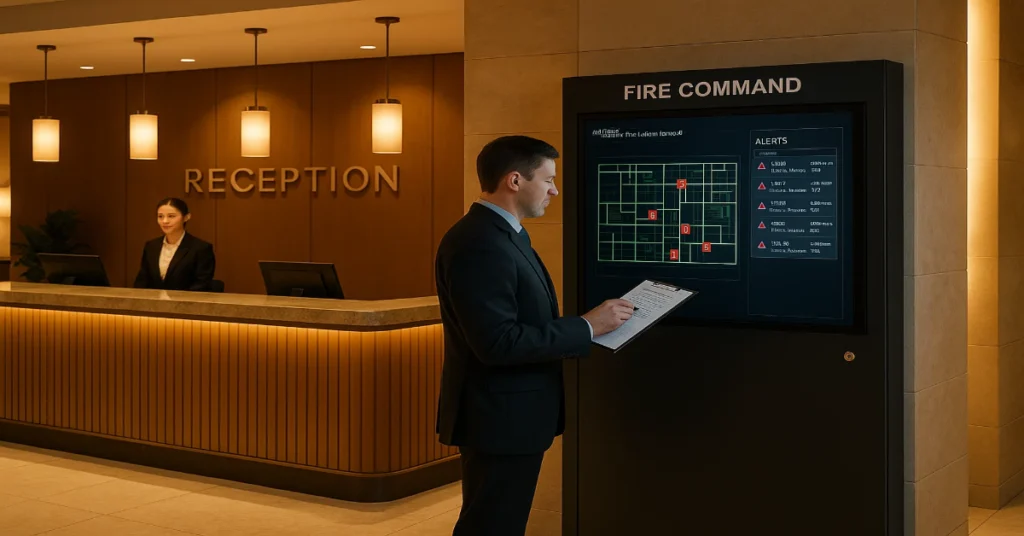
Modern hotels operate in a highly competitive environment where guest experience, safety, operational reliability and compliance directly influence reputation. Among all building systems, the fire alarm system is one of the most critical components for both safety and brand credibility. In recent years, hotel chains across India and globally have started replacing their older conventional fire panels with addressable fire alarm systems. This shift is not driven by trend alone, it comes from real operational benefits, safety improvements and strong compliance requirements. Addressable systems provide hotels with precise control, real-time data and a smarter approach to handling alarms. This article explains why hotels are transitioning, what advantages they gain, how addressable systems reduce long-term costs and where brands like GST addressable fire alarm systems fit in this transformation. Understanding the Hotel Environment: Why Fire Alarm Precision Matters Hotels are large, dynamic and continuously occupied buildings. Many contain several hundred rooms spread across multiple floors, along with kitchens, laundries, corridors, basements, lifts, meeting halls, roof-top areas and mechanical rooms. This translates into: In such environments, a fire alarm system must be accurate, fast, scalable and easy to maintain. Conventional panels often fall short in these areas. Limitations of Old Conventional Fire Panels in Hotels Many hotels still use systems that only indicate the “zone” of a fire or fault rather than the specific device. These systems create several challenges: Weak Fault IdentificationIf a detector fails, the panel will show a “zone fault.” The maintenance team then checks dozens of devices one by one. This increases the risk of downtime. False Alarms Affect Guest ExperienceFalse alarms can cause panic, property damage and reputation loss. Guests may share negative experiences online, impacting brand trust. Higher Maintenance CostsMore man-hours, longer troubleshooting time and repeated inspections make conventional systems expensive in the long run. Limited ScalabilityAs hotels renovate or expand their floors, conventional systems require additional wiring and panel upgrades. Delayed Emergency ResponseThe panel cannot identify the exact detector that triggered an alarm. This delays staff response and increases fire spread risk. These limitations are exactly why hotels now prefer addressable systems, which eliminate these operational pain points. Why Hotels Are Switching to Addressable Fire Alarm Panels Precise Device-Level Location for Every Alarm Addressable fire alarm panels identify each detector, MCP, module and sounder with a unique address. When a fire or fault occurs, the panel shows: This is game-changing for hotels because: For example, if a smoke detector in “Room 509 – Corridor Detector 03” activates, the panel pinpoints this device immediately. This level of clarity is essential in large hotels where quick decision-making matters. Dramatic Reduction in False Alarms False alarms are one of the major reasons hotels switch to addressable fire systems. Addressable systems include: These features help prevent false triggers due to dust, humidity, steam or aging sensors. Hotels report that switching to addressable detectors reduces false alarms by 30% to 60%, depending on building conditions. This translates into fewer disruptions and a smoother guest experience. Better Fire Response and Evacuation Strategy Addressable systems support advanced evacuation features such as: Hotels can create evacuation strategies based on: This ensures a controlled evacuation rather than a panic situation where all floors evacuate simultaneously. Scalability Across Multiple Hotel Floors and Blocks Hotels frequently expand: Addressable fire systems allow easy integration of new zones without massive rewiring. A new device can simply be looped into the existing addressable network. This flexibility helps large hotel chains maintain consistency across all their properties. Lower Cabling Costs and Easier Installation While conventional systems require separate wiring for each device or zone, addressable systems use a single loop for multiple devices. This reduces: Hotels benefit from up to 30-40% savings in cabling during new installations or renovations. Centralized Monitoring for Multiple Buildings Many premium hotel chains operate from: An addressable system allows all buildings to be connected to a central location using: Security staff can monitor the entire property from a single Fire Control Room (FCR). This is especially useful for resorts and large hotel campuses. Compliance with Modern Fire Safety Standards Hotels must comply with: Addressable systems help hotels meet these standards easily since they provide: Many modern certifications now recommend or prefer addressable systems over older conventional options. Role of GST Addressable Systems in the Hotel Sector GST addressable fire alarm systems are widely used in hotels due to their: This is one reason many hotel engineers and consultants include GST systems during fire safety upgrades. The intention here is not to promote but to acknowledge that GST is a recognized brand in the Indian hospitality sector’s fire safety ecosystem. How Addressable Fire Panels Support Hotel Operations Beyond Safety Modern addressable panels go beyond basic alarm functions. They integrate with other hotel systems such as: Addressable panels can automatically: This automation reduces staff workload and ensures the hotel follows a predictable emergency sequence. Better Data Visibility for Hotel Facility Teams Hotels benefit greatly from the data that addressable systems provide: Facility teams use this data to: This is especially helpful in large hotel chains with multiple properties. Enhancing Guest Trust and Brand Reputation Guests expect hotels to provide: Installing addressable fire alarm systems strengthens guest trust because these systems demonstrate that the hotel prioritizes life safety. Many hotels subtly highlight their safety measures on their website or brochures. A reliable fire alarm system indirectly supports brand value. Cost Efficiency Over Long-Term Operations Even though addressable systems may cost more initially, hotel chains switch because they save significantly over time through: These savings make addressable panels more sustainable for hotel operations. Why the Shift Is Growing Faster in 2025 and Beyond The last few years have accelerated the shift because of: Hotels aim to future-proof their infrastructure, and addressable systems fit that goal perfectly. Note: Hotel chains are switching to addressable fire alarm panels because these systems offer precision, scalability, reduced false alarms, low maintenance costs and strong compliance support. In environments where safety, reputation and uninterrupted guest experience matter most, the advantages of addressable systems
5 Problems in Old Fire Panels That GST Addressable Systems Completely Solve
Fire safety technologies are evolving faster than ever. Yet, many buildings in India especially industrial facilities, commercial offices, hospitals and residential complexes still operate on old, conventional fire alarm panels. These legacy systems may have served their purpose years ago, but today they struggle to keep up with modern safety needs, performance expectations and compliance requirements. With rising safety risks, stricter fire norms and increasing complexity in building layouts, outdated panels create real operational problems for engineers, facility managers and safety consultants. This is why a large percentage of upgrades in 2024-2025 have shifted toward GST addressable fire alarm systems, an advanced, intelligent and highly reliable solution trusted across India. This article explores five major problems in old fire alarm panels and explains how GST addressable systems completely eliminate these issues with real engineering logic, system behavior insights and long-term operational benefits. Old Fire Panels: Why They Struggle in Modern Buildings Conventional fire panels were designed for smaller, simpler buildings. They function zone-wise, not device-wise. That means the system can only tell you: “There is an alarm in Zone 5.” But not: “The alarm is coming from Detector No. 17 in the AHU room.” This limitation alone causes confusion, unnecessary downtime and slow response during emergencies. GST addressable systems solve these challenges through intelligent device communication, real-time monitoring and exact pinpointing of events. Engineers across India now prefer GST panels because they reduce manual workload, cut operational risks and greatly improve precision. Let’s explore the top five problems in old fire panels and how GST addressable panels solve each one. Problem 1: They Cannot Identify the Exact Device Triggering the Alarm Why it happens in old systems In conventional panels, detectors and call points are grouped into simple electrical circuits called zones. When any device in that zone is activated, the whole zone goes into alarm. This means: Engineers often spend 15-45 minutes locating a single activated device, dangerous during a real emergency. How GST addressable systems solve it GST addressable panels assign unique IDs to every device, including detectors, modules, call points and sounders. The panel displays: “Smoke Detector – ID 056 – Third Floor Electrical Panel Room – Alarm.” This helps teams: Addressable technology changes the way buildings respond to fire events by ensuring zero guesswork. Problem 2: Old Panels Generate Frequent False Alarms Why false alarms happen in old systems False alarms are one of the biggest frustrations in older fire systems. They occur due to: In many sites, engineers end up silencing the panel frequently, which is risky and non-compliant. How GST addressable systems solve it GST addressable panels use advanced algorithms and device-level analysis to reduce false alarms drastically: The system tells you: This level of clarity allows preventive maintenance and eliminates unnecessary panic. In real deployments across warehouses, logistics centers,and plants, GST systems often reduce false alarms by up to 70-90% compared to old panels. Problem 3: Complex Cabling and High Installation Cost Why old panels increase wiring cost Conventional panels require: When the building grows, cabling becomes a nightmare. Engineers end up spending 25-40% more on wiring alone. How GST addressable systems solve it GST addressable systems use loop-based architecture, where multiple devices share the same cable loop. A single loop can connect: Key cost-saving advantages: In many engineering case studies, GST addressable systems cut wiring cost by 30-40%, making them a smart long-term choice. Problem 4: Poor Fault Detection and Zero Predictive Maintenance Why old systems fail at fault detection Conventional fire panels can only detect: But they cannot detect: This often leads to failures going unnoticed until the system malfunctions during an emergency. How GST addressable systems solve it GST panels perform continuous health checks of every device on the loop. They instantly notify: This allows maintenance teams to take action before a failure occurs. GST addressable systems essentially bring predictive maintenance into fire safety, something older systems were never capable of providing. Problem 5: No Event History or Analytics for Safety Compliance Why old panels fall short Legacy fire panels do not store detailed history. At most, they show the last few events. For compliance audits, safety reporting and insurance checks, the lack of logs becomes a major problem. How GST addressable systems solve it GST panels store thousands of events, including: This makes audits smooth and ensures full transparency. Benefits: With GST’s clear logging and reporting, safety management becomes data-driven instead of reactive. Additional Advantages of GST Addressable Fire Alarm Systems Beyond solving the five major problems, GST systems also add several benefits that improve overall building safety: These features make GST one of the most trusted fire alarm brands across India. Why Engineers Prefer GST Over Other Addressable Panels Engineers frequently choose GST due to: Its balance of price, performance, reliability and support makes it a practical choice for both retrofits and new projects. When Should You Upgrade from an Old Panel to a GST Addressable System? Upgrade immediately if: An upgrade significantly improves risk management and reduces operational downtime. Old fire alarm panels may have worked well decades ago, but modern buildings demand much higher precision, reliability and intelligence. The limitations of old systems, unclear alarms, false triggers, complex wiring, poor fault detection and lack of analytics, make them unsafe and inefficient. GST addressable fire alarm systems solve all these problems by combining: For engineers, consultants and facility managers, upgrading to GST addressable systems is no longer just a modernization choice, it is an essential step toward safer, smarter and more compliant buildings. Read Also: Buy GST Detectors and Modules: Confirm Authenticity and Warranty Read Also: How GST Fire Panels Help Engineers Reduce Cabling Costs by Up to 40%