
Compare GST Models: GST-100 vs GST-IFP8 vs GST-200N
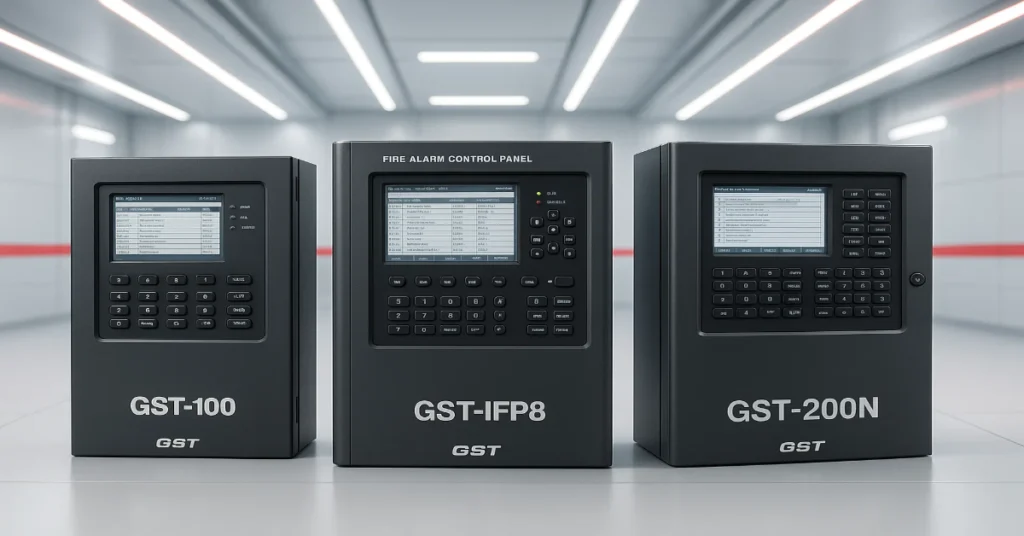
Fire safety planning always begins with one essential question, which control panel should you choose? In the GST ecosystem, three models today dominate different building categories: GST-100, GST-IFP8 and GST-200N. Each model is built for a specific scale of operation and level of smart functionality. But for builders, consultants and system integrators, understanding the difference is crucial for avoiding under-design or over-engineering. This guide takes a deep, practical and experience-driven look at these three GST fire panels. You’ll learn how they compare in: By the end, you will know exactly which GST model suits your project’s technical, regulatory and operational needs. Quick Summary: How the Three Models Differ Before exploring the details, here is a quick high-level overview: Model Category Best For Strength GST-100 Entry-level conventional Small shops, micro factories, small commercial units Low-cost, simple, reliable GST-IFP8 Intelligent analog addressable Modern commercial buildings needing smart evacuation Advanced logic, high integration, flexible programming GST-200N Mid-to-large intelligent addressable Industrial sites, hospitals, campuses, multi-storey structures Exceptional stability, network scalability, EMI-resistant GST-100 – The Most Dependable Entry-Level Fire Panel What It Is The GST-100 is a compact, easy-to-deploy conventional fire alarm panel designed for small and simple infrastructure. It uses zone-based detection rather than addressable logic. Who It’s For Features ✔ Up to 16 Zones: Simple zoning suitable for low-complexity layouts✔ Cost-efficient design: Ideal for budget-sensitive installations✔ Easy maintenance: No complex address mapping✔ Quick deployment: Recommended for projects requiring rapid commissioning Strengths Limitations Ideal Projects If your building’s fire strategy does not require addressable features, the GST-100 remains one of the most reliable and stable solutions. GST-IFP8 – The Preferred Intelligent Panel for Smart Buildings What It Is The GST-IFP8 is an advanced intelligent addressable fire panel designed for modern buildings where fire safety must work seamlessly with automation, integration and detailed analytics. Who It’s For Features ✔ Addressable panel with loop expandability✔ High device capacity per loop✔ Modular design for upgrades✔ Interactive programming with detailed cause-and-effect✔ Supports networking and BMS integration Why Consultants Prefer GST-IFP8 Limitations Ideal Projects If your project demands smart features, detailed mapping and integration, the IFP8 stands out as the perfect intelligent solution. GST-200N – The Industrial-Grade Intelligent Panel for Heavy-Duty Use What It Is The GST-200N is a robust, ultra-stable, intelligent addressable panel specifically engineered for industrial and high-noise electrical environments. It is widely used in critical facilities where performance must remain consistent even under challenging conditions. Who It’s For Features ✔ Supports multiple addressable loops (expandable)✔ Handles large device counts easily✔ Strong EMI resistance for industrial areas✔ Networkable for campus-wide deployment✔ Stable performance in high-noise zones✔ Event memory and advanced diagnostics Why It Stands Out Limitations Ideal Projects If your project needs uninterrupted protection in heavy electrical environments, GST-200N delivers unmatched reliability. 5. Feature-by-Feature Comparison Table A. Basic Specifications Feature GST-100 GST-IFP8 GST-200N Type Conventional Intelligent addressable Intelligent addressable Zones/Loops Up to 16 zones Multiple loops Multiple loops (higher capacity) Best Use Small buildings Smart commercial Industrial & large sites Expansion Limited Modular Highly scalable Integration Low High Very high EMI Resistance Basic Good Industrial-grade B. Device Handling Criteria GST-100 GST-IFP8 GST-200N Precision Zone-level Address-level Address-level (industrial accuracy) Detector Capacity Low Medium–High Very high Notification Control Basic Programmable Advanced multi-zone control C. Programming & Smart Logic Feature GST-100 GST-IFP8 GST-200N Cause & Effect Limited Advanced Highly advanced Custom Logic Minimal Yes Yes + industrial automation support Network Support No Yes Yes (best) 6. Choosing the Right GST Panel for Your Project Choose GST-100 If… Choose GST-IFP8 If… Choose GST-200N If… 7. Final Recommendation For most real-world projects, here is the simplest decision-making rule: Each panel is best-in-class within its own category, and the right choice depends on building size, device capacity, future expansion and the complexity of required fire logic. Read Also: 5 Things Every Fire Engineer Should Know Before Programming GST Panels Read Also: Why Commercial Builders Prefer GST Fire Systems for IGBC/LEED Certifications
Why Commercial Builders Prefer GST Fire Systems for IGBC/LEED Certifications
In modern construction, safety and sustainability no longer stand as separate priorities, they are deeply interconnected. Today’s commercial builders are designing projects that are not just safe for occupants but also environmentally responsible. This shift has made green certifications like IGBC (Indian Green Building Council) and LEED (Leadership in Energy and Environmental Design) critical milestones in the industry. Among the many systems contributing to these green standards, GST Fire Systems have emerged as a preferred choice for forward-thinking builders. Known for their reliability, efficiency and environmental compliance, GST systems help projects align with key sustainability parameters that influence IGBC and LEED certifications. This article explores why commercial builders increasingly rely on GST Fire Systems when pursuing green building credentials and how these systems blend life safety with eco-efficiency. 1. Understanding IGBC and LEED Certifications Before we explore GST’s role, it’s essential to understand what IGBC and LEED certifications represent. What Is IGBC Certification? The Indian Green Building Council (IGBC) is India’s leading authority promoting environmentally sustainable building practices. Its certification system evaluates structures across parameters like: Buildings that meet these criteria earn IGBC ratings such as Certified, Silver, Gold or Platinum, depending on their score. What Is LEED Certification? LEED, developed by the U.S. Green Building Council (USGBC), is a globally recognized framework for sustainable design and operation.It also uses a points-based system covering: Both certifications encourage the integration of intelligent building systems, and that’s where GST Fire Systems come into the picture. 2. The Link Between Fire Safety and Green Certification While fire systems are primarily associated with life safety, their design and performance have a direct impact on a building’s sustainability profile. Modern rating frameworks like IGBC and LEED emphasize: GST Fire Systems support all these objectives by combining digital intelligence, low-power operation and eco-friendly manufacturing. This makes them highly compatible with the sustainability parameters of green building certification bodies. 3. Why Builders Choose GST Fire Systems for IGBC/LEED Projects Let’s explore the main reasons commercial builders prefer GST Fire Systems when designing sustainable buildings. A. Energy-Efficient Design That Supports Green Points Energy performance is one of the top scoring areas in both IGBC and LEED frameworks. GST Fire Systems are designed to minimize energy use without compromising on performance. Highlights: These attributes directly contribute to Energy Efficiency Credits under LEED and Energy Optimization points in IGBC evaluation. B. Use of RoHS-Compliant, Eco-Friendly Components Environmental responsibility begins at the manufacturing stage. GST strictly follows RoHS (Restriction of Hazardous Substances) and WEEE (Waste Electrical and Electronic Equipment) guidelines. This means: Such eco-friendly production practices strengthen a project’s sustainability credentials, indirectly contributing to Materials and Resources (MR) credits in LEED and Sustainable Materials points in IGBC. C. Intelligent Network Architecture for Smarter Buildings IGBC and LEED recognize smart technologies that improve building efficiency. GST Fire Systems use advanced digital networking to minimize wiring, reduce installation material and improve monitoring efficiency. Advantages for Green Buildings: These features not only enhance fire safety but also help achieve credits under the Innovation in Design (ID) and Smart Building Integration categories. D. Reduced Carbon Footprint Through Longevity and Reliability Durability plays a crucial role in sustainability. GST Fire Systems are built for long service life and minimal maintenance. This reduces the replacement frequency of devices, thereby cutting down electronic waste and carbon emissions associated with manufacturing and logistics. Sustainability Advantage: This contributes to Life Cycle Assessment (LCA) and Operational Efficiency parameters recognized by both IGBC and LEED. E. Seamless Integration with HVAC and Energy Systems A modern green building operates through an interconnected ecosystem, fire detection, HVAC, lighting and energy management systems communicate in real time. GST systems support standard protocols such as Modbus and BACnet, allowing easy integration with: Through this, GST enables optimized energy distribution during emergencies, such as shutting down air handlers to prevent smoke spread, while maintaining overall system efficiency. This level of interoperability aligns with LEED’s Building Automation credits and IGBC’s Smart Systems Integration criteria. F. Contribution to Indoor Environmental Quality (IEQ) A lesser-known but important connection exists between fire detection systems and Indoor Environmental Quality. GST’s intelligent detectors are designed to maintain high air quality by: These attributes enhance building safety without compromising the indoor experience, supporting IGBC’s Health and Well-being parameters and LEED’s IEQ credits. 4. Real-World Applications: GST in Certified Green Projects Across India and abroad, several IGBC and LEED-certified buildings have adopted GST Fire Systems due to their compliance with sustainability frameworks. Examples include: GST’s compatibility with green building philosophies ensures that architects and MEP consultants can meet both life safety codes and environmental goals with a single integrated system. 5. Economic Benefits for Builders and Developers Beyond sustainability, GST Fire Systems offer tangible financial advantages that appeal to commercial builders. Lower Operational Costs Energy-efficient components mean lower power bills and reduced lifecycle costs. Reduced Installation Material Intelligent networking minimizes cabling and junction hardware, lowering both cost and environmental impact. Simplified Maintenance Smart diagnostics help maintenance teams identify and rectify faults quickly, reducing man-hours and downtime. Higher Building Value Buildings equipped with certified, eco-compliant systems often command better rental and resale value, attracting environmentally conscious tenants. All these factors align with the economic sustainability pillar of green certification frameworks. 6. Supporting Documentation for IGBC/LEED Audits When applying for certification, documentation is critical. GST provides technical datasheets, energy consumption reports, RoHS compliance certificates and BMS integration guidelines, all of which support project consultants during the audit phase. Having clear documentation simplifies compliance verification and reduces the time required for certification approval. Builders find this especially valuable when coordinating across multidisciplinary teams. 7. Future-Ready Compliance with Global Green Trends Sustainability standards are evolving rapidly. With ESG (Environmental, Social, and Governance) reporting becoming mandatory for many companies, choosing future-ready fire systems like GST ensures long-term compliance. GST’s ongoing innovations, such as addressable detectors with ultra-low standby power and AI-based alarm analytics, demonstrate commitment to aligning with next-generation sustainability requirements. This proactive approach reassures builders that their projects will remain compliant and efficient for years to come. 8.