
Why Choose Innxeon Technologies for Fire Alarm Systems Across PAN India?
Fire safety is no longer optional. Across India, authorities have become stricter, industries have become more safety-focused, and building owners now expect systems that deliver fast detection, clear evacuation alerts and compliant documentation. But choosing the right fire alarm system is only half the job. The bigger decision is choosing the right fire safety partner, the company that designs the solution, supplies genuine products, installs correctly and supports the system for years. That is exactly where Innxeon Technologies stands out. Innxeon Technologies delivers reliable fire alarm solutions across PAN India using trusted brands like GST Fire Alarm System, Edwards Fire Alarm System and PAVA Systems. From industrial plants and data centres to hospitals and high-rise commercial projects, Innxeon helps teams build fire safety infrastructure that performs when it matters most. In this article, you’ll learn why engineers, consultants, EPC contractors and facility managers across India choose Innxeon and how the right implementation makes the difference between “installed” and “protected.” Fire Alarm Systems in India Need More Than Hardware Many people think fire alarms are just detectors and hooters. In reality, a modern fire safety solution is a complete ecosystem that includes: And in India, your fire alarm system must also survive: So the partner you choose must understand both engineering and on-ground site realities. That’s why Innxeon focuses on end-to-end fire safety delivery, not just product supply. Who Is Innxeon Technologies? Innxeon Technologies is a fire safety solutions provider with the ability to support projects across PAN India. The company works with established global and regional brands, including: Innxeon supports customers in industries like: 1) PAN India Capability: One Partner for All Locations If your organisation operates in multiple states, managing different fire alarm vendors becomes a headache. You deal with: Innxeon solves this by offering PAN India project support, which helps enterprises standardise: This reduces operational risk and makes authority compliance easier because you follow a consistent system blueprint across locations. Overlay Text Idea:“One Fire Safety Standard. All India Execution.” 2) Multi-Brand Expertise: GST + Edwards + PAVA Under One Roof A big reason customers choose Innxeon is flexibility. Instead of forcing a single product brand into every project, Innxeon helps you select the best-fit solution based on: GST Fire Alarm System (Smart + Cost-Effective + Scalable) GST systems work well for a wide range of commercial and industrial sites. If your project needs high functionality with optimised cost, GST becomes a strong option. Common use cases: Edwards Fire Alarm System (Premium + High Reliability + Critical Sites) Edwards systems are widely chosen for mission-critical applications where performance, detection speed and high-level integration matter most. Common use cases: PAVA Systems (Clear Voice Evacuation Saves Lives) A siren alone cannot guide people during panic. A PAVA system helps announce clear instructions, reduce confusion and support faster evacuation. Common use cases: Innxeon helps integrate fire alarm triggers with voice evacuation sequences for real-life safety performance. Overlay Text Idea:“Detection + Control + Voice Evacuation = Complete Fire Safety.” 3) Engineering-First Approach: Not Just Installation, Proper Design In fire safety, design mistakes become expensive and dangerous. Wrong detector placement can cause: Innxeon prioritises an engineering-first approach that includes: This ensures your system stays compliant and practical, not just visually installed. 4) Clean Installation Quality: The “Hidden Differentiator” Most failures in fire alarm systems happen not because of products, but because of installation quality. Examples: Innxeon teams focus on a clean execution standard: For EPC contractors, this also reduces punch points and speeds up final approvals. Overlay Text Idea:“Clean Install = Fast Approval + Fewer Breakdowns.” 5) Compliance-Ready Delivery for Faster NOC Approvals Fire alarm systems exist for life safety. But in India, they also exist for compliance approvals. Projects often get delayed due to: Innxeon supports compliance-focused delivery by ensuring: This helps customers avoid last-minute fixes and costly rework. 6) Integration Expertise: Fire Alarm Must Talk to Other Systems In a modern building, the fire alarm system is the central trigger point for multiple actions: Innxeon understands these interfaces and ensures your system performs as one integrated safety platform. This is where many vendors struggle because integration requires both electrical coordination and logic programming expertise. Innxeon ensures integration stays stable, testable and expandable. 7) Support and Service: Protection Continues After Handover A fire alarm system must work every day, not just on the day of commissioning. That’s why customers prefer a partner that can support: Innxeon supports both project and post-project reliability, so the system stays audit-ready and live. Overlay Text Idea:“Commissioning Is Not the Finish Line.” 8) Strong Fit for EPC Contractors and Consultants EPC contractors and consultants choose Innxeon because the company supports project workflows smoothly. Innxeon understands how EPC projects run: Instead of slowing the project down, Innxeon helps speed up delivery using: This makes Innxeon a practical partner for high-volume and multi-location projects. 9) Right System for Every Site Type Across India India is diverse, with coastal humidity, industrial dust, north Indian winters and extreme summer conditions. A single fire alarm approach does not fit every environment. Innxeon supports system selection based on real conditions: This localised design thinking improves uptime and reduces nuisance alarms. That’s exactly what makes Innxeon a true PAN India solution provider, not just a distributor. Why Innxeon Works Across Indian Cities & Regions Innxeon solutions fit well for: Whether your project is in North India, South India, East India, West India, or Central India, Innxeon aims to deliver consistent engineering quality and system reliability. Key Benefits Summary: Why Innxeon Technologies Is a Smart Choice Here’s the complete value you get with Innxeon: Safety Needs a Partner, Not Just a Product If you want a fire alarm system that only looks good on drawings, any vendor can deliver hardware. But if you want a system that: …you need a partner like Innxeon Technologies. With experience across GST fire alarm systems, Edwards fire alarm systems and PAVA systems, Innxeon helps projects across India build fire safety infrastructure that performs under pressure. Because in a real
Top Reasons EPC Contractors Partner with Innxeon for Fire Alarm Projects
EPC contractors operate in a high-pressure environment where deadlines are tight, approvals are stringent and every system must perform flawlessly from day one. When it comes to fire alarm projects, EPC teams need more than just a supplier; they need a partner who can support engineering, compliance, site execution and commissioning without delays or confusion. That is exactly why many EPC contractors across India partner with Innxeon Technologies for fire alarm system projects. From design support to supply reliability and technical coordination, Innxeon helps EPC teams deliver compliant fire alarm installations on time, whether it is a factory, hospital, commercial tower, warehouse, data centre or infrastructure project. In this article, we will break down the top reasons EPC contractors choose Innxeon and how this partnership helps reduce risk, improve project control and ensure faster approvals. Why Fire Alarm Projects Are High-Risk for EPC Contractors Fire alarm systems look simple on paper, but EPC contractors know the reality on-site: A fire alarm package is more than just products. It is about correct engineering, correct execution and clean commissioning. That is where Innxeon steps in, with structured support that matches the EPC working style. 1) EPC-Friendly Engineering Support That Saves Time EPC contractors often handle multiple systems at once: fire alarm, suppression, HVAC, ELV and electrical packages. They need fast support during: Innxeon helps EPC teams with engineering assistance, such as: This reduces the biggest EPC risk: late-stage redesign and rework. Bonus advantage: When the engineering is correct from the beginning, authority approvals become faster and site teams face fewer surprises. 2) Complete Product Range for Both Addressable and Conventional Needs Not every project needs the same fire alarm architecture. EPC contractors need flexibility depending on project type, budget and authority requirements. Innxeon supports both: Addressable solutions for complex projects Projects like IT parks, hospitals, high-rise buildings and industrial campuses typically require advanced detection and location accuracy. This is where an addressable fire alarm panel becomes the preferred choice. Conventional solutions for simpler zones Warehouses, smaller commercial buildings, schools and utility blocks often need simpler zoning at a cost-effective level. For these, a conventional fire alarm panel makes practical sense. EPC contractors partner with Innxeon because they do not need to manage multiple vendors for different site categories. Innxeon helps standardise the process across project locations. 3) Faster Procurement and Reliable Availability Across India EPC scheduling is strict. If the panel delivery is delayed, every milestone gets affected: Innxeon’s strength lies in supporting EPC supply cycles with: This is extremely useful for EPC contractors handling projects in different cities at the same time. 4) Compliance Support That Reduces Approval Headaches Authorities, consultants and safety auditors expect full compliance, not assumptions. Innxeon supports EPC teams by aligning the fire alarm system design with: Many EPC contractors also prefer deploying a gst fire alarm system configuration approach in projects where authority compliance needs structured product documentation and stable performance. When compliance becomes smoother, EPC teams avoid: 5) Clean Coordination With Other Systems (Cause & Effect Ready) Modern buildings do not run fire alarm systems as standalone networks. They must integrate with multiple systems, such as: Innxeon supports EPC contractors with cause-and-effect planning so the system behaves correctly during events. This is a big reason why EPC teams choose addressable configurations using an addressable fire alarm panel for complex sites, because integration logic can be more controlled and scalable. 6) Faster Site Execution With Practical Installation Guidance EPC site teams need systems that are easy to execute and verify on the ground. Innxeon supports EPC execution by helping teams with: This reduces the common problem EPC teams face: ❌ “Installed everything, but the system is unstable during testing.” A stable, well-guided execution workflow leads to: 7) Strong Detector Options for Accuracy and Reliability Detection quality defines the system’s performance. A good fire alarm project is not only about panels. It is about choosing the right detectors for each environment. Innxeon supports EPC projects with both: Where addressable detectors help EPC teams most Where conventional detectors are practical This flexibility helps EPC contractors avoid overspending while still meeting design intent. 8) Reduced Risk of False Alarms Through Better System Planning False alarms are one of the biggest project handover issues. They affect client trust and can create repeated maintenance visits. Innxeon helps EPC teams reduce false alarms by supporting: This is especially useful in: When EPC teams deliver stable systems, clients are happy and future orders become easier. 9) Scalable Design for Expansion and Future Building Phases Many EPC projects are executed in phases: Innxeon supports scalable fire alarm planning so EPC contractors can prepare for: This is a major advantage when deploying an addressable fire alarm panel, because expansion becomes more structured and site changes do not break the entire logic. 10) Better Documentation Support for Handover and Audits EPC contractors do not finish at installation. The real pressure comes at handover: Innxeon supports EPC contractors with a documentation structure that helps during: This reduces last-minute firefighting during project closure. 11) Standardisation Across Multiple Sites and Contractors EPC contractors often work with multiple site teams, subcontractors and vendors. Without a standard approach, quality becomes inconsistent. Innxeon helps create standardisation in: This makes fire alarm projects easier to manage across: Standardisation also improves project forecasting and reduces dependency on individual technicians. 12) Support for Industrial, Commercial and Infrastructure Projects Innxeon is preferred by EPC contractors because the brand is aligned with the realities of Indian sites: Whether the project is: Innxeon adapts to project requirements with structured engineering support and product selection guidance. 13) Strong Value for Money Without Compromising Safety EPC contractors always balance three things: Innxeon delivers strong overall value by supporting: This is why EPC partners often choose Innxeon as their preferred fire alarm project partner because it helps them win bids competitively while delivering safe systems. Quick EPC Checklist: When to Use Addressable vs Conventional Systems Here is a simple guide EPC teams can use during planning: Choose an addressable fire
Addressing Authority Compliance Issues Using GST Fire Alarm Panels
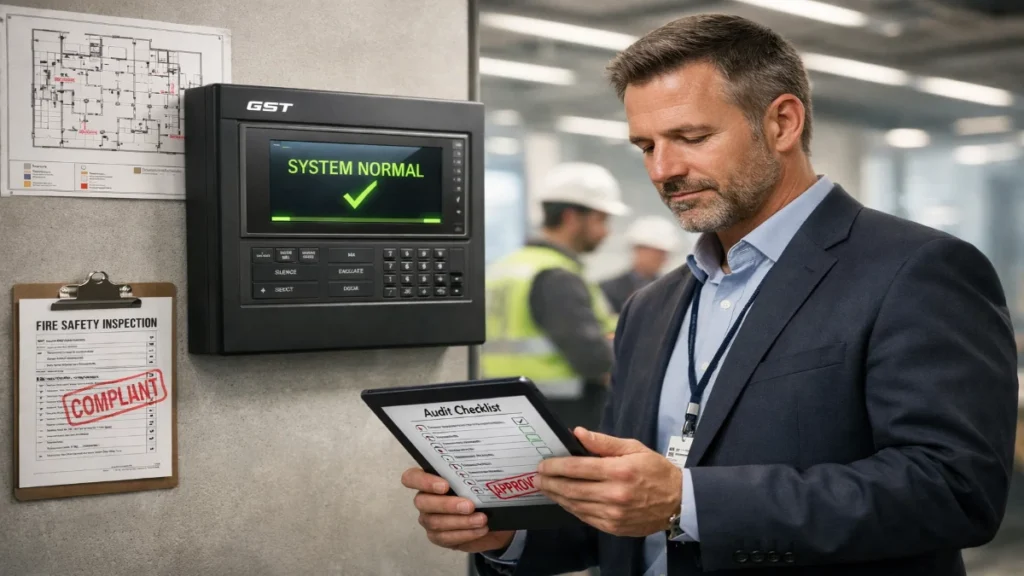
Fire safety compliance is no longer optional. In India and across most regions, authorities are stricter, audits are more frequent and penalties for non-compliance can be serious. For building owners, facility managers, and project contractors, the real challenge is not only installing a fire alarm system but also proving that it meets authority expectations in terms of documentation, performance and maintenance. This is where a reliable fire alarm platform makes a huge difference. GST fire alarm panels are widely used in commercial, industrial and critical facilities because they help teams solve the most common compliance failures: poor zone mapping, unclear alarm records, weak fault monitoring, difficult expansion and inconsistent service logs. In this guide, you will learn how to address authority compliance issues using GST Fire Alarm Panels, what inspectors check, where projects typically fail and how to stay ready for approvals and renewals year-round. What “Authority Compliance” Means in Fire Alarm Projects Authority compliance means your fire alarm system must satisfy the requirements of local fire departments, consultants and safety auditors. Compliance is not only about “system working.” It is about the system working correctly, reporting correctly and remaining maintainable over time. Authorities usually look for proof in three major areas: 1) Design compliance 2) Installation compliance 3) Operational compliance Many sites fail not because the system is bad, but because the system cannot prove performance in a structured, audit-friendly way. The Most Common Authority Compliance Issues (And Why They Happen) Before we discuss solutions, let’s highlight the common reasons inspections fail: Issue 1: Unclear zoning and poor fire location identification Inspectors want quick, accurate identification of the alarm area. If the system only shows “Zone 3” without a meaningful location, it creates confusion during emergencies and audits. Issue 2: Too many false alarms and nuisance triggers Frequent false alarms become a serious compliance risk because authorities treat them as operational negligence. False alarms may come from incorrect detector selection, poor programming or environmental conditions. Issue 3: Faults are not detected, logged, or responded to Loose wiring, device removal, loop short/open faults, these must be supervised and reported properly. If faults stay hidden, compliance fails. Issue 4: Missing documentation and event records Many sites cannot produce clean logs during audits: Issue 5: Expansion was done incorrectly Sites often expand floors or modify partitions. If the system is not scalable or changes are made without updating drawings and programming, compliance breaks. Issue 6: Incompatible integrations Authorities frequently check interlocks: Why GST Fire Alarm Panels Help Fix Compliance Problems A fire alarm panel should do more than just trigger an alarm. It should support compliance for years by being stable, scalable and easy to audit. That’s where GST solutions stand out. Here’s how GST fire alarm panels support better compliance outcomes. 1) Better Fire Location Identification With Addressable Intelligence One of the strongest compliance advantages of a GST addressable fire alarm panel is accurate identification. Instead of just identifying a zone, the system can identify: This level of clarity reduces response time and makes authority inspections smoother. Compliance win: Authorities love systems where the fire team can instantly identify where the activation happened. 2) Cleaner Documentation and Traceable Event History Authorities don’t only verify that devices work. They verify accountability. GST panels support clear event reporting, such as: That makes it easier for facility teams to show that they track events and respond properly. Compliance win: You can present a structured system history during audits and renewals. 3) Strong Fault Monitoring Improves Audit Confidence A big compliance failure happens when fault detection is weak or ignored. Authorities often test: GST fire alarm panels are designed to support reliable supervision, helping your team detect problems early instead of facing surprise failures during inspection day. Compliance win: If faults appear early, corrective action becomes easy and auditable. 4) Easier Device Mapping and Labelling (A Common Inspection Point) Authorities frequently check whether device naming is meaningful. For example, a “Smoke Detector 012” is not enough. They expect something like: GST systems allow structured programming, so you can standardise naming, which boosts readability for both responders and auditors. Compliance win: Clear mapping reduces rejection risk during commissioning. 5) Addressable vs Conventional: Choosing the Right System for Authority Requirements Not every building needs the same setup. In some small premises, a conventional fire alarm panel may still be acceptable. In larger or more complex sites, authorities often prefer addressable for accuracy and maintenance control. When a conventional system is usually acceptable Where addressable is a smarter compliance choice GST offers both conventional and addressable options, so you can meet compliance while staying practical on cost and scale. 6) Reducing False Alarms With Smarter Configuration False alarms can become a compliance headache because they trigger: GST panels can support better alarm control when the system design and programming are handled properly. You can reduce nuisance alarms by: Compliance win: Lower false alarm frequency improves authority trust and builds operational discipline. 7) Better Support for Site Expansion Without Breaking Compliance Real buildings grow. Floors change. Tenants change. Warehouses add partitions. And compliance fails when expansions are done without proper updates. GST addressable systems are designed to support scaling and reconfiguration more smoothly than systems that require major rewiring and complicated changes. Best practice: Whenever expansion happens, update: Compliance win: You stay inspection-ready even after modifications. 8) Integration-Readiness Helps With Authority Interlocks Authorities often validate interlocks because fire safety is not isolated anymore. Common integrations include: With the right design, GST panels make integration management practical and structured. Compliance win: Your fire alarm becomes part of a complete life safety ecosystem. What Inspectors Commonly Check During Fire Alarm Compliance Audits If you want to pass approvals with confidence, align your site readiness with typical inspection practices. Inspectors usually check: System health checks Device checks Fault simulation Documentation review A GST-based system helps you present your setup clearly and confidently, especially when you maintain a consistent documentation routine. A Simple Compliance Checklist You Can Follow With GST Panels Here’s
Common Pitfalls in Fire Alarm Retrofits & How GST Panels Reduce Risk
Quick summary: Retrofits fail when teams underestimate cable health, load calculations, device compatibility, zoning logic and commissioning time. GST panels reduce risk by improving fault isolation, loop stability, system scalability, diagnostics and integration readiness, especially in complex mixed environments. Fire alarm retrofits look simple on paper: replace old devices, upgrade the control panel, add notification and hand over a safer facility. But on real sites, factories, hospitals, warehouses, hotels, malls or commercial towers, retrofits are rarely straightforward. You are working with existing cables, active operations, legacy devices, partial drawings and tight shutdown windows. That is why fire alarm retrofits often fail, not because of bad intentions, but because of hidden risks that show up late: unstable loops, false alarms, cable faults, incomplete cause-and-effect logic or compliance gaps. In this article, we’ll break down the most common retrofit pitfalls and explain how GST fire alarm panels help reduce risk through smarter diagnostics, flexible architecture, stable performance and easier commissioning. We’ll also cover practical retrofit strategies that improve reliability and help consultants and project teams close faster with fewer surprises. Why Fire Alarm Retrofits Are Riskier Than New Installations A new installation is built around clean drawings, controlled environments and brand-new cabling and devices. A retrofit is different: Even when the “scope” looks small, the risk is usually bigger. That’s why a fire alarm retrofit must be treated like a risk management project, not just a supply-and-install job. Top 12 Common Pitfalls in Fire Alarm Retrofits Below are the pitfalls that repeatedly create delays, disputes, failures and post-handover complaints. 1) Assuming Old Cables Are “Good Enough” Many retrofit projects reuse existing field wiring to save time and cost. This can work, but only after testing. The problem is that old cables may have: Result: Earth faults, intermittent loop drops, random faults and false alarms. How GST panels reduce risk:GST systems support stable loop communication and provide strong fault diagnostics. A modern addressable fire alarm panel can identify loop issues faster, helping teams isolate faulty segments instead of guessing across floors. 2) Mixing Legacy Devices Without Compatibility Planning Retrofits often involve partial upgrades. For example, a team upgrades the panel but tries to reuse old detectors and modules. This becomes risky if: Result: Devices not responding, missing alarms, frequent troubles, or unpredictable behaviour. How GST panels reduce risk:GST retrofit-friendly product ecosystems make it easier to standardise devices under one platform. When combined with addressable detectors, you get a predictable device response and easier mapping during commissioning. 3) Underestimating Cause-and-Effect Complexity Many retrofits fail at the programming stage, not installation. Cause-and-effect rules include: If these rules are not revalidated during retrofit, logic may remain incomplete or incorrect. Result: Alarms trigger, but output actions fail, leading to audit failures. How GST panels reduce risk:GST panels are built for structured configuration and easier testing of logic. Teams can validate outputs, zones and event actions more confidently during FAT/SAT. 4) Wrong Zoning or Loop Segmentation Decisions In many older systems, zoning was designed around wiring convenience, not life safety strategy. During retrofit, teams copy the old zoning instead of improving it. Bad zoning causes: How GST panels reduce risk:GST solutions support scalable loop architecture and better segmentation planning. The result is easier fault isolation and safer operations in phased retrofit jobs. 5) Ignoring Battery and Load Calculations This is one of the most common compliance failures. Retrofits often add: But teams sometimes keep the same PSU/battery concept. Result: The panel works during normal power but fails backup runtime requirements. How GST panels reduce risk:GST fire alarm panels support modern power management planning. With correct sizing, you avoid handover-day failures and reduce long-term operational risk. 6) Overlooking NAC Circuit Limitations Notification Appliance Circuits (NAC) are a common trouble area. In older buildings: Result: Low volume, inconsistent alerting, frequent NAC faults. How GST panels reduce risk:Modern GST platforms support structured notification design. When done right, you get stable performance and easier compliance verification. 7) Poor Labelling and Missing Documentation Retrofit teams often inherit: Result: Longer downtime, wrong device mapping, confusion during emergency response. How GST panels reduce risk:GST panels help during commissioning by enabling clearer device identification and mapping workflows, making it easier to build accurate as-builts for the facility team. 8) Not Testing for Earth Faults Early Earth faults are common in old sites, especially industrial plants and basements. They usually come from: Result: Repeated faults, reduced reliability, delayed project completion. How GST panels reduce risk:A robust gst fire alarm system supports better fault reporting and faster isolation practices, reducing the time wasted on repeated trial-and-error fixes. 9) Trying to Retrofit in Live Areas Without a Phased Strategy Fire alarm retrofits cannot disrupt operations, especially in: If you don’t plan the phasing, you risk leaving areas unprotected. How GST panels reduce risk:GST retrofit strategies work well with phased implementation. A well-planned addressable fire alarm panel supports scalable expansion so you can upgrade zone-by-zone without chaos. 10) Wrong Detector Selection for the Actual Environment A very common retrofit mistake is copying the old detector types without re-evaluating the site. Examples: Result: Nuisance alarms, occupants ignoring alarms and eventually system bypass habits. How GST panels reduce risk:GST supports a complete device ecosystem. With the right mix of addressable detectors and well-matched applications, you reduce false alarms and build trust in the alarm system. 11) Integrations Done as an Afterthought Modern buildings often require integration with: If integration is planned late, it causes scope disputes and delays. How GST panels reduce risk:GST panels are integration-ready when planned correctly. This reduces rework and helps the system behave as a coordinated safety network instead of isolated boxes. 12) Rushing Commissioning and Handover Retrofit commissioning requires more time than new projects because every loop and device must be verified against unknown conditions. Common rushed steps: Result: Failures during consultant inspections, or worse, failures during real emergencies. How GST panels reduce risk:GST platforms support systematic testing and stable performance, enabling teams to validate the full system properly before handover. How GST Panels Reduce Retrofit
Where Conventional Systems Perform Better Than Addressable
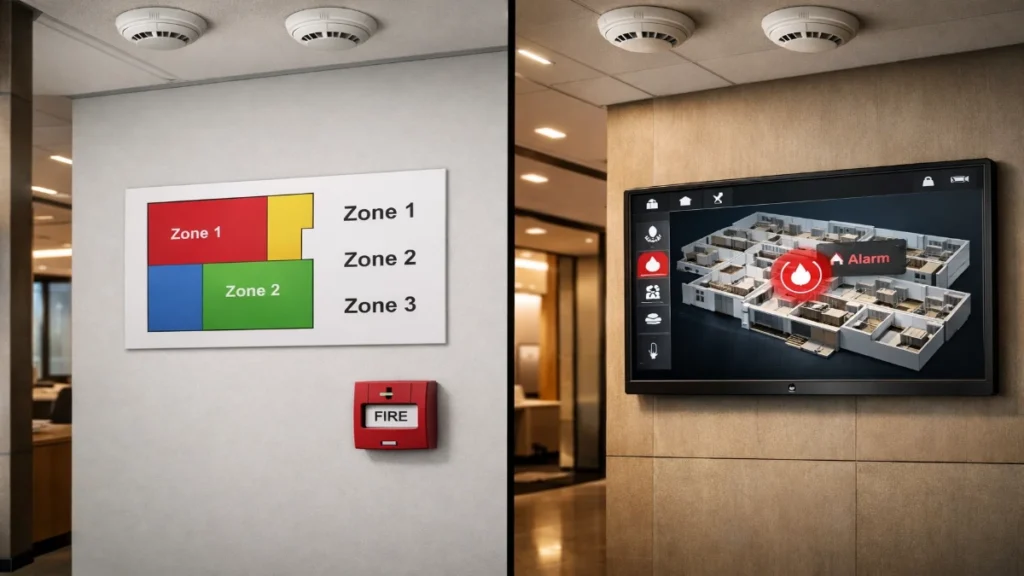
Fire alarm technology has evolved fast. Today, most consultants and facility managers talk about addressable systems as the modern standard, especially for large buildings, multi-site campuses and high-occupancy projects. But here’s the truth that many people forget: Conventional fire alarm systems still perform better than addressable systems in several practical situations. In fact, there are places where conventional systems are not only enough, but they are faster to install, easier to maintain and more cost-effective without compromising safety when designed correctly. This article explains where conventional systems outperform addressable systems in practical situations, how to choose the right option for your project and how GST Fire Alarm Systems offers both choices with dependable performance and long-term support. Conventional vs Addressable: A Quick, Clear Difference Before we compare performance, let’s simplify what these systems actually do. Conventional Fire Alarm System A conventional system divides the building into zones (Zone 1, Zone 2, Zone 3…).If a detector activates, the panel shows the zone location, not the exact device. 👉 Example: “Fire in Zone 2” This is typically managed using a conventional fire alarm panel. Addressable Fire Alarm System An addressable system identifies the exact device; every detector and module has a unique address. 👉 Example: “Smoke Detector 18, 2nd Floor Pantry” This is typically managed using an addressable fire alarm panel and addressable detectors. Both are effective when planned correctly. But performance depends on the site. 1) Small Buildings: Conventional Wins on Simplicity If the project is small, conventional systems usually perform better because they are: Ideal Applications Why Conventional Performs Better Here Addressable systems provide precise device-level information. That’s great, but if the building has only 2–5 zones and a few detectors, the extra complexity can feel unnecessary. With a GST fire alarm system, many small facilities prefer conventional systems due to easy operation for non-technical users. 2) Budget-Controlled Projects: Conventional Delivers Better Value Let’s be honest: many projects have strict cost limits. In those cases, conventional systems often perform better because: Where This Matters Most Addressable systems are a premium investment. They shine in large, complex buildings. But in tight budgets, a conventional system can meet requirements without overengineering. GST makes this decision easier by offering reliable products in both categories, so you don’t have to compromise on brand quality even when choosing conventional. 3) Sites with Frequent Power Issues: Conventional is More Forgiving In many regions, especially where power quality isn’t stable, conventional systems are often easier to maintain long-term. Why Conventional Systems Perform Better Addressable systems can be very stable, but they also depend more on: If the site has weak electrical discipline, conventional tends to run smoother with fewer “mystery faults.” GST systems are known for stability and consistent performance and when paired with proper power supply design, they provide strong reliability for both conventional and addressable. 4) High-Dust, High-Noise Industrial Areas: Conventional Can Be More Practical Not all sites benefit equally from device-level pinpointing. In areas such as: You may get increased nuisance triggering if detectors are not carefully selected and placed. Why conventional systems perform better here Conventional zoning allows teams to plan detection more broadly and build in practical logic using: This is not a disadvantage; it’s simply a different method of managing risk. Of course, addressable still works well in industrial spaces when engineered properly, especially using correct detector types and layouts. But conventional can be more forgiving in harsh environments. 5) Fast Installation Jobs: Conventional is Faster to Deploy If you’ve ever done a project on a hard deadline, you already know this pain. When the requirement is: Conventional systems often outperform addressable systems because: Best cases A properly selected conventional fire alarm panel from a trusted brand like GST can be installed quickly, commissioned efficiently and maintained easily. 6) Easy Fault Finding: Conventional Troubleshooting is More Direct Addressable systems provide more information, yes.But conventional systems often win in hands-on troubleshooting because the fault patterns are simpler. Conventional faults are easy to understand Technicians with basic training can find faults quickly. Addressable systems require deeper knowledge of: That’s why in places where maintenance skills are limited, conventional can feel more dependable. 7) Locations with Limited Skilled Support: Conventional is the Safer Choice This is one of the biggest reasons conventional systems still stay relevant. If the building is in an area where: Then conventional systems perform better due to: Still, if you’re going with conventional for this reason, always choose a reputable brand with good service coverage. This is where GST Fire Alarm Systems earn trust because the product ecosystem, availability and support network matter more than panel type. 8) Small Hotels, Guest Houses and Low-Occupancy Properties: Conventional is Enough Addressable systems are excellent for premium hotels and high-occupancy towers.But for small properties (like 10–30 rooms), conventional can be the better fit. Why conventional performs better For example: It’s clean and practical. 9) Low-Change Buildings: Conventional Works Best When Layout Stays Stable Addressable systems shine when: But if the building layout is fixed and stable, conventional performs better because: Examples: Conventional vs Addressable: Performance Comparison Table Here is a simple comparison to help decision makers: Conventional Fire Alarm System ✅ Better when you need… Addressable Fire Alarm System ✅ Better when you need… Fast installation Exact detector location Low-budget compliance Advanced cause & effect logic Easy maintenance Large buildings with many devices Low technical dependency Faster pinpointing during emergencies Simple zoning visibility Low-budget compliance How GST Helps You Choose the Right System (Without Regret Later) Many people make a mistake by thinking: Conventional = cheapAddressable = premium That’s incomplete. The real truth is: With GST, you get both options under one trusted ecosystem, meaning your project can start conventional today and upgrade later when required. When upgrading is likely Choose addressable if you expect: Where Addressable Still Clearly Wins (Be Honest About It) To make the right decision, it’s important to admit where addressable performs better. Addressable systems outperform conventional in: Because device-level detection improves response speed and reduces confusion. Addressable
Why Buying GST Fire Alarm Panels from Authorized Distributors Matters
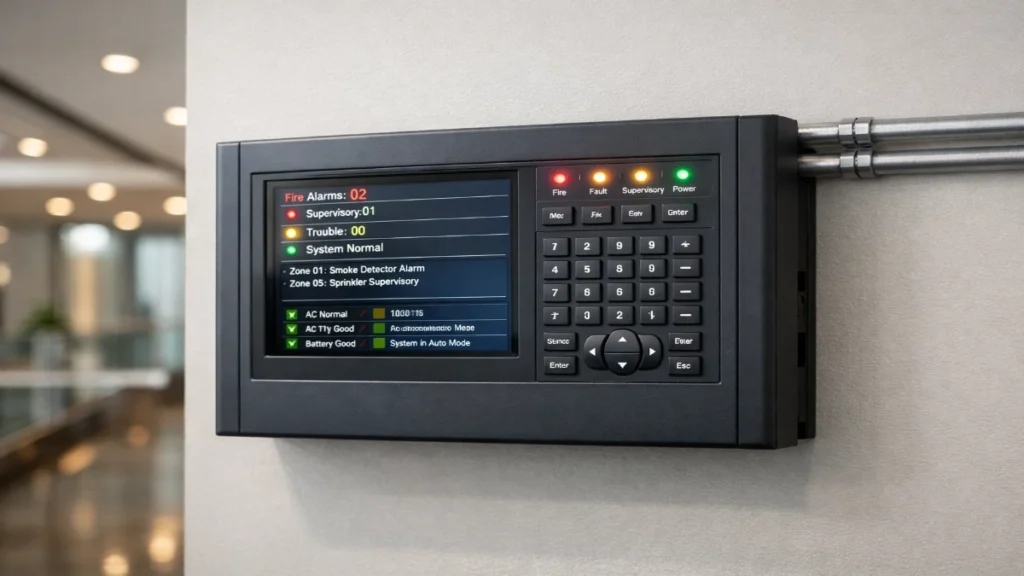
When it comes to fire safety, every decision carries real-world responsibility. A fire alarm system is not a “nice-to-have” product. It is a life-safety system designed to detect danger early, trigger alarms, support evacuation and help protect people, property and operations. That’s why one decision matters more than most buyers realise: Where do you buy your GST Fire Alarm Panel from? Many contractors, project teams and facility managers compare panel models, loop capacity, detector compatibility and approvals. But some ignore the most important factor, buying from an authorised distributor. In this article, you’ll learn why buying GST Fire Alarm Panels from authorised distributors protects your project, improves reliability, ensures compliance and saves you from hidden costs that appear months after installation. Why “Authorised Distributor” Is Not Just a Label An authorised distributor is not simply a seller. They are an officially approved channel that: In short, authorised distributors protect your complete installation from procurement to inspection. The Risk of Buying from Unauthorised Sources In many markets, you’ll find online sellers and unofficial dealers offering panels at lower rates. The price may look attractive, especially in competitive bidding. But fire alarm systems are not like normal electronics. If your panel fails during an emergency or during inspection, you don’t just lose money; you risk: Let’s break down the real reasons buying from authorised distributors matters. 1) Guaranteed Genuine GST Hardware (No Counterfeits or Refurbished Units) Fire alarm panels and detection devices are high-demand items, so the market often includes: These products can look identical at first glance. But internally, they may have: When you buy from an authorised distributor, you get verified, genuine GST Fire Alarm Panels, not suspicious stock with unknown history. 2) Warranty Protection That Actually Works Warranty is not just a paper promise. It matters when: If you buy from unauthorised sources, warranty claims can become a dead end because: Authorised distributors ensure your invoice and serial numbers align with the official supply chain. That means: 3) Assurance of Latest Firmware, Compatible Devices and Updated Product Series Fire alarm technology continuously evolves. Panels and detectors receive updates that improve: When you buy through unofficial channels, you can end up with: This causes issues during commissioning, like: An authorised distributor supplies the latest supported variants and helps match the right accessories, especially for an addressable fire alarm panel design where device communication must remain stable. 4) Correct Product Selection for the Right Application One of the most common mistakes in projects is selecting the wrong panel type. For example: An authorised distributor provides pre-sales technical guidance, such as: This ensures your gst fire alarm system is not under-designed or over-designed. Because the cheapest system is not the best system, the correct system is the most cost-effective system. 5) Reliable Compatibility Between Panels, Detectors and Modules A fire alarm system is a complete ecosystem: When any one part is not genuine or not compatible, it can create hidden problems: Buying from authorised distributors reduces this risk because they ensure correct product pairing, including: Your fire alarm system becomes consistent, reliable and inspection-ready. 6) Faster Service Support, Spares Availability and Replacement Assurance Fire alarm systems are expected to run 24×7. When something fails, downtime is not acceptable. If you bought from unauthorised sellers, you may struggle with: Authorised distributors maintain supply continuity and support, including: This is especially critical in facilities like: A reliable supply chain means your system remains operational and your maintenance team stays confident. 7) Compliance, Approvals and Documentation Support Consultants and inspectors usually ask for documentation such as: Unauthorised purchases create problems like: Authorised distributors support you with the required documentation so your handover becomes smooth. This also makes it easier to align your project with local fire authority expectations and consultant standards. 8) Lower Total Cost of Ownership (Not Just Lower Purchase Price) Many teams think unauthorised sources save money. But the real cost often shows up later. Here’s what can increase costs after installation: An authorised purchase may cost slightly more upfront, but it reduces: So your total cost of ownership becomes lower, not higher. 9) Reduced Risk of False Alarms and Nuisance Faults False alarms are not “small issues.” They cause: Many nuisance alarms come from: Authorised distributors help you select the proper addressable detectors or conventional detectors based on the environment, such as: When installed correctly with genuine devices, GST systems maintain stable performance over time. 10) Better Guidance for Expansion and Future-Proofing A fire alarm system should not become outdated in two years. Many buildings expand by adding: Authorised distributors help plan future readiness by: This matters most for an addressable fire alarm panel setup where future expansion should be smooth and predictable. Quick Checklist: How to Confirm You’re Buying from an Authorised Distributor Before you purchase, confirm these points: If any seller avoids these points, treat it as a warning sign. Which Buyers Benefit Most from Authorised Purchases? Buying from an authorised distributor is important for everyone, but it becomes absolutely critical for: 1) Consultants and EPC Contractors Because approval and inspections depend on system authenticity and documentation. 2) Facility Managers Because reliability, uptime and service response matter more than initial cost. 3) Fire System Integrators Because client satisfaction depends on stable performance and low call-backs. 4) Critical Infrastructure Operators Because fire alarm performance is non-negotiable. Fire Safety Is Too Important for Shortcut Purchases A fire alarm system is not a product you can “test later.” It must work correctly the first time, every time, especially during an emergency. Buying GST Fire Alarm Panels from authorised distributors like Innxeon Technologies ensures: So if you are planning a new installation or upgrading an existing gst fire alarm system, don’t only ask:“What is the price?” Ask the better question:“Is it coming from an authorised distributor?” Because in fire safety, authenticity is not optional; it’s essential. Read Also: How GST Distributors Ensure Code-Compliant Fire Alarm Systems Read Also: Multi-Site Deployment Comparison Using GST Addressable Panels Frequently Asked Questions
How GST Distributors Ensure Code-Compliant Fire Alarm Systems
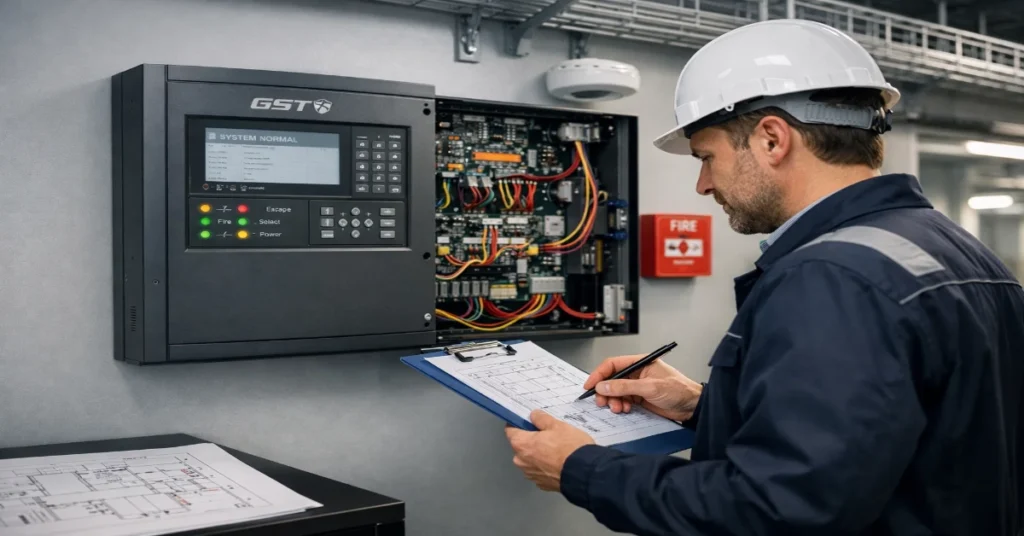
Fire alarm systems are not just “another electrical installation.” They are life-safety systems designed to detect fire early, alert occupants and trigger emergency actions like evacuation and firefighting response. That is why fire alarm projects must follow strict codes, standards and best practices. But here is the reality: even a high-quality fire alarm brand can fail in the field if the system design, device selection, installation, programming and testing are not done properly. This is exactly where authorised GST distributors play a critical role. A GST distributor does much more than supply hardware. A professional distributor supports code-compliant fire alarm execution by guiding correct product selection, loop planning, documentation, commissioning and after-sales support, so the system performs correctly during audits, inspections and real emergencies. In this article, you’ll learn how GST distributors help ensure code compliance from planning to handover and why this makes a measurable difference in safety, approvals and long-term reliability. What Does “Code-Compliant Fire Alarm System” Really Mean? A code-compliant fire alarm system meets the requirements of applicable fire and building safety standards. Depending on your country and project type, compliance may include: In short, compliance is not only about installing a panel. It’s about ensuring every part of the system works together and satisfies the authority requirements. This is where a trusted GST distributor adds structured value. Why Authorised GST Distributors Matter for Compliance There are many fire alarm suppliers in the market, but not all are trained, authorised, or updated on correct fire alarm implementation. Unauthorised sourcing creates common risks: Authorised GST distributors reduce these risks by ensuring you receive: This support becomes extremely important when your site is inspected by consultants, third-party auditors, or fire authorities. Step-by-Step: How GST Distributors Ensure Code-Compliant Fire Alarm Systems Let’s break down the real workflow. A good distributor contributes at every stage. 1) They Help You Choose the Correct System Type: Addressable vs Conventional One of the first compliance decisions is selecting the right architecture. A professional GST distributor will ask key questions: Based on this, they recommend the right solution: This step prevents under-designing (audit failure risk) or over-designing (unnecessary cost). 2) They Guide Correct Detector Selection for Real-World Conditions Incorrect detector selection is one of the biggest reasons false alarms and inspection failures happen. Authorised GST distributors help you select the correct detectors based on: They ensure the correct mix of: This makes the system both compliant and operationally reliable. 3) They Support Proper Loop Planning, Load Calculation and Device Count For addressable systems, loop planning is not a casual step. It impacts: A trained GST distributor helps integrators plan: This guidance helps ensure the installed GST fire alarm system meets project expectations and code needs. 4) They Ensure Proper Zoning Strategy and Fire Alarm Logic Code compliance is not only electrical, but it’s also logical. Fire alarm zoning must match the building’s layout and evacuation strategy. A GST distributor supports best-practice zoning, such as: For addressable systems, they also support cause-and-effect logic, such as: These details make the difference between “installed” and “approved.” 5) They Provide Correct Documentation for Consultant Approvals In most commercial and industrial projects, approvals depend on documentation. Authorised GST distributors help consultants and contractors by providing: This makes it easier for consultants to validate and sign off on the system design. If you want smooth approvals, documentation must be complete and clear and distributors help build that foundation. 6) They Support Correct Installation Practices Through On-Ground Guidance A major reason systems fail audits is not because of the brand, but because of poor installation practices, such as: A GST distributor often supports: This practical guidance reduces rework and prevents inspection objections. 7) They Assist in Programming, Configuration, and Panel Setup Fire alarm panels are not plug-and-play systems. Even the best addressable fire alarm panel needs a correct configuration to work as intended. Distributors help with: Correct programming ensures: This step is often where audits are won or lost. 8) They Ensure Testing and Commissioning Is Done the Right Way Commissioning is not “turning ON the system.” Code-compliant commissioning includes: GST distributors often support integrators by providing: When commissioning is structured, the system passes technical audits faster and performs reliably after handover. 9) They Help Ensure Long-Term Compliance Through Maintenance Support Fire alarm compliance doesn’t end at handover. Most regulations require periodic testing and maintenance. Authorised GST distributors support system owners and facility managers through: This keeps the system compliant year after year, not just on the day of inspection. Common Compliance Issues GST Distributors Help You Avoid Here are typical mistakes that cause rejections during audits and how distributors prevent them: Wrong Detector Choice Fix: Match detector type to environment using distributor guidance. Poor Zoning or No Zone Clarity Fix: Distributor helps structure zones logically as per layout. Loop Overloading in Addressable Systems Fix: Correct device count and power planning. Incorrect Panel Programming Fix: Proper mapping and event logic configuration. No Documentation for Approvals Fix: Distributor provides datasheets and support material. Poor Commissioning Practices Fix: Commissioning checklist and testing support. How GST Distributors Add Value Beyond Product Supply When you work with a GST distributor, you benefit from a complete support ecosystem: Engineering Assistance They help choose the correct architecture and device set. Risk Reduction They prevent non-compliant selections and installation mistakes. Faster Approvals Better documentation and smoother consultant satisfaction. Faster Commissioning Correct configuration reduces rework and project delays. Better Warranty and Authenticity Authorised channels ensure genuine equipment and support. Long-Term Continuity Spare and service support keep systems running properly for years. This is why many consultants and project managers prefer procurement only through authorised networks. Addressable vs Conventional: Compliance Use Cases When a Conventional Fire Alarm Panel Works Best A conventional fire alarm panel is ideal for: It provides reliable performance when zoning is planned properly and end-of-line practices are correct. When an Addressable Fire Alarm Panel Becomes Necessary An addressable fire alarm panel is best for: It helps facility teams identify exactly which device triggered and speeds up
Why GST Fire Alarm Panels Are Preferred for 24×7 Critical Facilities
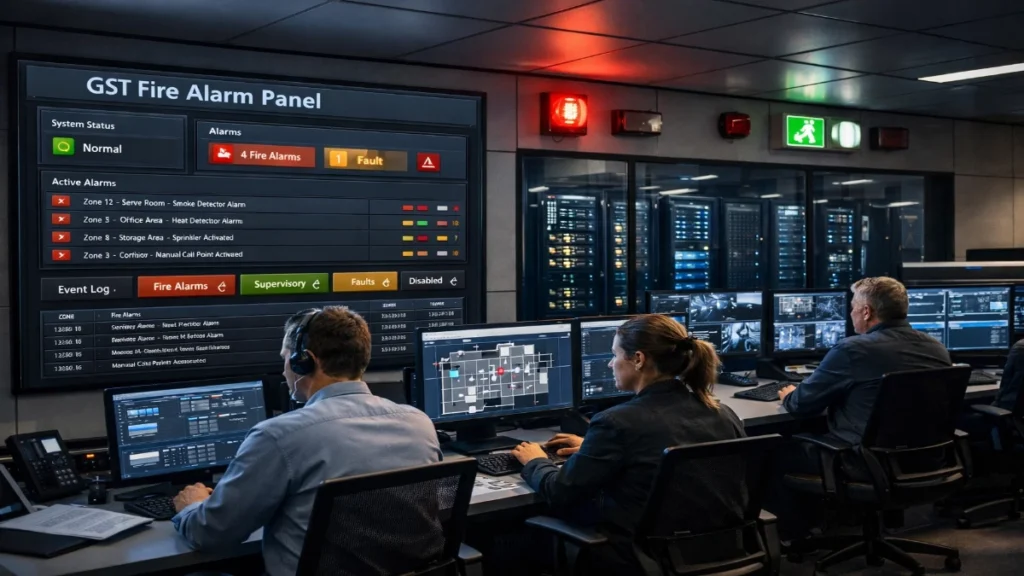
Critical facilities don’t get “off-hours.” Whether it’s a hospital ICU, a data centre, an airport terminal, a metro station, a pharmaceutical plant or a large manufacturing unit, operations run 24×7. That also means fire safety systems must stay ready every second, without excuses. In these environments, a fire alarm panel is not just a compliance requirement. It is a continuous monitoring backbone that protects people, assets, uptime and reputation. That is why most critical sites prefer advanced and reliable solutions like GST fire alarm systems because they are built for performance, stability and real-world reliability in demanding conditions. In this article, we will break down why GST fire alarm panels are preferred for 24×7 critical facilities, what problems they solve better than generic systems and what decision-makers should look for when choosing a panel. What Makes a Facility “24×7 Critical”? A critical facility is any site where downtime, evacuation errors or delayed response can cause severe consequences, such as: Examples of 24×7 critical facilities include: For these environments, a fire alarm system must deliver two things: This is where GST stands out. Why Fire Alarm Reliability Matters More in Critical Facilities In normal buildings, even a short disruption in monitoring might not feel like a disaster. But in 24×7 facilities, reliability is everything. Real risks in critical environments A panel that works smoothly under real conditions, power changes, electrical noise, complex cabling, high occupancy and around-the-clock load becomes the best long-term choice. 1) Built for Continuous Monitoring Without Performance Drops A major reason GST panels are preferred is their consistent performance for long durations. 24×7 facilities don’t “restart systems” daily. Panels operate continuously for months and years. GST fire alarm systems are designed to maintain stable operation with: This is essential when your safety depends on real-time status updates from every device every hour, every day. Result: Higher uptime, fewer interruptions, smoother operations. 2) Faster Fault Detection and Clear Maintenance Alerts In critical facilities, small issues must be identified early before they become failures. Common fault situations include: A strong panel should not only detect faults but also explain them clearly. GST panels are preferred because they provide: When your maintenance team can locate and fix issues faster, you reduce system downtime and avoid repeated false alerts. 3) Addressable Technology That Improves Accuracy and Response Most critical facilities choose an addressable fire alarm panel because it offers precise control and location identification. Why addressable matters in 24×7 environments In a hospital, data centre or metro station, you cannot afford confusion. You need accurate information like: A GST fire alarm system paired with addressable detectors helps facilities: Result: Faster action with fewer mistakes. 4) Better Handling of High Device Count in Large Facilities Critical facilities are usually large. They have: That means the system can include hundreds or thousands of detection devices and notification appliances. GST panels are preferred because they are better suited for: Generic panels may work fine for small buildings, but large 24×7 sites need systems that scale without becoming unstable. Result: Smooth operation even in large installations. 5) Smarter Event Management During Multiple Alarm Situations In real fires, alarms don’t always come one-by-one. Smoke can spread quickly, or multiple devices may activate across an area. A critical facility panel must: GST fire alarm panels are often preferred because they manage events without lag and provide a clear sequence of alarms and faults. This helps emergency teams and security control rooms: Result: Better incident control when it matters most. 6) Reduced False Alarms Through Better Device Supervision False alarms are not just annoying in 24×7 sites; they are expensive and disruptive. What false alarms cause: GST panels, when designed properly with the right devices, offer better stability for day-to-day challenges like: When paired with quality addressable detectors, the system becomes more reliable for real-world conditions. Result: Fewer false alarms and smoother operations. 7) Strong Compatibility With Facility Response Systems In critical facilities, the fire alarm panel is not standalone. It often needs to connect with: GST fire alarm panels are preferred because they support structured integration planning. This improves safety because automation can: Result: More coordinated emergency response. 8) Designed for Easier Testing, Audits and Compliance 24×7 facilities are regularly inspected. They go through: A panel must support: GST panels are preferred because they help teams maintain better documentation and system visibility, especially when audits happen frequently. Result: Easier compliance and more confidence in system readiness. 9) Improved Isolation and Redundancy Planning Critical facilities need continuity, even during a fault. One wiring issue should not affect the entire system. That is why strong designs focus on: GST panels allow better engineering planning for these scenarios, ensuring that operations remain protected and alarms remain functional even when faults occur. Result: Better reliability and reduced risk during failures. 10) Better Long-Term Value for 24×7 Facilities The panel may look like a one-time purchase. But for 24×7 facilities, the real costs happen over time. Long-term costs include: Choosing a stable and scalable GST fire alarm system often results in: Result: Better ROI over the system lifetime. Addressable vs Conventional: What’s Better for Critical Facilities? Both types have their place, but the facility type decides the best option. Addressable Fire Alarm Panel (Best for critical facilities) Recommended for: Why it works better: Conventional Fire Alarm Panel (Suitable for smaller or low-risk zones) Recommended for: Why it may not be ideal for critical 24×7 sites: Where GST Panels Fit Best in 24×7 Critical Facilities GST panels are widely preferred in environments such as: Hospitals & Healthcare Facilities Data Centres & Server Rooms Airports, Metro Stations & Public Infrastructure Industrial Plants & Warehousing Best Practices to Get Maximum Performance From GST Fire Alarm Panels Even the best system depends on correct planning and installation. For critical facilities, follow these best practices: GST Panels: The Smart Choice for Mission-Critical Fire Safety In 24×7 critical facilities, every second matters. A fire alarm system must be stable, accurate, scalable and easy to maintain. This is why
How GST Fire Alarm Panels Passed Consultant Technical Audits
In large fire safety projects, consultant technical audits decide which fire alarm systems get approved and which get rejected. Consultants evaluate systems based on international standards, reliability, scalability, documentation and real-world performance. A single technical mismatch can delay approvals, increase project costs, or force a complete redesign. Over the years, GST fire alarm panels by Gulf Security Technology have consistently passed these audits across commercial buildings, industrial plants, hospitals, airports and high-rise developments. Their success is not accidental. It results from strong engineering design, compliance with global standards and transparent technical documentation. This article explains how GST fire alarm panels meet and exceed consultant audit expectations, and why consultants often approve GST systems for complex projects. Understanding Consultant Technical Audits What Is a Fire Alarm Consultant Audit? A consultant technical audit is a structured evaluation of a fire alarm system before or during project execution. Consultants review: Only systems that pass all checkpoints receive final approval. Compliance with International Fire Safety Standards Strong Foundation with Global Certifications One of the primary reasons GST panels pass audits is clear compliance with international standards. Consultants prefer systems that reduce approval risk. GST fire alarm panels comply with: This compliance reassures consultants that the gst fire alarm system follows globally accepted safety benchmarks. Why Standards Matter to Consultants Standards ensure: GST provides certificates, test reports and scope documents, making audit verification faster and smoother. Robust Panel Architecture That Auditors Trust Advanced Processing and Memory Design Consultants examine how a panel handles data under stress conditions. GST panels use high-performance microprocessors and optimised firmware to process thousands of events without lag. This capability becomes critical in large installations using an addressable fire alarm panel, where hundreds or thousands of devices communicate simultaneously. Stable System Logic GST panels maintain: Auditors value predictable logic because it reduces false alarms and ensures a fast response. Superior Loop Design and Fault Isolation Why Loop Stability Is a Key Audit Parameter Consultants closely analyse loop behaviour. A single short circuit should never disable an entire system. GST panels excel here due to: If a loop fault occurs, unaffected sections remain operational, an essential audit requirement. Addressable vs Conventional Evaluation In projects comparing an addressable fire alarm panel with a conventional fire alarm panel, consultants often approve GST addressable systems because they offer: High Device Capacity for Complex Buildings Handling High Device Density with Ease Modern buildings require thousands of detection points. GST panels support high device counts per loop without compromising performance. This capability allows consultants to: GST panels integrate seamlessly with addressable detectors, including smoke, heat and multi-sensor devices. Reliable Power Management and Redundancy Audit Focus on Power Calculations Consultants verify whether a system can operate during mains failure. GST panels meet audit expectations with: GST provides clear battery calculation sheets, which consultants can easily validate during audits. Fault-Tolerant Power Design Even if one power module fails, the system continues to operate. This redundancy strengthens confidence during technical evaluation. Clear and Transparent Technical Documentation Documentation That Auditors Appreciate One of the most common reasons systems fail audits is poor documentation. GST avoids this problem by offering: Consultants can quickly verify compliance without requesting repeated clarifications. Compatibility with Addressable and Conventional Devices Flexible System Design Consultants often work on projects with mixed requirements. GST supports: This flexibility helps projects transition from conventional fire alarm panel setups to modern addressable systems without full replacement. Real-World Testing and Proven Performance Factory and Site Acceptance Tests GST panels undergo: Consultants review these test records to confirm real-world reliability. Proven Installations Build Trust GST fire alarm systems operate successfully in: This field history gives consultants confidence during technical audits. Network Capability for Large Projects Scalable Panel Networking GST panels support networking across multiple buildings and zones. Consultants value this because it enables: This scalability is essential for campuses, IT parks and industrial estates. Cyber and System Security Considerations Protecting Fire Alarm Integrity Modern audits include system integrity checks. GST panels include: These measures prevent unauthorised changes that could compromise safety. How GST Simplifies Consultant Approval Cycles Faster Technical Clearances Because GST systems meet audit expectations from the start, projects benefit from: This efficiency saves time for developers, contractors and consultants alike. Future-Ready Design for Evolving Fire Codes Fire safety regulations continue to evolve. GST designs its panels with firmware upgradability and modular expansion in mind. Consultants appreciate systems that remain compliant without major hardware changes. Why GST Consistently Passes Consultant Technical Audits GST fire alarm panels succeed in consultant audits because they combine engineering excellence, global compliance, robust design and transparent documentation. They address every critical audit parameter, from loop stability and power redundancy to scalability and real-world reliability. This is why GST fire alarm systems continue to earn consultant approval across diverse and demanding fire safety projects. Read Also: Multi-Site Deployment Comparison Using GST Addressable Panels Read Also: Why Engineers Choose GST-IFP4E Addressable Fire Alarm Panel for Mid-to-Large Projects
Multi-Site Deployment Comparison Using GST Addressable Panels
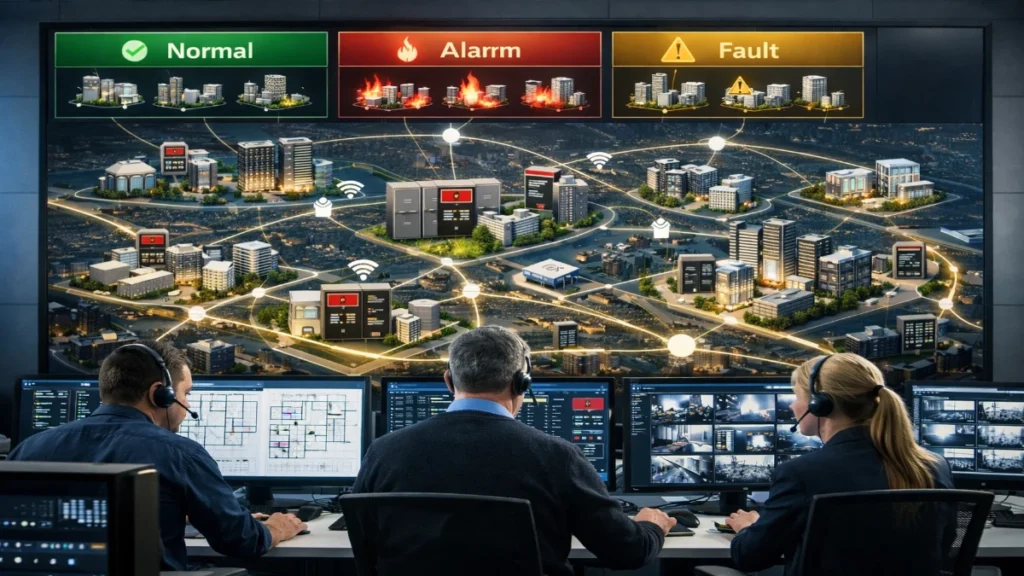
Large organisations today rarely operate from a single location. Airports, hospital chains, IT parks, universities, manufacturing groups, logistics hubs and retail chains all manage multiple sites spread across cities or regions. In such environments, fire safety cannot be treated as isolated installations. It requires consistency, scalability, centralised visibility and reliability. This is where multi-site fire alarm deployment becomes critical. Choosing the right fire alarm technology plays a decisive role in how efficiently these sites are monitored, maintained and expanded. When comparing traditional systems with modern solutions, GST addressable panels clearly stand out for multi-site deployment due to their intelligent architecture, network capability and long-term cost efficiency. This article provides a detailed comparison of multi-site deployment using GST addressable panels, explains how they outperform conventional approaches and helps decision-makers choose the right fire alarm strategy for complex, distributed projects. Understanding Multi-Site Fire Alarm Deployments A multi-site fire alarm deployment refers to the installation and management of fire detection and alarm systems across multiple buildings or geographically separated locations, often under one organisation or authority. Common Multi-Site Scenarios Each site may differ in size, occupancy and risk profile, yet they must operate under one safety standard and reporting structure. Conventional vs Addressable Systems in Multi-Site Projects Before comparing deployment performance, it is important to understand the core difference between system types. Conventional Fire Alarm Panel Approach A conventional fire alarm panel divides the building into zones. When an alarm triggers, the panel only identifies the zone, not the exact device. Challenges in multi-site deployments: Conventional systems were designed for small, standalone buildings, not for large, distributed networks. Addressable Fire Alarm Panel Approach An addressable fire alarm panel assigns a unique address to each device. The panel identifies the exact detector or module that triggers an alarm or fault. This architecture becomes extremely powerful when deployed across multiple sites. Why GST Addressable Panels Are Ideal for Multi-Site Deployment The GST fire alarm system is specifically engineered for large-scale and distributed fire safety projects. Its addressable panels offer intelligent networking, high device capacity and centralised control. 1. Centralised Monitoring Across Multiple Sites GST addressable panels can be networked to a central command station. Key benefits: Instead of managing dozens of isolated panels, facility managers gain one integrated fire safety view. 2. Scalable Architecture for Growing Organisations Multi-site projects rarely remain static. New buildings, floors and sites are added over time. GST panels support: This makes an addressable fire alarm panel far more suitable than a conventional fire alarm panel, which often requires a complete redesign during expansion. 3. Intelligent Device-Level Identification In multi-site deployments, response time is critical. GST systems identify: Using addressable detectors, the system pinpoints incidents precisely, eliminating guesswork and reducing evacuation or response delays. Deployment Comparison: GST Addressable vs Conventional Systems Installation Efficiency Across Sites Conventional Systems GST Addressable Panels This results in lower installation time and cost, especially when repeated across multiple locations. Maintenance and Fault Management Maintenance becomes a major challenge when dozens of sites are involved. With conventional detectors: With addressable detectors from GST: This drastically reduces maintenance effort, service visits and operational disruption. Standardisation Across Sites GST allows organisations to: This standardisation is almost impossible with mixed or conventional fire alarm panel installations. Network Capability: A Game Changer for Multi-Site Safety One of the strongest advantages of GST addressable panels is advanced networking. Multi-Panel Networking GST panels can communicate via: This enables: A conventional fire alarm panel lacks this level of intelligence and connectivity. Compliance and Regulatory Confidence Multi-site projects often face: The GST fire alarm system supports: Auditors can quickly verify system health across all sites, improving regulatory confidence and approval speed. Cost Comparison: Initial vs Lifecycle Cost Initial Cost Perspective At first glance, conventional systems may appear cheaper. However, in multi-site deployments: These costs add up quickly. Lifecycle Cost Advantage of GST Addressable Panels Over 10–15 years, GST systems deliver: This makes addressable fire alarm panels far more economical in the long run. False Alarm Reduction in Multi-Site Operations False alarms are expensive and disruptive, especially when repeated across sites. GST addressable panels use: Compared to conventional detectors, GST addressable detectors significantly reduce nuisance alarms, protecting business continuity and occupant trust. Centralised Data & Reporting for Management Multi-site organisations require data-driven safety management. GST panels provide: This supports strategic decision-making, something not possible with isolated conventional fire alarm panel setups. Use Case Examples Hospitals and Healthcare Chains Industrial Groups Educational Campuses Addressable vs Conventional: Final Comparison Table (Conceptual) Aspect Conventional Fire Alarm Panel GST Addressable Panels Site Scalability Limited Excellent Central Monitoring Not supported Fully supported Fault Identification Zone-based Device-level Maintenance Cost High Low Expansion Flexibility Difficult Easy Multi-Site Suitability Poor Ideal GST: The Smart Choice for Multi-Site Fire Safety Multi-site fire alarm deployment is no longer just about detection; it is about visibility, intelligence and control. When comparing solutions: In contrast, GST addressable panels deliver: For organisations managing multiple locations, choosing a GST addressable fire alarm panel is not just a technical decision; it is a strategic investment in safety, efficiency and long-term resilience. Read Also: Loop Stability, Isolation & Redundancy: GST vs Generic Panels Read Also: Power Management and Redundancy Strategies in the GST-IFP8 Panel
Loop Stability, Isolation & Redundancy: GST vs Generic Panels
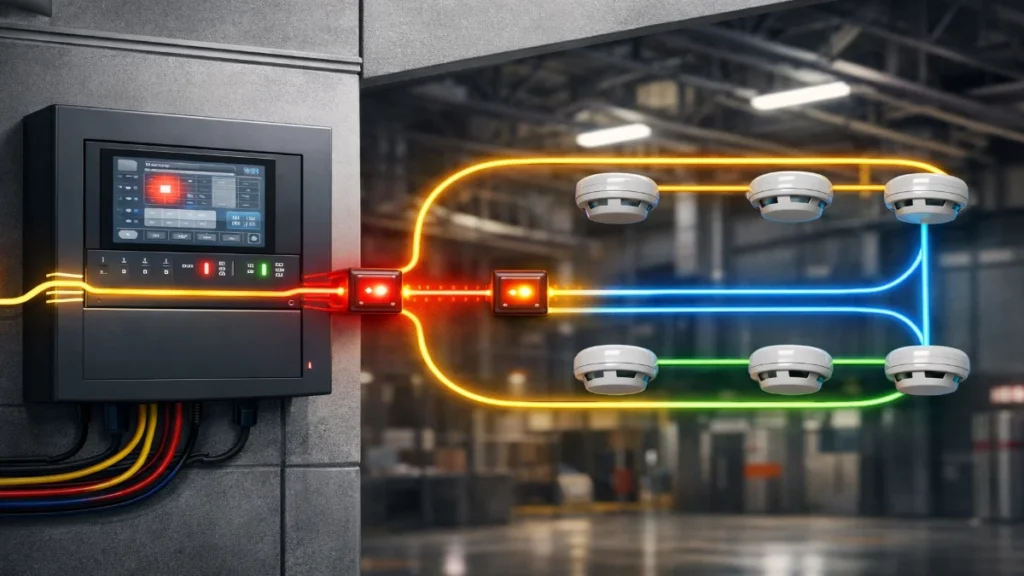
Fire alarm systems today protect far more than small buildings. Modern infrastructure includes airports, data centres, hospitals, smart commercial complexes and industrial campuses with thousands of devices connected on a single network. In such environments, loop stability, isolation and redundancy are not optional features. They define whether a fire alarm system performs reliably during emergencies or fails when it matters most. Many projects still compare GST fire alarm systems with generic addressable or conventional panels only on price. However, experienced consultants, system integrators and safety managers know that loop behaviour under fault conditions is the real differentiator. This article explains, in clear and practical terms, how GST panels outperform generic fire alarm panels when it comes to loop stability, intelligent isolation, and built-in redundancy and why these factors directly impact life safety, compliance and long-term operational cost. Understanding Fire Alarm Loops in Simple Terms Before comparing GST and generic panels, let’s first understand what a fire alarm loop is. In an addressable fire alarm panel, all field devices, such as smoke detectors, heat detectors, manual call points, and modules, connect on a single communication loop. Each device has a unique address, allowing the panel to identify exactly where an alarm or fault occurs. In contrast, a conventional fire alarm panel divides the building into zones rather than individual device addresses. Why Loops Are Critical The loop is the backbone of an addressable system. If the loop becomes unstable or fails: That is why loop design quality separates premium systems like GST from generic panels. What Is Loop Stability and Why Does It Matter Loop stability refers to the ability of a fire alarm loop to maintain reliable communication with all connected devices, even under challenging conditions such as: Common Problems with Generic Panels Generic fire alarm panels often struggle with: These issues result in frequent nuisance faults and increased maintenance calls. How GST Panels Ensure Superior Loop Stability GST addressable panels are designed with advanced loop communication algorithms and robust power management, ensuring stable performance even in complex installations. Key GST loop stability features include: As a result, a GST addressable fire alarm panel maintains consistent communication, even when loop conditions are not ideal. Isolation: Containing Faults Instead of Spreading Failure Isolation is one of the most misunderstood yet critical aspects of fire alarm design. What Is Loop Isolation? Loop isolation means the ability of a system to automatically isolate a faulty section of the loop, such as a short circuit, without disabling the entire loop. Without isolation: Isolation Capabilities: GST vs Generic Panels Generic Panels: Limited or Optional Isolation In many generic systems: In budget installations, isolators are often skipped entirely to reduce upfront cost, creating a major safety risk. GST Panels: Built-In Intelligent Isolation GST panels take a safety-first approach by integrating isolation intelligence directly into the system design. GST advantages include: Even during a wiring short, the GST fire alarm system ensures that the rest of the loop remains active and responsive. Redundancy: Designing for Fail-Safe Operation In fire safety, redundancy means no single point of failure. What Redundancy Means in Fire Alarm Systems Redundancy includes: Generic panels often meet only the minimum code requirements, while premium systems like GST exceed them. Power Redundancy: A Key GST Advantage Generic Panels Most generic panels offer: During extended power failures, system performance may degrade. GST Panels GST panels are engineered for continuous operation during adverse conditions. Key redundancy features include: This ensures that even during prolonged outages, the system remains reliable and compliant. Loop Redundancy and Network Survivability In large installations, loop redundancy becomes critical. Generic Panel Limitations Generic systems often lack: A single break can isolate large building sections. GST Loop Redundancy Strengths GST systems support: These features make GST ideal for airports, hospitals, IT parks and industrial campuses. Device-Level Stability: Addressable vs Conventional Conventional Detectors: Limited Feedback In a conventional fire alarm panel, conventional detectors: A single fault can disable an entire zone. GST Addressable Detectors: Intelligent & Stable GST addressable detectors offer: This intelligent device-level stability dramatically improves overall system reliability. Installation Flexibility Without Compromising Stability Generic Panels: Strict Limitations Installers often face: GST Panels: Installer-Friendly Design GST systems allow: This flexibility reduces installation errors and long-term maintenance costs. Compliance, Standards & Long-Term Reliability Fire alarm systems must comply with international and regional standards. Generic Panels Some generic systems: GST Panels GST fire alarm systems: This makes GST a preferred choice for consultants, government projects and large EPC contracts. Real-World Scenario Comparison Scenario: Short Circuit on a Floor Loop Generic Panel Result GST Panel Result This single difference can save lives. Total Cost of Ownership: The Hidden Advantage of GST While GST systems may have a higher initial cost compared to generic panels, they offer: Over 10–15 years, GST delivers a significantly lower total cost of ownership. Final Verdict: GST vs Generic Panels When it comes to loop stability, isolation and redundancy, the difference between GST and generic fire alarm panels is clear. Generic panels may meet basic requirements, but GST systems deliver: For projects where safety, uptime, and performance truly matter, GST fire alarm systems are not just a better choice; they are the professional standard. Read Also: How GST Panels Handle High Device Density Better Than Conventional Designs Read Also: Why Engineers Choose GST-IFP4E Addressable Fire Alarm Panel for Mid-to-Large Projects
How GST Panels Handle High Device Density Better Than Conventional Designs
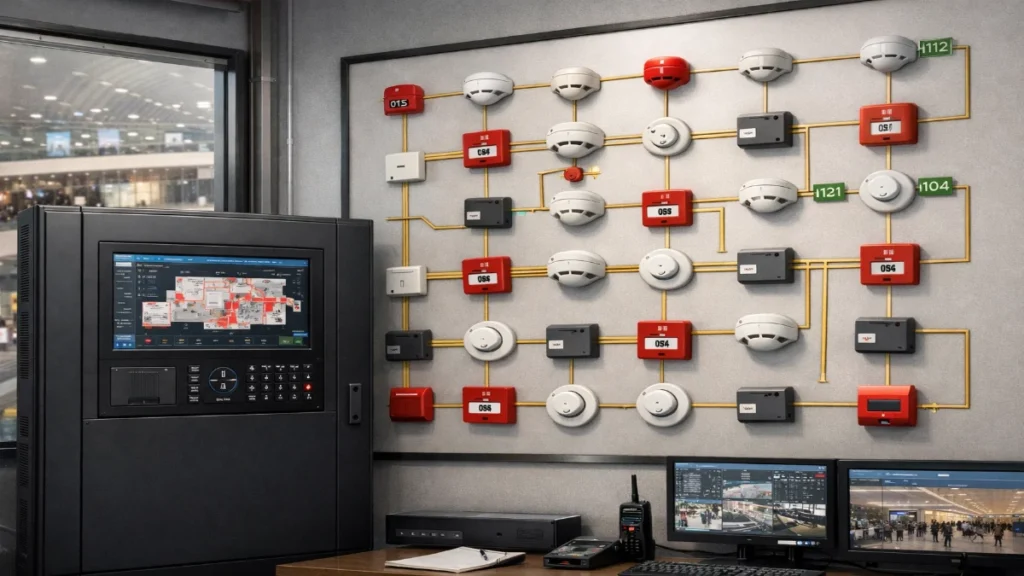
In any fire alarm system, the design and capability of the control panel play a crucial role in reliability, scalability and performance. When environments require high device connectivity, such as large commercial buildings, airports, data centres or industrial facilities, choosing the right panel becomes critical. In this context, GST panels stand out for their ability to handle high device density more efficiently and intelligently than conventional fire alarm panels. This article explains how GST panels achieve this, why they outperform traditional systems and how their advanced architecture ensures faster detection, better monitoring and easier management in complex installations. We also compare GST panels with a conventional fire alarm panel and highlight key features like addressable fire alarm panel technology and addressable detectors. What Is Device Density in Fire Alarm Systems? Device density refers to the number of fire alarm devices, such as detectors, notification appliances, modules and sounders, that a control panel can support within a given area or loop. Higher device density means a panel can manage more devices on its network without losing performance or reliability. In modern buildings, especially those with large areas or complex safety needs, high device density is essential. Traditional systems often struggle when too many devices are connected. That’s where GST’s advanced design delivers significant advantages. Conventional Fire Alarm Panel vs. GST Panels: Basic Differences Before we dive into how GST panels handle high device density, let’s briefly understand how they differ from conventional fire alarm panel designs: Feature Conventional Panel GST Panel Device Identification Limited zone-based detection Individual device ID Scalability Lower High Data Accuracy Average High False Alarm Control Basic Advanced Device Load per Loop Limited High Monitoring Capabilities Zone-level Device-level (Addressable) Conventional fire alarm panels divide an installation into zones. Each zone monitors multiple devices collectively. When an alarm triggers, the panel identifies the zone but not the specific device. This works well in small installations. However, as the device count increases, this method becomes inefficient. In contrast, GST panels (especially those with addressable fire alarm panel technology) assign a unique ID to every device. This enables precise monitoring and control, which is vital for high-density environments. Addressable Technology: The Heart of High Device Density What Are Addressable Systems? In an addressable system, each detector and module is uniquely identifiable. Instead of reporting a collective zone alarm, an addressable detector sends specific information about its status, such as location and fault type, to the panel. This capability transforms fire alarm systems from basic warning mechanisms into intelligent safety networks. How Addressable Detectors Improve Device Density GST’s Loop Architecture: Designed for Scalability GST panels use an advanced loop design that supports more devices per loop compared to conventional designs. This design offers three key benefits: 1. Higher Device Capacity GST loops can handle more addressable detectors and modules without degrading performance. This allows large buildings to be protected with fewer loops, reducing installation costs and complexity. 2. Faster Communication GST employs efficient communication protocols that ensure rapid data exchange between the panel and connected devices. Even during heavy traffic when many devices send signals simultaneously, the panel processes all data quickly. 3. Flexibility in Expansion As buildings grow or requirements change, GST panels can be expanded easily. Adding new devices does not require a major system redesign. This adaptability is crucial in modern commercial and industrial environments. Intelligent Algorithms for High Device Loads GST panels use intelligent algorithms to manage high device density. These algorithms support: Smart Polling Instead of constantly querying every device, GST panels use optimised polling schedules to check device status effectively. This reduces network congestion and ensures quick detection without unnecessary communication. Fault Isolation When devices malfunction or communication errors occur, GST panels isolate the problem without affecting the entire system. This ensures uninterrupted protection even when handling many devices. Event Prioritization In high-density systems, multiple events can occur simultaneously. GST panels prioritise life safety alarms over maintenance and supervisory signals. This helps emergency responders act faster. Better False Alarm Control High device density can sometimes increase false alarms if the panel can’t process signals intelligently. GST panels reduce false alarms using: Advanced Signal Analysis Each addressable detector sends detailed information such as heat levels, smoke density and environmental data. GST panels analyse these signals against defined thresholds to reduce unnecessary alarms. Drift Compensation Over time, detector sensitivity can change due to dust, humidity, or ageing. GST panels use drift compensation to adjust sensitivity dynamically, ensuring accurate detection and lower false alarm rates. Multi-Parameter Evaluation GST detectors monitor more than one parameter (like heat + smoke). This multi-parameter approach helps distinguish real threats from harmless environmental changes. Enhanced Diagnostics and Monitoring Handling many devices increases the importance of diagnostic visibility. GST panels provide powerful monitoring tools: Real-Time Device Status Each device reports its status continuously. The panel displays real-time health information, including device faults, communication status and maintenance needs. Historical Event Logs GST panels record events with timestamps. This historical data helps technicians analyse trends, troubleshoot issues and improve system reliability. Remote Access and Reporting Many GST systems support network connectivity. Authorised personnel can view system status, generate reports and perform remote diagnostics, making maintenance easier in high-device environments. Simplified Installation and Maintenance When working with high device density, installation complexity can become a challenge. GST panels simplify this through: Auto-Addressing Some GST panels support auto-addressing, reducing manual configuration time. This is especially useful when hundreds of devices must be configured. Modular Design GST panels often use modular architecture. Individual modules can be replaced or added without affecting the entire system. Clear Maintenance Alerts Instead of vague zone warnings, GST panels provide precise alerts like “Device 114 – Low Sensitivity” or “Module 25 – Communication Fault.” This makes repairs faster and reduces downtime. Scalability for Modern Building Needs Today’s buildings are dynamic. They evolve with expansions, repurposing of areas and changing safety regulations. GST panels support scalability through: Flexible Loop Expansion More loops can be added without replacing the entire panel. This makes GST systems future-proof.