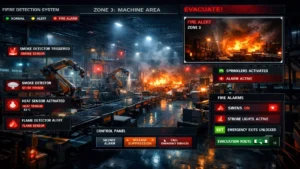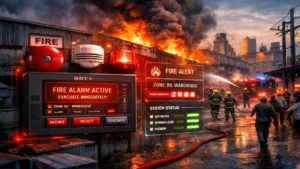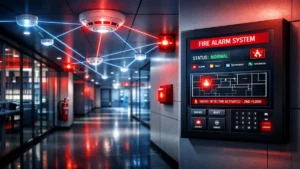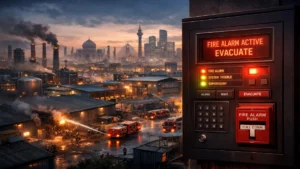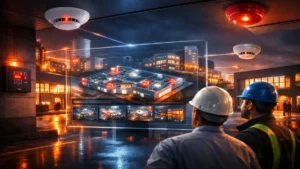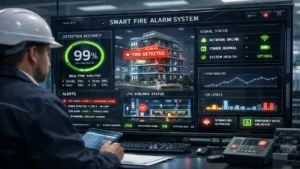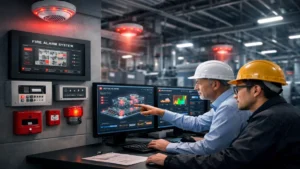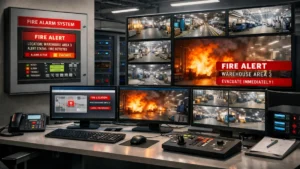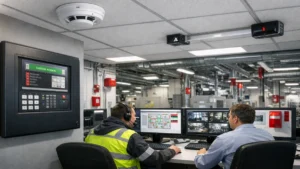
India’s Tier-2 industrial cities, such as Surat, Indore, Coimbatore, Nagpur and Lucknow, are rapidly transforming into economic powerhouses. With industrial expansion, logistics hubs, MSME clusters and manufacturing zones growing at an unprecedented pace, fire safety infrastructure has become a critical yet often overlooked necessity.
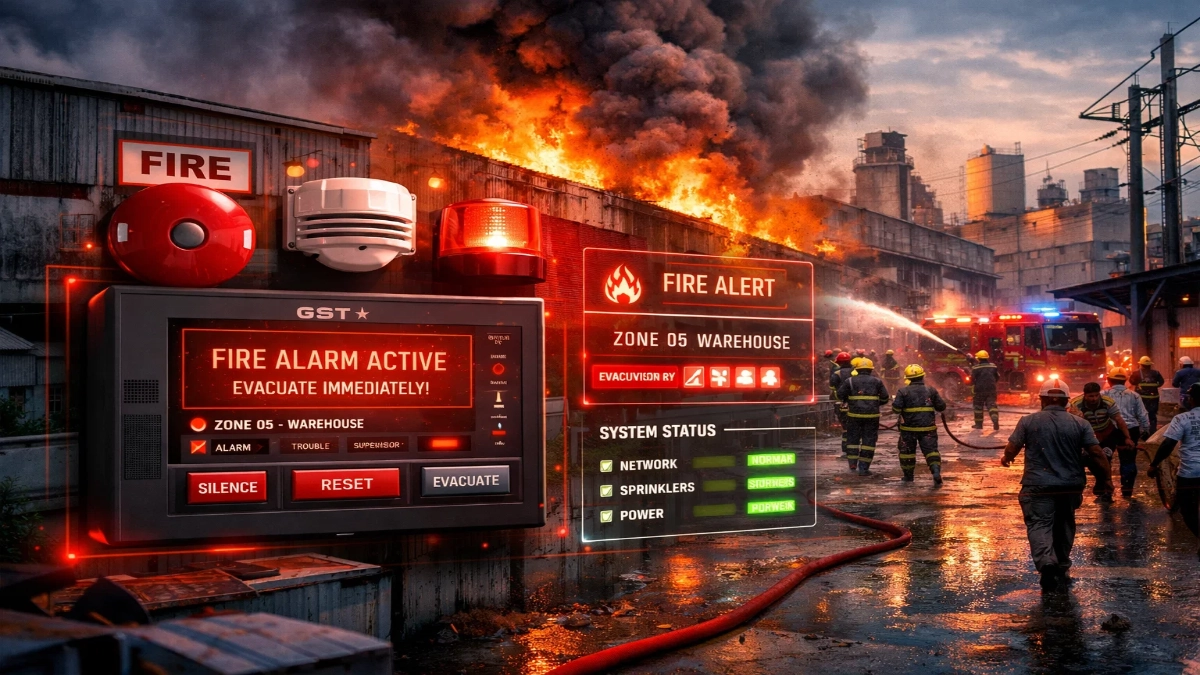
However, despite increasing industrial density, fire safety preparedness in these cities is still evolving. The gap between development and safety infrastructure is creating significant risks for industries, workers and surrounding communities.
This article explores the key challenges in fire safety infrastructure in India’s Tier-2 industrial cities, supported by real-world insights, data and actionable solutions, while also highlighting the importance of adopting modern systems like the GST fire alarm system.
Understanding the Fire Risk Landscape in India
Fire incidents in India remain alarmingly high. According to national data:
- Over 7,500 fire accidents were reported in 2022, leading to 7,435 deaths
- Around 35 people die daily due to fires in India
- Electrical faults are responsible for a majority of fire incidents
In industrial environments, risks are even higher due to flammable materials, chemicals and heavy machinery. Tier-2 cities face compounded challenges due to infrastructure limitations and governance gaps.
1. Rapid Industrial Growth Without Fire Safety Planning
Tier-2 cities are expanding faster than their safety systems.
Key Issues:
- Industrial clusters are developed without an integrated fire safety design
- Lack of zoning regulations for hazardous industries
- Overcrowded industrial layouts
As highlighted in recent developments, cities like Indore and Chandigarh are conducting emergency inspections after repeated fire incidents, indicating reactive rather than proactive planning.
Impact:
- Delayed emergency response
- High casualty and asset loss risk
- Fire spread due to the proximity of units
Solution: Industries must integrate fire safety during the design phase using systems like:
- Addressable fire alarm panel
- Addressable detectors
2. Weak Enforcement of Fire Safety Regulations
India has strong frameworks like the National Building Code (NBC) 2016, but enforcement remains inconsistent.
Challenges:
- Fire safety laws vary across states
- Inspections are irregular or superficial
- Corruption and lack of accountability
Many industrial units operate without proper fire NOCs or renewals. In some regions, hundreds of units function without compliance.
Example: Reports show widespread non-compliance in industrial areas like Nagpur, where enforcement remains weak
Impact:
- Unsafe working environments
- Increased risk of industrial disasters
- Legal liabilities for businesses
Solution: Partner with a reliable GST fire alarm system supplier in India to ensure compliance-ready systems and documentation.
3. Lack of Fire Safety Infrastructure and Resources
One of the most critical issues is inadequate fire infrastructure.
Key Gaps:
- Shortage of fire stations and trained personnel
- Insufficient water supply systems
- Lack of modern firefighting equipment
India faces a shortage of thousands of fire stations and over 5 lakh personnel
In industrial outskirts, the situation is worse, as fire trucks often travel long distances for water.
Example: A Nagpur industrial fire exposed the absence of basic water infrastructure, delaying response
Impact:
- Increased fire damage
- Delayed containment
- Higher insurance losses
Solution: Install integrated systems:
- Conventional fire alarm panel
- Conventional detectors
- Automated suppression systems
4. Poor Awareness and Training Among Stakeholders
Fire safety is not just about equipment; it’s about preparedness.
Issues:
- Workers are not trained in emergency response
- Fire drills are rarely conducted
- Management underestimates fire risks
Many industries lack:
- Evacuation plans
- Fire response teams
- Safety SOPs
As highlighted, awareness levels in Tier-2 cities are significantly lower compared to metros
Impact:
- Panic during emergencies
- Increased fatalities
- Ineffective use of safety systems
Solution:
- Conduct regular fire drills
- Train staff on system usage
- Use smart systems like the GST fire alarm system for real-time alerts
5. Outdated Electrical and Industrial Infrastructure
Electrical faults are one of the leading causes of fire incidents in India.
Common Problems:
- Overloaded circuits
- Old wiring systems
- Poor maintenance
Recent data shows that 85% of fire incidents in some regions are due to electrical issues
Impact:
- Sudden fire outbreaks
- Difficulty in early detection
- Equipment damage
Solution:
- Deploy addressable detectors for precise fault detection
- Upgrade electrical systems regularly
6. Unsafe Storage of Hazardous Materials
Industrial fires are often intensified due to improper storage of flammable materials.
Risks:
- Chemical storage without safety protocols
- Lack of ventilation
- No fire-resistant infrastructure
Industrial fires involving oils, gases, or chemicals spread rapidly and are harder to control.
Example: A recent industrial fire in Kochi highlighted the lack of maintenance and safety systems
Impact:
- Explosions
- Environmental damage
- Worker fatalities
Solution:
- Use specialised fire detection systems
- Install zone-based monitoring via an addressable fire alarm panel
7. Urban Planning and Accessibility Issues
Tier-2 cities often suffer from unplanned industrial growth.
Problems:
- Narrow roads in industrial areas
- Encroachments blocking fire access
- Mixed-use buildings without safety upgrades
These issues delay fire brigade response and complicate rescue operations.
Impact:
- Increased damage spread
- Reduced rescue efficiency
Solution:
- Smart city planning with fire access routes
- Mandatory compliance audits
8. Cost Sensitivity and Budget Constraints
Many MSMEs in Tier-2 cities avoid investing in fire safety due to cost concerns.
Reality:
- Fire safety is seen as an expense, not an investment
- Preference for low-cost, low-quality systems
Impact:
- Substandard installations
- System failures during emergencies
Solution:
- Choose scalable systems like:
- GST fire alarm system
- Hybrid addressable + conventional systems
These offer long-term cost efficiency and reliability.
Role of Advanced Fire Alarm Systems in Solving These Challenges
Modern fire detection technology is key to bridging the infrastructure gap.
Why Choose Advanced Systems?
Addressable Systems
- Pinpoint fire location
- Faster response
- Ideal for large industrial setups
Conventional Systems
- Cost-effective
- Suitable for small industries
GST Fire Alarm Systems (Recommended)
- Reliable and scalable
- Advanced detection accuracy
- Ideal for Indian industrial environments
Working with a trusted GST fire alarm system supplier in India ensures:
- Compliance with regulations
- Proper system design
- After-sales support
Strategic Recommendations for Tier-2 Industrial Cities
To overcome these challenges, a multi-level approach is required:
Government Level:
- Strengthen the enforcement of fire laws
- Increase funding for fire departments
- Implement mandatory fire audits
Industry Level:
- Invest in certified systems
- Conduct regular maintenance
- Train employees
Technology Level:
- Adopt smart detection systems
- Use IoT-enabled fire monitoring
- Integrate centralised alarm systems
India’s Tier-2 industrial cities are at a critical turning point. While they continue to drive economic growth, their fire safety infrastructure must evolve simultaneously.
The challenges, ranging from weak enforcement and lack of infrastructure to low awareness and outdated systems, are significant but solvable.
By adopting modern solutions like:
- Addressable fire alarm panel
- Conventional fire alarm panel
- GST fire alarm system
- Addressable detectors
- Conventional detectors
Industries can significantly reduce risks, improve compliance and protect lives and assets.
Fire safety is no longer optional; it is a strategic necessity for sustainable industrial growth.
Read Also: Network Communication Protocols in Modern Fire Alarm Systems
Read Also: How Industrial Growth in Tier-1 Cities Is Increasing Fire Safety Demand