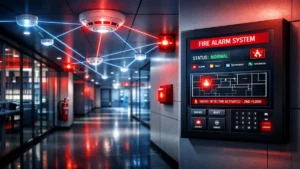
Fire safety has evolved far beyond simple smoke detectors and sirens. Today’s buildings rely on fully integrated ELV (Extra Low Voltage) systems where multiple technologies communicate in real time. CCTV watches for threats. Access control manages entry. PA systems guide evacuation. BMS automates building responses.
But here’s the truth, many facilities miss:
👉 None of these systems can react effectively without one central decision-maker.
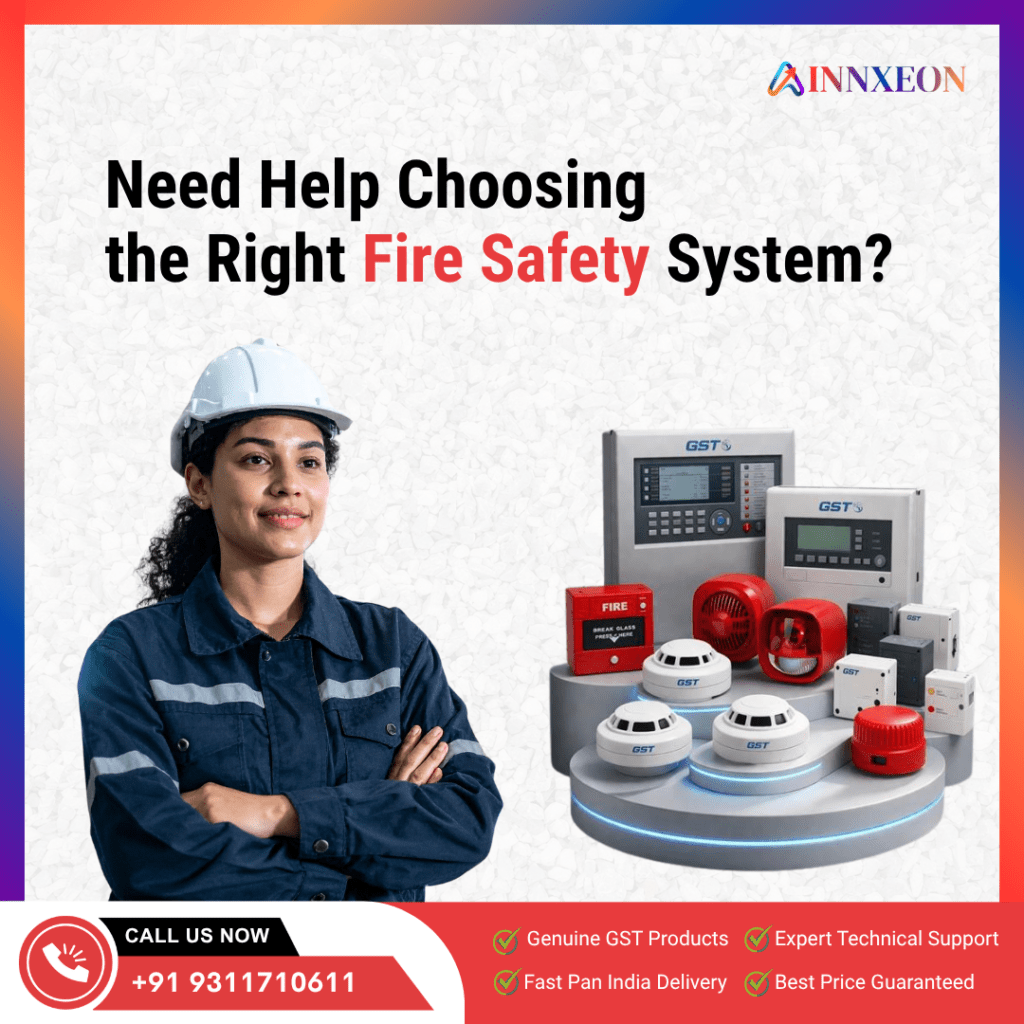
That decision-maker is the Fire Alarm Control Panel (FACP).
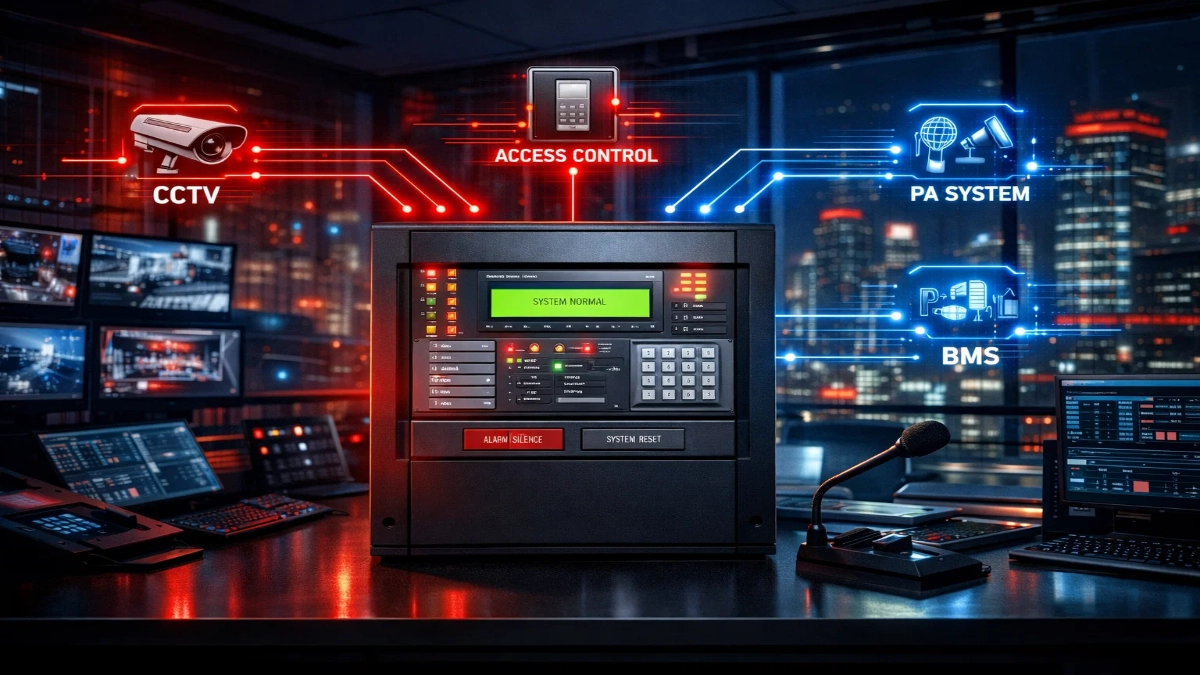
Think of it as the brain of your ELV ecosystem. It collects data, analyses risk, triggers alerts and commands other systems during emergencies.
In this guide, you’ll learn:
- What a fire alarm control panel does
- Why it’s the core of ELV integration
- How addressable and conventional panels differ
- Best practices for smarter deployment
- Why systems powered by Gulf Security Technology (GST) deliver reliable performance
Let’s break it down step by step.
What Is a Fire Alarm Control Panel?
A Fire Alarm Control Panel (FACP) is the central unit that:
- Receives signals from detectors and devices
- Processes fire or fault conditions
- Activates alarms and outputs
- Communicates with other building systems
Without it, detectors are just sensors.
With it, they become intelligent responders.
In simple words:
If detectors are the eyes, the panel is the brain.
Why the Panel Is the Brain of ELV Systems
Modern ELV infrastructure connects:
- Fire alarms
- CCTV
- Access control
- PA/VA systems
- Building Management Systems (BMS)
- Elevators
- HVAC
During a fire event, everything must respond together, not separately.
Example of coordinated action:
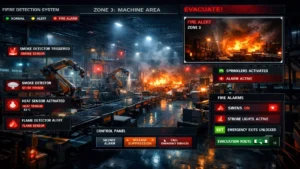
When smoke is detected:
- Panel confirms alarm
- Sirens activate
- Emergency lighting turns on
- CCTV records the zone
- Access doors unlock
- Elevators return to ground
- HVAC shuts down to stop smoke spread
- Control room receives alerts
Only a smart fire alarm control panel can orchestrate this chain reaction.
Types of Fire Alarm Panels
Understanding panel types helps you choose the right solution.
🔹 Addressable Fire Alarm Panel
An addressable fire alarm panel assigns a unique ID to every device.
Benefits:
- Pinpoints the exact fire location
- Faster troubleshooting
- Fewer false alarms
- Scalable for large buildings
- Advanced diagnostics
Best for:
- Hospitals
- IT parks
- Factories
- Malls
- Data centers
These panels are ideal for complex ELV integration.
🔹 Conventional Fire Alarm Panel
A conventional fire alarm panel divides the building into zones.
Benefits:
- Cost-effective
- Easy installation
- Simple design
- Reliable for small properties
Limitations:
- Shows only zone, not device
- Limited intelligence
- Less scalable
Best for:
- Small offices
- Shops
- Warehouses
- Schools
Key Components of a Fire Alarm System
Let’s understand what connects to the panel:
Detectors
- Addressable detectors (smart, precise location)
- Conventional detectors (zone-based detection)
- Smoke
- Heat
- Multi-criteria
Input Devices
- Manual call points
- Beam detectors
- Gas detectors
Output Devices
- Sounders
- Strobes
- Speakers
- Relays
Integration Interfaces
- BMS
- CCTV
- Access control
- Elevator control
All signals flow through the panel first.
How Panels Enable ELV Integration
Here’s where the magic happens.
1. CCTV Integration
- Records fire zone footage automatically
- Sends live feed to the control room
- Helps verify alarms
2. Access Control
- Unlocks exit doors
- Prevents unauthorised re-entry
- Supports safe evacuation
3. Public Address System
- Sends voice evacuation messages
- Guides occupants
4. BMS/HVAC
- Stops smoke spread
- Controls dampers
- Shuts ventilation
5. Elevators
- Moves cars to safe floors
- Prevents usage during fire
Without integration, each system works independently, causing confusion and delays.
Why Intelligent Panels Matter Today
Buildings are getting:
- Larger
- Smarter
- More crowded
- More regulated
Traditional systems struggle.
Modern intelligent panels provide:
- Real-time monitoring
- Event logs
- Remote access
- Networked architecture
- Cloud connectivity
- Faster diagnostics
This is where GST fire alarm system technology stands out.
Why Choose GST-Based Fire Alarm Panels?
When selecting a panel, reliability is everything.
Systems from Gulf Security Technology (GST) are widely adopted because they offer:
Key advantages:
- Stable communication loops
- High device capacity
- Intelligent programming
- Easy maintenance
- Strong compatibility with ELV systems
- Long-term durability
- Cost-effective ownership
Suitable for:
- Commercial buildings
- Industrial plants
- Government facilities
- Educational campuses
Their solutions support both:
- Addressable fire alarm panel setups
- Conventional fire alarm panel installations
So you can scale as needed.
Practical Use Case: How a Smart Panel Saves Time
Let’s imagine a mall fire scenario:
Conventional setup:
- Zone alarm triggers
- Staff manually checks the location
- Delay in evacuation
Addressable + GST system:
- Exact detector identified
- CCTV auto-focus
- PA announces evacuation
- Doors unlock
- HVAC stops
Time saved: minutes that save lives
Best Practices for Deploying Fire Alarm Panels
To maximise performance:
1. Choose addressable for medium/large projects
It offers precision and scalability.
2. Integrate early in design
Plan ELV coordination at the design stage.
3. Use certified devices only
Ensures reliability.
4. Provide redundancy
Battery backup + network loops.
5. Train operators
Human error causes most failures.
6. Regular testing
Monthly inspections and yearly audits.
Future Trends in Fire Alarm Control Panels
The next generation includes:
- Cloud dashboards
- IoT devices
- AI analytics
- Predictive maintenance
- Mobile alerts
- Cyber-secure networking
Panels are no longer just alarms.
They are smart safety hubs.
Note: If ELV systems are the nervous system of a building, then the Fire Alarm Control Panel is the brain.
It:
- Detects
- Decides
- Communicates
- Activates
- Protects
Choosing the right panel, especially intelligent platforms like GST fire alarm system solutions, ensures:
- Faster response
- Safer evacuation
- Better compliance
- Lower downtime
- Long-term reliability
So when planning your next project, don’t treat the panel as just another device.
Treat it as the command centre of safety.
Because when seconds matter, intelligence saves lives.
Read Also: Choosing a PAN-India Fire Alarm Supplier: What Consultants Should Look For
Read Also: What Makes GST Fire Alarm Systems Commercially Viable for Large Projects