Fire safety systems are long-term investments. When organizations choose a fire alarm panel, they usually focus on the upfront cost, how much the panel, detectors or accessories cost today. But fire protection is not a one-time expense. It evolves with your building, regulations, occupancy load, safety goals and future expansions. This is exactly where modular-architecture fire panels stand out.
In the last decade, more building owners, consultants and facility managers have started shifting from fixed, rigid fire alarm panels to modular designs offered by advanced addressable systems.
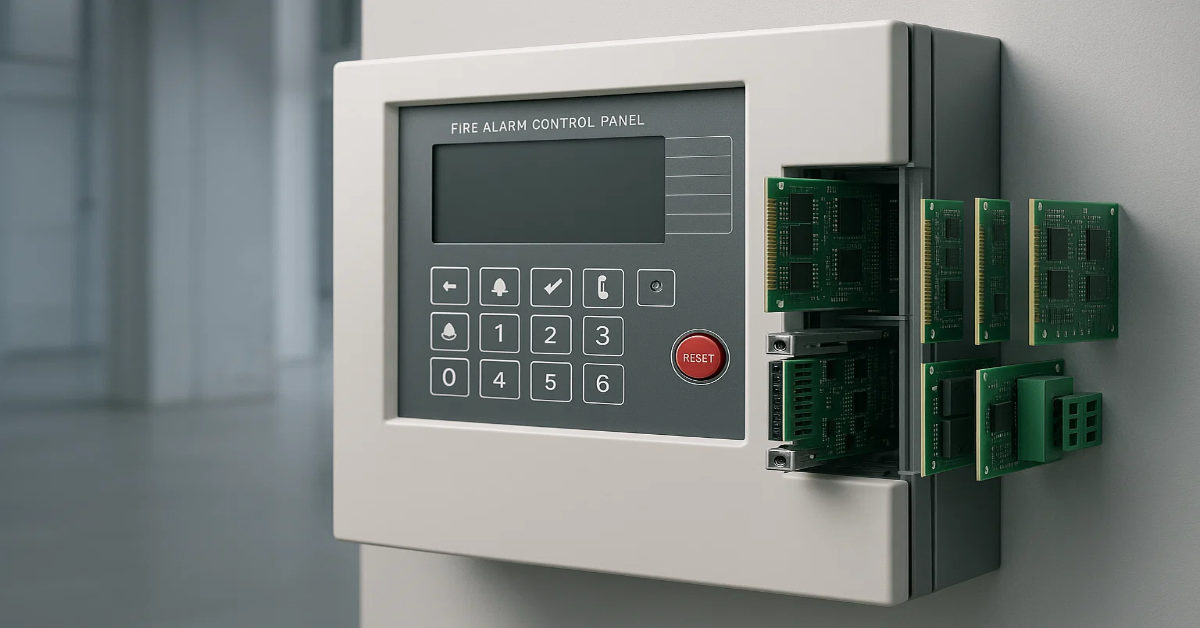
Brands known for scalable architectures, such as those used widely in commercial, industrial and infrastructure projects have made modularity a trusted foundation for long-term fire safety planning.
But what does modular architecture actually mean? And how does it translate into real, measurable cost savings?
This article dives deep into how modular fire panels work, the financial advantages they create and why they outperform conventional “fixed-capacity” panels over the lifespan of a building.
What Is Modular Architecture in Fire Panels?
A fire alarm panel with modular architecture is designed like a building block system. Instead of offering a fixed number of loops, zones or interfaces, it allows users to add, remove or replace modules based on current or future requirements.
Examples of modules include:
- Loop cards
- Power supply modules
- Communication/network modules
- Input–output cards
- Repeater modules
- Integration modules for BMS/ACS/PA
- Networking or fiber expansion kits
This architecture lets you scale your fire detection system without replacing the panel, wiring, or major components.
Brands with advanced addressable systems, like the ones used commonly in IT parks, tech campuses, hospitals, airports, manufacturing units and commercial complexes, typically follow this modular approach, giving building owners a more flexible, economical path forward.
Why Modular Fire Panels Save Money Over Time
Below are the most important ways modularity reduces long-term costs, simplifies operations and increases system lifespan.
1. Lower Installation Cost Because You Don’t Buy Everything Upfront
Traditional fire panels force you to purchase full capacity on day one, even if you don’t need it.
Modular panels work differently.
You only install the modules you need today, such as:
- 1 loop instead of 4
- A single communication interface instead of 3
- Basic I/O rather than an advanced networking kit
As your building grows, you simply add more modules without replacing the entire panel. This avoids unnecessary upfront expenses and reduces procurement costs by 30-40% during the initial installation.
This is why modern addressable systems with modular design are preferred for campuses and multi-phase projects.
2. Easy, Affordable Expansion Without System Replacement
When your fire protection system grows, expansion becomes a major cost factor.
Conventional panels often require:
- New control panels
- Additional cabinets
- Redesigning wiring
- System rewiring
- Large downtime for reinstallation
Modular panels eliminate these expenses.
You can scale vertically (more detectors, more loops) or horizontally (new buildings, new floors, new areas) by simply plugging in new modules.
This results in:
- No need for full rewiring
- No disruption to existing operations
- No major reconfiguration costs
- Minimal additional labour
For organizations with future growth plans, IT hubs, universities, manufacturing sites, hotels, hospitals, this scalability becomes a vital long-term cost saver.
3. Reduced Maintenance Costs Due to Independent Replaceable Modules
Maintenance costs are a significant part of fire system ownership.
With a modular system:
- If a loop card fails, replace only that card
- If a communication module malfunctions, swap that module
- If a PSU fails, replace the PSU module, not the panel
This dramatically reduces service charges, downtime and component replacement cost.
A modular addressable panel allows technicians to isolate the fault to a single card. This means:
- No large-scale panel replacement
- Faster repairs
- Cheaper spare parts
- Lower annual maintenance contract (AMC) expenses
For buildings with continuous operations, like data centres, airports, industrial facilities, this reliability reduces risk and cost.
4. Longer System Lifespan (10–20 Years With Module Upgrades)
One of the biggest financial benefits of modular fire panels is their extended lifespan.
In fixed systems, technology upgrades often require replacing the entire panel.
In modular systems, you only update the modules.
Examples:
- Updating communication modules for new protocols
- Upgrading loop cards for new intelligent detectors
- Adding networking modules
- Replacing outdated power modules with energy-efficient ones
This ensures that your fire alarm system stays technologically current for years.
Building owners often extend the life of their fire panel by an additional 8-10 years simply by upgrading modules instead of replacing the whole system.
5. Reduced Downtime Means Lower Operational Loss
Every minute of downtime in fire detection increases operational risks, especially in high-value facilities like:
- Data centres
- Hospitals
- Manufacturing lines
- Airports
- 24×7 corporate buildings
Modular panels reduce downtime because:
- Faults are isolated to small modules
- Modules can be replaced in minutes
- Expansion does not require system shutdown
- Components can be added in a live environment (depending on the panel design)
When downtime becomes costly, modular architecture offers a clear operational advantage.
6. Better Integration with Modern Building Systems (No Extra Panels Required)
Modern infrastructure requires communication between:
- Fire Systems
- BMS (Building Management System)
- HVAC Controls
- Access Control
- Sprinkler & Suppression
- PA/EVAC systems
Modular fire panels allow easy integration using plug-in interface modules.
Instead of purchasing new devices or integration panels, you simply add:
- RS485 modules
- Ethernet communication cards
- Modbus/BACnet modules
- Fiber networking kits
This eliminates expensive external integration hardware.
Brands known for intelligent addressable technologies, especially those used frequently in airports, tech parks and industrial zones, have strong modular integration capabilities, giving them an edge in complex project environments.
7. Easier Compliance With Future Regulations (Lower Re-Certification Cost)
Fire safety regulations evolve every few years. This usually means more:
- Detectors
- Interfaces
- Monitoring points
- Safety interlocks
Modular panels make compliance easier because you only need to install the required modules, not overhaul the system.
This drastically lowers the cost of:
- Re-certification
- Expansion due to new safety laws
- Safety audits
- Third-party inspection costs
- System upgrades
Buildings with modular architecture panels stay compliant longer and at lower cost.
8. Less Hardware Clutter and Reduced Cabinet Costs
Fixed fire panels often require:
- Multiple auxiliary cabinets
- Panel extensions
- Additional wiring trays
- Larger panel footprints
A modular panel fits most expansion modules within the same cabinet.
This saves money on:
- Extra enclosures
- Additional wiring
- Mounting infrastructure
- Space utilization in fire control rooms
Especially in commercial complexes or industrial plants, saving wall space and cabinet cost directly reduces project cost.
9. Highly Reliable System Architecture (Lower Fault-Related Expenses)
Modular panels use isolated modules, meaning:
- A fault in one module does not crash the system
- Faults are localized
- Networked architecture remains stable
- Recovery is faster and cheaper
This reliability prevents costly issues like:
- False alarms
- Unwanted evacuations
- System shutdowns
- Expensive emergency servicing
Reliability directly translates into lower financial losses and better safety outcomes.
10. Lower Training and Manpower Costs
Modular panels are easier to:
- Understand
- Operate
- Troubleshoot
- Maintain
Technicians can handle modules individually, reducing skill requirements and training time. This also cuts down on:
- Vendor dependency
- Specialized engineer visits
- Paid technical support
This is particularly beneficial for organizations with multi-building campuses.
How GST’s Modular Addressable Architecture Fits Into This Vision
GST systems are widely used in global commercial, industrial and infrastructure projects. One of the reasons is their strong modular architecture, which offers:
- Add-on loop modules
- Networking modules for campus-wide integration
- Dedicated power modules
- Flexible interface cards for BMS
- Scalable architecture for large facilities
This modular design helps building owners upgrade, expand and maintain systems more economically over long periods, making them a practical choice for customers who prioritise cost-efficiency and long-term performance.
Real-World Scenarios Where Modular Panels Save Money
Scenario 1: A Growing IT Park
An IT park starts with 2 buildings and later expands to 7.
With a modular panel, only loop cards and networking modules are added, saving lakhs in reinstallation costs.
Scenario 2: A Hospital With Continuous Operation
A hospital needs zero downtime.
Faulty modules are replaced instantly without shutting down the system, eliminating service disruption.
Scenario 3: A Manufacturing Unit Updating Safety Regulations
New monitoring points are added due to revised fire norms.
Expansion modules make compliance fast and low-cost.
Scenario 4: A Hotel Upgrading Technology
New smart detectors are introduced; the panel supports them by updating only the loop card, not the whole panel.
Why Modular Fire Panels Are the Future
Modular design is increasingly becoming the standard for fire detection systems globally because it offers:
- Long-term cost savings
- High reliability
- Scalability
- Regulatory readiness
- Reduced maintenance
- Seamless integration
- Greater system lifespan
Note: Buildings are no longer static, they evolve. Fire safety systems must evolve with them. Modular architecture ensures your fire panel grows as your infrastructure grows, without forcing expensive system overhauls.
Fire panels with modular architecture are not just technologically advanced, they are economically smart. Over time, they save money across all major cost areas:
- Installation
- Expansion
- Maintenance
- Upgrades
- Compliance
- Downtime
- System lifespan
Brands that follow this architecture, including the well-known GST addressable systems, provide building owners with long-term value, operational reliability and technological flexibility.
For any organization planning new construction, upgrades or phased expansion, a modular fire panel is no longer a luxury, it is a financially intelligent choice.
Read Also: Why GST100 Leads Entry-Level Fire Panels for SMEs
Read Also: Compare GST Models: GST-100 vs GST-IFP8 vs GST-200N