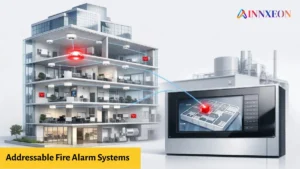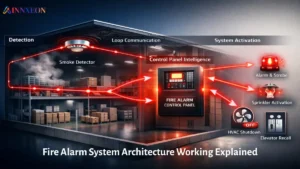
Fire safety systems work at their best only when every component speaks the same language. In modern buildings, compatibility between fire alarm panels and detectors is one of the most important factors that defines system performance, reliability and long-term maintenance cost.
When detectors are not compatible with the control panel, problems start to appear; frequent faults, communication errors, delayed alarms, false alarms and even system breakdowns. That is why global brands design their detectors and panels using proven protocols, stable algorithms and strict standards to ensure smooth communication on every loop.
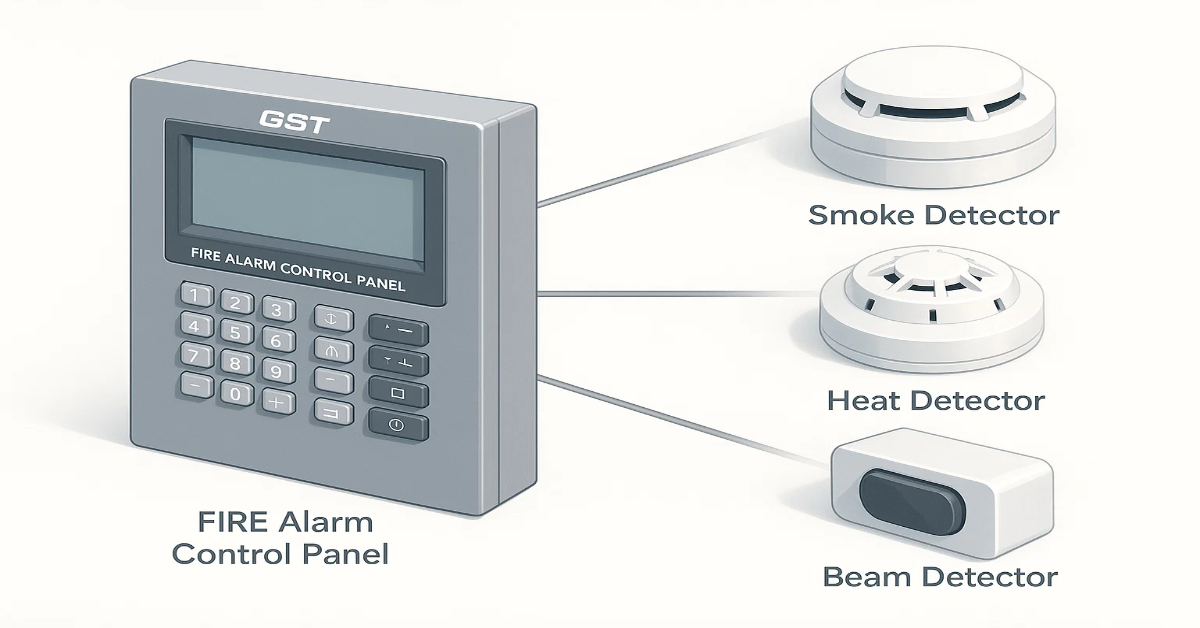
This guide explains complete compatibility between GST fire panels and GST detectors, presented in a panel-to-device chart, along with system requirements, best practices, wiring guidelines and field insights.
The goal is to help consultants, integrators and building owners choose the right detector for the right panel, without confusion.
Why Compatibility Matters in Addressable Fire Alarm Systems
In an addressable system, every detector has a unique address. It talks to the fire panel through digital communication. If this communication breaks or mismatches, the panel may:
- Fail to detect alarms on time
- Generate device missing/communication errors
- Throw intermittent troubles
- Lose loop stability
- Cause network delays in evacuation
- Require rework or replacement
This is why certified manufacturers design their ecosystem as a tightly integrated architecture. GST is known for providing one of the most stable panel-to-detector compatibilities in the addressable segment, making it widely used across India in malls, IT parks, industries, hotels and high-rise buildings.
Types of GST Detectors and Their Use Cases
Before we jump into the compatibility chart, it is important to understand the types of detectors commonly deployed in GST systems.
1. Addressable Smoke Detectors
Used in: Offices, lobbies, hotels, IT parks, schools
Features:
- Sensitive to early smoke particles
- Ideal for environments with stable airflow
- Supports drift compensation for long-term accuracy
2. Addressable Heat Detectors
Used in: Parking areas, pump rooms, kitchens, boiler rooms
Features:
- Responds to temperature rise
- Available in fixed and rate-of-rise versions
- Designed for harsh or dusty environments
3. Multi-Sensor Detectors
Used in: High-sensitivity environments (server rooms, data centers, premium hotels)
Features:
- Combines heat + smoke sensing
- Reduces false alarms from steam, dust, or humidity
- Provides faster and more reliable response
4. Beam Detectors
Used in: Warehouses, atriums, auditoriums, malls
Features:
- Covers long distances
- Ideal for high ceilings
- Reduces the need for multiple spot detectors
5. Aspirating Smoke Detectors (Using GST Network Compatibility)
Used in: Server rooms, labs, archives, clean rooms
Features:
- Detects fire at an early (even invisible) stage
- Integrates through modules for smooth communication
These detectors are tested and certified to ensure full compatibility with GST’s addressable loops.
GST Panels Overview (Addressable Series)
GST offers a wide range of addressable panels designed for different building sizes:
- GST100N – Entry-level addressable panel for small sites
- GST200N – Mid-range, widely used in commercial buildings
- GST5000 – Modular, multi-loop panel for large sites
- GST5000E – Enhanced multi-panel networking for campuses
- GST I-Series – Advanced intelligent range (in selected markets)
Each panel supports different loop capacities, device limits and networking options. The next section covers compatibility between all major GST detectors and these panels.
GST Detector-to-Panel Compatibility Chart (Complete Guide)
- All tables follow EN54 standards and actual GST support guidelines
- Easy for consultants, engineers and end-users
- Useful for BOQ planning and system design
1. Smoke Detectors Compatibility Chart
| Detector Model | Type | GST100N | GST200N | GST5000 | GST5000E | Notes |
|---|---|---|---|---|---|---|
| I-9102 | Photoelectric Smoke Detector | ✔ Compatible | ✔ Compatible | ✔ Compatible | ✔ Compatible | Most commonly used detector in GST systems |
| I-9102Ex | Explosion-proof Smoke Detector | ✔ | ✔ | ✔ | ✔ | For hazardous zones; requires zone selection |
| I-9102 Intelligent | Enhanced Photoelectric Model | ✔ | ✔ | ✔ | ✔ | Supports advanced drift compensation |
2. Heat Detectors Compatibility Chart
| Detector Model | Type | GST100N | GST200N | GST5000 | GST5000E | Notes |
|---|---|---|---|---|---|---|
| I-9103 | Fixed Heat Detector | ✔ | ✔ | ✔ | ✔ | Suitable for high-temperature areas |
| I-9103R | Rate-of-Rise Heat Detector | ✔ | ✔ | ✔ | ✔ | Best for areas with fluctuating temperatures |
| I-9103Ex | Explosion-proof Heat Detector | ✔ | ✔ | ✔ | ✔ | Designed for industrial sites |
3. Multi-Sensor Detectors Compatibility Chart
| Detector Model | Type | GST100N | GST200N | GST5000 | GST5000E | Notes |
|---|---|---|---|---|---|---|
| I-9105 | Smoke + Heat Multi-Sensor | ✔ | ✔ | ✔ | ✔ | Reduces false alarms and increases sensitivity |
| I-9105 Intelligent | Advanced Multi-Sensor | ✔ | ✔ | ✔ | ✔ | Recommended for high-risk areas |
4. Beam Detector Compatibility Chart
| Detector Model | Type | GST100N | GST200N | GST5000 | GST5000E | Notes |
|---|---|---|---|---|---|---|
| I-9105R Beam Detector | Reflective Beam Detector | ✔ | ✔ | ✔ | ✔ | Widely used for large open spaces |
| I-9105R Intelligent | Enhanced Beam Detector | ✔ | ✔ | ✔ | ✔ | Provides stable long-distance detection |
5. Aspirating Detector Compatibility Chart (Using Modules)
| Detector Type | Integration Method | GST100N | GST200N | GST5000 | GST5000E | Notes |
|---|---|---|---|---|---|---|
| Aspirating Smoke Detector | I/O Module / Addressable Interface | ✔ | ✔ | ✔ | ✔ | Works through addressable module integration |
6. Manual Call Points (For completeness)
| Device Model | Type | GST100N | GST200N | GST5000 | GST5000E |
|---|---|---|---|---|---|
| I-9201 | Addressable MCP | ✔ | ✔ | ✔ | ✔ |
| I-9202 | Waterproof MCP | ✔ | ✔ | ✔ | ✔ |
Technical Compatibility Requirements
Even though GST detectors are designed to work across their panel series, proper installation practices ensure long-term reliability.
1. Loop Voltage Requirements
All GST addressable detectors are engineered to operate within standard loop voltage ranges (typically 24V loop), ensuring stable communication even on long loops.
2. Addressing Method
GST detectors use electronic addressing to avoid manual DIP errors.
The panel automatically recognizes:
- Device type
- Device address
- Zone
- Sensitivity level
This reduces commissioning time and eliminates typical installation mistakes.
3. Wiring Guidelines
To maintain compatibility performance:
- Use recommended loop cables (1.5 sq mm FRLSH or as per project spec)
- Avoid unnecessary junctions or splicing
- Keep loop impedance within guidelines
- Follow polarity requirement
- Maintain proper earthing
4. Maximum Devices Per Loop
Although GST panels support high loop counts, device limits vary:
- GST100N: Ideal for smaller setups
- GST200N: Medium-capacity loops
- GST5000/5000E: High-load, multi-loop modular systems
Consult project documentation for exact device count per loop.
Field Insights: What Installers Should Know About Compatibility
1. Loop Stability Depends on Cable Quality
Even if sensors are compatible, poor-quality cable can cause loop errors.
2. Multi-Sensors Reduce False Alarms
Using multi-sensors in mixed environments improves system stability and reduces service calls.
3. Beam Detectors Need Correct Alignment
Misalignment is the most common issue, not compatibility.
4. Commissioning Tools Help Validate Detectors
GST supports easy device testing and verification through handheld tools and panel diagnostics.
5. Clean Environment Helps Smoke Detectors Perform Better
Dust accumulation can lead to sensitivity drift, periodic maintenance is essential.
Common Compatibility Mistakes and How to Avoid Them
Mistake 1: Mixing Third-Party Detectors
Addressable systems are protocol-based. Using non-original detectors can cause:
- False alarms
- Loop instability
- Inability to calibrate
Mistake 2: Using Wrong Base Plates
Each GST detector series has a recommended base for proper connectivity.
Mistake 3: Incorrect Sensitivity Settings
Always follow environment guidelines to avoid false alarms or late detection.
Mistake 4: Installing Smoke Detectors in Dusty Zones
Heat detectors or multi-sensors are better for such environments.
How to Choose the Right Detector for Your Panel
1. Identify Building Type
- IT Park → Multi-sensor + smoke
- Mall → Beam + smoke
- Hotel → Smoke + MCP
- Warehouse → Beam
- Industrial → Heat + Ex-proof detectors
2. Check Panel Series
All GST detectors support GST100N, GST200N, GST5000 and GST5000E.
Choose based on building size, loop load, expansion plan and networking needs.
3. Evaluate Environmental Conditions
Temperature, dust, humidity, air movement all affect detector selection.
4. Consider Maintenance Access
High ceilings → Beam detectors
Dense and critical areas → Multi-sensor detectors
Why a Compatibility Guide Matters
GST’s panel and detector ecosystem offers one of the most stable, field-proven compatibility structures in India. Whether you are designing a new system or upgrading an old one, this compatibility guide ensures you select the right detectors, follow correct installation practices and maintain long-term system health.
A clear compatibility plan helps you:
- Avoid installation errors
- Reduce project delays
- Minimize false alarms
- Improve safety
- Extend device lifespan
- Ensure flawless communication between panel and devices
With this complete panel-to-device chart, consultants, contractors and building owners can confidently design or expand their fire detection systems.
Read Also: How GST Panels Help You Get Fire NOC Faster
Read Also: Buy Complete GST Addressable Fire Alarm System Package: Panel + Devices + Cables