In modern construction planning, fire alarm systems are designed as part of the building’s core life-safety infrastructure rather than an auxiliary service. Their layout, capacity and system integration directly influence statutory approvals, operational reliability and long-term maintenance efficiency.
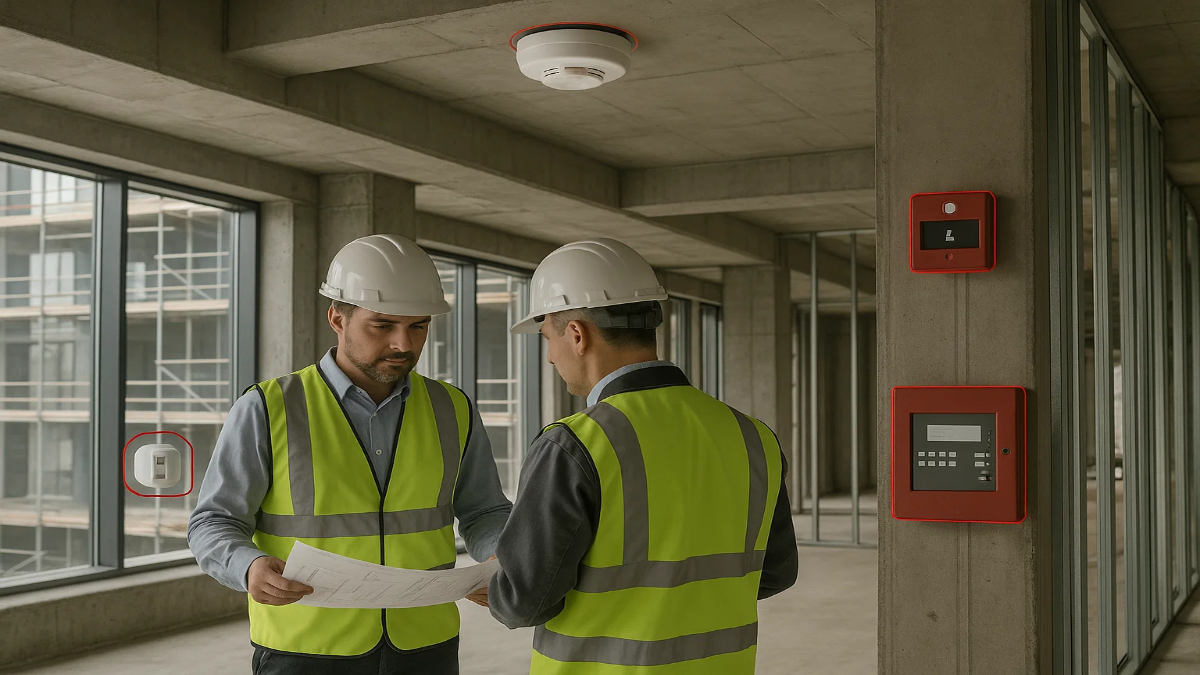
For this reason, accurate cost estimation of a GST fire alarm system during the early design phase is essential for new construction projects. A well-calculated estimate aligns system design with regulatory requirements, prevents scope changes during execution and ensures predictable project budgeting throughout the construction lifecycle.
Why Fire Alarm Cost Estimation Matters in New Construction
Fire alarm systems are among the first safety services reviewed by fire authorities before granting approvals and occupancy certificates. In new construction projects, inaccurate estimation often leads to redesign, additional material procurement and installation delays.
Unlike retrofit installations, new construction offers the advantage of planned routing, optimal device placement and system scalability. However, these advantages only translate into cost efficiency when estimation is done correctly at the planning stage.
Proper estimation ensures:
- Compliance with fire department norms
- Smooth coordination with electrical and HVAC systems
- Avoidance of last-minute cost escalation
- Better lifecycle cost control
Understanding GST Fire Alarm Systems in Construction Planning
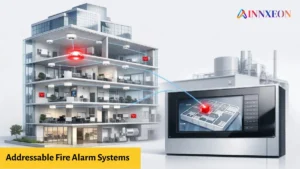
GST fire alarm systems are commonly specified in new construction projects because they support both conventional and addressable architectures. Most medium to large projects prefer addressable or intelligent addressable systems due to better fault diagnostics and precise fire location identification.
From a planning perspective, GST systems allow designers to:
- Configure loop capacity based on building size
- Integrate multiple safety interfaces
- Plan phased expansions without system replacement
These characteristics directly affect how cost estimation is structured for new buildings.
Key Components That Define Fire Alarm Cost
Accurate estimation begins with understanding the major system components and their role in the overall budget.
Fire Alarm Control Panel
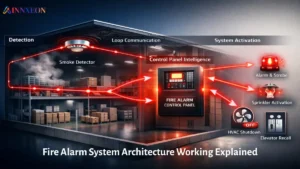
The control panel acts as the system’s command centre. Its cost depends on loop capacity, device limit, networking capability and redundancy requirements. New construction projects typically select panels with spare capacity to support future expansion.
Automatic Detectors
Smoke detectors, heat detectors and multi-sensor detectors account for the largest portion of equipment cost. Their quantity depends on floor area, ceiling height, occupancy classification and risk zones defined by fire regulations.
Manual Call Points
Manual call points are installed at exits, staircases and circulation areas. Their cost impact increases in buildings with multiple floors and escape routes.
Notification Devices
Sounders, hooters and visual alarm devices ensure occupant alerting during emergencies. The number and type depend on ambient noise levels and building usage.
Interface Modules
Modules enable communication between the fire alarm system and other building services, such as:
- Fire pumps
- Sprinkler systems
- Elevators
- HVAC shutdown
New construction projects often require more modules due to higher integration requirements.
Cabling and Installation Accessories
Fire-rated cables, conduits, junction boxes and mounting accessories form a significant cost component, especially in high-rise or large-footprint projects.
Factors That Influence GST Fire Alarm Cost Estimation
No single cost figure applies to all construction projects. Several technical and regulatory factors influence the final estimate.
Building Size and Height
Larger buildings require more devices, longer cable runs, and higher-capacity panels. High-rise structures may also require zoning and networking between panels.
Occupancy Type
Fire alarm requirements differ for offices, hospitals, hotels, industrial plants and residential complexes. High-risk occupancies demand additional detection and control logic.
Regulatory Compliance Requirements
Local fire authority guidelines determine detector spacing, alarm audibility, redundancy and integration needs. Compliance directly impacts material quantity and system design.
System Architecture Selection
Addressable systems have higher initial costs than conventional systems but offer better scalability and lower long-term maintenance costs. Most new construction projects choose addressable systems for this reason.
Integration Scope
Integration with building management systems, public address systems, or access control increases both hardware and programming costs.
Approximate Cost Range for New Construction Projects
While exact pricing depends on project specifics, cost estimation typically follows building scale and complexity.
Small commercial buildings usually require lower investment due to limited device count and simpler layouts.
Mid-scale residential and commercial projects fall into a moderate range because of multi-floor coverage and integration requirements.
Large commercial complexes, hospitals, malls and industrial facilities require higher budgets due to extensive detection coverage, redundancy and system networking.
These estimates generally include equipment supply, installation, testing and commissioning but may exclude statutory approval fees.
Structured Cost Estimation Process
A professional estimation process ensures technical accuracy and budget control.
Review of Architectural and MEP Drawings
Designers study floor plans, ceiling layouts and electrical drawings to identify device locations and routing paths.
Device Quantity Calculation
Each floor is analysed to determine the required number of detectors, call points, sounders and modules based on coverage norms.
Panel and Loop Planning
Panel capacity is selected based on total device count and future expansion needs.
Cable Length Estimation
Cable routes are mapped to calculate fire-rated cable quantities accurately.
Installation and Commissioning Cost Assessment
Labour costs include installation, testing, programming and system handover documentation.
Cost Efficiency Advantages in New Construction
New construction projects benefit from optimised fire alarm planning because:
- Cable routes are integrated into structural design
- Device mounting locations are pre-planned
- Rework and surface wiring are avoided
When planned correctly, this results in lower installation labour and better system aesthetics.
Long-Term Cost Considerations
Initial installation cost is only one part of the financial picture.
Addressable fire alarm systems reduce troubleshooting time, which lowers maintenance expenses. System scalability prevents costly panel replacement when buildings expand.
Energy-efficient panels also reduce operational costs over time.
Common Errors in Fire Alarm Cost Estimation
Many projects underestimate detector quantity by ignoring ceiling height and room usage. Others fail to include interface modules during initial planning.
Excluding fire-rated cabling to reduce upfront cost often leads to compliance failure and reinstallation expenses.
Another common mistake is selecting panels without spare capacity, resulting in early system upgrades.
How to Optimise Fire Alarm Budget Without Compromising Compliance
Early involvement of fire consultants ensures alignment with regulations. Coordinating fire alarm layouts with electrical and HVAC teams reduces conflicts and labour costs.
Selecting scalable panels and standardised devices improves long-term cost efficiency.
Clear documentation supports faster approvals and avoids redesign delays.
Note: GST fire alarm cost estimation for new construction projects is a technical planning exercise that directly affects compliance, budgeting and long-term system performance. Treating fire alarm systems as core infrastructure rather than an afterthought ensures smoother execution and predictable costs.
By understanding system components, regulatory influences and integration needs, project stakeholders can develop accurate estimates that support both safety objectives and financial control throughout the building lifecycle.
Read Also: GST Intelligent Multi-Sensor Detector – Best Use Cases
Read Also: Why GST Fire Alarm Costs Less in Long-Term Maintenance