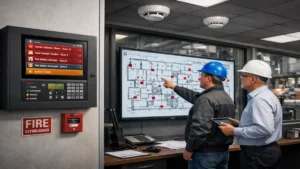
Fire alarm system planning is no longer just about meeting code requirements. In large commercial, industrial and infrastructure projects, the real challenge lies in balancing system design excellence with cost optimisation. Poor design decisions increase project costs, lead to rework and inflate long-term maintenance expenses. On the other hand, excessive cost-cutting compromises safety, compliance and system reliability.
This is where GST Fire Alarm Systems (Gulf Security Technology) stand out. GST enables consultants, system integrators and project owners to achieve technically sound fire alarm designs while maintaining strict cost efficiency without sacrificing safety or future scalability.
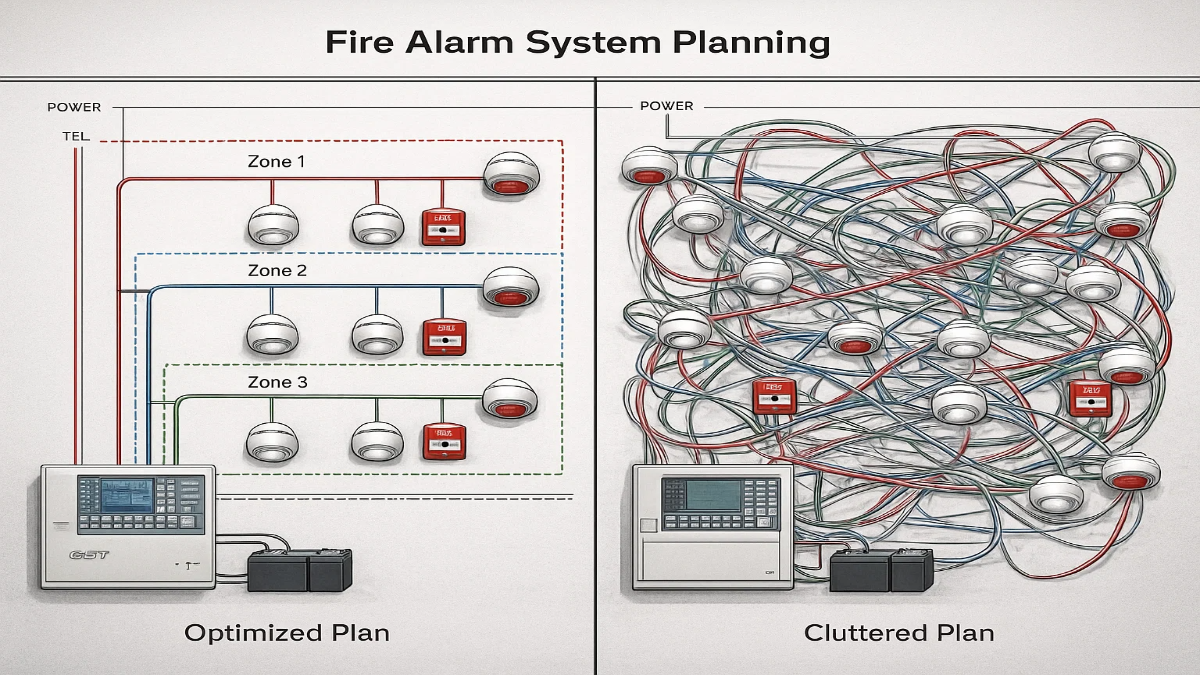
In this article, we will explain how GST fire alarm system design compares with traditional cost-cutting approaches and why design-driven cost optimisation is the smarter strategy for modern projects.
Understanding Fire Alarm System Design vs Cost Optimisation
Many projects mistakenly treat fire alarm design and cost optimisation as opposing goals. In reality, good design is the foundation of cost control.
Fire Alarm System Design Focuses On:
- Risk-based coverage
- Detector selection accuracy
- Correct zoning and loop architecture
- Compliance with NFPA, NBC, IS and local authority norms
- Future expansion readiness
Cost Optimisation Focuses On:
- Reducing hardware quantity
- Minimising cabling and installation time
- Lowering commissioning and maintenance costs
- Avoiding redesigns and authority rejections
- Improving lifecycle value, not just initial pricing
GST fire alarm systems bridge this gap by offering intelligent, modular and scalable solutions that naturally reduce unnecessary costs through better design logic.
Why Poor Design Increases Fire Alarm System Costs
Many high-budget projects face cost overruns not because of premium equipment, but due to design inefficiencies.
Over-Design
Using excessive detectors, oversized panels or unnecessary redundancy increases material and installation costs. This often happens when systems lack flexibility.
Under-Design
Cutting corners leads to:
- Authority rejections
- Re-engineering costs
- Delayed occupancy certificates
- Expensive retrofits
Brand Limitations
Some fire alarm brands force rigid designs due to:
- Limited loop capacity
- Fixed device counts
- Restricted panel expansion
GST avoids all three pitfalls by offering flexible, intelligent design options that adapt to real project needs.
How GST Enables Intelligent Fire Alarm System Design
GST fire alarm systems are engineered with design freedom at their core. This allows consultants and designers to create optimised layouts without inflating costs.
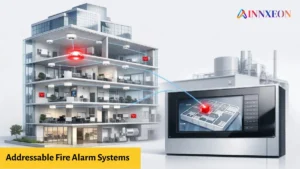
Modular Panel Architecture
GST addressable fire alarm panels allow:
- Scalable loop expansion
- Optimised panel sizing
- Reduced need for multiple panels
This prevents unnecessary capital investment during early project stages while keeping future expansion open.
High Loop Device Capacity
With higher device counts per loop, GST systems:
- Reduce cable length
- Lower installation labour
- Minimise containment requirements
Fewer loops mean lower material costs and simpler commissioning.
Wide Detector Portfolio
GST offers:
- Smoke detectors
- Heat detectors
- Multi-sensor detectors
- Beam detectors
- Flame detectors
Designers can select only what the risk demands, instead of overspecifying devices to compensate for limitations.
Cost Optimisation Through Accurate Risk-Based Design
Cost optimisation does not mean choosing cheaper devices. It means choosing the correct devices.
Example: Intelligent Multi-Sensor Usage
Instead of installing multiple detector types in challenging environments, GST multi-sensor detectors:
- Reduce false alarms
- Eliminate redundant devices
- Lower maintenance visits
This results in lower operational expenditure over the system’s life.
Application-Specific Design
GST supports tailored solutions for:
- Commercial buildings
- IT parks
- Hospitals
- Manufacturing plants
- Warehouses
- Airports and metros
Each application benefits from optimised device selection, not generic layouts.
GST Fire Alarm Cabling Strategy and Cost Control
Cabling accounts for a significant portion of fire alarm system costs.
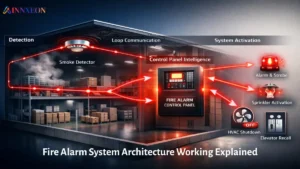
Loop-Based Addressable Systems
GST addressable systems:
- Reduce cable runs
- Eliminate complex star wiring
- Simplify fault isolation
This leads to:
- Faster installation
- Lower cable quantities
- Reduced containment costs
Fault-Tolerant Loop Design
GST loop isolation technology:
- Minimizes downtime
- Prevents full loop failures
- Reduces emergency repair costs
Better reliability equals lower long-term expenses.
Panel Selection Strategy: Right-Sizing Saves Money
Choosing the wrong panel size is a common cost mistake.
Oversized Panels
Increase initial costs without adding real value.
Undersized Panels
Force panel replacements or additional panels later.
GST Advantage
GST panels allow:
- Precise device mapping
- Loop expansion
- Network scalability
This ensures you pay only for what you need, when you need it.
Compliance-Driven Design Reduces Hidden Costs
Non-compliance is one of the most expensive mistakes in fire alarm projects.
GST Systems Support:
- NBC of India
- IS standards
- NFPA guidelines
- Local fire authority norms
This results in:
- Faster approvals
- Fewer redesign cycles
- Reduced consultant revisions
- Lower project delays
Compliance-ready systems protect both budget and reputation.
Installation Efficiency as a Cost Optimisation Tool
GST systems simplify installation through:
- Auto addressing
- Clear device identification
- Simple commissioning software
This reduces:
- Skilled labour dependency
- Installation errors
- Commissioning time
Shorter project timelines translate directly into lower costs.
Lifecycle Cost Comparison: GST vs Low-Cost Alternatives
Initial price alone does not define system value.
Low-Cost Systems Often Lead To:
- High false alarm rates
- Frequent breakdowns
- Expensive spare parts
- Limited technical support
GST Lifecycle Advantages:
- Stable performance
- Lower maintenance frequency
- Easy device replacement
- Long product life
Over 10-15 years, GST systems cost significantly less than cheaper alternatives.
Consultant Perspective: Why GST Supports Better Design Decisions
Consultants prefer GST because it allows:
- Technical accuracy
- Flexible design interpretation
- Cost-effective compliance
- Reliable documentation support
This confidence reduces design risk and project liability.
Why Design-First Cost Optimisation Always Wins
Projects that prioritise design quality first always achieve better cost control than those focused only on price reduction.
GST fire alarm systems make this possible by combining:
- Intelligent engineering
- Flexible architecture
- Compliance-ready design
- Long-term reliability
The result is a fire alarm system that protects lives, satisfies authorities and respects project budgets.
Note: The real choice is not between design vs cost, but between short-term savings and long-term value.
GST Fire Alarm Systems prove that:
- Smart design reduces cost
- Flexibility prevents overspending
- Reliability protects investments
For consultants, developers and facility owners, GST delivers optimised fire safety without financial compromise.
Read Also: GST Intelligent Multi-Sensor Detector – Best Use Cases
Read Also: Why Consultants Specify GST Fire Alarm Systems in Large Projects