Fire safety is not just a legal requirement, it is a continuous responsibility. For facilities like IT parks, hospitals, hotels, manufacturing units, commercial high-rises and educational campuses, the cost of maintaining fire alarm systems forms a significant part of yearly operational expenses. With budgets tightening and efficiency becoming a strategic priority, more building owners are shifting from conventional fire alarm systems to addressable fire alarm systems, largely because of one key reason: lower long-term maintenance costs.
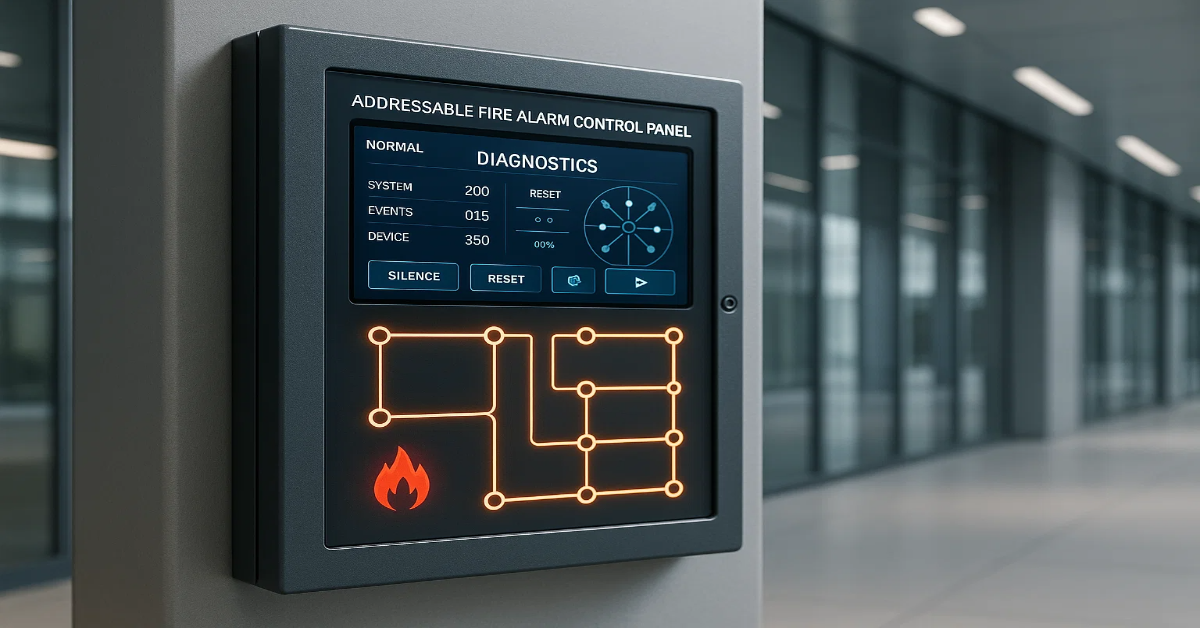
This article explains how addressable systems reduce maintenance costs, why they perform better and what makes them a smarter long-term investment. Throughout the article, we also reflect the kinds of technological strengths seen in reliable global brands like GST (Gulf Security Technology) focusing on engineering principles and operational advantages.
1. Fewer False Alarms Mean Lower Operational Disruption
False alarms are one of the biggest hidden expenses in fire safety. Every false alarm causes:
- Wasted manpower to inspect the cause
- System downtime
- Unnecessary evacuation
- Loss of productivity
- Potential penalties in sensitive sites like hospitals or airports
Conventional systems only show zone numbers, making technicians spend hours locating the exact device triggering the fault or alarm.
How Addressable Systems Solve This
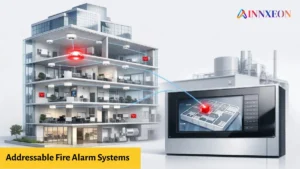
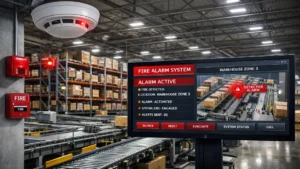
Addressable systems pinpoint the exact device with precision, such as:
- “Smoke Detector – 3rd Floor – Server Room – Loop 1 – Device 16”
Instead of searching an entire floor, technicians immediately identify the faulty or triggered device and fix it in minutes.
This reduces:
- Technician hours
- Investigation time
- Manpower costs
- Business disruption
Modern brands like GST integrate advanced algorithms that differentiate dust and fog from real smoke, drastically reducing unwanted alarms and maintenance visits.
2. Intelligent Self-Diagnostics Reduce Manual Testing
One of the biggest advantages of addressable systems is intelligent self-diagnostics.
What these self-checks include:
- Device health monitoring
- Sensitivity drift analysis
- Cable or loop integrity
- Contamination levels
- Ageing of sensors
- Communication quality
Conventional systems require periodic manual inspection of each device, sometimes thousands of detectors in large campuses.
Cost Advantage
When a system automatically identifies issues, technicians only check devices that need attention, reducing:
- Routine manual checks
- Man-hours
- Annual maintenance contract (AMC) costs
GST-type platforms often feature auto-compensation technologies where detectors adjust their sensitivity automatically as they age, extending their usable life and reducing replacement costs.
3. Addressable Detectors Last Longer Than Conventional Detectors
The lifespan of a detector affects maintenance budgets directly.
Why Conventional Detectors Age Faster
- No compensating technology
- Higher susceptibility to dust
- More false triggers and resets
- Greater wear during manual testing
Why Addressable Detectors Offer Longer Life
Technologically advanced addressable detectors:
- Continuously calibrate their sensing chambers
- Compensate for dust and environmental changes
- Automatically alert when nearing end-of-life
- Use two-way communication for efficient management
GST-like systems commonly integrate microprocessor-based sensors, which maintain high accuracy over several years, minimizing the frequency of replacements.
The longer the life, the lower the replacement and servicing costs.
4. Reduced Cable Usage Saves Upfront and Long-Term Maintenance Costs
Cabling accounts for almost 40–50% of fire alarm installation cost and a major part of maintenance effort.
Conventional System Cabling:
- Separate wiring for each zone
- More copper cable
- Higher installation time
- Higher maintenance cost in case of damage
Addressable System Cabling:
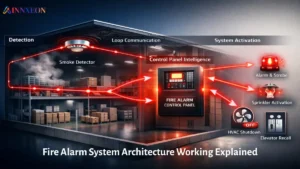
- Loop wiring architecture
- Lower overall cable length
- Single loop supports multiple detectors
- Easier troubleshooting in case of cable faults
The reduction in cabling not only saves on installation costs but also drastically reduces:
- Cable testing
- Cable tracing
- Cable replacement
- Labour hours in maintenance
Most addressable panels, including technologies used in GST solutions offer short-circuit isolators that isolate faults automatically, ensuring the rest of the system continues functioning without requiring emergency repairs.
5. Remote Monitoring Minimizes On-Site Maintenance Visits
Over the last few years, facility managers have increasingly relied on remote visibility of fire alarm systems.
Addressable systems can be:
- Connected to the building management system (BMS)
- Integrated with central monitoring rooms
- Supervised via remote software tools
This enables operators to analyze:
- Device health
- Historical alarms
- Communication errors
- Loop voltage levels
- Detector contamination
Cost Benefits of Remote Monitoring
- Maintenance teams can plan visits proactively
- No need for emergency visits
- Quicker decision making
- Lower manpower requirement
GST-like systems often come with PC-based monitoring software that presents real-time device information, which helps predict failures before they occur, reducing emergency repair costs.
6. Faster Troubleshooting Means Lower AMC Costs
A key reason building owners pay high annual fees for traditional systems is the time technicians spend identifying issues.
Conventional System Troubleshooting:
- Large zones
- More manual inspection
- Trial-and-error fault location
- Multiple revisits
Addressable System Troubleshooting:
- Fault pinpointing to exact device
- System provides cause and location
- Faster repairs
- Lower AMC labour charges
Because addressable systems reduce the technician time required to maintain the system, service providers adjust AMC fees accordingly.
In large buildings or multi-tower tech parks, the savings are significant.
7. Modular Design Lowers Component-Level Maintenance Costs
Addressable fire alarm systems are built with a modular architecture, meaning:
- Detectors are microprocessor-based
- Modules can be replaced individually
- Panels have field-replaceable boards
- Loop cards expand capacity easily
This modularity prevents costly replacement of entire panels or zones.
For example:
- If one module fails, you replace only that module, not a whole zone.
- If a loop card fails, only that section is affected and can be repaired quickly.
Brands following global quality standards like GST usually design systems that allow component-level maintenance to keep long-term costs low.
8. Predictive Maintenance Replaces Reactive Maintenance
The newest generation of addressable systems supports predictive analytics, helping identify issues before they grow.
Examples of predictive alerts:
- Sensitivity drifting
- Device approaching contamination levels
- Intermittent communication errors
- Loop voltage fluctuations
- Detector nearing end-of-life
Result:
Technicians fix problems before they cause alarms, failures, or shutdowns, dramatically reducing emergency visits and corrective maintenance costs.
GST-class systems integrate microprocessor technology that provides predictive device data for more reliable planning.
9. Scalable Expansion Avoids Costly System Replacement
One hidden cost in fire safety is system expansion when a building grows.
In conventional systems, adding new rooms or floors often requires:
- Rewiring
- New zones
- Additional panels
- Major labour and material cost
Addressable systems support seamless scalability:
- Add devices directly to the loop
- Expand panel capacity with loop cards
- Update software, not hardware
- Avoid replacing existing infrastructure
This reduces long-term upgrade and maintenance expenditure drastically, especially in:
- Expanding hospitals
- Growing IT parks
- Industrial plants
- Multi-tower properties
Systems that follow global standards, such as those seen in GST solutions, support high loop capacities and modular expansion, ensuring long-term cost stability.
10. Improved System Reliability Means Fewer Emergency Repairs
Addressable systems are far more reliable due to:
- Intelligent communication
- Microprocessor-based detectors
- Loop redundancy
- Fault-tolerant design
- Better device-level control
As a result, buildings experience:
- Fewer system failures
- Lower emergency repair costs
- Reduced risk of malfunction during audits
- Better compliance with fire authorities
GST-like addressable platforms are known for strong fault-monitoring and redundancy, which reduces unexpected downtime and repair budgets.
11. Simplified Documentation and Compliance Reduce Audit Costs
Fire compliance involves extensive:
- Reports
- Logs
- Maintenance records
- Device histories
- Proof of system testing
Addressable systems automatically store:
- Alarm logs
- Device events
- Fault histories
- Testing data
This dramatically reduces the time spent preparing compliance reports.
During inspections:
- Authorities can view logs instantly
- Technicians do not need to manually recreate maintenance data
This saves manpower and prevents penalties due to incomplete documentation.
12. Lower Life Cycle Cost Compared to Conventional Systems
When evaluating fire systems, the purchase price is only a small part of total cost.
The life cycle cost (LCC) includes:
- Installation
- Maintenance
- Testing
- Repairs
- Upgrades
- Replacement
Studies consistently show that although an addressable system may cost slightly more upfront, its lifetime savings far outweigh the initial investment.
Where It Saves the Most:
- Technicians spend less time troubleshooting
- Fewer components fail
- System testing becomes efficient
- Expansion cost is minimal
- Emergency callouts reduce
- Fewer false alarms reduce operational shutdown
Many global manufacturers, including GST, design systems to minimise LCC, making addressable systems the smarter long-term choice.
Addressable Systems Deliver Real, Measurable Maintenance Savings
Addressable fire alarm systems have transformed how modern buildings manage fire safety. They are not just technologically advanced, they are economically efficient, reducing maintenance costs through:
- Intelligent device monitoring
- Pinpoint fault detection
- Longer detector life
- Reduced cabling
- Lower AMC charges
- Predictive maintenance
- Scalability
- Fewer false alarms
- Remote diagnostic capability
Whether it’s a hospital, hotel, IT campus, industrial site, commercial tower or logistics facility, the shift to addressable systems is driven by long-term savings and smarter operations.
Reliable global brands like GST (Gulf Security Technology) demonstrate how advanced engineering, device intelligence and long-term stability can naturally lower maintenance costs.
For building owners, facility managers and engineers, the financial advantage is clear:
An addressable fire alarm system is not just a safety investment, it is a cost-saving strategy.
Read Also: The Real Reason Your Fire Alarm System Has Frequent False Alarms
Read Also: Why Addressable Panels Offer Higher ROI Than Conventional Panels