Why are industrial facilities in India rapidly adopting GST fire alarm systems?
Modern industries need accurate, scalable and intelligent fire detection solutions that prevent costly downtime, protect critical assets and ensure strict safety compliance.
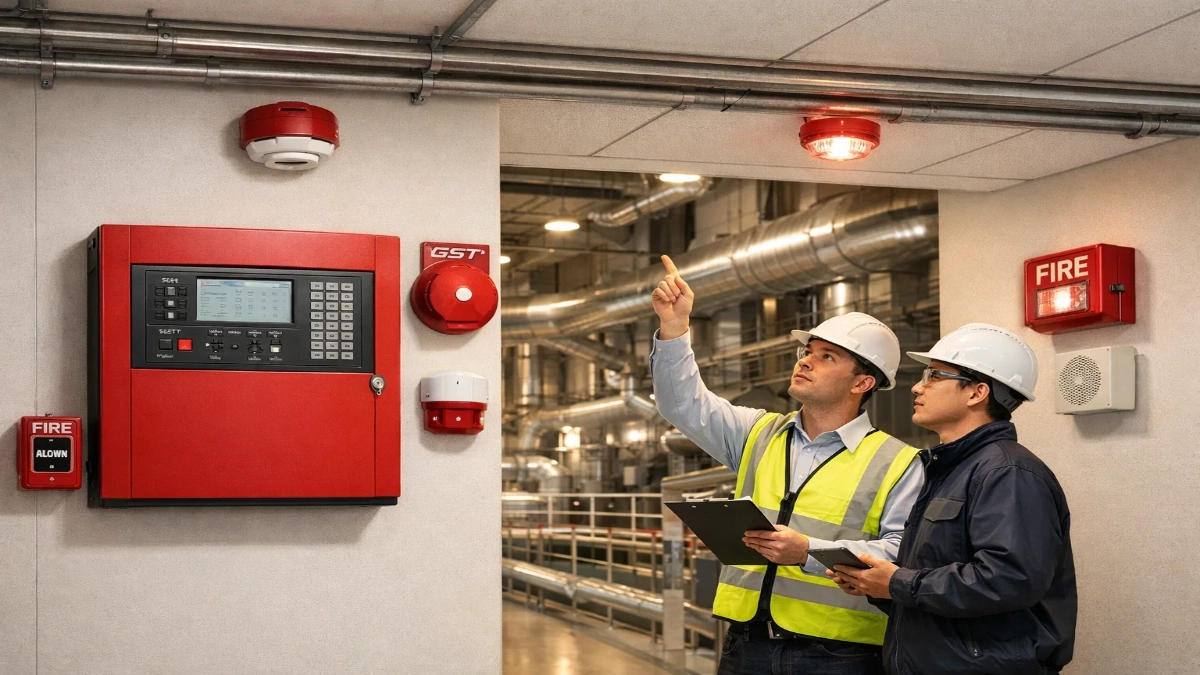
As industrial environments become more complex with high-value machinery, continuous operations and increased fire risks, traditional fire detection methods are no longer sufficient. Even a minor delay in detecting a fire can lead to severe operational disruptions, financial losses and safety hazards.
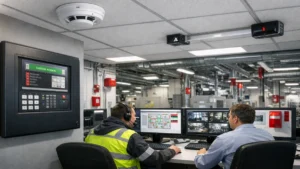
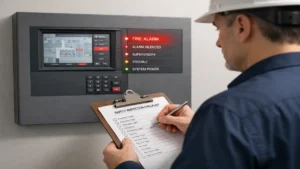
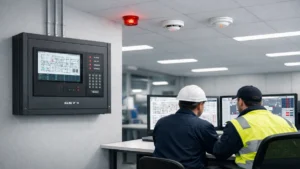
This is where GST fire alarm systems are transforming industrial safety in India. Designed with advanced addressable technology, these systems provide real-time detection, precise location tracking and seamless integration with other safety infrastructure.
From manufacturing plants and warehouses to power plants and data centres, GST fire alarm systems now play a critical role in protecting lives, assets and business continuity. In this article, we will explore their key industrial applications and why they have become a preferred choice across various sectors in India.
What is a GST Fire Alarm System?
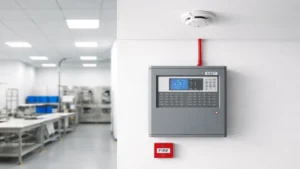
A GST fire alarm system is an advanced, addressable fire detection and alarm system designed to quickly and accurately identify fire hazards.
Unlike conventional systems, GST systems:
- Identify the exact location of the fire
- Reduce false alarms using intelligent algorithms
- Integrate with other safety systems (like sprinklers and BMS)
- Offer scalable solutions for large industrial setups
These features make them highly suitable for industrial environments where precision and speed are critical.
Why Industries in India Prefer GST Fire Alarm Systems
Before diving into applications, let’s understand why GST systems are widely adopted:
1. High Accuracy Detection
GST systems use intelligent sensors that can differentiate between smoke, heat and environmental disturbances.
2. Scalability for Large Facilities
From small plants to massive industrial complexes, GST systems can be easily expanded.
3. Compliance with Indian Standards
They support compliance with:
- NBC (National Building Code of India)
- IS standards
- Local fire authority regulations
4. Cost-Effective Long-Term Solution
Though the initial investment may be moderate, maintenance and false-alarm costs are significantly lower.
Key Industrial Applications of GST Fire Alarm Systems in India
Let’s break this down sector by sector, so it becomes practical and relatable.
1. Manufacturing Plants
Manufacturing units are among the highest-risk environments due to machinery, heat and combustible materials.
Common Risks:
- Electrical fires
- Machinery overheating
- Chemical reactions
GST Application:
- Addressable detectors installed across production lines
- Heat detectors near high-temperature equipment
- Integration with emergency shutdown systems
Benefit:
Quick detection minimises downtime and prevents large-scale damage.
2. Warehouses and Storage Facilities
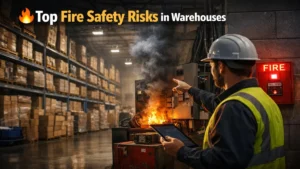
Warehouses store goods in bulk, often including flammable materials such as packaging, chemicals and textiles.
Common Risks:
- Fire spread due to the stacked inventory
- Delayed detection in large spaces
GST Application:
- Beam detectors for large open areas
- Smoke detectors for early-stage fire detection
- Zonal monitoring for quick identification
Benefit:
Early alerts prevent inventory loss and ensure business continuity.
3. Oil & Gas Industry
This is one of the most critical applications due to the highly flammable nature of materials.
Common Risks:
- Gas leaks leading to explosions
- High-temperature operations
GST Application:
- Flame detectors and heat sensors
- Explosion-proof devices
- Integration with gas detection systems
Benefit:
Immediate detection reduces catastrophic risks and ensures worker safety.
4. Power Plants
Power plants, including thermal and renewable facilities, involve high-voltage equipment and continuous operations.
Common Risks:
- Electrical faults
- Cable tray fires
- Transformer explosions
GST Application:
- Linear heat detection systems for cables
- Smoke detection in control rooms
- Integration with SCADA/BMS systems
Benefit:
Ensures uninterrupted power generation and protects critical infrastructure.
5. Pharmaceutical Industries
Pharma facilities require strict environmental control and safety compliance.
Common Risks:
- Chemical fires
- Sensitive equipment damage
GST Application:
- Cleanroom-compatible detectors
- High-sensitivity smoke detection
- Integration with HVAC systems
Benefit:
Maintains product integrity and regulatory compliance.
6. Textile and Paper Industries
These industries are highly fire-prone due to combustible raw materials.
Common Risks:
- Cotton dust ignition
- Paper storage fires
GST Application:
- Smoke detectors in storage areas
- Heat detectors in production units
- Alarm systems for quick evacuation
Benefit:
Reduces fire spread in highly flammable environments.
7. Chemical Processing Units
Chemical industries deal with volatile substances and reactions.
Common Risks:
- Chemical explosions
- Toxic gas release
GST Application:
- Specialised detectors for hazardous zones
- Integration with suppression systems
- Real-time monitoring panels
Benefit:
Prevents accidents and ensures compliance with safety norms.
8. Data Centres and Server Rooms
With India’s digital growth, data centres are expanding rapidly.
Common Risks:
- Electrical fires
- Overheating equipment
GST Application:
- Very Early Smoke Detection Apparatus (VESDA)
- Addressable smoke detectors
- Integration with fire suppression systems (FM200, Novec)
Benefit:
Protects critical data and ensures zero downtime.
9. Airports and Transportation Infrastructure
Large-scale infrastructure requires centralised monitoring systems.
Common Risks:
- Electrical faults
- High footfall areas
GST Application:
- Networked fire alarm panels
- Centralised command systems
- Integration with public announcement systems
Benefit:
Ensures the safety of thousands of people daily.
Role of GST Systems in Smart Industrial Safety
Modern industries are moving towards Industry 4.0, and GST systems are aligning with this shift.
Smart Features:
- Remote monitoring
- Data analytics for predictive maintenance
- Integration with IoT platforms
Impact:
- Faster decision-making
- Reduced manual intervention
- Improved safety management
Compliance and Regulatory Importance in India
Fire safety compliance is mandatory for industrial operations in India.
GST systems help industries comply with:
- National Building Code (NBC)
- Factory Act regulations
- State fire department guidelines
- Insurance requirements
Non-compliance can lead to:
- Operational shutdowns
- Heavy penalties
- Insurance claim rejection
Installation Best Practices for Industrial Use
If you’re planning implementation, these are crucial:
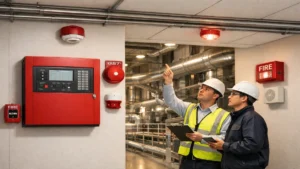
1. Site Risk Assessment
Understand the type of hazards before system design.
2. Proper Detector Placement
Avoid blind spots and ensure full coverage.
3. System Integration
Connect with sprinklers, suppression, and BMS.
4. Regular Maintenance
Schedule periodic testing and calibration.
5. Training Staff
Ensure employees know how to respond during alarms.
Challenges in Industrial Fire Safety (and How GST Solves Them)
| Challenge | GST Solution |
|---|---|
| False alarms | Intelligent detection algorithms |
| Large area coverage | Addressable loop systems |
| Harsh environments | Durable industrial-grade devices |
| Complex layouts | Flexible system design |
Future of GST Fire Alarm Systems in India
The future looks strong due to:
- Increasing industrialization
- Strict safety regulations
- Smart building adoption
- Demand for integrated safety systems
GST systems are evolving with:
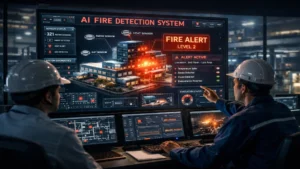
- AI-based detection
- Cloud monitoring
- Advanced analytics
Note: Industrial safety is not something you can afford to compromise on, especially in a fast-growing economy like India.
GST fire alarm systems provide a reliable, scalable and intelligent solution for diverse industrial applications. From manufacturing plants to data centres, their ability to detect, alert and integrate makes them an essential component of modern fire safety infrastructure.
For engineers and facility managers, investing in GST systems is not just about compliance; it’s about protecting lives, assets and business continuity.
Read Also: Why Modern Buildings Prefer Addressable Fire Alarm Technology
Read Also: 6 Advantages of Addressable GST Fire Alarm Technology