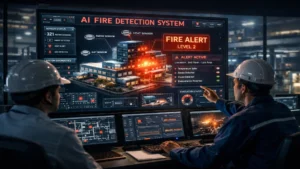
A fire doesn’t send a warning email. It doesn’t wait for approvals. It doesn’t care about your deadlines.
It starts silently… and within minutes, it can:
- Shut down your operations
- Destroy critical assets
- Put lives at risk
- Trigger legal and financial chaos
Now here’s the uncomfortable truth:
👉 Most fire losses are not due to lack of systems…
👉 They happen due to ineffective or outdated systems
This is exactly why modern businesses are shifting toward GST Fire Alarm Systems (Gulf Security Technology).
But let’s not jump to conclusions.
In this deep-dive guide, we’ll break down:
- Real cost vs real value
- Engineering advantages
- Practical ROI scenarios
- Industry-specific impact
- Decision-making framework
So you can answer confidently:
👉 Is GST Fire Alarm System truly worth the investment?
Understanding GST Fire Alarm Systems Beyond Basics
GST is not just another fire alarm brand; it represents a technological shift from reactive safety to proactive intelligence.
Core System Architecture
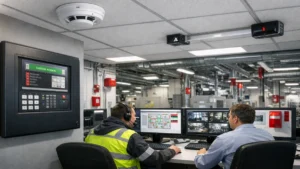
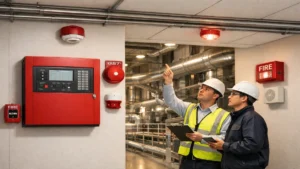
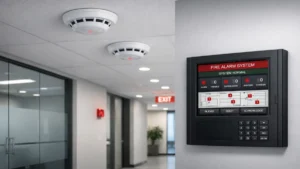
A GST Fire Alarm System operates through an integrated network of:
Detection Devices
- Smoke detectors (photoelectric / ionisation)
- Heat detectors (fixed / rate-of-rise)
- Multi-sensor detectors
These devices continuously monitor environmental parameters.
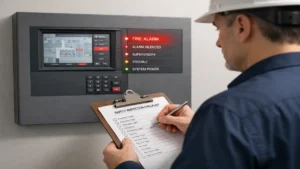
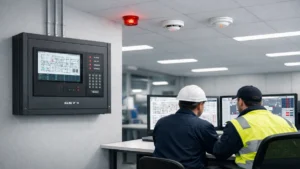
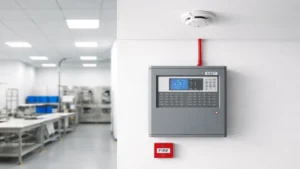
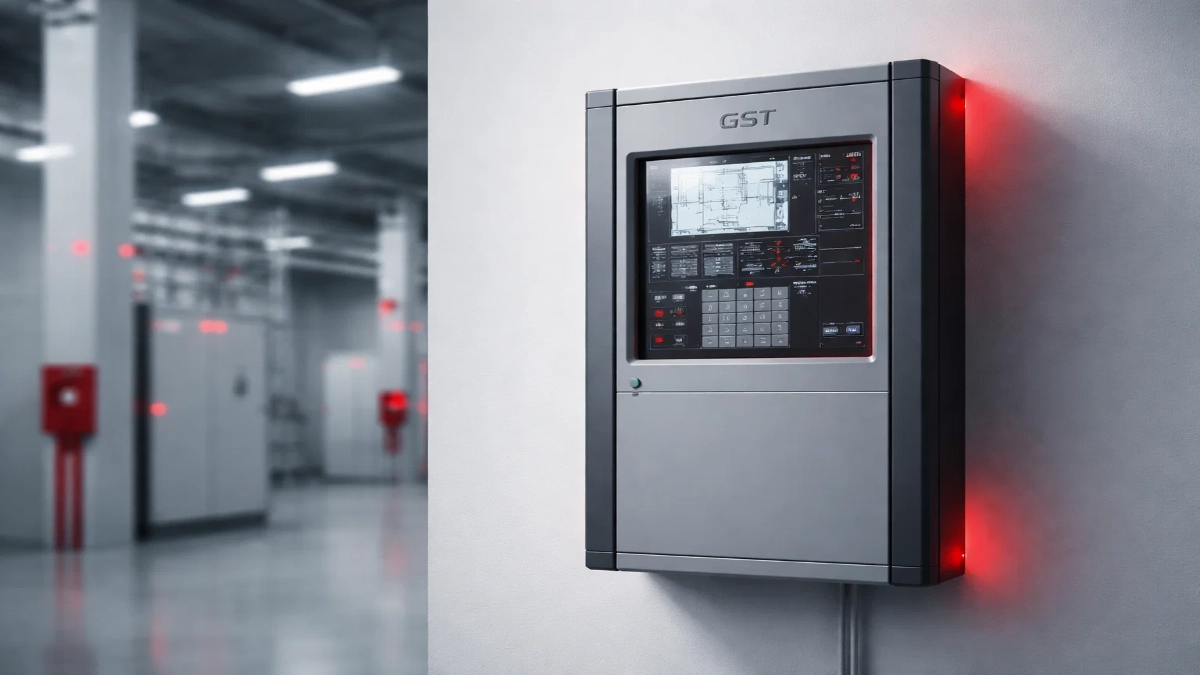
Control Panel (The Brain)
- Addressable loop-based panels
- Real-time data processing
- Event logging and diagnostics
This is where GST stands out; it doesn’t just detect, it interprets and prioritises signals.
Notification & Response Units
- Hooters and sirens
- Flashers and strobes
- Voice evacuation systems
Communication Layer
- Loop wiring architecture
- Fault-tolerant communication
- Integration-ready protocols
Evolution of Fire Alarm Systems: Why GST Represents the Future
Let’s understand the evolution:
1. Conventional Systems (Past)
- Zone-based detection
- No exact location
- High manual dependency
2. Semi-Addressable Systems (Transition)
- Partial improvements
- Still limited intelligence
3. Addressable GST Systems (Present & Future)
- Device-level identification
- Smart algorithms
- Scalable and network-ready
👉 This shift is similar to moving from feature phones to smartphones.
The Real Cost of Fire Incidents in India
Many decision-makers underestimate the true cost of fire.
Direct Costs
- Equipment damage
- Infrastructure loss
- Inventory destruction
Indirect Costs (Often Bigger)
- Production downtime
- Loss of contracts
- Brand reputation damage
- Legal liabilities
- Employee safety impact
Hidden Costs
- Investigation delays
- Compliance re-audits
- Insurance disputes
👉 In many cases, indirect losses exceed direct losses by 2–5x.
Investment Breakdown: What You Actually Pay For
A GST Fire Alarm System investment includes:
1. System Design
- Site survey
- Risk assessment
- Device placement strategy
2. Equipment Cost
- Control panels
- Detectors
- Modules
- Accessories
3. Installation & Commissioning
- Wiring
- Configuration
- Testing
4. Training & Handover
- Staff training
- Documentation
- System familiarization
5. AMC (Annual Maintenance Contract)
- Routine checks
- Calibration
- Fault handling
Value Engineering: Where GST Justifies Its Cost
Now comes the important part.
1. Precision = Faster Response
GST systems identify:
- Exact detector location
- Type of alert
- Severity level
👉 No time wasted in searching the source.
2. False Alarm Reduction
False alarms cost:
- Production loss
- Panic
- Resource wastage
GST uses intelligent algorithms to filter false triggers.
3. Predictive Maintenance
GST systems can:
- Detect faults early
- Alert before failure
- Reduce unexpected downtime
4. Scalability Without Replacement
Unlike conventional systems:
👉 GST allows expansion without replacing the entire system.
ROI Analysis: A Practical Scenario
Let’s consider a mid-sized industrial unit:
- GST System Cost: ₹8–12 lakh
- Average Fire Loss Risk: ₹50 lakh – ₹2 crore
Scenario 1: No Advanced System
- Fire spreads unnoticed
- Loss: ₹80 lakh
- Downtime: 15–30 days
Scenario 2: GST Installed
- Fire detected early
- Loss limited to ₹5–10 lakh
- Downtime: Minimal
👉 Savings in one incident = entire system cost recovered multiple times.
Industry-Wise Deep Impact Analysis
Manufacturing Industry
Challenges:
- Heat generation
- Electrical overload
- Chemical processes
GST Advantage:
- Early-stage detection
- Machine-level monitoring
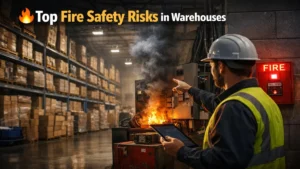
Warehousing & Logistics
Challenges:
- Large storage areas
- Limited supervision
- High fire load
GST Advantage:
- Zone + device-level tracking
- Centralized monitoring
Data Centres
Challenges:
- High-value infrastructure
- Zero downtime tolerance
GST Advantage:
- High sensitivity detection
- Fast response integration
Healthcare Facilities
Challenges:
- Patient safety
- Evacuation complexity
GST Advantage:
- Early alerts
- Voice evacuation support
Commercial Buildings
Challenges:
- High occupancy
- Compliance pressure
GST Advantage:
- Regulatory alignment
- Scalable safety
Technical Deep Dive (For Engineers)
Loop Architecture
GST systems use loop wiring, which means:
- Devices connected in a loop
- Communication in both directions
- Fault isolation capability
👉 Even if one section fails, the system continues working.
Addressing Mechanism
Each device has:
- Unique ID
- Location mapping
- Status reporting
Protocol & Integration
GST supports integration with:
- BMS (Building Management Systems)
- HVAC shutdown systems
- Fire suppression systems
Redundancy & Reliability
- Backup power supply
- Fault tolerance
- Continuous monitoring
Risk Mitigation: The Biggest Value Driver
Let’s simplify:
Without GST
- Reactive response
- High uncertainty
- Delayed action
With GST
- Proactive detection
- Immediate identification
- Controlled response
👉 This shift reduces risk exposure drastically.
Compliance & Legal Advantages
GST systems help you:
- Meet NBC (National Building Code) standards
- Pass fire audits easily
- Maintain documentation records
- Avoid penalties and shutdowns
Insurance Benefits Explained
Insurance companies evaluate:
- Risk level
- Safety infrastructure
- Response capability
With GST:
- Lower perceived risk
- Faster claim processing
- Potential premium reduction
Decision Psychology: Why Businesses Delay (And Regret)
Most businesses delay due to:
- Cost concerns
- Lack of awareness
- “Nothing has happened yet” mindset
But here’s reality:
👉 Fire safety is not about probability, it’s about impact.
India faces unique challenges:
- Dense industrial clusters
- Electrical fluctuations
- Mixed infrastructure quality
GST systems are ideal because:
- They are adaptable
- They support diverse environments
- They ensure uniform safety across locations
Final Decision Framework
Ask yourself:
- What is the cost of one fire incident for my business?
- Can I afford downtime?
- Is my current system future-ready?
- Am I fully compliant?
Final Verdict: Worth It or Not?
Let’s be brutally honest.
GST Fire Alarm Systems are:
❌ Not the cheapest
✅ But among the most reliable
✅ Technically superior
✅ Long-term cost-efficient
👉 If you think short-term → You may hesitate
👉 If you think long-term → It’s a clear YES
The Smartest Investment is the One You Never Have to Use
A GST Fire Alarm System is like insurance you hope you never need, but when you do, it becomes priceless.
It gives you:
- Time
- Control
- Protection
- Confidence
And in fire safety:
👉 Time is everything.
Read Also: Industrial Applications of GST Fire Alarm System in India
Read Also: Why Modern Buildings Prefer Addressable Fire Alarm Technology