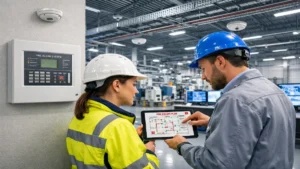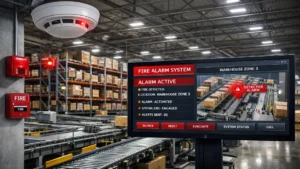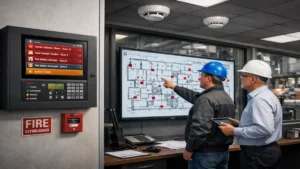
Fire alarm systems are not one-time purchases. They are long-term safety investments that remain active for 10–20 years or more. While many buyers focus only on the initial price, experienced consultants, facility managers and building owners evaluate the total lifecycle cost before making a decision.
This is where GST Addressable Fire Alarm Systems clearly stand out.
From design and installation to operation, maintenance, expansion and eventual upgrades, GST systems consistently deliver lower lifetime ownership costs without compromising safety or compliance.
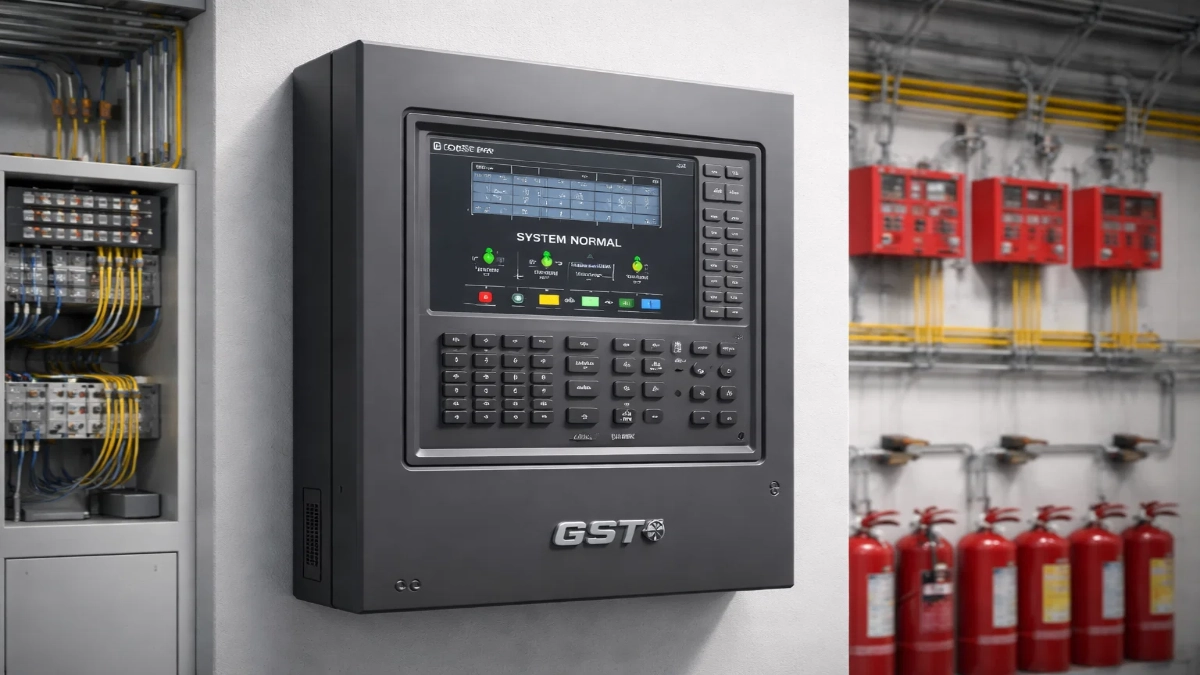
This article provides a detailed explanation of why GST addressable systems offer superior lifecycle cost advantages, particularly when compared to traditional solutions.
What Is Lifecycle Cost in Fire Alarm Systems?
Lifecycle cost refers to the total cost of owning and operating a fire alarm system over its entire usable life. It includes:
- System design and engineering
- Installation and commissioning
- Day-to-day operation
- Maintenance and fault handling
- Spare parts and replacements
- System expansion or reconfiguration
- Downtime and false alarm losses
- Upgrade and migration costs
A system with a lower upfront price can become more expensive over time if it causes frequent faults, requires manual intervention, or becomes obsolete quickly.
Why GST Focuses on Long-Term Value, Not Just Initial Cost
GST (Gulf Security Technology) designs its addressable fire alarm systems with a long-term performance mindset. Every component, from control panels to addressable detectors, is engineered to reduce operational complexity and lifetime expenses.
Instead of forcing system replacements, GST supports scalable, backwards-compatible and service-friendly architectures, which directly reduce ownership costs over decades.
Lower Design and Engineering Costs
Simplified System Architecture
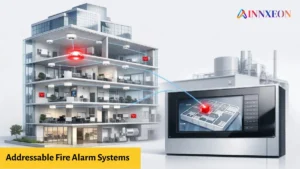
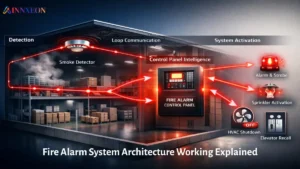
GST addressable systems utilise an intelligent loop-based architecture, enabling hundreds of devices to operate on a single loop. This reduces:
- Cable length
- Power supply requirements
- Panel quantity
- Design complexity
Compared to a conventional fire alarm panel, which requires multiple zones and extensive wiring, GST systems significantly lower engineering time and material usage.
Consultant-Friendly Documentation
GST provides:
- Clear system topology guidelines
- Loop capacity calculations
- Cause-and-effect programming support
This reduces redesign cycles and engineering errors, saving consultancy hours and project costs.
Reduced Installation Costs Over the System Life
Less Cabling, Less Labor
With GST addressable systems:
- One loop replaces multiple zone cables
- Devices share communication and power
- Installation becomes faster and cleaner
Even during future modifications, installers can add devices without disturbing existing wiring, something not easily possible in conventional fire alarm panel setups.
Faster Commissioning
GST panels offer:
- Auto-addressing
- Device auto-learning
- Loop diagnostics
These features reduce commissioning time and minimise costly site visits during project handover.
Intelligent Devices Reduce Operational Costs
Smart Addressable Detectors = Fewer False Alarms
GST addressable detectors use advanced algorithms to analyse smoke, heat and environmental conditions. This intelligence helps:
- Differentiate real fires from dust or steam
- Reduce nuisance alarms
- Prevent unnecessary evacuations
False alarms are expensive. They disrupt operations, reduce trust in the system and may even lead to penalties. GST significantly lowers these indirect costs.
Precise Event Identification
Each device has a unique address. When an alarm occurs, the system identifies:
- Exact device location
- Event type
- Time of occurrence
This eliminates time wasted searching zones, which is common with conventional detectors.
Lower Maintenance and Service Costs
Predictive Maintenance Instead of Reactive Repairs
GST addressable systems continuously monitor device health and report:
- Contamination levels
- Communication faults
- Power irregularities
Maintenance teams can address issues before failures occur, reducing emergency service calls and downtime.
Faster Fault Isolation
In traditional systems, a single fault can disable an entire zone. GST panels isolate faults automatically, allowing:
- The rest of the system is to remain active
- Maintenance without system shutdown
- Reduced business interruption costs
This is a major lifecycle cost advantage for hospitals, data centres, malls and industrial facilities.
Reduced Spare Parts and Inventory Costs
GST maintains long product lifecycles and backward compatibility, which means:
- Older panels support newer devices
- Spare parts remain available for years
- No forced system replacement
Facilities do not need to stock multiple detector types or obsolete components, unlike mixed or legacy systems.
Easy Expansion Without System Replacement
Scalable Architecture
As buildings grow, GST systems grow with them:
- Add new loops
- Integrate additional panels
- Expand device capacity
This avoids the common situation where conventional systems must be replaced entirely during expansion.
Software-Driven Configuration
Most changes in a gst fire alarm system are software-based, not hardware-based. This reduces:
- Material costs
- Labor hours
- System downtime
Energy Efficiency Reduces Operating Expenses
GST panels and devices are designed for low power consumption:
- Efficient loop power management
- Optimised standby current
- Smart battery charging
Lower energy usage translates into reduced electricity bills and longer battery life, especially important in large installations.
Compliance Stability Lowers Long-Term Risk
Designed for Global and Local Standards
GST systems are engineered to meet:
- International fire safety standards
- Regional compliance requirements
- Evolving code updates
This protects building owners from future retrofit costs due to regulatory changes.
Audit-Ready Reporting
Event logs, alarm histories, and fault records help facilities pass inspections without additional system upgrades or documentation expenses.
Training and Skill Availability Reduce Dependency Costs
GST systems follow logical, intuitive programming and operation, making it easier to:
- Train in-house teams
- Reduce reliance on specialised technicians
- Avoid premium service charges
This is particularly valuable for organisations managing multiple sites.
Comparison: GST Addressable vs Conventional Lifecycle Cost
| Cost Factor | GST Addressable System | Conventional System |
|---|---|---|
| Initial Wiring | Lower | Higher |
| False Alarms | Minimal | Frequent |
| Fault Isolation | Automatic | Manual |
| Expansion Cost | Low | High |
| Maintenance | Predictive | Reactive |
| System Replacement | Rare | Common |
| Lifecycle Cost | Significantly Lower | Higher |
Why Consultants Recommend GST for Long-Term Projects
Fire safety consultants increasingly recommend GST because:
- Systems remain relevant for decades
- Design flexibility reduces future risks
- Operational savings outweigh initial investment
For high-value assets, GST delivers predictable costs, consistent performance and future-ready safety.
Lifecycle Cost Advantage in Real-World Applications
Commercial Buildings
Reduced downtime, minimal false alarms and easy tenant modifications.
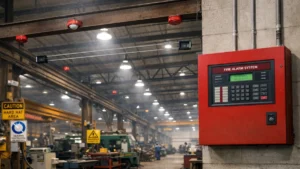
Industrial Facilities
Reliable detection in harsh environments and fault tolerance during operations.
Hospitals and Data Centers
Continuous system availability and precise alarm identification.
Educational Institutions
Low maintenance overhead and simplified system management.
Final Thoughts: True Value Lies in the Lifecycle
The real cost of a fire alarm system is not what you pay on day one; it is what you spend over the next 10–20 years.
GST Addressable Fire Alarm Systems consistently deliver:
- Lower total ownership cost
- Reduced operational disruption
- Simplified maintenance
- Long-term compliance confidence
When lifecycle cost matters, and it always does, GST proves to be a smarter, more economical choice than traditional alternatives.
Read Also: What Makes the GST-200N Panel Consultant-Friendly in Fire Alarm Design
Read Also: GST Addressable Fire Alarm Panel Specifications Explained for Buyers