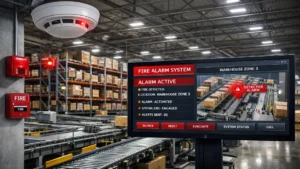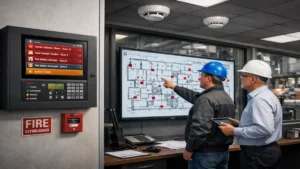
In modern fire safety systems, reliable power management and effective redundancy strategies are crucial for ensuring the uninterrupted operation of fire alarm panels. The GST-IFP8 Panel, part of the comprehensive GST Fire Alarm System family, is engineered with advanced power solutions that prioritise safety, reliability and continuous protection even during power disturbances.
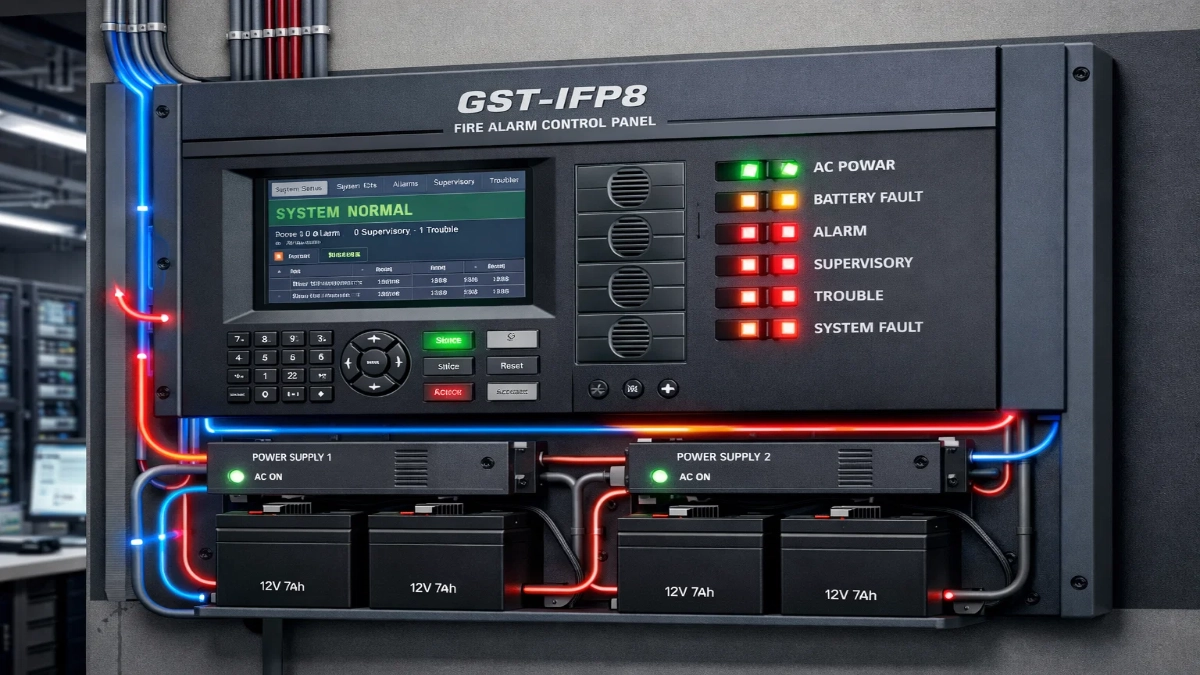
In this article, we will explain how the GST-IFP8 panel manages power, why redundancy matters and how its design supports high availability. Whether you are specifying systems for commercial buildings or learning about fire alarm reliability, this guide will help you understand core power management strategies.
Introduction to Power Management in Fire Alarm Systems
A fire alarm panel is only as reliable as its power supply. Fire detection systems must remain operational at all times, especially during emergencies when power outages are common.
Power management in a fire alarm panel includes:
- Primary power supply: Usually AC mains input.
- Backup power: Typically batteries or a secondary source.
- Monitoring and switching: Seamless transition between power sources.
- Load distribution: Ensuring components receive power without interruption.
Without efficient power management, a fire alarm panel could fail during critical moments, delaying detection and evacuation.
The GST-IFP8 takes these requirements seriously by applying robust strategies to manage and maintain power.
Why Redundancy Matters
Redundancy refers to backup or alternative systems that take over in the event of the primary system’s failure. In fire safety systems, redundancy ensures the panel continues to operate even if a component stops working.
Redundancy is essential because:
- Fire emergencies often coincide with power loss.
- Building evacuations and first responder access need reliable alerts.
- Regulatory standards require continuous fire safety operations.
In critical infrastructure like hospitals, data centres, or commercial complexes, even a momentary loss of fire detection and alarm functions can have severe consequences. Redundancy protects against such failures.
Overview of GST-IFP8 Panel
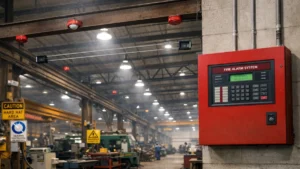
The GST-IFP8 Panel is a next-generation fire alarm control unit from Gulf Security Technology (GST) designed for flexibility and reliability. It supports both conventional and advanced configurations and integrates seamlessly with a variety of fire detection devices.
Key features include:
- Support for multiple zones of protection.
- Compatibility with both addressable and conventional peripherals.
- Highly efficient power management and redundancy systems.
- Clear status indication, easy configuration and maintenance.
This makes the GST-IFP8 a versatile choice for commercial, industrial and residential applications.
4. Power Architecture of GST-IFP8
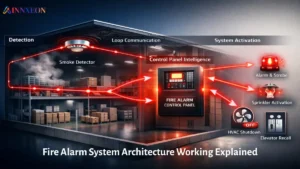
Power architecture refers to how power is supplied, monitored and distributed in a fire alarm panel. The GST-IFP8 employs a layered power system to ensure continuous operations.
Primary Power Supply
The GST-IFP8 typically operates from a standard AC mains source (e.g., 230VAC in many regions). The incoming power passes through:
- Surge protection: To shield the system from voltage spikes.
- Rectification and filtering: Ensuring clean DC voltage for internal circuits.
- Regulated outputs: Precise voltage levels for connected devices.
Quality regulation is critical because unstable input can damage sensitive electronics such as addressable detectors and logic circuits on the panel.
Secondary (Backup) Power
If the mains supply fails, the GST-IFP8 automatically switches to backup power without interruption. Backup power is usually supplied by sealed lead-acid or maintenance-free batteries sized according to regulatory requirements.
Backup power functions include:
- Automatic switching: Smooth transfer between mains and battery.
- Battery health monitoring: Ensures readiness and early indication of issues.
- Low-voltage disconnect: Protects batteries from over-discharge.
This means the system can operate continuously for hours without mains power, making it reliable during blackouts or emergencies.
Intelligent Power Distribution
Beyond supplying power, the GST-IFP8 intelligently distributes energy to all connected components.
Dedicated Power Outputs
The panel has separate outputs for:
- Bell circuits/notification appliances
- Local modules (e.g., zone expanders)
- Auxiliary power for devices like strobes or relays
Each output is individually monitored for faults and can be reset without affecting the entire system.
Load Prioritisation
During battery operation, the panel prioritises powering critical circuits:
- Fire detection and signalling devices
- Communications with remote display units
- Priority outputs like voice evacuation amplifiers
Less critical loads may be limited or disabled to extend battery life during prolonged outages.
Redundancy Features in the GST-IFP8
Redundancy in GST-IFP8 is built into both hardware and software.
Dual Power Path Monitoring
The panel continuously checks both the primary and backup power paths, with logic that:
- Triggers alarms if power deviates from acceptable levels.
- Logs events for maintenance and auditing.
- Notifies users through indicators and remote communications.
This proactive approach helps facility managers stay ahead of potential power issues.
Battery Supervision and Alerts
Battery failure is one of the most common causes of fire alarm downtime. The GST-IFP8 monitors:
- Battery voltage
- Charging current
- Charging termination status
If a battery begins to fail, the panel alerts maintenance personnel well before critical depletion.
Power Supply Redundancy (Optional)
Some installations require dual AC supplies or redundant power supplies. The GST-IFP8 supports configurations where:
- A second mains feed can be connected.
- A secondary UPS (uninterruptible power supply) feeds the panel.
- Redundant power modules can be added to extend availability.
These options ensure maximum uptime even in complex power environments.
Integration with Detection Devices
The power and redundancy strategies of the GST-IFP8 support both traditional and modern detection technologies:
- Conventional detectors connect easily due to organised power zones. These detectors work well in smaller, well-defined areas where individual detector addressing is not required.
- Addressable detectors communicate status and alarms individually, requiring stable power and data links. The GST-IFP8 supports these devices with proper circuit design and power stability.
Whether you use conventional zones or intelligent addressable devices, the GST-IFP8 ensures they remain powered and monitored.
Benefits of Advanced Power Management
Effective power management yields several advantages:
Enhanced Safety
With reliable operation, occupants receive timely alerts during emergencies. Firefighters and responders can act faster, reducing risk and damage.
Compliance with Codes and Standards
Fire codes require fire alarm panels to maintain operation during power loss. Redundancy and power monitoring in GST-IFP8 help meet or exceed these standards.
Lower Maintenance Costs
Predictive alerts for battery health and power anomalies reduce emergency repairs and unplanned downtime.
Easy Serviceability
Clear indicators and logging make troubleshooting straightforward, reducing service time.
Practical Deployment Scenarios
Understanding real-world use cases of GST-IFP8 helps illustrate its power and redundancy strengths:
Commercial Office Building
In a multi-story office block:
- Mains power feeds the primary panel.
- Dual battery backup ensures continued protection after hours.
- Redundant UPS keeps critical communication lines active.
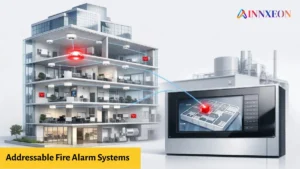
- Addressable detectors on each floor allow precise location identification.
Retail and Public Venues
Retail spaces often experience fluctuating power due to high electrical loads. The GST-IFP8 maintains steady operation through:
- Energy filtering against spikes
- Load balancing across notification circuits
- Priority power for public address and evacuation systems
Industrial Facility
Large industrial sites may use:
- Multiple GST-IFP8 panels networked together
- Redundant mains from separate substations
- Backup generators are tied into the overall power strategy
Here, reliability is crucial to prevent costly downtime or catastrophic fire events.
Maintenance and Best Practices
To maximise performance:
- Conduct periodic battery tests.
- Verify power supply wiring and connections.
- Inspect surge protection devices.
- Ensure regular firmware updates on the panel.
- Train maintenance staff on identifying power alerts.
These simple practices ensure the GST-IFP8 operates optimally year-round.
Why Choose GST-IFP8 for Your Fire Safety Needs
The GST-IFP8 Panel, as part of a complete gst fire alarm system, stands out due to:
- Robust power management is designed for uninterrupted operation.
- Advanced redundancy strategies that support both small and large installations.
- Compatibility with a wide range of detection devices, including addressable detectors and conventional detectors.
- Easy integration with other fire safety products like the addressable fire alarm panel and conventional fire alarm panel devices.
- Quality engineering from Gulf Security Technology, a trusted name in fire safety.
These benefits make the GST-IFP8 a top choice when reliability and performance matter most.
Note: Power management and redundancy strategies are essential components of any effective fire alarm panel. The GST-IFP8 delivers both with intelligent design, proactive monitoring and flexible deployment options.
From primary and backup power systems to seamless load distribution and device support, this panel ensures that your fire safety system stays operational under all conditions.
Whether your facility uses conventional setups or advanced addressable technologies, the GST-IFP8 provides peace of mind with dependable power and enhanced safety.
For facility managers, installers and safety planners, understanding and choosing the right panel is the first step toward better fire protection.
Read Also: Scaling a Multi-Building Fire Alarm Network Using GST Panels
Read Also: What Makes the GST-200N Panel Consultant-Friendly in Fire Alarm Design