Fire detection system selection is no longer just a compliance requirement; it is a strategic engineering decision. In modern industrial, commercial and high-risk environments, selecting the right fire alarm system directly impacts life safety, asset protection and operational continuity.
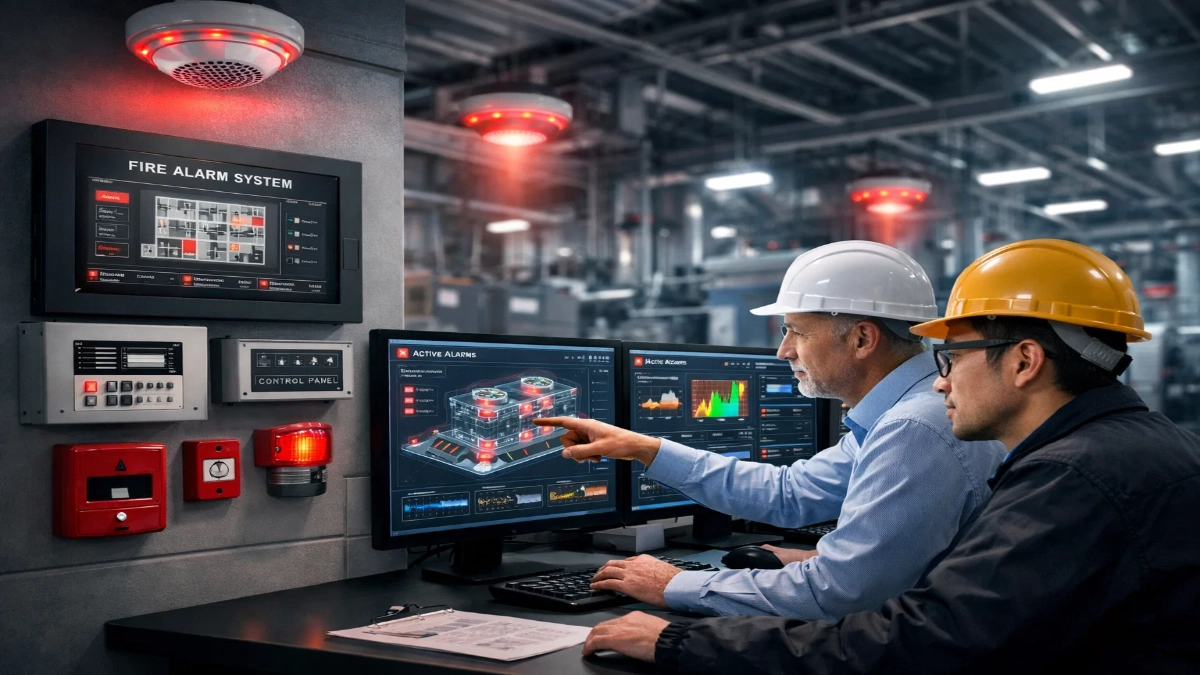
A risk-based decision-making approach ensures that engineers and consultants go beyond basic code compliance and design systems that actively respond to real-world fire scenarios. Instead of choosing between a conventional fire alarm panel and an addressable fire alarm panel based only on cost, professionals now evaluate risk profiles, environmental conditions and operational criticality.
This article explains how risk-based decision-making transforms fire detection system selection and why advanced solutions like the GST fire alarm system consistently stand out in technical and practical evaluations.
What is Risk-Based Decision Making in Fire Detection?
Risk-based decision making involves identifying, analysing and prioritising potential fire hazards before selecting a detection system. It answers one critical question:
“What level of detection intelligence is required to minimise risk in this specific environment?”
Instead of a one-size-fits-all approach, engineers assess:
- Fire load and ignition probability
- Occupancy type and density
- Asset criticality
- Environmental conditions (dust, humidity, temperature)
- Required response time
This approach ensures that the selected system is not just compliant, but optimised.
Why Traditional Selection Methods Are No Longer Enough
Historically, fire alarm systems were selected based on:
- Budget constraints
- Building size
- Basic regulatory compliance
While this approach worked for simpler infrastructures, it fails in modern environments such as:
- Data centers
- Industrial plants
- High-rise commercial buildings
- Smart infrastructure
In such environments, choosing between conventional detectors and addressable detectors without risk analysis can lead to:
- Delayed detection
- False alarms
- System inefficiencies
- Increased downtime
Core Factors in Risk-Based Fire Detection Selection
1. Risk Severity and Fire Load
The first step is to evaluate how severe a fire event could be.
High-risk areas include:
- Electrical rooms
- Server rooms
- Chemical storage areas
In these environments, using an addressable fire alarm panel with intelligent addressable detectors ensures faster and more precise detection.
Low-risk environments, such as small offices, may still function adequately with a conventional fire alarm panel and conventional detectors.
2. Detection Speed Requirements
Time is the most critical factor in fire safety.
- Conventional systems detect zones
- Addressable systems detect exact device locations
This means:
- Faster response
- Reduced investigation time
- Improved evacuation efficiency
A GST fire alarm system enhances this further with advanced algorithms that detect fire patterns early while minimising false alarms.
3. System Scalability and Future Expansion
Modern facilities evolve. Your fire alarm system should, too.
Risk-based planning considers:
- Future building expansion
- Integration with BMS (Building Management Systems)
- IoT and smart monitoring
An addressable fire alarm panel offers modular scalability, unlike traditional conventional fire alarm panel setups.
4. Environmental Conditions
Environmental factors significantly affect detector performance.
Examples:
- Dust → False alarms
- Humidity → Sensor degradation
- Temperature fluctuations → Detection delay
Advanced addressable detectors used in a GST fire alarm system come with:
- Drift compensation
- Environmental adaptability
- Intelligent filtering
This makes them ideal for harsh industrial conditions.
5. False Alarm Risk
False alarms are not just inconvenient; they are costly and dangerous.
They can:
- Disrupt operations
- Cause evacuation fatigue
- Reduce system credibility
Risk-based selection prioritises systems that minimise false triggers.
The GST fire alarm system uses multi-sensor technology and intelligent processing to significantly reduce false alarms compared to traditional conventional detectors.
Conventional vs Addressable Systems: A Risk Perspective
Conventional Fire Alarm Systems
Best suited for:
- Small buildings
- Low-risk environments
- Budget-sensitive projects
Limitations:
- Zone-based detection
- Limited scalability
- Higher false alarm probability
A conventional fire alarm panel paired with conventional detectors works where risks are predictable and manageable.
Addressable Fire Alarm Systems
Best suited for:
- High-risk facilities
- Large infrastructures
- Mission-critical environments
Advantages:
- Device-level identification
- Real-time monitoring
- Faster fault detection
- Integration capabilities
An addressable fire alarm panel combined with intelligent addressable detectors provides superior control and visibility.
Why GST Fire Alarm Systems Excel in Risk-Based Environments
When applying risk-based decision frameworks, the GST fire alarm system consistently emerges as a preferred solution.
1. Intelligent Detection Technology
GST systems use advanced sensing technologies that:
- Analyse smoke patterns
- Detect heat variations
- Differentiate between real fire and environmental noise
This ensures accurate detection even in complex environments.
2. High Reliability in Critical Applications
In industries where downtime is unacceptable, reliability is non-negotiable.
GST systems offer:
- Stable communication protocols
- Fault-tolerant architecture
- Continuous system monitoring
This makes them ideal for high-risk environments like:
- Manufacturing plants
- Airports
- Data centres
3. Advanced Addressable Architecture
The strength of GST lies in its addressable ecosystem.
With addressable detectors connected to an addressable fire alarm panel, users can:
- Pinpoint exact fire locations
- Reduce response time
- Optimise emergency handling
4. Reduced Lifecycle Cost
While initial investment may be higher than a conventional fire alarm panel, GST systems provide:
- Lower maintenance cost
- Reduced false alarm expenses
- Longer device lifespan
This aligns perfectly with risk-based financial planning.
5. Seamless Integration
Modern buildings require interconnected safety systems.
GST supports:
- Fire + CCTV integration
- Fire + access control
- Fire + BMS systems
This creates a unified safety ecosystem.
Practical Example: Risk-Based Selection in an Industrial Facility
Let’s consider a real-world scenario.
Scenario:
A manufacturing plant with:
- High electrical load
- Dust-heavy environment
- Continuous operations
Risk Analysis:
- High fire probability
- High operational loss risk
- High false alarm probability
Recommended Solution:
- Addressable fire alarm panel
- Intelligent addressable detectors
- Fully integrated GST fire alarm system
Outcome:
- Faster fire detection
- Reduced downtime
- Improved safety compliance
Role of Engineers in Risk-Based Decision Making
Modern fire protection engineers must:
- Move beyond code compliance
- Perform detailed risk assessments
- Recommend intelligent systems
- Consider long-term performance
This shift ensures that fire detection systems are not just installed, but engineered.
Best Practices for Risk-Based Fire Detection Selection
- Always start with a detailed risk assessment
- Match system type with risk severity
- Prioritise intelligent detection over cost savings
- Choose scalable solutions
- Invest in reliable systems like the GST fire alarm system
- Ensure proper installation and maintenance
Conclusion
Risk-based decision making is transforming how fire detection systems are selected. It shifts the focus from basic compliance to intelligent safety engineering.
While conventional detectors and a conventional fire alarm panel may still serve low-risk applications, modern environments demand more advanced solutions. An addressable fire alarm panel combined with intelligent addressable detectors provides the precision and reliability required today.
Among available solutions, the GST fire alarm system stands out as a robust, scalable and intelligent choice for risk-driven environments.
In fire safety, the right decision is not the cheapest; it is the one that minimises risk, protects lives and ensures operational continuity.
Read Also: Data Communication Between Fire Alarm and Surveillance Systems
Read Also: Types of Fire Alarm Systems Used in Industrial Facilities