False alarms are more than an inconvenience. They disrupt operations, create panic, waste manpower and most dangerously make people ignore fire alarms altogether. When a business faces repeated false alarms, it’s a clear sign that something is fundamentally wrong with the system.
Many facility managers assume false alarms happen due to poor-quality detectors or accidental triggers. But the real reasons often lie much deeper within system design, environmental compatibility, incorrect installation practices, outdated conventional technology and long-ignored maintenance issues.
In this comprehensive guide, you will learn:
- Why false alarms occur more often than you think
- What hidden system flaws cause recurring false alerts
- How environmental and operational factors contribute
- Why older and conventional systems are more prone to false alarms
- What modern addressable fire alarm technology does differently
- How to eliminate false alarms permanently with the right engineering choices
Let’s break down the truth behind recurring false alarms and what you can do to stop them for good.
1. False Alarms Are Not Random, They’re a Symptom of System Weakness
False alarms don’t “just happen.”
If your system is triggering alarms frequently, it means it is:
✔ Misreading the environment
✔ Receiving inaccurate data
✔ Failing to distinguish between real fire indicators and disturbances
✔ Unable to self-correct or isolate problematic devices
In short, false alarms are a diagnostic indicator, not an accident. They reveal underlying gaps in:
- System design
- Detector placement
- Device calibration
- Panel intelligence
- Wiring integrity
- Environmental compatibility
A fire alarm system should be stable, predictable and resilient. When it isn’t, it means something in the design or hardware ecosystem isn’t working the way it should.
2. Poor Detector Placement Is the Hidden Root Cause
One of the biggest and least understood causes of false alarms is incorrect device placement.
Many installers treat detectors as plug-and-play devices. But every detector type has strict environmental rules. When detectors are placed incorrectly, they behave unpredictably.
Common placement mistakes include:
❌ Installing smoke detectors near HVAC vents
Airflow can confuse a detector’s sensing chamber, causing turbulence and nuisance alarms.
❌ Installing detectors near kitchens or pantry areas
Cooking vapors, steam and aerosols can easily trigger them.
❌ Mounting heat detectors too close to machinery
Equipment generates sporadic heat spikes that mimic fire signatures.
❌ Placing detectors in dusty, humid or polluted zones
Dust buildup is one of the fastest ways to cause false alarms.
❌ Installing the wrong detector type for the environment
For example:
- Ionization detectors in dusty workshops
- Optical detectors near welding areas
- Standard detectors in high-humidity basements
When detectors are mismatched to the environment, false alarms become inevitable.
3. Poor Maintenance Turns Small Issues Into False Alarm Cycles
Fire alarm systems require routine cleaning, calibration and inspection. When these steps are ignored, the system becomes unstable.
Common maintenance-related triggers include:
- Dust accumulation inside the sensing chamber
- Insects entering detectors
- Aged or degraded sensors
- Loose wiring or corroded terminals
- Dirty air filters affecting air aspiration systems
- Detector end-of-life expiry
- Faulty bases or connectors
Most detectors have a lifespan of 8–10 years. After that, sensitivity drifts and false alarms escalate dramatically.
If your system is older, frequent false alarms are a warning that devices need replacement.
4. Environmental Factors You Don’t Usually Notice
Your environment is far more dynamic than you think. A fire alarm system must account for:
✔ Temperature fluctuations
Heat detectors may interpret sudden, non-fire heat surges as danger.
✔ Humidity
Moisture can obstruct sensor chambers or trigger condensation alarms.
✔ Aerosols from cleaning sprays
Cleaning staff often unknowingly trigger smoke detectors at night.
✔ Renovation or construction work
Dust, paint fumes, welding smoke, all confuse sensors.
✔ High-voltage equipment
Electrical noise and electromagnetic interference affect older systems.
Most of these do not indicate system failure but they indicate a mismatch between detector type, system intelligence and environmental behavior.
5. Old Conventional Systems Are Naturally Prone to False Alarms
Conventional systems treat the building as zones, not individual devices. This lack of detail creates instability because:
✔ The system cannot identify which device is misbehaving
If one detector drifts or malfunctions, the entire zone can go into alarm.
✔ Sensitivity levels cannot be adjusted individually
All detectors in a zone must operate at the same sensitivity, even if they are in different environments.
✔ No real-time diagnostics
You cannot track device health trends, contamination levels or communication issues.
✔ Wiring faults often resemble fire signals
A loose wire or short circuit can look like a fire condition.
✔ The system cannot differentiate between genuine smoke and disturbances
Conventional panels lack algorithmic intelligence to filter out nuisances.
This is why older conventional panels often create recurring, untraceable false alarms that become expensive to diagnose.
6. Devices Reaching End-of-Life Lead to Sensitivity Drift
Every detector has a manufacturer-specified lifespan. Beyond this period:
- Sensors lose accuracy
- Sensitivity drifts
- The device misinterprets environmental signals
- False alarms and missed alarms become more frequent
Many facilities continue using detectors far past their expiry date, assuming they are still functional.
But aged sensors are one of the most common causes of persistent nuisance alarms.
A modern addressable system alerts you in advance when a detector is nearing end-of-life, something conventional systems cannot do.
7. Faulty Wiring and Loose Connections Mimic Fire Conditions
In older systems, wiring issues are often mistaken as fire signals.
Common wiring-related causes:
- Loose terminals
- Insulation damage
- Short circuits
- Earth faults
- High loop resistance
- Voltage drop issues
- Moisture entering conduits
Conventional panels see these faults as abnormal current patterns and interpret them as alarms.
Addressable systems, in contrast, can identify:
- The exact device with wiring issues
- The precise location of the fault
- Whether it’s a wiring break, short or ground fault
This makes troubleshooting far simpler and prevents false alarms caused by wiring instability.
8. Using Low-Quality or Uncertified Detectors
Many false alarm cycles begin when buildings use:
- Counterfeit detectors
- Incompatible replacements
- Third-party sensors not certified with the panel
- Uncalibrated or low-cost detectors
- Mixed-brand devices that do not communicate properly
Fire detection is not a place to cut costs.
Non-certified devices degrade faster and behave unpredictably, especially under environmental stress.
A robust system uses:
✔ Certified detectors
✔ Matched panels and modules
✔ Proper calibration
✔ Reliable device communication
This drastically reduces false alarms and increases system stability.
9. Changing Building Usage Without Updating the Detection Plan
If your building started using:
- New HVAC systems
- New machines and equipment
- More cleaning chemicals
- Renovation areas
- Storage for packaging materials
- Temporary partitions
- Expanded kitchen areas
…then your old fire detection plan is no longer suitable.
Detectors designed for your original building conditions may not be compatible with new environmental behavior.
For example:
- A storage area that now holds cardboard will create more dust.
- A converted pantry will generate steam and aerosols.
- New machinery raises temperature fluctuations.
When building activities evolve, the fire alarm design must evolve too.
10. Why Modern Addressable Systems Reduce False Alarms Significantly
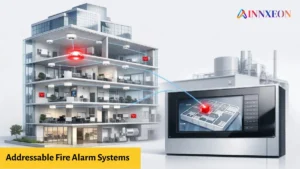
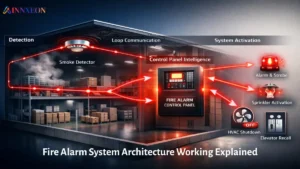
Modern addressable fire alarm systems use intelligent algorithms and device-level communication to differentiate real fires from disturbances.
Key advantages include:
✔ Device-level monitoring
The system identifies exactly which detector is misbehaving.
✔ Adjustable sensitivity settings
Each detector can be calibrated for its unique environment.
✔ Drift compensation
Smart detectors automatically balance their sensitivity as they age, reducing false alarms.
✔ Real-time diagnostics
The panel monitors contamination, chamber blockages, wiring issues and signal deviations.
✔ Event history and trend analysis
Engineers can track and prevent false alarms before they happen.
✔ Reduced wiring faults
Addressable loops are more resilient and self-monitoring.
✔ Smarter fire detection algorithms
Modern sensors distinguish between dust, steam, aerosols and real smoke patterns.
These capabilities dramatically reduce the frequency and severity of false alarms.
11. The Human Factor: Training and Usage Mistakes
Often overlooked, human errors add to the false alarm problem.
Some examples:
- Staff spraying cleaners directly under detectors
- Maintenance workers forgetting to isolate zones during repair
- Contractors creating dust without notifying facility teams
- Kitchen staff leaving ovens or fryers unattended
- Poor housekeeping around detectors
- Steam from washrooms drifting into corridors
With basic training, many of these can be prevented.
12. How to Permanently Reduce False Alarms in Your Facility
Here is a practical checklist for eliminating false alarms:
✓ Audit your detector placement
Ensure detectors match each environment of your building.
✓ Replace outdated detectors
Especially if they are 8–10 years old.
✓ Clean and service detectors regularly
Prevent dust, insects and contamination.
✓ Switch to an intelligent addressable system
It reduces false alarms dramatically due to its analytics and sensitivity control.
✓ Use certified devices only
Avoid cheap third-party replacements.
✓ Update the detection design when building usage changes
✓ Train staff on usage best practices
✓ Fix wiring issues immediately
Working with a qualified fire system engineer can help you detect root causes quickly and ensure long-term stability.
Frequent false alarms are not random, they are the system’s way of telling you something is wrong.
Whether it’s poor placement, aging sensors, environmental disturbances or outdated conventional technology, false alarms always have a reason. Fortunately, modern fire alarm systems especially intelligent addressable solutions offer the diagnostics, stability and precision required to eliminate nuisance alarms for good.
When your fire system is reliable, your building becomes safer, operations run smoothly and your people trust the alarms they hear.
Read Also: 12 Technical Specs Engineers Must Check Before Choosing a Fire Alarm Panel
Read Also: What Brands Don’t Tell You About Fire Alarm System Lifespan