Industrial warehouses and manufacturing plants play a critical role in modern supply chains. They store raw materials, manage production processes and distribute finished goods across markets. However, these facilities also face some of the highest fire risks among commercial and industrial environments.
A single fire incident in a warehouse or manufacturing plant can cause massive financial losses, operational downtime and even endanger human lives. According to industrial safety reports worldwide, most industrial fires are preventable and are caused by electrical faults, improper storage practices, combustible dust and a lack of adequate fire protection systems.
Understanding the top fire safety risks in warehouses and manufacturing plants is essential for safety engineers, facility managers, plant heads and system integrators. By identifying these risks early, organisations can implement proactive safety strategies that reduce fire hazards and ensure regulatory compliance.
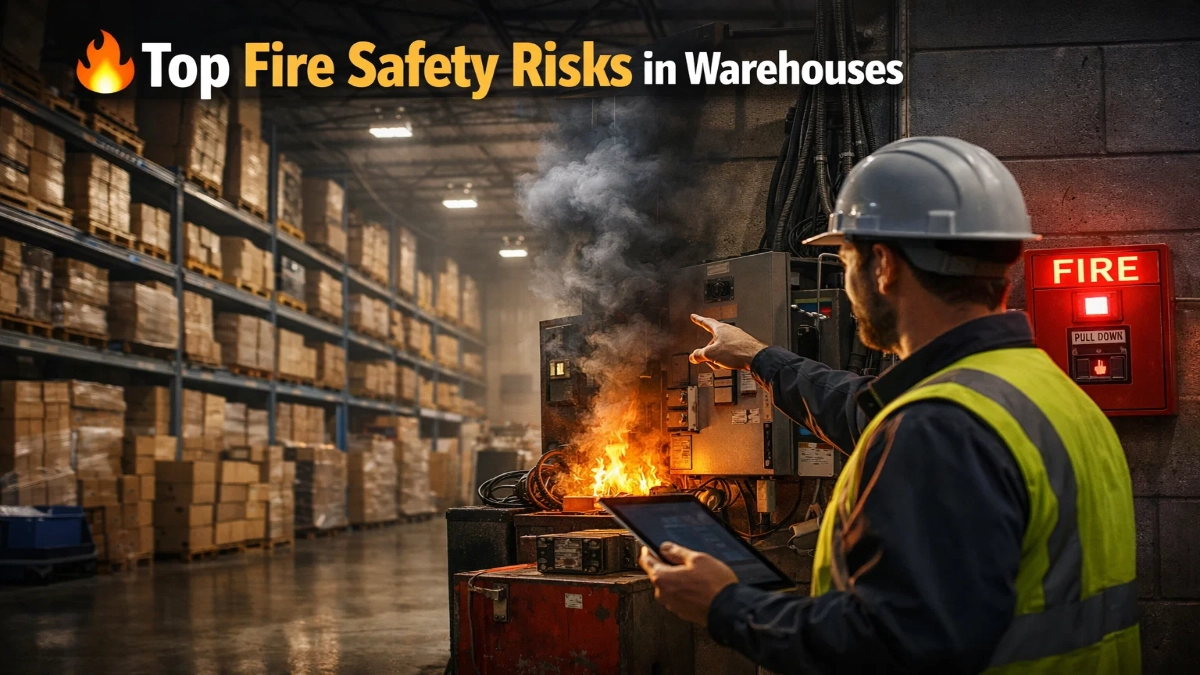
In this comprehensive guide, we will explore the most common fire hazards in industrial facilities and practical solutions to mitigate them.
Why Warehouses and Manufacturing Plants Face Higher Fire Risks
Warehouses and industrial plants naturally contain multiple elements that can fuel a fire:
- Large quantities of combustible materials
- Continuous electrical equipment operation
- Heavy machinery and heat-generating processes
- Chemical storage
- High storage racks and dense layouts
When these factors combine with insufficient safety measures, even a small ignition source can quickly escalate into a major fire incident.
Additionally, fires in large industrial facilities often spread rapidly due to:
- High ceilings and open floor layouts
- Ventilation systems that feed oxygen to flames
- Large quantities of packaging materials like cardboard and plastic
Because of these risks, modern fire safety strategies must combine technology, engineering design and operational discipline.
1. Electrical System Failures
Electrical faults remain a leading cause of industrial fires in warehouses and manufacturing plants.
Electrical systems in industrial facilities operate continuously and power multiple machines, lighting systems, conveyors and automation equipment. Over time, electrical components may deteriorate or become overloaded.
Common Electrical Fire Hazards
- Overloaded circuits
- Aging wiring infrastructure
- Loose electrical connections
- Faulty control panels
- Improper grounding systems
- Poor cable management
When insulation breaks down or circuits overload, sparks can ignite nearby combustible materials.
How to Reduce Electrical Fire Risks
Organisations should implement the following measures:
- Conduct periodic electrical safety audits
- Install thermal monitoring systems for electrical panels
- Use industrial-grade wiring and switchgear
- Schedule preventive maintenance inspections
- Implement load balancing for electrical systems
Smart monitoring technologies can also detect abnormal heat patterns before electrical failures occur.
2. Combustible Dust Explosions
Combustible dust is one of the most underestimated fire hazards in manufacturing plants.
Industries such as:
- food processing
- pharmaceuticals
- metal fabrication
- woodworking
- chemical manufacturing
often generate fine dust particles during production.
When dust particles accumulate in the air and come into contact with an ignition source, they can cause dust explosions.
Conditions That Trigger Dust Explosions
A dust explosion requires five elements:
- Combustible dust
- Oxygen
- Ignition source
- Dispersion of dust particles
- Confined environment
This combination is known as the Dust Explosion Pentagon.
Prevention Strategies
To minimise combustible dust risks:
- Install industrial dust collection systems
- Maintain proper ventilation
- Perform regular housekeeping to remove dust accumulation
- Use explosion-proof electrical equipment
- Install spark detection systems
Early detection and proper facility design can significantly reduce the risk of catastrophic explosions.
3. Improper Storage of Flammable Materials
Warehouses frequently store flammable liquids, chemicals and packaging materials.
If these materials are not stored properly, they can easily ignite during an electrical fault or mechanical failure.
High-Risk Materials in Warehouses
Some common flammable materials include:
- Solvents
- Paints
- Adhesives
- Lubricants
- Cleaning chemicals
- Cardboard packaging
- Plastic pallets
Stacking these materials without fire protection significantly increases the fire load.
Safe Storage Best Practices
To reduce fire hazards:
- Store flammable liquids in approved fire-rated cabinets
- Maintain safe separation distances
- Label hazardous materials clearly
- Install fire suppression systems in storage areas
- Train staff on chemical handling protocols
Proper inventory management also ensures that outdated or unstable chemicals do not accumulate.
4. Overheated Machinery and Equipment
Manufacturing plants operate with heavy machinery that generates heat during production.
Examples include:
- industrial furnaces
- cutting machines
- compressors
- conveyors
- welding equipment
If machinery overheats or operates without proper maintenance, it can become a source of ignition for a fire.
Common Causes of Machinery Fires
- Lack of lubrication
- Mechanical friction
- Overheating motors
- Dust buildup in equipment
- Blocked ventilation systems
Preventive Measures
Facilities should implement:
- Predictive maintenance programs
- Temperature monitoring sensors
- Machine shutdown alarms
- Routine inspection schedules
Industrial IoT monitoring systems can now detect abnormal machine behaviour and alert operators before failures occur.
5. Poor Housekeeping Practices
Housekeeping is one of the simplest yet most overlooked fire prevention strategies in warehouses and manufacturing plants.
Accumulated waste materials can act as fuel sources for fire.
Common Housekeeping Issues
- Cardboard accumulation
- Plastic waste storage
- Oil-soaked rags
- Wooden pallets stacked improperly
- Blocked fire exits
When these materials accumulate near electrical panels or machinery, they significantly increase fire risks.
Effective Housekeeping Policies
Facilities should:
- Maintain daily cleaning schedules
- Create designated waste disposal zones
- Implement pallet management programs
- Ensure fire exits remain unobstructed
A clean facility significantly reduces potential fire fuel sources.
6. Inadequate Fire Detection Systems
Many industrial facilities rely on outdated fire detection systems that cannot detect fires early enough.
Warehouses often have high ceilings and large open spaces, which can delay smoke detection.
Challenges in Warehouse Fire Detection
- Smoke dilution in large volumes
- Slow detection in rack storage systems
- Limited detector coverage
Modern Fire Detection Technologies
Modern facilities should consider:
- Aspirating smoke detection systems
- Beam smoke detectors for large spaces
- Heat detection systems in high-risk zones
- Addressable fire alarm systems
Early detection dramatically reduces fire damage by allowing faster emergency response.
7. Lack of Fire Suppression Systems
Fire detection alone cannot stop a fire. Facilities must also have effective suppression systems.
Many warehouse fires spread quickly because suppression systems are either absent or poorly designed.
Common Fire Suppression Solutions
Industrial facilities may use:
- Automatic sprinkler systems
- Gas-based fire suppression systems
- Foam suppression systems
- Water mist systems
The selection depends on:
- Stored materials
- Building design
- Fire load calculations
For example, warehouses storing flammable liquids require specialised suppression systems.
8. Human Error and Lack of Safety Training
Human error remains a major contributor to industrial fires.
Employees may unknowingly create fire hazards due to a lack of awareness.
Examples of Unsafe Practices
- Improper use of electrical equipment
- Smoking in restricted zones
- Unsafe welding operations
- Improper chemical handling
Importance of Fire Safety Training
Regular safety training helps employees:
- Identify fire hazards
- Respond quickly to emergencies
- Use fire extinguishers correctly
- Follow evacuation procedures
Organisations should conduct periodic fire drills and safety workshops to ensure preparedness.
9. Hot Work Activities
Hot work refers to operations that produce flames, sparks, or heat.
Examples include:
- Welding
- Cutting
- Soldering
- Grinding
These activities frequently occur in manufacturing plants and maintenance operations.
Risks of Hot Work
Sparks generated during hot work can ignite nearby combustible materials.
Many industrial fires occur because proper safety procedures were not followed.
Hot Work Safety Controls
Facilities should implement:
- Hot work permits
- Fire watch personnel
- Spark containment barriers
- Removal of nearby combustible materials
These measures ensure hot work activities remain controlled and safe.
10. Poor Emergency Planning
Even with advanced fire protection systems, a lack of emergency planning can worsen fire incidents.
Many facilities fail to prepare employees for emergencies.
Essential Emergency Preparedness Measures
A strong fire emergency plan should include:
- Clearly marked evacuation routes
- Emergency assembly points
- Fire wardens for each department
- Emergency communication systems
Emergency response planning ensures faster evacuation and reduces panic during incidents.
The Role of Technology in Industrial Fire Safety
Modern fire safety systems now integrate advanced technologies to reduce risks in industrial environments.
Some of the most effective innovations include:
- AI-powered fire detection systems
- Thermal imaging cameras
- Smart fire alarm panels
- Predictive maintenance platforms
- IoT-based safety monitoring
These technologies help identify fire risks before they escalate into major incidents.
By combining engineering controls, automation and safety training, organisations can build safer industrial environments.
Best Practices for Improving Fire Safety in Industrial Facilities
Organisations should adopt a proactive fire safety strategy that includes:
Conducting Regular Fire Risk Assessments
Fire risk assessments help identify hazards and ensure compliance with safety regulations.
Installing Advanced Fire Detection Systems
Modern detection systems provide early warning and faster response times.
Implementing Preventive Maintenance Programs
Regular maintenance reduces the risk of electrical faults and machinery overheating.
Training Employees on Fire Safety
Employee awareness plays a crucial role in preventing workplace fires.
Ensuring Compliance with Fire Safety Standards
Facilities must comply with local fire codes and industrial safety regulations.
Note: Warehouses and manufacturing plants are essential components of modern industry, but they also carry significant fire risks.
From electrical failures and combustible dust explosions to improper storage practices and human error, multiple factors can contribute to industrial fires. Fortunately, most of these risks are preventable through proper planning, engineering controls and modern fire safety technologies.
Organisations that prioritise fire safety not only protect their infrastructure and workforce but also ensure business continuity and regulatory compliance.
By identifying the top fire safety risks in warehouses and manufacturing plants and implementing proactive measures, industrial facilities can create safer working environments and reduce the likelihood of devastating fires.
In today’s rapidly evolving industrial landscape, fire safety must be viewed not as a regulatory obligation but as a critical investment in operational resilience and long-term sustainability.
Read Also: How Technology Is Transforming Modern Fire Safety Systems?
Read Also: Is Your Surveillance System Designed for Today’s Threats?