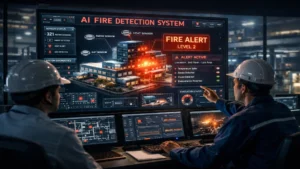
Fire safety is not just a regulatory requirement in India; it is a critical responsibility for every business owner, facility manager and safety professional. Every year, fire incidents in commercial buildings, factories, warehouses and offices lead to severe property damage, business disruption and tragic loss of life.
To reduce these risks, India has established strict fire safety regulations that businesses must follow. These rules ensure that buildings are designed with proper fire protection systems, emergency exits, alarm systems and trained personnel who can respond quickly during emergencies.
However, many organisations still misunderstand the legal fire safety requirements. Some assume installing a few fire extinguishers is enough. Others believe compliance only matters during inspections. In reality, fire safety compliance in India involves multiple laws, building codes and operational practices that must work together.
In this detailed guide, we will explain the legal fire safety requirements for businesses in India, including applicable laws, mandatory systems, compliance procedures and best practices for maintaining a safe workplace.
Why Fire Safety Compliance Is Critical for Businesses
Before we explore the legal framework, it is important to understand why fire safety compliance matters for businesses.
Fire incidents can escalate within minutes. Without proper detection, alarm systems and evacuation planning, employees and visitors may not receive enough warning to escape safely.
Fire safety compliance helps businesses:
- Protect employees, visitors and occupants
- Prevent large-scale property damage
- Maintain operational continuity
- Avoid legal penalties and shutdown orders
- Reduce insurance risks
- Build trust with regulators and stakeholders
For industrial facilities, manufacturing plants and commercial complexes, fire safety compliance is even more critical because the risk of ignition sources and combustible materials is higher.
Key Fire Safety Laws and Regulations in India
India does not rely on a single national fire safety law. Instead, fire safety compliance is governed by a combination of national codes, state regulations and building approval processes.
The most important regulations include:
1. National Building Code of India (NBC)
The National Building Code (NBC) 2016 is the primary guideline for fire and life safety in buildings across India.
The NBC provides detailed standards for:
- Fire detection systems
- Fire alarm systems
- Fire suppression systems
- Emergency exits
- Fire-resistant building materials
- Smoke control systems
- Evacuation planning
Although NBC itself is a code and not a law, most state governments adopt it into their local building regulations. As a result, compliance with NBC fire safety guidelines is effectively mandatory.
2. State Fire Service Acts
Each Indian state has its own Fire Service Act, which empowers the fire department to enforce fire safety regulations.
Examples include:
- Maharashtra Fire Prevention and Life Safety Measures Act
- Delhi Fire Service Act
- Karnataka Fire Force Act
- Tamil Nadu Fire Service Act
These laws allow authorities to:
- Inspect buildings
- Issue Fire Safety Certificates (NOC)
- Enforce compliance
- Penalize violations
- Order the closure of unsafe buildings
Businesses must comply with both NBC guidelines and state fire safety regulations.
3. Factories Act, 1948
Industrial facilities and manufacturing plants must also follow the Factories Act, 1948, which includes fire safety provisions for worker protection.
Under this act, factories must provide:
- Fire prevention measures
- Emergency evacuation routes
- Firefighting equipment
- Worker training and drills
Failure to comply can result in legal penalties and operational restrictions.
4. Occupational Safety, Health and Working Conditions Code (OSH Code)
India’s modern OSH Code strengthens workplace safety regulations, including fire safety responsibilities for employers.
Businesses must ensure:
- Hazard identification
- Emergency preparedness
- Safety training
- Risk mitigation systems
This law emphasises proactive safety management rather than reactive compliance.
Fire Safety Certificate (Fire NOC): A Mandatory Requirement
One of the most important legal requirements for businesses in India is obtaining a Fire NOC (No Objection Certificate).
A Fire NOC confirms that a building complies with fire safety regulations and can be safely occupied.
When Is Fire NOC Required?
A Fire NOC is typically required for:
- Commercial buildings
- High-rise buildings
- Factories and industrial units
- Hotels and hospitals
- Malls and shopping complexes
- Educational institutions
- Warehouses and logistics facilities
Without this certificate, a building may not receive occupancy approval.
How Businesses Obtain a Fire NOC
The typical process involves several steps.
1. Fire Safety Design Approval
Before construction begins, building plans must include fire safety systems such as:
- Fire hydrants
- Sprinkler systems
- Fire detection and alarm systems
- Emergency staircases
- Smoke management systems
These designs must be submitted to the fire department for approval.
2. Installation of Fire Safety Systems
During construction, businesses must install all fire protection systems according to approved plans.
These systems may include:
- Fire alarm systems
- Fire pumps
- Hydrant networks
- Sprinklers
- Smoke detectors
- Emergency lighting
Proper installation and testing are essential.
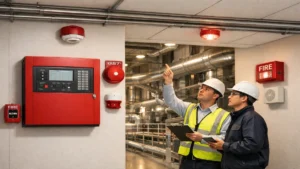
3. Inspection by Fire Authorities
After installation, the fire department conducts a site inspection to verify that the building meets safety standards.
Inspectors typically check:
- System functionality
- Pump performance
- Alarm response
- Exit accessibility
- Fire extinguisher placement
4. Issuance of Fire NOC
If the building passes inspection, the fire department issues the Fire NOC.
However, compliance does not end here.
Many states require periodic renewal of Fire NOC, especially for commercial and industrial buildings.
Mandatory Fire Safety Systems for Businesses
To meet legal requirements, businesses must install specific fire protection systems depending on building type and occupancy.
Let us explore the most common mandatory systems.
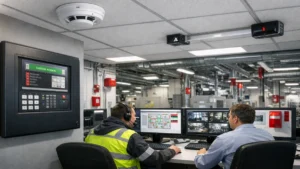
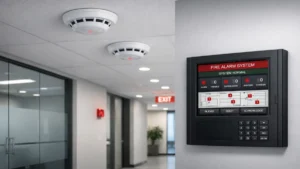
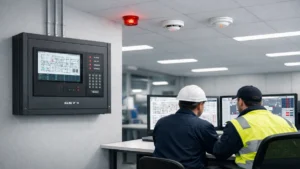
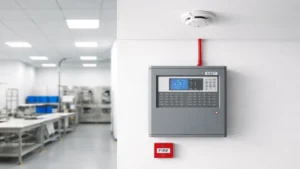
1. Fire Detection and Alarm Systems
Early detection is essential to prevent fire disasters.
Businesses must install fire detection systems such as:
- Smoke detectors
- Heat detectors
- Manual call points
- Fire alarm control panels
- Audible alarm systems
These systems provide early warning and allow occupants to evacuate safely.
In large facilities, addressable fire alarm systems are commonly required because they identify the exact location of a fire.
2. Fire Suppression Systems
Fire suppression systems control or extinguish fires before they spread.
Common systems include:
- Automatic sprinkler systems
- Gas suppression systems
- Water mist systems
- Foam systems for flammable liquids
Industrial facilities often require specialised suppression systems depending on fire hazards.
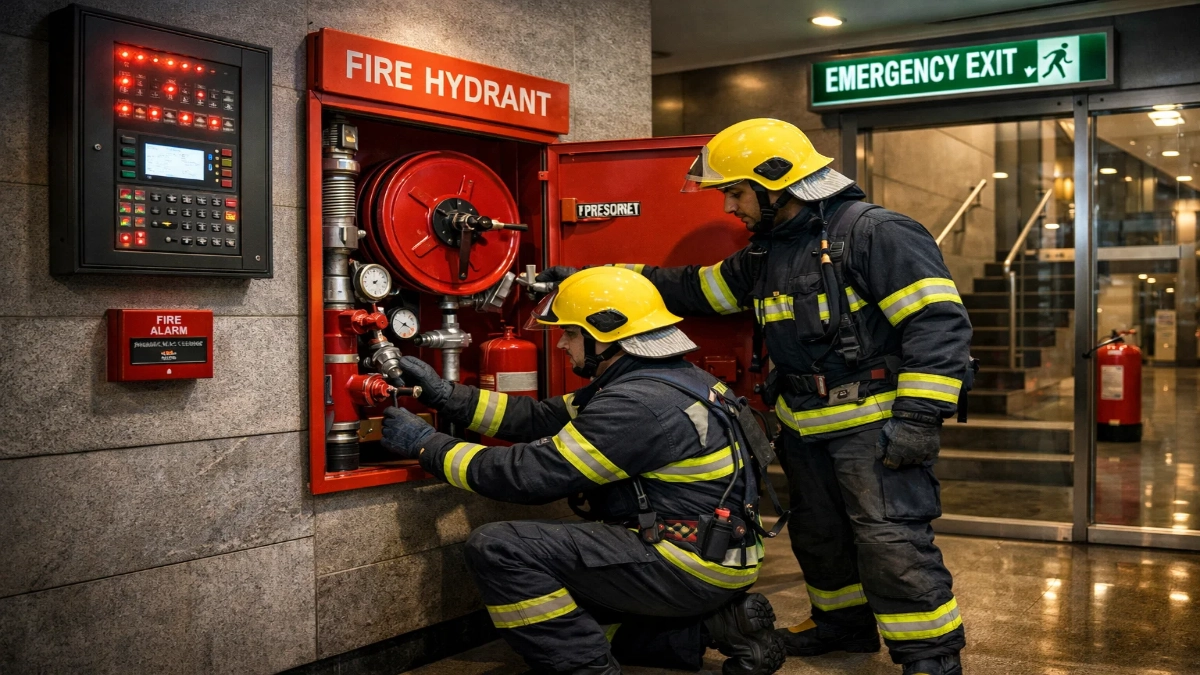
3. Fire Hydrant Systems
Fire hydrant systems allow firefighters to access water quickly during emergencies.
A typical hydrant system includes:
- Fire pumps
- Hydrant valves
- Hose reels
- Water storage tanks
Large buildings and factories must install both internal and external hydrant systems.
4. Portable Fire Extinguishers
Portable extinguishers are mandatory in almost all commercial buildings.
Different types are used for different fire classes:
- Water extinguishers for Class A fires
- CO₂ extinguishers for electrical fires
- Foam extinguishers for liquid fires
- Dry chemical powder extinguishers for mixed risks
Proper placement and regular inspection are required.
5. Emergency Exits and Evacuation Routes
Legal fire safety requirements also include building design elements that enable safe evacuation.
Buildings must provide:
- Clearly marked emergency exits
- Fire-resistant staircases
- Exit signage
- Emergency lighting
- Obstruction-free escape routes
High-rise buildings must also include refuge areas for safe evacuation.
Fire Safety Training and Emergency Preparedness
Fire safety compliance does not stop with equipment installation.
Businesses must also ensure employees know how to respond during a fire emergency.
Mandatory safety practices include:
- Fire safety training programs
- Evacuation drills
- Fire warden assignments
- Emergency response plans
- Fire extinguisher training
Regular drills help employees respond quickly and prevent panic during real incidents.
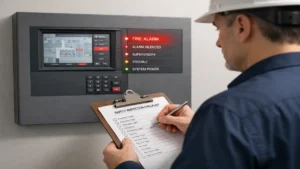
Maintenance and Inspection Requirements
Many fire safety systems fail not because of poor design but because of a lack of maintenance.
Indian fire safety regulations require businesses to maintain systems in working condition.
Routine maintenance typically includes:
- Fire alarm testing
- Pump performance testing
- Sprinkler inspection
- Hydrant pressure checks
- Battery backup testing
Maintenance records must be documented and available during inspections.
Penalties for Non-Compliance
Ignoring fire safety regulations can result in serious legal and financial consequences.
Authorities may impose:
- Monetary fines
- Suspension of occupancy certificates
- Temporary closure of facilities
- Legal prosecution
- Insurance claim rejection
In cases where negligence leads to loss of life, business owners and facility managers may face criminal liability.
For this reason, fire safety compliance should always be treated as a continuous operational responsibility, not a one-time requirement.
Common Fire Safety Compliance Mistakes Businesses Make
Despite clear regulations, many businesses still make critical fire safety mistakes.
Common issues include:
- Installing systems but not maintaining them
- Blocking emergency exits with storage
- Ignoring periodic Fire NOC renewals
- Using untrained personnel for system maintenance
- Disabling alarm systems to avoid false alerts
These mistakes significantly increase risk during emergencies.
Best Practices for Fire Safety Compliance
To maintain compliance and improve safety, businesses should adopt a proactive fire safety strategy.
Best practices include:
Conduct Fire Risk Assessments
Identify potential fire hazards in electrical systems, storage areas and production processes.
Use Certified Fire Protection Systems
Always install systems that meet national and international safety standards.
Schedule Regular System Audits
Periodic fire safety audits help identify system failures before emergencies occur.
Train Employees Continuously
Fire safety awareness must be part of workplace safety culture.
Work with Qualified Fire Safety Professionals
Professional system designers and integrators ensure compliance with NBC and state regulations.
The Future of Fire Safety Compliance in India
As Indian cities continue to grow vertically and industrial infrastructure expands, fire safety regulations are becoming more advanced.
Modern buildings now integrate technologies such as:
- Intelligent fire detection systems
- Networked fire alarm panels
- AI-powered surveillance integration
- Smart evacuation systems
These innovations improve response time and reduce the impact of fire incidents.
Regulatory authorities are also strengthening compliance requirements to ensure higher safety standards across industries.
Note: Fire safety compliance in India is not simply a legal obligation; it is a critical part of responsible business operations.
By following national building codes, state fire regulations and workplace safety laws, businesses can significantly reduce fire risks and protect both people and property.
Effective fire safety systems combine technology, proper design, regular maintenance and trained personnel. When these elements work together, businesses can create safer environments and maintain operational continuity even during emergencies.
For organisations operating in commercial buildings, factories, warehouses and industrial facilities, understanding and implementing legal fire safety requirements is essential.
Because in fire safety, compliance is not just about passing inspections, it is about saving lives.
Read Also: Importance of Redundancy and Fault Tolerance in Fire Alarm Systems
Read Also: How to Choose the Right Power Backup System For Fire Safety?