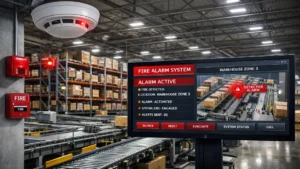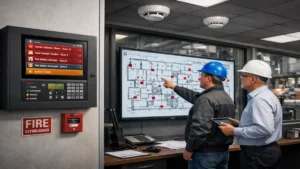
Fire alarm systems are marketed as long-term safety investments. Most brands highlight certifications, features, aesthetics and pricing. But one crucial topic rarely appears in brochures or sales pitches, the real lifespan of a fire alarm system.
The truth is that a fire alarm system has more than one lifespan. Its electronics, sensors, cabling, software and field devices age differently. Environmental conditions, maintenance quality and technology updates also influence how long the system remains reliable.
This article breaks down the hidden aspects of fire alarm lifespan many brands don’t openly discuss, using engineering insights. You will also see how modern addressable ecosystems such as GST systems handle these lifecycle challenges better, without turning this into a promotional piece.
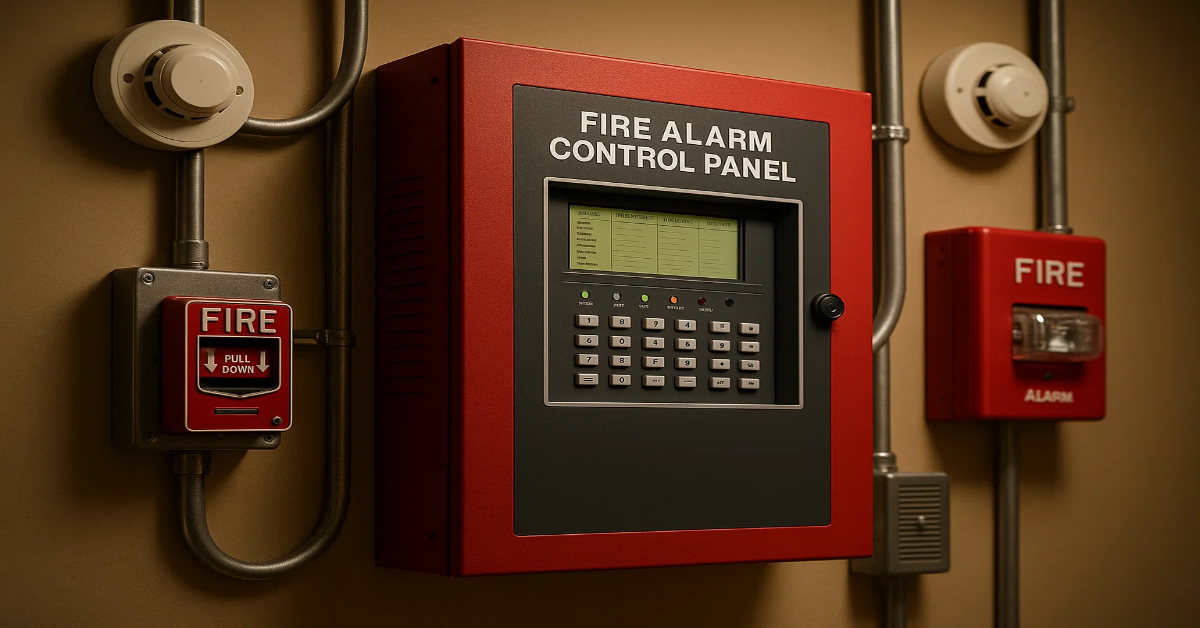
By the end, you will understand exactly what affects system longevity, how to plan replacements and what specifications help extend operational life.
1. The “Promised Lifespan” vs. the “Practical Lifespan”
Most brands claim a fire alarm panel lasts 8 to 15 years. While this is technically true, it can be misleading because it refers only to the control panel hardware.
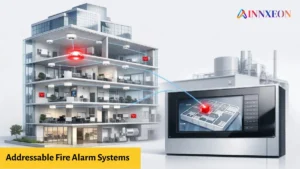
In real-world conditions, fire alarm systems function as ecosystems. Their lifespan depends on:
- The panel
- Detectors and sensors
- Sounders and modules
- Batteries
- Loop cards
- Software compatibility
- Environmental stress
Many brands advertise only the maximum theoretical lifespan. Engineers know the practical lifespan varies based on:
| Component | Ideal Lifespan | Practical Real-World Lifespan |
|---|---|---|
| Control panel | 10–15 years | 8–12 years |
| Addressable detectors | 8–10 years | 5–8 years (depending on dust exposure) |
| Batteries | 3–5 years | 2–3 years |
| Sounders | 10–15 years | 7–10 years |
| Cabling | 15–20 years | 10–15 years |
| Software/firmware | No fixed lifespan | Needs update every 3–4 years |
What brands don’t tell you:
A fire alarm system does not fail at once. It ages in layers.
Addressable systems like GST handle this well because they support modular replacements. You can replace only outdated components while keeping the existing loop infrastructure active.
2. Technology Becomes Obsolete Faster Than Hardware
Even when the hardware is functioning, technology on which it runs becomes outdated. This is one of the biggest industry secrets.
What becomes obsolete first?
A. Protocols
Older systems operate on outdated communication protocols that are either slow or incompatible with new detectors.
B. Firmware
Many brands lock firmware updates or discontinue support after 7–10 years.
C. Panel Expandability
An old panel may not support new:
- Loop cards
- Device types
- Networking features
- Integration with BMS/CCTV/IoT systems
Modern ecosystems like GST addressable systems typically ensure backward compatibility. As a result, outdated devices can still operate with new-generation panels or loop cards, which extends the usable life.
3. Dust, Humidity and Heat Cut Detector Lifespan by 30–50%
Most marketing materials specify detector lifespan assuming:
- Clean environment
- Standard temperature
- Low humidity
In reality, industries like manufacturing, hotels, warehouses and malls have:
- High dust
- Temperature variations
- Chemical fumes
- High human activity
This reduces detector efficiency drastically.
What brands don’t usually clarify:
- Optical detectors lose sensitivity due to dust accumulation.
- Heat detectors degrade faster in hot climates (common in India).
- Unsealed electronics corrode in humid areas.
- Pollution increases false alarm risk, which stresses the system and reduces lifespan.
Addressable ecosystems (like GST) mitigate this with:
- Automatic drift compensation
- Self-diagnostics
- Device health monitoring
- Real-time sensitivity adjustment
These features extend the operational life without needing premature replacement.
4. The Lifespan of Cabling Is Often Ignored But Critical
Brands emphasize devices, not cabling. But cables form 70% of the physical system.
Cabling failure reasons:
- Rodent damage
- UV exposure
- Moisture
- Mechanical stress in service buildings
- Bad terminations
Even high-quality panels cannot compensate for bad cable health.
GST and similar modern addressable systems support loop isolation, meaning even if a cable section fails, the loop survives. This reduces system downtime and extends overall reliability.
5. Sensor Drift Is the Silent Reason Most Systems Fail Early
Every detector’s sensitivity changes over time. This phenomenon, called drift, is rarely discussed in brand literature.
Why drift matters:
- Too sensitive → false alarms
- Not sensitive enough → delayed detection
- Improper calibration → malfunction
Most conventional systems require manual recalibration. Engineers often miss this step, shortening system life.
Addressable detectors in systems like GST come with:
- Auto-calibration
- Drift compensation algorithms
- Loop communication feedback
This allows detectors to maintain accurate sensitivity for longer, extending lifespan naturally.
6. Battery Replacement Determines Whether Your System Lives or Dies
Brands highlight panel lifespan…
…but the system runs on batteries, not mains.
Batteries degrade due to:
- Frequent charging cycles
- Heat exposure
- High standby load
- Poor maintenance
If batteries fail, the entire system fails, even if the panel and detectors are new.
Best practice:
- Replace batteries every 2–3 years
- Test charger boards annually
- Keep temperature-controlled environments
Good addressable systems monitor battery health and alert maintenance teams early.
7. Maintenance Quality Influences 40% of the System’s Longevity
Most brands avoid discussing maintenance responsibility because:
- Poor maintenance reduces lifespan
- Blame often falls on the system, not maintenance
- Brands want to avoid association with operational issues
Poor maintenance includes:
- Skipping detector cleaning
- Not replacing expired sensors
- Improper battery care
- No firmware updates
- Ignoring fault logs
Maintenance-friendly systems like GST have:
- Fault pinpointing
- Device-level health reports
- Intelligent diagnostic tools
These help engineers protect system lifespan more effectively.
8. Software Support Controls the Life of Your Fire Alarm Panel
As buildings expand, merge floors, or add new areas, the fire alarm system must adapt.
Many brands restrict:
- Software licenses
- Device compatibility
- Loop expansions
- Integration possibilities
Once software support ends, the system becomes technologically outdated even if the hardware works.
Addressable systems known for long support cycles (GST included) allow:
- New device addition
- Firmware updates
- Backward-compatible expansions
- Integration with modern building systems
This keeps the system functional beyond its standard lifespan.
9. False Alarms Destroy System Life Faster Than Actual Fires
Frequent false alarms cause:
- Sensor degradation
- Wear on sounders
- Panel stress
- Battery drain
- Frequent resets
- Increased downtime
Most false alarms occur due to:
- Dust
- Aging detectors
- Bad calibration
- Temperature fluctuations
Addressable systems minimize false alarms by:
- Intelligent algorithms
- Multi-criteria detection
- Continuous sensitivity monitoring
This drastically extends device lifespan.
10. Replacement Cycles Are Not Uniform and Brands Don’t Highlight This
The truth: No fire alarm system ages uniformly.
Engineers must plan for:
- Detector replacement every 6–8 years
- Battery replacement every 2–3 years
- Panel replacement every 10–12 years
- Sounder replacement every 7–10 years
Brands rarely reveal these staggered replacement cycles because they complicate buying decisions.
Modern addressable systems minimize these cycles through:
- Modular components
- Long-support protocols
- Flexible integration
- Self-test capabilities
This lowers lifetime cost without heavy early replacements.
11. End-of-Life Announcements Are Often Delayed
Brands avoid early end-of-life (EOL) announcements because:
- It may hurt sales
- It creates urgency for upgrades
- It forces transparency about parts availability
Many users find out too late that their system:
- Has no spare parts
- Has no firmware support
- Cannot integrate with new devices
- Needs a full system change
Well-established ecosystems like GST generally maintain transparent support cycles and ensure long-term compatibility.
12. System Life Depends on How Smartly It Adapts to Building Growth
If your building evolves, your system must evolve too.
A system’s lifespan shortens drastically when:
- New sections cannot be added
- Device limits are reached
- Loops cannot be expanded
- Integration is limited
Addressable platforms that support:
- Loop expansion
- Multiple networking topologies
- Intelligent device addition
- Flexible zoning
…naturally last longer, even if you don’t replace them fully.
The Real Lifespan of a Fire Alarm System Depends on Engineering, Not Branding
Fire alarm systems do not fail because they are “old.”
They fail because:
- They were not maintained well
- They became technologically outdated
- Their components aged at different rates
- Their environment stressed them
- Their design lacked scalability
Brands don’t openly discuss these factors, but engineers must.
Addressable fire alarm systems like those in the GST ecosystem extend real-world lifespan by offering:
- Self-diagnostics
- Backward compatibility
- Auto calibration
- Modular upgrades
- Loop survivability
- Long-term software support
These engineering advantages help preserve operational lifespan naturally, without needing promotional claims.
A well-installed, well-maintained and technologically supported system can protect a building for 15–20 years, even if individual components need scheduled replacements.
That is the real truth most fire alarm brands never openly tell you.
Read Also: 5 Problems in Old Fire Panels That GST Addressable Systems Completely Solve
Read Also: 12 Technical Specs Engineers Must Check Before Choosing a Fire Alarm Panel