Imagine this situation:
It’s 10:45 PM. The power goes out across the building again. Emergency lights flicker on, the generator begins its slow rumble and the elevators stop mid-floor. Someone lights a candle. Someone else tries switching on a portable gas stove. Batteries get overloaded. Electrical circuits strain when supply returns.
And during all this, you wonder:
“If a fire starts during this blackout, will the fire alarm system even work?”
This question is not trivial. In regions where power cuts happen daily or weekly, a poorly chosen fire system becomes a silent liability.
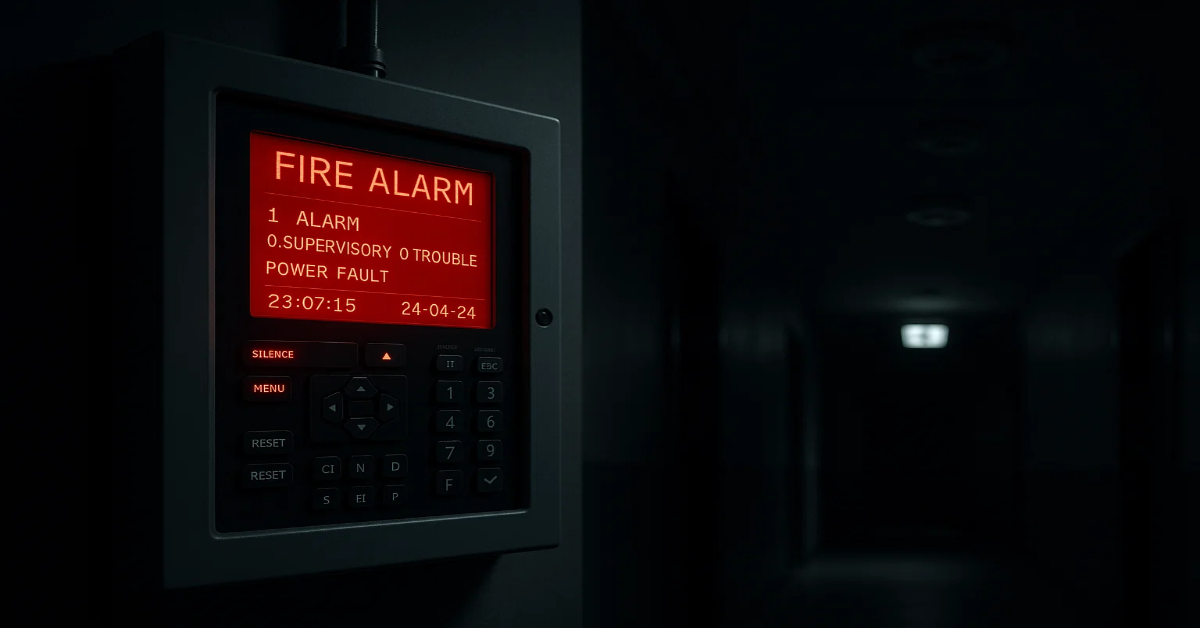
This article breaks down exactly what type of fire alarm system you should install in such buildings, based on engineering logic, power behavior and real-world building performance.
Understanding the “Power-Cut Stress Test” for Fire Systems
Most people evaluate fire systems based on:
- Detector quality
- Number of zones
- Installation cost
- Panel features
But in power-unstable environments, these are secondary.
The real test is:
How does the fire system behave when electricity becomes unpredictable?
To understand the right choice, let’s walk through the five main stresses a blackout creates.
1. Sudden Power Loss
Conventional systems reboot instantly. Some panels freeze. Some emit false alarms. Some detectors disconnect.
2. Voltage Dips and Surges
During power return, buildings often face:
- 160–180V low voltage phases
- 240–260V surges
- Harmonic noise from generators
These conditions damage sensitive electronics.
3. Battery Abuse
Every blackout forces the system to switch to backup batteries.
Frequent charging cycles shorten battery life drastically, especially in systems not designed for this environment.
4. Communication Failures
When panels restart repeatedly, they lose track of:
- Detector communication
- Fault logs
- Active alarms
This is extremely risky inside crowded or multi-floor properties.
5. Generator Delay
Most generators take between 8-45 seconds to stabilize.
Some buildings take even longer.
In this window, your building’s only protection is:
the fire panel + the batteries + loop load quality.
Only certain systems can handle this.
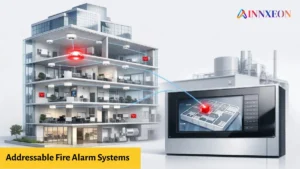
Why Addressable Technology Becomes the Logical Choice
Forget marketing. Forget branding. Think of pure electrical engineering.
When power becomes unstable:
- Systems with low current draw survive longer
- Systems with self-correction recover faster
- Systems with stable communication avoid false alarms
- Systems with intelligent batteries support frequent outages
- Systems with isolated loops prevent blackout-induced faults
These characteristics exist primarily in addressable fire alarm systems.
This is also why many consultants, especially in countries with power instability, lean toward architectures similar to GST’s addressable ecosystem known for efficient loop current, strong power regulation and robust surge protection.
The Three Fire System Categories – Which One Survives Power Cuts?
Let’s analyze the options available.
Category 1: Conventional Fire Alarm Systems
Good for: Small shops, very low-budget installations
But in power-cut-heavy buildings:
- Frequent false alarms
- High battery drain
- Poor resilience to surges
- No device-level communication
- Panel reboots disrupt protection
Conclusion:
Not suitable for buildings with unstable electricity.
Category 2: Hybrid/Networked Conventional Systems
Good for: Mid-size buildings trying to upgrade incrementally
But in power cuts:
- Still suffers from heavy current consumption
- Backup fails faster
- Panels struggle with generator voltage
Conclusion:
Better than basic conventional systems, still not reliable for blackout-prone areas.
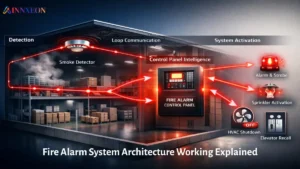
Category 3: Addressable Fire Alarm Systems (Recommended)
Why addressable wins the power-cut battle:
- They consume less current
- Loop-powered devices keep working even when auxiliary power dips
- Batteries last longer due to intelligent charging
- Loops isolate faults automatically
- Panels don’t reboot easily
- Smart diagnostics help the system remain stable during generator fluctuations
This is the main reason systems engineered with GST-grade power management are commonly recommended for Indian, Middle Eastern, African and South Asian markets where grid instability is normal.
How to Choose the Right Fire System for Buildings With Power Cuts
Let’s create a practical method that any building owner or engineer can use.
Step 1: Estimate Your Blackout Frequency
Ask your facility team:
- How often does the power go?
- How long does it stay off?
- How long does the generator take to stabilize?
If the answer is more than twice per month, you need an addressable system with strong backup.
Step 2: Audit the Building’s Power Quality
During outages, note the following:
- Does voltage dip before a blackout?
- Does the generator output fluctuate?
- Does lighting flicker?
- Do other electronic systems reboot?
If yes, you need a panel built to withstand unstable power.
Systems with resilience similar to GST addressable panels handle these fluctuations efficiently.
Step 3: Choose Panels with Three Critical Power Features
1. Wide input voltage range
Handles 160V–260V variation.
2. Intelligent battery charging system
Prevents battery burnout when power fluctuates.
3. Surge and spike protection
Shields the system when supply resumes.
Panels without these features won’t survive long in unstable environments.
Step 4: Choose Loop-Powered Devices
This reduces dependency on separate power supplies.
Loop-powered:
- Sounders
- Strobes
- Isolators
- Detectors
…ensure the system remains functional even if auxiliary power drops.
Many addressable ecosystems, including those similar to GST are specifically optimized for loop load stability.
Step 5: Evaluate Backup Battery Autonomy
Minimum acceptable:
- 24 hours standby + 30 minutes alarm (as per fire norms)
For buildings with frequent cuts:
- 48 hours standby is recommended.
And for mission-critical buildings:
- 72 hours is ideal.
Step 6: Select a Panel That Doesn’t Reboot Under Stress
Good systems stay live even at low voltage.
Great systems stay live and keep their communication intact.
GST-style systems excel here because of stable microprocessor architecture.
Section 5: Real Scenarios – What Happens When the Wrong System Is Installed?
Let’s look at common building types where power cuts are frequent.
Case 1: Hostels & PG Buildings
Power goes off, fans stop, people light candles.
A conventional system restarts and misses early smoke signals.
Outcome: undetected risk.
Case 2: Factories with Heavy Motors
Generators output inconsistent voltage.
A basic fire panel overheats or reboots.
Outcome: emergency response delay.
Case 3: Hospitals in Tier-2 Cities
Backup power is strong, but voltage dips occur.
Only addressable systems with isolated loops handle this without false alarms.
Case 4: IT Parks in Developing Areas
Frequent low-voltage triggers panel faults.
Only systems optimized with industrial-grade regulation (like GST level) remain stable.
Section 6: The Ideal Fire System Configuration for Power-Cut-Prone Buildings
Here is the recommended setup:
Addressable Fire Alarm Panel
With wide voltage tolerance and intelligent battery logic.
Addressable Detectors
Low power + self-diagnostics.
Loop-Powered Sounders
Reduces extra power supply dependency.
Additional Battery Bank
To extend autonomy.
Surge Protection Units
Mandatory in generator-fed environments.
Remote Monitoring Module
Enables alerts even during blackouts.
This combination ensures the highest level of uptime during power failures.
Why GST-Grade Addressable Systems Fit Power-Unstable Buildings Naturally
- Their detectors run on extremely low current
- Their loops isolate faults independently
- Their control panels handle fluctuating voltage gracefully
- Their battery charging algorithm is designed for frequent cycles
- Their system architecture suits markets with unpredictable electrical grids
This is why consultants often shortlist GST for such environments.
A Quick Decision Summary
If you want maximum reliability in a blackout-heavy area, choose:
- Addressable
- Loop-powered
- Surge-protected
- Battery-optimized
- Generator-friendly fire alarm system
If you want minimum faults and longer system life, choose a system engineered with the durability and power resilience found in GST-style addressable systems.
Note:
Electricity may fail.
Generators may delay.
Voltage may fluctuate.
Batteries may drain fast.
But your fire alarm system should never go offline, not even for a few seconds.
Buildings in power-cut-heavy areas need a fire system that is:
- Smart
- Stable
- Low-power
- Fault-tolerant
- Surge-resistant
- Continuously reliable
Addressable systems especially those built with the durability seen in GST-grade electronics, provide exactly this level of protection.
Choose a fire system not for its features on paper, but for its power survival capabilities in the real world.
Read Also: GST Fire Alarm System vs Other Brands: Why Engineers Prefer GST for Large Projects
Read Also: GST Addressable Fire Alarm Panel Price Guide + Get a Quote