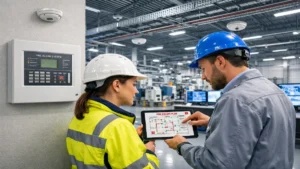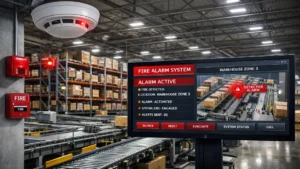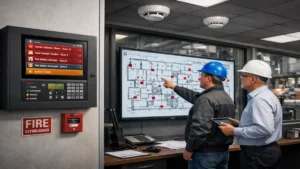
In modern construction, a fire alarm system is not just a safety requirement; it is a critical project component that directly impacts approvals, timelines, budgets and long-term operations. Consultants, developers, EPC contractors and facility managers often ask one important question before finalising a system:
“Is this fire alarm system truly project-ready?”
A project-ready fire alarm system goes far beyond basic detection and alarm functions. It must integrate seamlessly into complex construction environments, comply with multiple standards, scale across large sites, support future expansion and deliver measurable value throughout the building lifecycle.
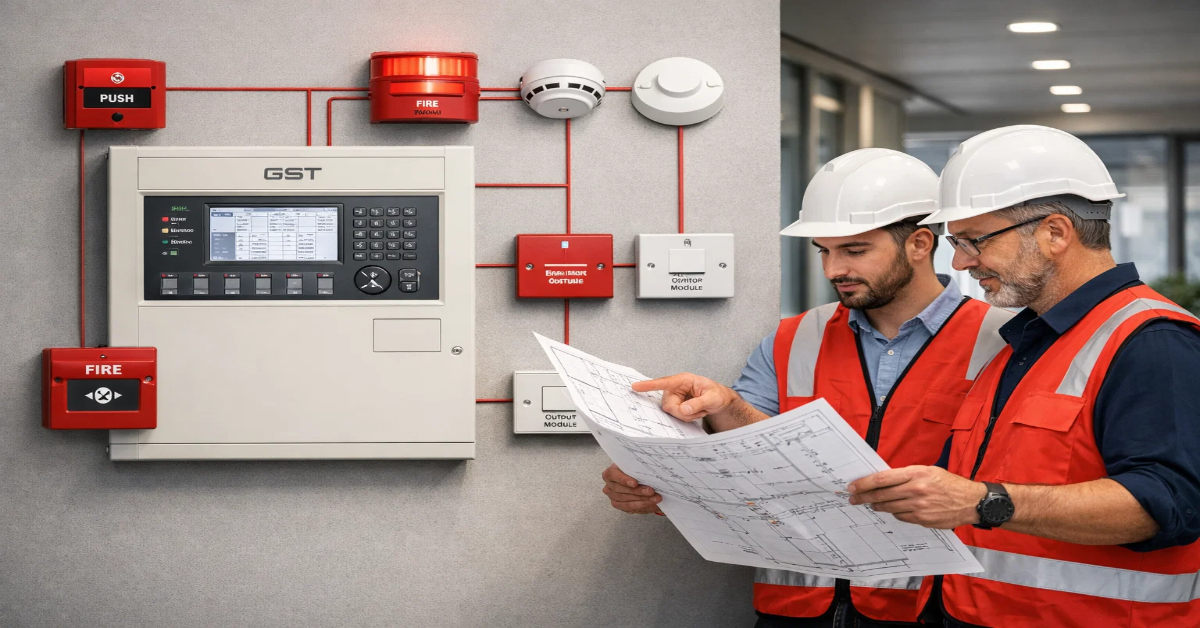
In this article, we will clearly explain what makes a fire alarm system project-ready and why GST (Gulf Security Technology) fire alarm systems are widely specified in large, mission-critical and compliance-driven projects.
What Does “Project-Ready” Mean in Fire Alarm Systems?
A project-ready fire alarm system is designed, tested and proven to perform reliably in real-world construction projects, not just in small installations or isolated buildings.
Such a system must support:
- Large building footprints and high device density
- Multiple stakeholders (consultants, authorities, contractors)
- Stringent compliance and documentation needs
- Phased construction and handover
- Long-term maintenance and future upgrades
In short, a project-ready system reduces risk, avoids rework and ensures smooth execution from design to commissioning and beyond.
Why Many Fire Alarm Systems Fail at the Project Level
On paper, many fire alarm systems appear similar. However, problems often arise during execution. Common issues include:
- Limited loop capacity that forces redesign
- Inflexible panel architecture
- Complicated programming tools
- Poor integration with other life safety systems
- Inconsistent approval from local authorities
- High long-term maintenance costs
These challenges delay projects, increase costs and create compliance risks.
This is exactly where GST fire alarm systems stand apart.
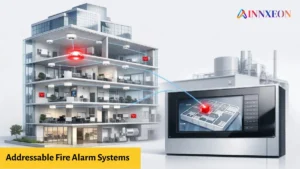
1. High Loop Capacity and Intelligent Addressable Architecture
One of the most important indicators of a project-ready fire alarm system is high loop capacity.
Large projects such as airports, hospitals, IT parks, metro stations, malls and industrial facilities require thousands of devices across multiple zones.
Why Loop Capacity Matters
- Reduces the number of panels required
- Minimises cabling and infrastructure cost
- Simplifies design and execution
- Improves system stability
How GST Delivers
GST addressable fire alarm panels are engineered to support high device density per loop, allowing consultants to design efficiently without artificial limitations.
This makes GST ideal for:
- High-rise buildings
- Mixed-use developments
- Large campuses
- Industrial complexes
A system that scales easily is a system that is truly project-ready.
2. Modular and Scalable Panel Design
Construction projects rarely remain static. Scope changes, future expansion and phased handovers are common.
A project-ready fire alarm system must be modular and scalable.
Key Requirements
- Easy expansion without replacing the main panel
- Support for additional loops and networks
- Flexibility for phased commissioning
GST Advantage
GST panels feature a modular architecture that allows seamless expansion. Additional loops, panels and network nodes can be added as the project grows.
This flexibility protects the client’s investment and ensures the system remains relevant for decades.
3. Compliance with Indian and International Standards
Compliance is non-negotiable in large projects. Authorities, insurers and consultants demand systems that meet recognised standards.
A project-ready system must comply with:
- Indian fire and safety requirements
- International standards used in global projects
- Third-party certifications
Why Compliance Impacts Project Success
- Faster approvals from authorities
- Reduced risk of rejection or redesign
- Increased trust among stakeholders
GST’s Compliance Strength
GST fire alarm systems are designed to meet globally recognised fire safety standards, making them suitable for both domestic and international projects.
This compliance-first approach makes GST a preferred choice for consultants working on high-value and high-risk developments.
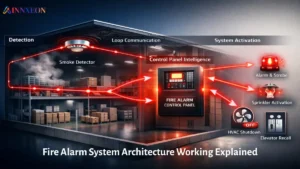
4. Advanced Cause & Effect Programming
Modern buildings require more than just alarms. Fire detection must trigger coordinated responses across multiple systems.
A project-ready system must support:
- Complex cause-and-effect logic
- Integration with HVAC, BMS, PA and suppression systems
- Custom fire strategies
GST’s Intelligent Control Capabilities
GST systems allow advanced cause-and-effect programming, enabling precise control during emergencies.
Examples include:
- Smoke control activation
- Elevator recall
- Door release and access control integration
- Zoned evacuation strategies
This level of intelligence is essential for large and complex projects.
5. Seamless Integration with Other Building Systems
Fire alarm systems do not operate in isolation. They must integrate smoothly with:
- Building Management Systems (BMS)
- Public Address and Voice Evacuation Systems
- Fire suppression systems
- Security and access control
Why Integration Defines Project Readiness
Poor integration leads to coordination failures, delayed responses and compliance issues.
GST’s Integration-Friendly Design
GST fire alarm systems are built with open communication and integration capability, ensuring smooth interoperability with other critical building systems.
This makes them suitable for smart buildings and modern infrastructure projects.
6. Consultant-Friendly Design and Documentation
Consultants play a decisive role in system selection. A project-ready system must be easy to specify, design and justify.
Consultant Expectations
- Clear technical documentation
- Reliable design data
- Proven performance history
- Transparent system architecture
Why Consultants Specify GST
GST provides clear documentation, standardised design principles and predictable performance, making it easier for consultants to recommend with confidence.
This reduces design risk and ensures smoother coordination with all stakeholders.
7. Ease of Installation and Commissioning
Time overruns are costly. A project-ready fire alarm system must support efficient installation and commissioning.
Key Installation Factors
- Simple wiring topology
- Logical device addressing
- User-friendly configuration tools
GST’s Execution Advantage
GST systems are designed for practical site conditions, reducing installation errors and commissioning time.
This helps contractors meet deadlines without compromising system performance.
8. Long-Term Reliability and Lifecycle Value
Fire alarm systems are expected to operate reliably for years, often decades.
A project-ready system must offer:
- Stable performance
- Low false alarm rates
- Easy maintenance
- Long-term spare availability
GST’s Focus on Reliability
GST fire alarm systems are known for consistent performance and durability, making them suitable for mission-critical environments.
This ensures a lower total cost of ownership and better ROI for building owners.
9. Authority, Acceptance, and Proven Track Record
In large projects, approval from fire authorities is a critical milestone.
A project-ready system must have:
- Proven acceptance history
- Widespread industry trust
- Reference installations
GST’s Market Confidence
GST systems are widely used in large-scale projects, increasing confidence among authorities, consultants and developers.
This reduces approval risks and accelerates project timelines.
Why GST Defines “Project-Ready” Fire Alarm Systems
A project-ready fire alarm system is not defined by price alone or by basic specifications. It is defined by performance under real project conditions.
GST fire alarm systems stand out because they offer:
- High scalability for large projects
- Intelligent addressable architecture
- Strong compliance and authority acceptance
- Advanced integration and control
- Long-term reliability and lifecycle value
For consultants, developers and contractors who cannot afford risk, rework or compromise, GST represents a fire alarm system that is truly project-ready.
In modern construction, choosing the right fire alarm system is not just a technical decision; it is a strategic one. GST continues to set the benchmark for systems designed not just to function, but to succeed at the project level.
Read Also: ROI Analysis of GST Addressable Fire Alarm Systems
Read Also: GST Fire Alarm System for High Device Density Projects