Fire alarm technology has evolved fast. Today, most consultants and facility managers talk about addressable systems as the modern standard, especially for large buildings, multi-site campuses and high-occupancy projects.
But here’s the truth that many people forget:
Conventional fire alarm systems still perform better than addressable systems in several practical situations.
In fact, there are places where conventional systems are not only enough, but they are faster to install, easier to maintain and more cost-effective without compromising safety when designed correctly.
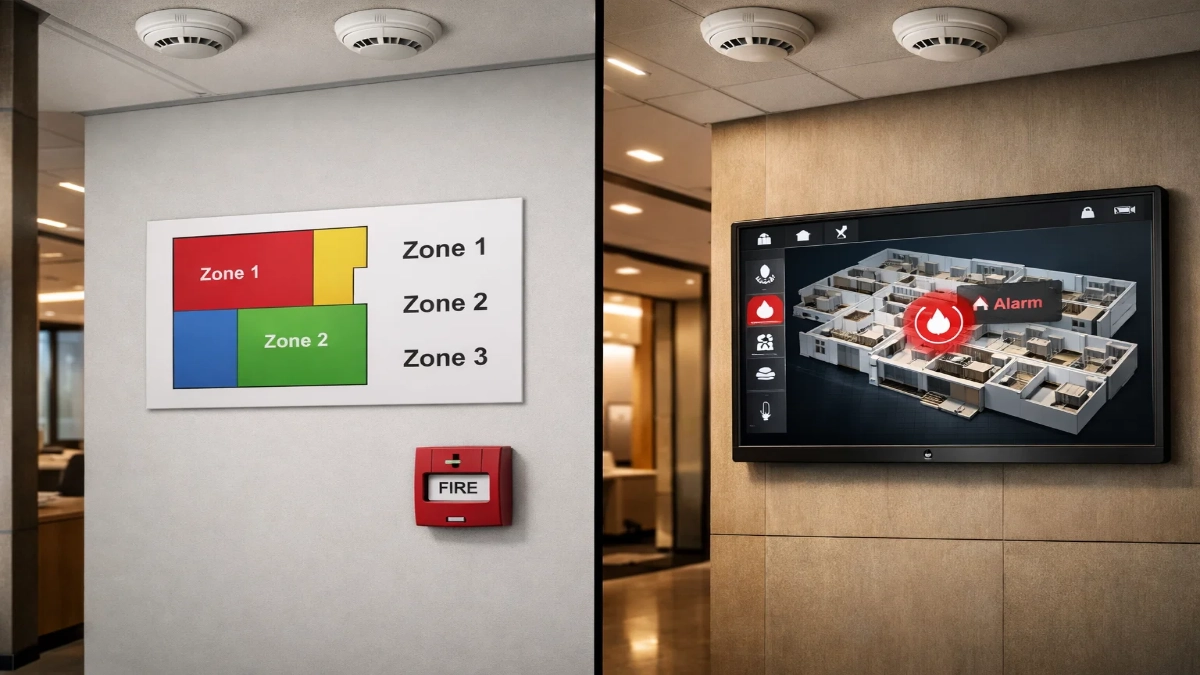
This article explains where conventional systems outperform addressable systems in practical situations, how to choose the right option for your project and how GST Fire Alarm Systems offers both choices with dependable performance and long-term support.
Conventional vs Addressable: A Quick, Clear Difference
Before we compare performance, let’s simplify what these systems actually do.
Conventional Fire Alarm System
A conventional system divides the building into zones (Zone 1, Zone 2, Zone 3…).
If a detector activates, the panel shows the zone location, not the exact device.
👉 Example: “Fire in Zone 2”
This is typically managed using a conventional fire alarm panel.
Addressable Fire Alarm System
An addressable system identifies the exact device; every detector and module has a unique address.
👉 Example: “Smoke Detector 18, 2nd Floor Pantry”
This is typically managed using an addressable fire alarm panel and addressable detectors.
Both are effective when planned correctly. But performance depends on the site.
1) Small Buildings: Conventional Wins on Simplicity
If the project is small, conventional systems usually perform better because they are:
- Simple to plan
- Simple to install
- Simple to operate
- Simple to troubleshoot
Ideal Applications
- Small offices
- Retail shops
- Restaurants
- Warehouses with limited sections
- Low-rise buildings with basic layouts
Why Conventional Performs Better Here
Addressable systems provide precise device-level information. That’s great, but if the building has only 2–5 zones and a few detectors, the extra complexity can feel unnecessary.
With a GST fire alarm system, many small facilities prefer conventional systems due to easy operation for non-technical users.
2) Budget-Controlled Projects: Conventional Delivers Better Value
Let’s be honest: many projects have strict cost limits.
In those cases, conventional systems often perform better because:
- Lower panel cost
- Lower device cost
- Easier cable planning
- Fewer specialised programming requirements
Where This Matters Most
- Small commercial buildings
- Local clinics and schools
- Builder-floor projects
- Retail chains where each outlet needs basic compliance
Addressable systems are a premium investment. They shine in large, complex buildings. But in tight budgets, a conventional system can meet requirements without overengineering.
GST makes this decision easier by offering reliable products in both categories, so you don’t have to compromise on brand quality even when choosing conventional.
3) Sites with Frequent Power Issues: Conventional is More Forgiving
In many regions, especially where power quality isn’t stable, conventional systems are often easier to maintain long-term.
Why Conventional Systems Perform Better
- Less dependency on configuration stability
- Simple reset logic
- Fewer “software-level” complexities
Addressable systems can be very stable, but they also depend more on:
- Correct programming
- Correct loop wiring discipline
- Correct commissioning tools
If the site has weak electrical discipline, conventional tends to run smoother with fewer “mystery faults.”
GST systems are known for stability and consistent performance and when paired with proper power supply design, they provide strong reliability for both conventional and addressable.
4) High-Dust, High-Noise Industrial Areas: Conventional Can Be More Practical
Not all sites benefit equally from device-level pinpointing.
In areas such as:
- Cement plants
- Textile units
- Wood workshops
- Heavy fabrication zones
- Warehouses with dust movement
You may get increased nuisance triggering if detectors are not carefully selected and placed.
Why conventional systems perform better here
Conventional zoning allows teams to plan detection more broadly and build in practical logic using:
- Zoning strategy
- Manual call points
- Sounder circuits by sections
This is not a disadvantage; it’s simply a different method of managing risk.
Of course, addressable still works well in industrial spaces when engineered properly, especially using correct detector types and layouts. But conventional can be more forgiving in harsh environments.
5) Fast Installation Jobs: Conventional is Faster to Deploy
If you’ve ever done a project on a hard deadline, you already know this pain.
When the requirement is:
- Fast execution
- Limited programming time
- Basic compliance setup
Conventional systems often outperform addressable systems because:
- Wiring is more straightforward
- Devices don’t require addressing
- Less commissioning effort
Best cases
- Fit-out projects
- Tenant office projects
- Temporary facilities
- Small factories need urgent compliance
A properly selected conventional fire alarm panel from a trusted brand like GST can be installed quickly, commissioned efficiently and maintained easily.
6) Easy Fault Finding: Conventional Troubleshooting is More Direct
Addressable systems provide more information, yes.
But conventional systems often win in hands-on troubleshooting because the fault patterns are simpler.
Conventional faults are easy to understand
- Zone open circuit
- Zone short circuit
- Sounder circuit fault
- Battery fault
Technicians with basic training can find faults quickly.
Addressable systems require deeper knowledge of:
- Loop wiring design
- Isolator behavior
- Device mapping
- Loop communication faults
That’s why in places where maintenance skills are limited, conventional can feel more dependable.
7) Locations with Limited Skilled Support: Conventional is the Safer Choice
This is one of the biggest reasons conventional systems still stay relevant.
If the building is in an area where:
- Skilled fire alarm engineers are not available quickly
- Service support is delayed
- Maintenance is done by general electricians
Then conventional systems perform better due to:
- Easier maintenance
- Reduced dependency on software tools
- Faster restoration after faults
Still, if you’re going with conventional for this reason, always choose a reputable brand with good service coverage.
This is where GST Fire Alarm Systems earn trust because the product ecosystem, availability and support network matter more than panel type.
8) Small Hotels, Guest Houses and Low-Occupancy Properties: Conventional is Enough
Addressable systems are excellent for premium hotels and high-occupancy towers.
But for small properties (like 10–30 rooms), conventional can be the better fit.
Why conventional performs better
- Zoning matches the floor-based layout
- Simpler training for staff
- Lower upfront investment
- Quick evacuation alert strategy
For example:
- Each floor = one zone
- Staircase = separate zone
- Kitchen/lobby = separate zones
It’s clean and practical.
9) Low-Change Buildings: Conventional Works Best When Layout Stays Stable
Addressable systems shine when:
- Expansions happen frequently
- Tenant layout changes every year
- New devices are added regularly
But if the building layout is fixed and stable, conventional performs better because:
- Once installed, it runs for years without reprogramming
- Changes are rare
- System stays simple for operators
Examples:
- Temples and places of worship
- Storage godowns
- Old offices with fixed partitions
- Basic industrial sheds
Conventional vs Addressable: Performance Comparison Table
Here is a simple comparison to help decision makers:
| Conventional Fire Alarm System ✅ Better when you need… | Addressable Fire Alarm System ✅ Better when you need… |
|---|---|
| Fast installation | Exact detector location |
| Low-budget compliance | Advanced cause & effect logic |
| Easy maintenance | Large buildings with many devices |
| Low technical dependency | Faster pinpointing during emergencies |
| Simple zoning visibility | Low-budget compliance |
How GST Helps You Choose the Right System (Without Regret Later)
Many people make a mistake by thinking:
Conventional = cheap
Addressable = premium
That’s incomplete.
The real truth is:
- Conventional is a smart design choice for specific environments.
- Addressable is a scalable choice for complex requirements.
With GST, you get both options under one trusted ecosystem, meaning your project can start conventional today and upgrade later when required.
When upgrading is likely
Choose addressable if you expect:
- Future extensions
- More floors or blocks
- Centralized monitoring
- Compliance upgrades
Where Addressable Still Clearly Wins (Be Honest About It)
To make the right decision, it’s important to admit where addressable performs better.
Addressable systems outperform conventional in:
- High-rise buildings
- Hospitals and critical facilities
- Airports and large malls
- Data centres and command centres
- Campuses and multi-building sites
Because device-level detection improves response speed and reduces confusion.
Addressable detection also shines when paired with:
- Graphical monitoring
- Event history logs
- Controlled evacuation sequences
Don’t Decide Only on Technology, Decide on Site Reality
If you choose the wrong type, your facility might face:
- Unnecessary complexity
- Higher maintenance cost
- More downtime during faults
- Difficult training for staff
The right approach is:
- Choose conventional where simplicity wins
- Choose addressable where precision and scalability matter
And if you want a brand that can serve both worlds reliably, GST remains one of the most practical choices for long-term fire safety projects.
So… Is Conventional Still Worth It?
Conventional fire alarm systems are not outdated.
They are purpose-built, practical and highly effective when used in the right environment.
Conventional performs better than addressable when:
- The building is small
- The layout is simple and stable
- Budget is limited
- Installation deadline is tight
- Technical support is limited
- Simple zoning information is enough
For such sites, choosing a quality GST conventional fire alarm panel and matching conventional detectors can give reliable protection, easier maintenance and long-term value.
Read Also: Why Buying GST Fire Alarm Panels from Authorized Distributors Matters
Read Also: How GST Distributors Ensure Code-Compliant Fire Alarm Systems